Dry mouth
Peer reviewed by Dr Colin Tidy, MRCGPLast updated by Dr Doug McKechnie, MRCGPLast updated 23 Aug 2023
Meets Patient’s editorial guidelines
- DownloadDownload
- Share
- Language
- Discussion
- Audio Version
- Add to preferred sources on Google
Dry mouth has various causes. Simple measures such as drinking frequent sips of water, sucking ice cubes and chewing sugar-free gum will often help. They may be all that is needed in many cases. Artificial saliva or medicine to stimulate the salivary glands is sometimes used.
At a glance
A dry mouth happens when there is not enough saliva or you feel your mouth is uncomfortably dry.
Symptoms include a burning mouth, altered taste, difficulty swallowing, bad breath, or thick saliva.
Causes can include anxiety, dehydration, mouth breathing, certain medicines, or nerve damage.
Some illnesses like Sjögren's syndrome, diabetes, and Alzheimer's disease can also cause a dry mouth.
To help, keep hydrated, chew sugar-free gum, reduce caffeine and alcohol, and stop smoking.
Artificial saliva products and some medicines are available if other measures do not help.
Regular dental check-ups are important as a dry mouth can lead to dental problems.
What is a dry mouth?
A dry mouth is just that - the feeling that the mouth is uncomfortably dry. The medical term for it is xerostoma (which literally means 'dry mouth' in Greek).
Usually, the feeling of a dry mouth happens when there is not enough saliva (spit). But some people also get the feeling of dry mouth even when they are producing normal amounts of saliva.
Symptoms of a dry mouth
The main symptom is a feeling that the mouth is uncomfortably dry. Other symptoms that people may have include:
Burning or soreness of the mouth.
A reduced, or altered, sense of taste.
Difficulty swallowing dry foods.
Feeling like saliva is thicker than normal.
Feeling the need to sip water whenever swallowing.
Bad breath.
Causes of a dry mouth
A dry mouth is not an illness in itself. It can have several causes. In many cases there is a problem with how the salivary glands work. The causes of dry mouth can include:
Person-related factors
Mouth breathing - which might be a usual habit, or be due to a blocked nose.
Anxiety. Many people have felt their mouth becoming dry when scared or anxious; it's part of the body's 'fight or flight' response to shut down digestion in the face of danger.
Lack of fluid in the body (dehydration). This may occur for many reasons. For example, being ill with a high temperature or diarrhoea, or simply not drinking enough.
Treatment-related factors
Medicines. Various medicines can cause a dry mouth as a side-effect. For example:
Tricyclic antidepressants used for low mood or pain relief.
Antihistamines used for allergies.
Antimuscarinic medicines used for gut problems.
Some anti-epileptic medicines.
Some antipsychotics used for mental health problems.
Beta-blockers used for heart problems.
'Water' tablets (diuretics) used to manage blood pressure or heart problems.
Many of these medicines cause a dry mouth by affecting the salivary glands which reduce the amount of spit (saliva) that these glands make.
Radiotherapy to the head or neck as part of treatment for cancer. The radiotherapy can damage the salivary glands.
Nerve damage
The salivary glands are controlled by nerves coming from the brain. If these nerves are damaged - such as by an operation, an injury, or another disease - they can cause the salivary glands to stop producing as much saliva.
Bell's palsy, a condition that affects the facial nerve, can cause this.
Sign of other illness
Sjögren's syndrome. This is a condition which can affect various parts of the body, including:
The joints (which can cause arthritis).
The salivary glands (which can cause a dry mouth).
The tear glands (which can cause dry eyes).
Other autoimmune diseases.
Dry mouth at night
Some people with dry mouth notice it more at night. This might be due to:
Not routinely drinking through the night.
People may mouth breathe more at night. This may be because they have a blocked nose and sleep with their mouth open.
The timing of when they take their medication may mean the effects are felt more at night.
Dry mouth treatment
If possible, treat any underlying cause
In some cases, it may be possible to treat the underlying cause. For example:
If a medicine is causing the dry mouth as a side-effect, it may be possible to change to a different medicine or to reduce the dose.
Lack of fluid in the body (dehydration), a blocked nose and anxiety can often be treated.
Practical measures
Whatever the cause, the following will often help:
Take frequent sips or sprays of cold water. Always have a glass of water next to you when you go to bed.
Suck ice cubes.
Sugar-free chewing gum is often helpful.
Eating pineapple chunks or partly frozen melon is often soothing and helpful.
Some people find that it helps to suck boiled sweets. (But, sugary or acidic sweets may not be good for your teeth.)
Consider reducing or cutting out caffeine and alcohol. They make you pass out more urine, which can be dehydrating. Caffeine occurs in tea, coffee, cola and other drinks. It is also part of some medicines.
You can apply petroleum jelly to your lips to prevent drying and cracking.
Protecting teeth
A dry mouth can lead to dental problems. To help prevent tooth decay and gum damage:
Brush teeth twice a day with fluoride-containing toothpaste.
Floss each day.
See a dentist regularly (at least every one to two years).
Artificial saliva
Artificial saliva products come as spray, gel, or lozenges. These can usually be bought without prescription. Each dose only lasts a short time and so they need to be used frequently. Some people find artificial saliva products more helpful than others.
Saliva stimulants
In some cases of dry mouth, the saliva glands are only partly affected and can be stimulated to make more saliva:
Chewing sugar-free gum can help to increase the production and flow of saliva.
Pilocarpine is a medicine which can stimulate salivary glands to make more saliva. It may be prescribed if other measures have not helped much:
Pilocarpine usually works well and quickly in most people with a dry mouth caused by a medication side-effect.
Pilocarpine is not very effective in treating people whose dry mouth has been caused by radiotherapy. An operation which moves the saliva gland on one side so that it can be protected from radiotherapy is sometimes an option in these people.
Pilocarpine can cause side-effects in some people, such as:
Sweating.
Runny nose.
Blurred vision.
Frequent trips to pass urine.
Side-effects tend to become less troublesome in time as your body becomes used to them. A doctor may suggest a low dose at first and that you take this for a while until any side-effects have eased. The dose may then be gradually increased with the aim of getting maximum benefit but with minimum side-effects.
Pilocarpine should not normally be used if you have asthma, chronic obstructive pulmonary disease (COPD), a slow heart rate (bradycardia), bowel obstruction or angle-closure glaucoma.
Complications of a dry mouth
This very much depends on the underlying cause and how that is treated.
What are the salivary glands?
The salivary glands are glands in your mouth that make spit (saliva). Producing enough saliva is important in the breaking down of the food that you eat. It makes food moist, lubricating it as it passes from the mouth to the gullet. It also contains enzymes in the saliva which break down some of the starch and fat in your food.
Salivary gland disorders
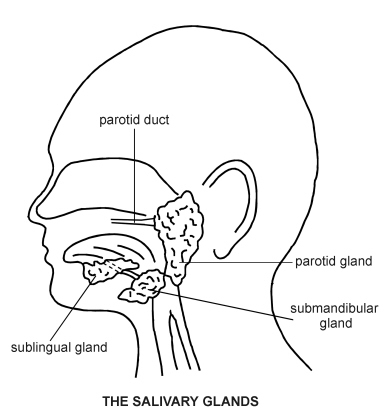
There are three pairs of glands that make saliva. From these glands, saliva drains into the mouth down short tubes (ducts). The submandibular glands are under the floor of your mouth - one on each side - and drain saliva up into the floor of your mouth.
The parotid glands lie just below and in front of your ears. Saliva passes down the parotid duct into the inside of your cheeks. The sublingual glands are just beneath your tongue.
You make small amounts of saliva all the time to keep your mouth moist. When you eat, you normally make much more saliva which pours into your mouth.
Patient picks for General signs and symptoms

Signs and symptoms
Dehydration
Although dehydration can be mild and usually just needs you to drink extra fluids, it can also be very severe and life-threatening.
by Dr Toni Hazell, FRCGP

Signs and symptoms
Pelvic pain in women
Pelvic pain is more common in women. There are many different causes of pain in your pelvic area. They can be separated by when they tend to happen, if you are pregnant and if they are accompanied by other symptoms such as vaginal bleeding. The most common causes are mentioned below. Most will improve with painkillers. Most recurring causes have treatments available.
by Dr Hayley Willacy, FRCGP
Frequently asked questions
What is 'xerostomia'?
Xerostomia is the medical term for dry mouth. It literally means 'dry mouth' in Greek and describes the feeling of an uncomfortably dry mouth, often due to insufficient saliva.
Are there any specific foods or drinks I should avoid if I have a dry mouth?
Yes, you might find it helpful to reduce or cut out caffeine and alcohol. Both can make you pass more urine, leading to dehydration, which can worsen dry mouth symptoms. Caffeine is found in tea, coffee, cola, and some medicines.
Can dry mouth affect my dental health?
Yes, a dry mouth can increase your risk of dental problems like tooth decay and gum damage because saliva helps protect your teeth. It's important to brush twice daily with fluoride toothpaste, floss every day, and see your dentist regularly (at least every one to two years) to help prevent these issues.
How do artificial saliva products help, and how often do I need to use them?
Artificial saliva products come as sprays, gels, or lozenges and can help relieve the feeling of dry mouth. However, each dose only provides relief for a short time, so they need to be used frequently throughout the day.
What are the side effects of pilocarpine, a medication for dry mouth?
Pilocarpine can cause side effects such as sweating, dizziness, a runny nose, blurred vision, and frequent trips to pass urine. These side effects often become less troublesome over time as your body adjusts to the medication. Doctors may start with a low dose and gradually increase it to minimise these effects.
Further reading and references
- Jha N, Seikaly H, Harris J, et al; Phase III randomized study: oral pilocarpine versus submandibular salivary gland transfer protocol for the management of radiation-induced xerostomia. Head Neck. 2009 Feb;31(2):234-43. doi: 10.1002/hed.20961.
- Furness S, Worthington HV, Bryan G, et al; Interventions for the management of dry mouth: topical therapies. Cochrane Database Syst Rev. 2011 Dec 7;(12):CD008934. doi: 10.1002/14651858.CD008934.pub2.
- Palliative care - oral; NICE CKS, January 2025 (UK access only)
About the authorView full bio
Updated by

Dr Doug McKechnie, MRCGP
Medical Writer
MA, MBBS, MSc, DRCOG, MRCP(UK), MRCGP(2021), FHEA
Dr Doug McKechnie is an NHS GP working in London. He works full-time clinically and is also the Deputy Lead for the Clinical and Professional Practice module at University College London Medical School.
About the reviewerView full bio

Dr Colin Tidy, MRCGP
General Practitioner, Medical Author
MBBS, MRCGP, MRCP (Paediatrics), DCH
Dr Colin Tidy is an NHS Doctor, based in Oxfordshire.
Join the conversation
Share your thoughts or experiences with others in our patient communities.

Ask, share, connect.
Browse discussions, ask questions, and share experiences across hundreds of health topics.

Feeling unwell?
Assess your symptoms online for free
Sign up to the Patient newsletter
Your weekly dose of clear, trustworthy health advice - written to help you feel informed, confident and in control.
By subscribing you accept our Privacy Policy. You can unsubscribe at any time. We never sell your data.