Thoracic back pain
Peer reviewed by Dr Caroline Wiggins, MRCGP Last updated by Dr Rachel Hudson, MRCGPLast updated 7 Apr 2025
Meets Patient’s editorial guidelines
- DownloadDownload
- Share
- Language
- Discussion
- Audio Version
- Add to preferred sources on Google
In this series:Back and spine painLower back painSlipped discSpinal stenosisCauda equina syndromeBack pain in children
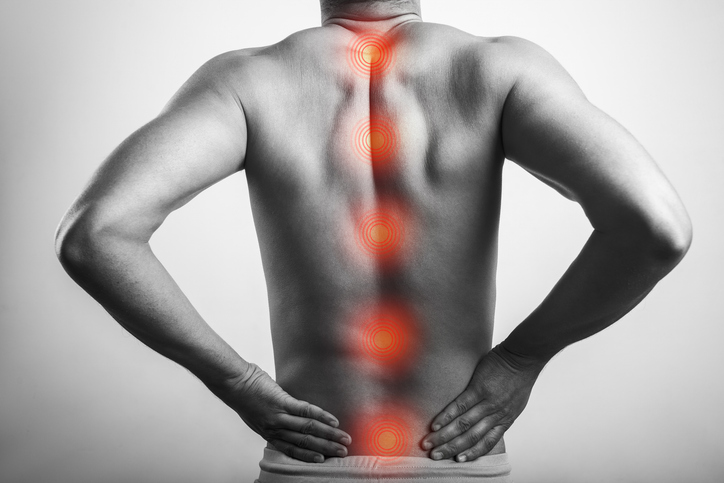
Thoracic back pain is pain that occurs in the thoracic spine. The thoracic spine is located at the back of the chest (the thorax), mostly between the shoulder blades. It extends from the bottom of the neck to the start of the lumbar spine, roughly at the level of the waist.
At a glance
Thoracic back pain is pain in the middle or upper back.
It is often caused by muscle strain, poor posture, or overuse.
Most cases of thoracic back pain improve on their own within a few weeks.
Simple painkillers, gentle exercise, and correcting posture can help.
See a doctor if pain is severe, constant, worsening, or if you feel generally unwell.
Other symptoms like numbness, weakness, or problems with bladder/bowel control also need medical attention.
Thoracic back pain symptoms
Thoracic spine pain is a relatively common symptom but does not tend to persist for long. Often, people will say this type of pain feels as if someone is stabbing them in the back. It is the least common type of back pain but it is more likely than neck pain or low back pain to have a serious cause.
Thoracic back pain red flag symptoms
Thoracic spine pain is usually not sinister and is usually of little consequence. However there are some more concerning features to look out for:
Recent serious injury, such as a car accident or a fall from a height.
Minor injury or even just heavy lifting in people who have osteoporosis ('thinning' of the bones).
Being under 20 years old or over 50 years old when the pain first starts.
Having a history of cancer, drug misuse, HIV infection, a condition that suppresses the immune system (immunosuppression) or use of oral steroids for a long time (about six months or more).
Feeling generally unwell - for example, a high temperature (fever), chills, sweats, fatigue or unexplained weight loss.
Having had a recent bacterial infection.
Pain that is there all the time, which is severe and getting worse.
Pain at night.
Pain that wasn't caused by a sprain or strain (non-mechanical).
Pain that doesn't get better after 2-4 weeks of treatment.
Pain that is accompanied by severe stiffness in the morning.
Having changes to the shape of the spine, including the appearance of lumps or bumps.
Having pins and needles, numbness or weakness of the legs that is severe or gets worse over time.
Having episodes of incontinence of urine or faeces (this can indicate pressure on the spinal cord).
Pain that is associated with a cough or feeling short of breath.
Causes of thoracic back pain
The most common cause of thoracic back pain is inflammation. This inflammation can occur for a number of reasons:
A sudden sprain or strain (as in car accidents or sports injuries).
Sitting or standing in a slouched position over time (poor posture).
Using a backpack.
Sitting for a long time at a computer.
Lack of muscular strength (which can be improved by regular exercise).
Repeating a movement persistently that involves the thoracic part of the spine (as in sport or work): also called overuse injury.
Less common causes include:
Narrowing of part of the spine (thoracic stenosis) - usually due to wear and tear.
Slipped discs - these are common but do not usually cause pain, however they can do so if they press on one of the nerve roots coming out between the vertebrae.
Fractures of the vertebrae (the bony components that make up the spine).
Osteoporosis (this does not cause pain in itself, but can cause a type of fracture of the vertebrae, called a compression fracture, which can cause pain).
Spinal infection.
Shingles (especially in people aged over 60 years).
Spinal osteoarthritis.
Ankylosing spondylitis - inflammation of the joints between the vertebrae.
Scheuermann's disease - an inflammation of the joints of the spine which results in spinal curvature.
Spinal tumours.
It shouldn't be assumed that all pain in the thoracic spine is coming from the spine itself. Other causes of pain in this area can include problems affecting the lung, the uppermost part of the gut (the oesophagus), the stomach, the gallbladder and the pancreas.
How common is thoracic back pain?
Surveys to find out how many people have thoracic spine pain produce very variable results. Evidence from studies suggest that between 15 and 35 in 100 people report having had thoracic back pain at some time. It appears to be as common in children and teenagers as it is in adults and is more common in girls.
Mental health problems seem to be an associated factor as does poor posture. . Adults with thoracic back pain often have aches and pains elsewhere.
Is thoracic back pain serious?
Usually there is not a serious cause for thoracic back pain. Most people with thoracic spine pain get better without treatment in a couple of weeks.
However, thoracic back pain is more likely to be due to a serious cause than pain in other areas of the spine (cervical or lumbar spine). There is a whole list of things to look out for that might indicate there's a problem (as listed above).
Diagnosing thoracic back pain
A short-lived mild pain with an obvious explanation should initially be managed with simple painkillers (such as paracetamol or ibuprofen which can be bought over the counter) and rest / gentle exercise.
However, because thoracic back pain has a higher chance of having a serious cause than neck or lower back pain, a clinician is likely to suggest tests if the pain persists, is severe or is accompanied by any of the 'red flag' features mentioned above.
The tests will depend on the conditions that the clinician wants to assess. They are likely to include blood tests such as a full blood count and inflammatory markers, an x-ray if there is a suspicion of a fracture of one of the vertebrae and maybe a magnetic resonance imaging (MRI) scan.
Thoracic back pain treatment
Most cases will settle without any specific treatment. Simple painkillers and gentle exercise will normally help. If there is an underlying cause, this will need treatment depending on the cause.
Medical treatment
If the pain is coming from a joint in the spine (a facet joint) this may be helped by an injection performed under X-ray vision (imaging-guided intra-articular injection).
Surgery which opens the covering of the spinal canal (a procedure called laminectomy) to treat a slipped disc causing thoracic spine pain is occasionally used.
Muscle relaxants used to be suggested for back pain with acute muscle spasm, but there is little evidence for their benefit and they often have side effects and can be addictive, so they are not generally recommended now.
Physiotherapy can be very useful if the pains are not settling.
Self-help treatment
The following can help to reduce and manage thoracic back pain:
Simple painkillers such as paracetamol or ibuprofen can be bought over the counter. Ibuprofen should be used with care in people over 40 years old or with a history of heartburn or acid reflux.
Rest can be useful, particularly if someone's normal lifestyle involves heavy lifting or significant exertion. However complete rest is counter-productive as it weakens the muscles around the spine and causes stiffness.
Gentle exercises such as walking and swimming are beneficial.
Warm baths or showers can provide relief.
Correcting poor posture can help.
Taking breaks from desk based work, and optimising your workstation at work or home can also help.
Preventing thoracic back pain
Thoracic back pain may be caused by an underlying condition. The commonest of these would be a "compression fracture" of a vertebra (where one of the vertebrae gets squashed by the vertebra above it and fractures) which is usually caused by osteoporosis. The best way to prevent osteoporosis is by doing regular weight-bearing exercise (several times a week) and ensuring adequate dietary intake of calcium, as well as not smoking or drinking excess alcohol.
Most commonly, thoracic back pain is simple pain due to muscle strain or inflammation. The best way of preventing this is regular exercise, such as walking or swimming. If the exercise is more vigorous then it is important to do warm up and cool down exercises to reduce the risk of problems. People who do exercises such as weight-lifting should be assessed to ensure they are doing the exercises correctly and safely.
Thoracic back pain can be caused by poor posture, or sitting for long periods, for example, at a desk - avoiding these, and ensuring a desk workstation is ergonomic, can help to prevent it.
Children and adolescents should ensure that they are not wearing backpacks to school which are too heavy. They should also be encouraged to sit with good posture, particularly when using computers or gaming devices.
What is the outlook for thoracic back pain?
The outlook (prognosis) depends on the underlying cause, age and general fitness.
Most cases settle down within a few weeks.
Patient picks for Back pain

Bones, joints and muscles
Slipped disc
A slipped disc is an old-fashioned term and does not truly describe what happens in this condition. It is more common to refer to it as a "disc prolapse", "disc herniation" or "disc bulge". There is further discussion below about these terms. However this leaflet will continue to use the term "slipped disc" due to its common usage. A slipped disc often causes sudden severe lower back pain. The disc often puts pressure on a nerve root which causes pain down one leg. Usually the symptoms gradually ease over several weeks. It is best to try and continue with normal activities as much as possible, using painkillers to help. Physical treatments such as spinal manipulation may also help. Surgery may be an option if the symptoms persist.
by Dr Philippa Vincent, MRCGP

Bones, joints and muscles
Ankylosing spondylitis
Ankylosing spondylitis is a chronic inflammatory arthritis. It mainly affects the lower back but can affect the rest of the spine. Other joints and other parts of the body are sometimes affected. There is no cure but treatments help with managing symptoms.
by Dr Philippa Vincent, MRCGP
Frequently asked questions
What specifically is the thoracic spine?
The thoracic spine refers to the middle part of your back. It's located between the neck (cervical spine) and the lower back (lumbar spine).
Can problems with other body parts cause pain in the thoracic area, even if they aren't directly related to the spine?
Yes, it's possible for pain in the thoracic area to originate from organs or structures other than the spine itself. For example, issues affecting the lungs, the upper part of the digestive tract (such as the oesophagus or stomach), the gallbladder, or the pancreas can all manifest as pain in this region.
What is the typical outlook for most cases of thoracic back pain?
For most individuals, thoracic back pain resolves within a few weeks. The overall prognosis can vary depending on the specific cause of the pain, the person's age, and their general level of fitness.
Is surgery a common treatment option for thoracic back pain?
Surgery is not a common treatment for thoracic back pain. Procedures like laminectomy (which opens the covering of the spinal canal to treat slipped discs) are only occasionally used in specific circumstances.
Are muscle relaxants recommended for thoracic back pain?
Muscle relaxants were historically suggested for back pain accompanied by acute muscle spasms. However, there is currently little evidence to support their effectiveness, and they often come with side effects and can be addictive. Therefore, they are generally not recommended for use anymore.
Further reading and references
- Louw A, Schmidt SG; Chronic pain and the thoracic spine. J Man Manip Ther. 2015 Jul;23(3):162-8. doi: 10.1179/2042618615Y.0000000006.
- Thoracic Disc Herniation; Orthobullets
- Thoracic Spine Pain in High School Adolescents: A One-Year Longitudinal Study; de Vitta
- Thoracic Back Pain; Physiopedia
- Chua NH, Gultuna I, Riezebos P, et al; Percutaneous thoracic intervertebral disc nucleoplasty: technical notes from 3 patients with painful thoracic disc herniations. Asian Spine J. 2011 Mar;5(1):15-9. doi: 10.4184/asj.2011.5.1.15. Epub 2011 Mar 2.
About the authorView full bio
Updated by

Dr Rachel Hudson, MRCGP
General Practitioner and Medical Author
MBChB, MRCGP (2008), BSc (Medical Science), DFSRH, DRCOG, DCH
Dr Rachel Hudson, is an NHS GP working in the North West of England.
About the reviewerView full bio

Dr Caroline Wiggins, MRCGP
General Practitioner, Medical Author
MBBS Honours (with Distinction), MRCGP (2016), MSc.SEM (with Distinction), BSc (Hons)
Dr Caroline Wiggins is a GP locum currently in the South-West of England.
Join the conversation
Share your thoughts or experiences with others in our patient communities.

Ask, share, connect.
Browse discussions, ask questions, and share experiences across hundreds of health topics.

Feeling unwell?
Assess your symptoms online for free
Sign up to the Patient newsletter
Your weekly dose of clear, trustworthy health advice - written to help you feel informed, confident and in control.
By subscribing you accept our Privacy Policy. You can unsubscribe at any time. We never sell your data.