Síndrome da cauda equina
Revisado por Dr Doug McKechnie, MRCGPÚltima atualização por Dr Colin Tidy, MRCGPÚltima atualização 20 Jun 2024
Atende aos diretrizes editoriais
- BaixarBaixar
- Compartilhar
- Language
- Discussão
- Versão em Áudio
- Adicionar às fontes preferidas no Google
Nesta série:Dor nas costas e colunaDor lombarHérnia de discoEstenose espinhalDor torácicaDor nas costas em crianças
Síndrome da cauda equina é um tipo particularmente grave de problema na raiz nervosa. É uma condição rara em que há pressão sobre os nervos na parte mais baixa da medula espinhal.
A coleção de nervos na parte inferior da medula espinhal é chamada de cauda equina porque se diz que se parece com o rabo de um cavalo. Cauda equina significa rabo de cavalo em latim.
A condição pode causar dor na região lombar e problemas com a função intestinal e da bexiga (geralmente incapacidade de urinar), dormência na área do selim, que fica ao redor da passagem traseira (ânus), e fraqueza em uma ou ambas as pernas. É necessário investigação e tratamento urgentes para evitar que os nervos da bexiga e do intestino sofram danos permanentes.
Procure um profissional de saúde imediatamente se suspeitar de CES.
Em resumo
A síndrome da cauda equina (CES) é causada por pressão nos nervos na parte inferior da medula espinhal.
A causa mais comum de CES é um disco prolapsado.
Os sintomas incluem dor intensa nas costas, dormência ou fraqueza em ambas as pernas, e alteração no controle da bexiga ou do intestino.
Se não for tratado rapidamente, pode causar danos permanentes nos nervos.
Se você tiver quaisquer sintomas, deve procurar ajuda médica imediatamente.
O que é a cauda equina?
A extremidade inferior da medula espinhal está ao nível da primeira ou segunda vértebra lombar. Os nervos da medula espinhal formam então uma estrutura chamada cone medular. Os nervos espinhais continuam a se ramificar abaixo do cone medular para formar a cauda de equina.
The corda equina carries nerves which control the bladder and bowel. The cauda equina also carries nerves which control movement of the legs, and nerves which sense light touch and pain in the legs or around the back passage (perineum).
O que é a síndrome da cauda equina?
A síndrome da cauda equina (CES) é um tipo de problema nos raízes nervosas particularmente grave. Há uma pressão sobre os nervos na parte mais baixa da medula espinhal. A pressão nos nervos impede que eles funcionem corretamente. Se a pressão não for tratada rapidamente, a CES pode causar danos permanentes nos nervos.
O que causa a síndrome da cauda equina?
The most common cause of CES is a hérnia de disco (frequentemente chamada de 'disco deslocado'). Other much rarer causes include infection and câncer ósseo.
Qual a frequência da síndrome da cauda equina?
CES é raro. Ocorre principalmente em adultos, mas pode acontecer em qualquer idade. Cerca de 3 pessoas a cada 100.000 desenvolvem-na a cada ano.
Sintomas da síndrome da cauda equina
The symptoms of CES usually start suddenly and progress quickly. Occasionally the symptoms start slowly. CES may cause dor lombar but not all people with CES have back pain.
Os sintomas da síndrome da cauda equina incluem dor que irradia para uma ou ambas as pernas e/ou dor lombar intensa com:
Numbness or weakness in both legs.
Loss of feeling pins and needles between your inner thighs or genitals.
Dormência na região ao redor do seu reto ou nádegas.
Sensação alterada ao usar papel higiênico para se limpar.
Dificuldade crescente ao tentar urinar.
Dificuldade crescente ao tentar parar ou controlar o fluxo de urina.
Perda de sensação ao urinar.
Vazamento de urina ou necessidade de usar absorventes.
Não saber quando sua bexiga está cheia ou vazia.
Incapacidade de parar uma evacuação ou vazamento.
Perda de sensação ao evacuar.
Alteração na capacidade de obter uma ereção ou ejacular.
Loss of sensation in genitals during sexual intercourse.
Se você apresentar algum desses sintomas, procure ajuda médica imediatamente.
Como é feito o diagnóstico da síndrome da cauda equina?
CES é principalmente suspeitado com base nos sintomas e, às vezes, também por um exame médico. O diagnóstico de CES então requer uma tomografia de emergência no hospital. Portanto, qualquer pessoa com suspeita de CES deve procurar atendimento urgente no hospital.
Investigations usually include an Exame de ressonância magnética para confirmar o diagnóstico. Other investigations pode incluir uma tomografia computadorizada and tests of bladder control.
Tratamento da cauda equina
A cirurgia de emergência é frequentemente, mas nem sempre, necessária para aliviar a pressão sobre os nervos e evitar danos permanentes.
The treatment otherwise depends on the cause of CES - for example, for infection, antibiotic medicines. A radioterapia pode ser usada se a CES tiver sido causada por câncer ósseo.
É possível recuperar-se da síndrome da cauda equina?
O prognóstico (perspectiva) depende da causa do CES e de quão rapidamente o tratamento pode ser realizado.
Recovery of cauda equina syndrome after spinal decompression surgery is a gradual process that can take weeks or months for the nerves to heal.
Um atraso no diagnóstico e no tratamento eficaz aumenta o risco de problemas de longo prazo na bexiga, intestinos e sexualidade. O diagnóstico tardio e o atraso no tratamento também podem aumentar o risco de danos permanentes nos nervos que afetam a bexiga, os intestinos e as pernas.
Compreendendo a região lombar
A região lombar também é chamada de área lombossacral das costas. É a parte das costas entre a parte inferior das costelas e o topo das pernas.
Most of the lower back is made up from muscles that attach to, and surround, the spine. The spine is made up of many bones called vertebrae. The vertebrae are roughly circular and between each vertebra is a disc.
Os discos entre as vértebras são uma combinação de uma camada externa fibrosa resistente e um centro mais macio, semelhante a um gel. Os discos atuam como amortecedores e permitem que a coluna seja flexível.
Vista aproximada
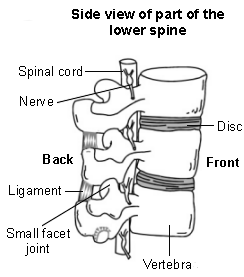
Ligamentos fortes também se prendem às vértebras próximas (adjacentes) para fornecer suporte adicional e resistência à coluna. Os vários músculos que estão ligados à coluna permitem que ela se dobre e se mova de várias maneiras.
A medula espinhal, que contém os caminhos nervosos de e para o cérebro, é protegida pela coluna vertebral. Os nervos da medula espinhal saem entre as vértebras para transmitir e receber mensagens para várias partes do corpo.
Escolhas do paciente para Fraqueza e dormência nos membros

Cérebro e nervos
síndrome de Guillain-Barré
A síndrome de Guillain-Barré afeta os nervos dos membros e do corpo e geralmente é desencadeada por uma infecção. O principal sintoma é a fraqueza muscular de início súbito nos músculos que são supridos pelos nervos afetados. Requer admissão hospitalar imediata, pois pode rapidamente se tornar muito grave. Com tratamento e monitoramento adequados, a maioria das pessoas se recupera completamente.
por Dr. Colin Tidy, MRCGP
Cérebro e nervos
Esclerose múltipla
Esclerose múltipla é uma condição do cérebro e da medula espinhal. Pode causar vários sintomas. Na maioria dos casos, os episódios de sintomas aparecem e desaparecem por vários anos. Com o tempo, alguns sintomas podem se tornar permanentes e causar deficiência. Embora não exista cura para a esclerose múltipla, diversos medicamentos e terapias podem reduzir o número de crises e ajudar a aliviar os sintomas e a deficiência.
por Dra. Hayley Willacy, FRCGP
Perguntas frequentes
Posso ter síndrome da cauda equina se não tiver dor nas costas?
Sim, é possível ter síndrome da cauda equina sem sentir dor nas costas. Embora a dor lombar possa ser um sintoma, nem todos os indivíduos com SCE a terão.
Com que rapidez os sintomas da síndrome da cauda equina geralmente aparecem?
Os sintomas da síndrome da cauda equina geralmente começam de forma súbita e progridem rapidamente. No entanto, em alguns casos, os sintomas podem se desenvolver lentamente.
Como é o processo típico de recuperação após o tratamento para a síndrome da cauda equina?
A recuperação após a cirurgia de descompressão espinhal para a síndrome da cauda equina é um processo gradual. Pode levar várias semanas ou até meses para que os nervos se recuperem após o tratamento.
A síndrome da cauda equina pode causar problemas sexuais?
Sim, a síndrome da cauda equina pode levar a alterações na capacidade de conseguir uma ereção ou ejacular, bem como a perda de sensibilidade nos genitais durante a relação sexual.
Como a síndrome da cauda equina é geralmente confirmada após suspeita inicial?
Uma vez que a síndrome da cauda equina é suspeitada, uma tomografia de emergência, geralmente uma ressonância magnética, é necessária em um hospital para confirmar o diagnóstico. Outras investigações, como uma tomografia computadorizada ou testes de controle da bexiga, também podem ser usados.
Leitura adicional e referências
- Protocolo Nacional para Suspeita de Síndrome da Cauda Equina (CES); NHS Getting it Right First Time (GIRFT), October 2023.
- Tamburrelli FC, Genitiempo M, Bochicchio M, et al; Síndrome da cauda equina: avaliação do resultado clínico. Rev Eur Med Pharmacol Sci. 2014;18(7):1098-105.
- Ma B, Wu H, Jia LS, et al; Síndrome da cauda equina: uma revisão do progresso clínico. Chin Med J (Engl). 20 de maio de 2009;122(10):1214-22.
- Gitelman A, Hishmeh S, Morelli BN, et al; Síndrome da cauda equina: uma revisão abrangente. Am J Orthop (Belle Mead NJ). Nov 2008;37(11):556-62.
- Gardner A, Gardner E, Morley T; Síndrome da cauda equina: uma revisão da posição clínica e medico-legal atual. Eur Spine J. 2011 maio;20(5):690-7. doi: 10.1007/s00586-010-1668-3. Epub 2010 Dez 31.
- Woodfield J, Lammy S, Jamjoom AAB, et al; Demografia da Síndrome da Cauda Equina: Um Estudo de Incidência Populacional. Neuroepidemiologia. 2022;56(6):460-468. doi: 10.1159/000527727. Epub 2022 Out 31.
- Ciática (radiculopatia lombar); NICE CKS, setembro de 2023 (acesso apenas no Reino Unido)
Sobre o autorVer biografia completa

Dr Colin Tidy, MRCGP
Médico Generalista, Autor Médico
MBBS, MRCGP, MRCP (Paediatrics), DCH
Dr Colin Tidy é um médico do NHS, baseado em Oxfordshire.
Sobre o revisorVer biografia completa

Dr Doug McKechnie, MRCGP
Redator Médico
MA, MBBS, MSc, DRCOG, MRCP(UK), MRCGP(2021), FHEA
O Dr. Doug McKechnie é um médico do NHS que trabalha em Londres. Ele trabalha em tempo integral na prática clínica e também é o Vice-Líder do módulo de Prática Clínica e Profissional na Faculdade de Medicina da University College London.
Histórico do artigo
As informações nesta página são escritas e revisadas por clínicos qualificados.
Artigo também disponível em Inglês, Alemão, Espanhol, Francês, Italiano, Português, Hindi, Hebraico, Árabe, e Sueco.
Próxima revisão prevista para: 19 Jun 2027
20 Jun 2024 | Última versão

Pergunte, compartilhe, conecte-se.
Navegue por discussões, faça perguntas e compartilhe experiências em centenas de tópicos de saúde.

Sentindo-se mal?
Avalie seus sintomas online gratuitamente
Inscreva-se no boletim informativo do Patient
Sua dose semanal de conselhos de saúde claros e confiáveis - escritos para ajudá-lo a se sentir informado, confiante e no controle.
Ao se inscrever, você aceita nossos Política de Privacidade. Você pode cancelar a inscrição a qualquer momento. Nunca vendemos seus dados.
Mais sobre cérebro e nervos
- Neuroma acústico
- Fibrilação atrial e prevenção de AVC
- Tumores cerebrais
- síndrome do túnel do carpo
- Cefaleias em salvas
- Epilepsia
- Medicação para epilepsia e efeitos colaterais
- Lesões na cabeça
- Cefaleia por uso excessivo de medicação
- Meralgia parestésica
- Enxaqueca
- Enxaqueca desencadeada por períodos menstruais
- Estudos de condução nervosa
- Neuroblastoma
- Síndrome pós-concussão
- Cefaleia pós-punção dural
- Herpes zoster
- Hemorragia subaracnóidea
- Morte súbita inesperada na epilepsia
- Neuralgia do trigêmeo