Salmonella
Revisado por Dr Hayley Willacy, FRCGP Última atualização por Dr Doug McKechnie, MRCGPÚltima atualização 10 Ago 2023
Atende aos diretrizes editoriais
- BaixarBaixar
- Compartilhar
- Language
- Discussão
- Ask Patient
- Versão em Áudio
- Adicionar às fontes preferidas no Google
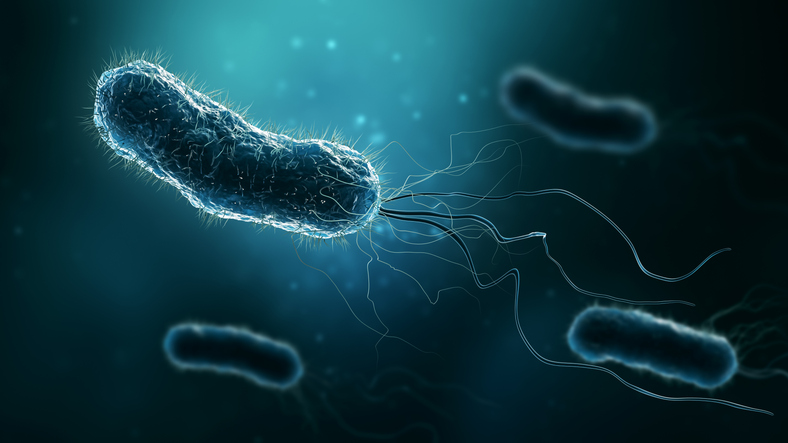
Salmonella are bacteria (germs) that can cause different types of infection. Usually, Salmonella causes gastroenteritis, or food poisoning.
Salmonella bacteria may be found in the gut of many animals, including farm animals and pets. Poultry (chickens, turkeys, etc) are especially likely to carry salmonella.
Em resumo
Salmonella é um grupo de bactérias que causam infecção, tipicamente intoxicação alimentar ou gastroenterite no Reino Unido.
Os sintomas comuns incluem diarreia, cólicas estomacais, náusea, vômito e febre alta.
Os sintomas geralmente aparecem dentro de 12 a 36 horas após o consumo de alimentos contaminados ou ao estar perto de um animal infectado.
Most cases are mild and improve within 4-7 days without specific treatment.
Procure orientação médica para crianças com menos de 6 meses, se houver suspeita de desidratação ou em caso de sintomas graves.
Os adultos devem procurar aconselhamento médico se estiverem desidratados, tiverem dor intensa ou se os sintomas não melhorarem após alguns dias.
Boa higiene, cozimento adequado, refrigeração dos alimentos e prevenção da contaminação cruzada são fundamentais para a prevenção.
Find relief from diarrhoea
Obtenha aconselhamento especializado em saúde no conforto da sua casa. Faça uma consulta online rápida, disponível 24 horas por dia, 7 dias por semana, e tenha o seu pedido avaliado por um profissional de saúde registado no Reino Unido. Entrega no dia seguinte disponível para tratamentos elegíveis.

What is Salmonella?
Salmonella is the name for a group of germs (bacteria) that cause infection.
In developed countries, like the UK and US, Salmonella bacteria usually cause gut infections: typically food poisoning or gastroenterite. In developing countries, particularly in South Asia and sub-Saharan Africa, a different type of Salmonella bacteria can cause different illnesses, called typhoid fever and paratyphoid fever.
Salmonella symptoms
In developed countries, Salmonella usually causes a gut infection called gastroenterite or food poisoning. Typical symptoms of Salmonella gastroenteritis include:
Diarrhoea, which can sometimes be bloody.
Stomach cramps.
Feeling sick (having nausea) and being sick (vomiting).
These symptoms tend to come on within 12-36 hours of eating contaminated food or being in contact with an infected animal. This time period before symptoms appear is known as the 'incubation period'.
Different types of Salmonella bacteria - which are rare in developed countries, but more common in South Asia and sub-Saharan Africa - can cause typhoid fever and paratyphoid fever, which have different symptoms. See the typhoid and paratyphoid fever leaflet for more information.
Quando devo procurar aconselhamento médico?
Crianças
If your child has gastroenteritis from any cause (including possible food poisoning caused by salmonella), you should seek medical advice in the following situations:
Se seu filho tiver menos de 6 meses de idade.
Se seu filho tiver uma condição médica subjacente (por exemplo, problemas cardíacos ou renais, diabetes, histórico de parto prematuro).
Se seu filho tiver febre.
Se você suspeitar que está se desenvolvendo uma falta de fluidos no corpo (desidratação) (veja anteriormente).
Se seu filho parecer sonolento ou confuso.
Se o seu filho estiver vomitando e não conseguir manter líquidos no estômago.
Se houver sangue nas suas diarreias ou vômitos.
Se seu filho tiver dor abdominal intensa.
Infecções contraídas no exterior.
Se o seu filho apresentar sintomas graves, ou se você sentir que a condição dele está piorando.
Se os sintomas do seu filho não estiverem melhorando (por exemplo, vômito por mais de 1-2 dias, ou diarreia que não começa a melhorar após 3-4 dias).
Se houver outros sintomas que lhe preocupem.
Adultos
If you have gastroenteritis from any cause (including possible food poisoning caused by salmonella), you should seek medical advice in any of the following situations:
Se você suspeitar que está ficando desidratado.
Se você estiver vomitando muito e não conseguir manter líquidos no estômago.
If you have blood in your diarrhoea or your vomit.
Se você estiver com dor abdominal intensa.
Se você tiver sintomas graves ou sentir que sua condição está piorando.
If you have a persisting high fever.
If your symptoms are not settling; for example, vomiting for more than 1-2 days, or diarrhoea that does not start to settle after 3-4 days.
Infecções contraídas no exterior.
If you are elderly or have an underlying health problem such as diabetes, epilepsy, doença inflamatória intestinal, doença renal.
If you have a weakened immune system because of, for example, chemotherapy treatment, long-term steroid treatment, teste de HIV infecção.
Se você está grávida.
If you suspect that you may have contracted food poisoning from eating restaurant or takeaway food (see below).
If your job involves preparing food for other people.
Se houver outros sintomas que lhe preocupem.
How long does Salmonella last?
In most people, symptoms are relatively mild and improve within 4-7 days without any specific treatment. However, sometimes, symptoms can be more severe and/or complications can occur, like dehydration.
Severe dehydration can be fatal unless quickly treated because the organs of your body need a certain amount of fluid to function.
Symptoms and signs of dehydration include:
Feeling very thirsty.
Having a dry mouth.
Passar menos urina do que o habitual.
Sentindo tontura ou vertigem.
Having sunken eyes.
Children and babies can also have:
Fewer wet nappies than normal.
Drowsiness, or being unusually irritable and unsettled.
A sunken fontanelle (the soft spot at the top of the head), in young babies.
Types of Salmonella
Salmonella is the scientific name for a group of different types of bacteria. There are over 2,500 different strains (subtypes) of Salmonella.
Salmonella types can be divided into "typhoidal" strains, which cause typhoid and paratyphoid fever, and "non-typhoidal" strains, which typically cause gut infections such as gastroenterite.
Non-typhoidal Salmonella infection is a relatively common cause of gastroenteritis in the UK and other developed countries.
Typhoidal Salmonella infection is rare in the UK. Most people in the UK with typhoid or paratyphoid fever have picked up the infection whilst in another country. Typhoidal Salmonella infection is more common in South Asia and sub-Saharan Africa.
What causes Salmonella?
Salmonella germs (bacteria) may be found in the gut of many animals, including wild animals, farm animals and pets.
Most causes of Salmonella are caused by consuming food or water that has been contaminated by faeces. Commonly infected foods include:
Raw and undercooked meat (especially poultry).
Raw eggs from chickens.
Unpasteurised milk and dairy products.
Contaminated fruit.
Contaminated seafood.
Contact with infected animals (dogs, cats, terrapins, and tortoises).
Once you have Salmonella, you may also spread the infection to your close contacts if you do not follow strict hygiene measures to prevent the spread of infection to others (see below).
How common is Salmonella?
Salmonella food poisoning is quite common. In England in 2019, there were 8,398 confirmed cases. As many people with food poisoning are not tested, there are probably many more cases than were confirmed.
In the UK, Salmonella is less common than it used to be. Levels of Salmonella infections were high in the 1990s, but have reduced since. It's thought that several things might be responsible, including better hygiene standards in the poultry industry, and a Salmonella vaccination programme for hens.
Eggs marked with the red British Lion symbol are produced under certain safety standards, which include vaccination of hens against Salmonella, Salmonella testing, and hygiene controls.
The UK's Food Standards Agency has stated that British Lion eggs are safe to eat raw or lightly cooked, even by vulnerable people (infants, children, pregnant women, and elderly people). Non-British Lion eggs, non-chicken eggs and eggs from outside the UK should always be fully cooked for vulnerable people.
Because it is possible for salmonella to be spread from person to person, outbreaks can occur, particularly in institutions such as elderly care or nursing homes.
How is Salmonella diagnosed?
Gastroenterite - the infection that Salmonella most commonly causes - can be diagnosed based on symptoms. Food poisoning - of which Salmonella is one cause - is a possibility if you've eaten contaminated food or drunk contaminated water, or if you've recently travelled abroad.
Salmonella itself can be diagnosed from a stool (faeces) sample. The sample can be tested in a laboratory for Salmonella infection.
A stool sample is not always needed, because treatment is usually the same regardless of which Salmonella strain is identified in the faeces. Most cases of Salmonella get better on their own before the stool sample gets back. Food is sometimes tested for Salmonella in outbreaks.
Salmonella treatment
Crianças
Most children with Salmonella do not need any specific treatment. The symptoms usually improve in a few days as their immune system has time to clear the infection. Children with Salmonella can usually be cared for at home. Occasionally, admission to hospital is needed if symptoms are severe, or if complications develop.
You should encourage your child to take plenty of fluids. The aim is to prevent dehydration. The fluid lost in their vomit and/or diarrhoea needs to be replaced.
However, if your child is not dehydrated (most cases) or once any dehydration has been corrected, encourage your child to have their normal diet.
Normalmente, não é necessário medicação
You should not give medicines to stop diarrhoea to children under 12 years old. They sound attractive remedies but are unsafe to give to children, due to possible serious complications. However, you can give paracetamol ou ibuprofeno to ease a high temperature (fever) or headache.
A very short course of an antibiotic may be needed if:
Your child is less than 6 months old.
Your child has another illness which affects their immune system, or is on medication which affects their immune system.
The infection has spread elsewhere in the body (other than the gut). (Children who have this will usually be seriously unwell and need to be treated in hospital.)
Adultos
Symptoms often settle within a few days or so as your immune system usually clears the infection. Occasionally, admission to hospital is needed if symptoms are severe, or if complications develop.
For information about what to eat and drink during a Salmonella infection, see our separate leaflet called Gastroenterite.
Medicação
Antidiarrhoeal medicines are not usually necessary. However, a medicine called loperamida may be advised in some situations. Loperamide works by slowing down your gut's activity and it can reduce the number of trips that you need to make to the toilet.
You can buy loperamide from pharmacies. You should not take loperamide for longer than five days.
Paracetamol ou ibuprofeno is useful to ease a high temperature or headache.
Antibiotic medicines may sometimes be needed to treat salmonella in some situations. This may be necessary if:
The infection has spread elsewhere in the body (other than the gut). (People who have this will usually be seriously unwell, and need to be treated in hospital.)
You are over the age of 50.
You have a weakened immune system.
Salmonella prevention
The Foods Standards Agency has identified the '4 Cs' to help improve food safety and prevent food poisoning, including food poisoning caused by Salmonella:
Cleanliness.
Cooking.
Chilling.
Cross-contamination.
Limpeza
Mantenha as superfícies de trabalho e utensílios limpos.
Wash and dry your hands regularly but especially after going to the toilet, before preparing food, after handling raw food and before touching 'ready-to-eat' food.
If a potty has to be used by your child, wear gloves when you handle it and sanitise the potty afterwards.
Regularly clean your toilet with disinfectant.
Don't prepare food for others if you have diarrhoea or are being sick (vomiting).
Cover any sores or cuts on your hands with a waterproof plaster before you touch food.
Troque panos de prato e toalhas de chá regularmente.
Cover any sores or cuts on your hands with a waterproof plaster before you touch food.
You should also wash your hands after touching pets or animals, after visiting farms and after gardening, to help avoid Salmonella infection.
Cozinhando
Make sure that you cook food thoroughly, especially meat.
If you are reheating food, it needs to be cooked right through and be piping hot in the middle.
Não reaqueça alimentos mais de uma vez.
Wash raw fruits and vegetables before you eat them.
Don't drink water thought to be unsafe (including avoiding drinks containing ice cubes that may have been made from unsafe water).
Drink pasteurised or boiled milk.
Raw or runny eggs are only safe to eat if they have the British Lion stamp. Any other eggs should be fully cooked before eating.
Refrigeração
Alimentos que precisam ser resfriados ou refrigerados devem ser. Se os alimentos forem deixados fora da geladeira, as bactérias podem se multiplicar a níveis que podem causar intoxicação alimentar.
Your fridge needs to be kept between 0°C and 5°C. Don't leave the door open unnecessarily.
Cool leftover food quickly and then refrigerate.
Contaminação cruzada
This occurs when bacteria pass from foods (commonly raw foods) to other foods. To avoid this:
Lave as mãos após tocar em alimentos crus.
Don't prepare food for others if you have diarrhoea or are vomiting.
Separate raw and cooked or 'ready-to-eat' foods.
Mantenha a carne crua em um recipiente selável na parte inferior da geladeira.
Don't use the same surface or cutting board for preparing raw and ready-to-eat foods.
Certifique-se de que facas e utensílios sejam limpos após preparar alimentos crus.
Additional measures
Reptiles and amphibians, including terrapins and tortoises, can commonly carry Salmonella bacteria, they should be kept with caution. You should supervise any contact with children, particularly very young children.
You should not keep them where people with weakened immune systems may come into contact with them.
Tempo de afastamento do trabalho
Stay off work, school, college, etc, until at least 48 hours after the last episode of diarrhoea or vomiting. Avoid contact with other people as far as possible during this time.
If you work with food and develop diarrhoea or vomiting, you must inform your employer and immediately leave the food-handling area. If Salmonella is confirmed, you should inform your employer and stay away from work until at least 48 hours after the last episode of diarrhoea or vomiting. Antibiotics are sometimes given to clear the infection.
If you have Salmonella infection and you work with vulnerable groups of people such as the elderly, the unwell or the young, you should inform your employer.
Salmonella complications
Complications are uncommon in the UK. They are more likely in the very young, or in the elderly. They are also more likely if you have an ongoing (chronic) condition such as diabetes or if your immune system is not working normally. (For example, if you are taking long-term steroid medication or you are having chemotherapy treatment for cancer.)
Possíveis complicações incluem o seguinte:
Electrolyte imbalance and dehydration
This is the most common complication. It occurs if the salts and water that are lost in your stools (faeces), or when you are sick (vomit), are not replaced by you drinking adequate fluids.
If you can manage to drink plenty of fluids then dehydration is unlikely to occur, or is only likely to be mild, and will soon recover as you drink. Severe dehydration can lead to a drop in your blood pressure.
This can cause reduced blood flow to your vital organs. If dehydration is not treated, your kidneys may be damaged. Some people who become severely dehydrated need a 'drip' of fluid directly into a vein. This requires admission to hospital. People who are very young, elderly or pregnant are more at risk of dehydration.
Complicações reativas
Rarely, other parts of your body can 'react' to an infection that occurs in your gut (intestines). This can cause symptoms such as joint inflammation (reactive arthritis), skin inflammation and eye inflammation (either conjuntivite ou uveíte).
Disseminação da infecção para outras partes do seu corpo
Salmonella can spread to other parts of the body, such as the blood vessels, heart valves, bones or brain - causing sepse. Fortunately, this is rare.
Síndromes de diarreia persistente
Sometimes, people develop longer-term problems with diarrhoea.
Síndrome do intestino irritável is sometimes triggered by a bout of food poisoning.
Intolerância à lactose can sometimes occur for a period of time after food poisoning. This is known as 'secondary' or 'acquired' lactose intolerance. This is more common in children.
Síndrome de Guillain-Barré
This is a condition that affects the nerves throughout your body and limbs, causing weakness and sensory problems. Guillaine-Barré is rare. Consulte o folheto separado chamado síndrome de Guillain-Barré para mais detalhes.
< b >Redução da eficácia de alguns medicamentos< /b >
This happens because the diarrhoea and/or vomiting mean that reduced amounts of the medicines are absorbed into your body.
Examples of such medicines are those for epilepsy, diabetes and contraception. Speak with your doctor or practice nurse if you are unsure of what to do if you are taking other medicines and have food poisoning.
Relatando o episódio de intoxicação alimentar
If you suspect that you or your child have Salmonella or any other type of food poisoning from eating takeaway or restaurant food, you should report this to your local Environmental Health Office.
This is so that the business can be investigated by environmental health officers and further actions may be taken if there is a problem with their food hygiene practices.
This will hopefully help to reduce the chance that other people will get food poisoning. You can find your local food standards enforcer from the Agência de Normas Alimentares Relatar um Problema Alimentar.
If your doctor suspects that you have food poisoning, or Salmonella infection is confirmed from your stool (faeces) sample, they are also required by law to report this.
Find relief from diarrhoea
Obtenha aconselhamento especializado em saúde no conforto da sua casa. Faça uma consulta online rápida, disponível 24 horas por dia, 7 dias por semana, e tenha o seu pedido avaliado por um profissional de saúde registado no Reino Unido. Entrega no dia seguinte disponível para tratamentos elegíveis.
Escolhas do paciente para Gastroenterite

Saúde digestiva
Helicobacter pylori
Helicobacter pylori é um tipo de bactéria. É comumente encontrada no estômago. Muitas pessoas com Helicobacter pylori não apresentam sintomas, mas pode causar irritação no estômago (gastrite) e úlceras estomacais.
por Dra. Hayley Willacy, FRCGP
Saúde digestiva
E. coli
There are various strains of E. coli germs (bacteria). Many strains are usually harmless and live in the gut of healthy people. However, some strains are a cause of common infections such as urine infections and gut infections (gastroenteritis). A strain called VTEC O157 is an uncommon cause of infection, but it can be serious. It can lead to a severe gut infection with bloody diarrhoea. Also, the poison (toxin) released by VTEC O157 can cause other serious diseases such as haemolytic uraemic syndrome (HUS) and thrombotic thrombocytopenic purpura (TTP). The majority of people fully recover from a VTEC O157 infection. However, in a few people, it can be fatal.
por Dr. Toni Hazell, FRCGP
Perguntas frequentes
A Salmonella pode se espalhar de pessoa para pessoa?
Sim, uma vez que alguém contrai Salmonella, pode espalhar a infecção para contatos próximos se as medidas de higiene adequadas não forem seguidas. É por isso que surtos podem ocorrer, especialmente em ambientes institucionais como lares de idosos.
Posso contrair Salmonella ao acariciar animais?
Sim, os germes de Salmonella podem ser encontrados no intestino de muitos animais, incluindo animais de estimação. Você deve lavar as mãos após tocar em animais de estimação ou outros animais, após visitar fazendas e após jardinagem para ajudar a evitar infecções.
Qual é o período de incubação da Salmonella?
Os sintomas da gastroenterite por Salmonella geralmente aparecem dentro de 12-36 horas após o consumo de alimentos contaminados ou contato com um animal infectado. Este período antes do aparecimento dos sintomas é conhecido como 'período de incubação'.
Existem diferentes tipos de Salmonella?
Sim, Salmonella é um grupo de bactérias com mais de 2.500 cepas diferentes. Estas são amplamente divididas em cepas 'tifoides', que causam febre tifoide e paratifoide, e cepas 'não tifoides', que são a causa usual de infecções intestinais como gastroenterite em países desenvolvidos.
Por que a Salmonella é menos comum no Reino Unido agora do que costumava ser?
As infecções por Salmonella no Reino Unido diminuíram desde a década de 1990. Acredita-se que isso se deve a padrões de higiene melhorados na indústria avícola e a um programa de vacinação contra Salmonella para galinhas.
Leitura adicional e referências
- Diarreia e vômito em crianças menores de 5 anos; Diretriz Clínica NICE (abril de 2009; atualizada em outubro de 2022).
- Salmonella: guidance, data and analysis; Agência de Segurança da Saúde do Reino Unido
- Salmonella Fact Sheet; Organização Mundial da Saúde, fevereiro de 2018
- Eggs and salmonella; Egg Info
- Gastroenterite; NICE CKS, maio de 2024 (acesso apenas no Reino Unido)
Sobre o autorVer biografia completa
Atualizado por

Dr Doug McKechnie, MRCGP
Redator Médico
MA, MBBS, MSc, DRCOG, MRCP(UK), MRCGP(2021), FHEA
O Dr. Doug McKechnie é um médico do NHS que trabalha em Londres. Ele trabalha em tempo integral na prática clínica e também é o Vice-Líder do módulo de Prática Clínica e Profissional na Faculdade de Medicina da University College London.
Sobre o revisorVer biografia completa

Dr Hayley Willacy, FRCGP
Médico Generalista, Autor Médico
MBChB (1992), DRCOG, DFFP, MRCOG (Part 1) MRCGP (2007), DFSRH (2013), MSc - medical education (2020)
A Dra. Hayley Willacy era uma médica do NHS atuando no noroeste da Inglaterra, que se aposentou da prática clínica em 2022 após 30 anos.
Profissionais de Saúde
Looking for more in-depth clinical detail? Our Professional Reference articles are written for doctors, nurses and other healthcare professionals. They include comprehensive clinical guidance, diagnostic information and UK/European evidence summaries. If you need the clinical version, you can read the Professional Reference article on this topic.
Compartilhe seus pensamentos ou experiências com outros em nosso comunidades de pacientes.
Acesso simples a tratamentos confiáveis e serviços de saúde online.
Common conditions
Get help with common conditions through the NHS, without a GP appointment.
 Sinusite aguda
 Amigdalite bacteriana
 Impetigo
 Mordidas de insetos
 Herpes zosterInfecção do trato urinário (ITUs)
Inscreva-se no boletim informativo do Patient
Sua dose semanal de conselhos de saúde claros e confiáveis - escritos para ajudá-lo a se sentir informado, confiante e no controle.
Ao se inscrever, você aceita nossos Política de Privacidade. Você pode cancelar a inscrição a qualquer momento. Nunca vendemos seus dados.