Câncer de estômago
Câncer gástrico
Revisado por Dr Hayley Willacy, FRCGP Última atualização por Dr Doug McKechnie, MRCGPÚltima atualização 10 Fev 2023
Atende aos diretrizes editoriais
- BaixarBaixar
- Compartilhar
- Language
- Discussão
- Versão em Áudio
- Adicionar às fontes preferidas no Google
Although stomach (gastric) cancer is common worldwide, it is not so common in the UK. Most cases occur in people over the age of 55. If stomach cancer is diagnosed at an early stage, there is a good chance of a cure. In general, the more advanced the cancer (the more it has grown and spread), the less chance that treatment will be curative. However, treatment can often slow the progress of the cancer.
Em resumo
Stomach cancer is also known as gastric cancer and is more common in men and older people.
In the UK, around 5,000 people are diagnosed with stomach cancer each year.
Symptoms can include tummy pain, indigestion, feeling sick, weight loss, and dark stools.
Risk factors include smoking, a diet high in salt, and long-term H. pylori infection.
Diagnosis involves a gastroscopy and biopsy if anything abnormal is seen.
Treatment options include surgery, chemotherapy, and sometimes radiotherapy.
Eating a healthy diet, not smoking, and maintaining a healthy weight can help reduce your risk.
What is stomach cancer?
Stomach cancer is sometimes called gastric cancer. Worldwide it is one of the most common cancers. It is common in Japan and China but is less common in the UK. About 5,000 people develop stomach cancer each year in the UK. Stomach cancer is more common in men than in women and tends to occur mainly in older people. Most people who develop stomach cancer are over the age of 55.
What are the types of stomach cancer?
Adenocarcinoma of the stomach
In most cases, stomach cancer begins from a cell which is on the inside lining of the stomach (the mucosa). This type of stomach cancer is called adenocarcinoma of the stomach. As the cancer cells multiply:
The tumour may invade deeper into the wall of the stomach. In time, it may pass through the wall of the stomach and invade nearby organs such as the pancreas or liver.
The tumour may spread up or down the stomach into the gullet (oesophagus) or small intestine.
Algumas células podem se desprender nos canais linfáticos ou na corrente sanguínea. O câncer pode então se espalhar para os linfonodos próximos ou se espalhar para outras áreas do corpo (metastatizar).
Other types of stomach cancer
There are some less common and rare types of stomach cancer which include:
Lymphomas. These are cancers which arise from the lymphatic tissue (part of the immune system) within the wall of the stomach.
Sarcomas. These are cancers which arise from the muscle or connective tissue within the wall of the stomach.
Carcinoid cancers. These are cancers which arise from cells in the stomach lining which make hormones.
The rest of this leaflet only discusses adenocarcinoma of the stomach.
Consulte o folheto separado chamado Câncer para mais informações gerais sobre câncer.
What is the stomach?
O trato digestivo superior
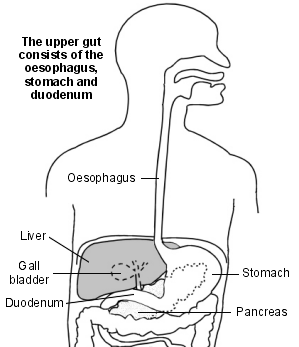
To understand stomach cancer, it helps to know about the normal structure and function of the stomach.
The stomach is in the upper tummy (abdomen). It is part of the gut (gastrointestinal tract). It lies in the upper part of the abdomen, just below the ribs. When we eat, food passes down the gullet (oesophagus) into the stomach.
The stomach is part of the digestive system and makes acid and some chemicals (enzymes) which help to digest food. The muscles in the wall of the stomach tighten (contract) to mix up the food with the acid and enzymes.
Food then passes into the first part of the small intestine (the duodenum). Here food mixes with more enzymes which come from the pancreas and lining of the gut. The enzymes break down (digest) the food.
Digested food is then absorbed into the body from the small intestine.
What causes stomach cancer?
A cancerous (malignant) tumour starts from one abnormal cell. The exact reason why a cell becomes cancerous is unclear. It is thought that something damages or alters certain genes in the cell. This makes the cell abnormal and multiply out of control. (Consulte o folheto separado chamado Câncer para mais detalhes.)
Many people develop stomach cancer for no apparent reason. However, certain risk factors increase the chance that stomach cancer may develop. These include:
Ageing. Stomach cancer is more common in older people. Most cases are in people over the age of 55.
Having a type of anaemia called pernicious anaemia, which causes a lack of vitamin B12, can very slightly increase your risk of stomach cancer.
Diet is probably a factor:
Countries such as Japan, where people eat a lot of salt, and pickled and smoked foods, have a high rate of stomach cancer.
Eating a lot of fruit and green vegetables can reduce the risk.
Smokers have a higher rate of stomach cancer compared with people who do not smoke.
Long-term infection of the stomach lining with a germ (bacterium) called Helicobacter pylori (H. pylori) seems to lead to a slightly higher risk of stomach cancer. (This infection is very common in the UK, and most people with H. pylori infection do not develop stomach cancer. See the separate leaflet called Helicobacter Pylori and Stomach Pain for more details.)
Gender. Stomach cancer is twice as common in men as it is in women.
If you have had part of your stomach removed in the past for any reason. For example, to treat a stomach ulcer or some other condition.
Family history. For some cases, stomach cancer may run in the family. However, most cases of stomach cancer do not run in families and are not inherited.
Blood group A. People who have this blood group have a slightly higher risk.
Stomach cancer symptoms
When a stomach (gastric) cancer first develops and is small, it usually causes no symptoms. Some do not cause symptoms until they are quite advanced. Initial symptoms may include:
Pain or discomfort in the upper tummy (abdomen), especially after eating.
Indigestão. (Nota: most people who have indigestion do not have stomach cancer.)
Feeling sick, and being off food. Some people have a sense of fullness after eating.
Weight loss and/or loss of appetite.
You may pass sangue out with your stools (faeces). This usually presents as black faeces (called melaena) or dark blood rather than bright red bleeding - which is more unusual with stomach cancer - and implies very serious bleeding in the stomach or bowel.
As the cancer grows in the stomach, symptoms may become worse and may include:
Os mesmos sintomas mencionados acima, mas mais graves.
Feeling generally unwell and more tired than usual.
Becoming anaemic if the tumour regularly bleeds. This can cause you to become more tired than usual.
The cancer growing very large and causing a blockage to food and drink.
Se o câncer se espalhar para outras partes do corpo, vários outros sintomas podem se desenvolver.
Nota: all the above symptoms can be due to other conditions, so tests are needed to confirm stomach cancer.
How is stomach cancer diagnosed and assessed?
Nota do editor
Dr. Krishna Vakharia, 16 de outubro de 2023
O Instituto Nacional de Excelência em Saúde e Cuidados (NICE) recomendou que uma pessoa deve receber um diagnóstico ou exclusão de câncer dentro de 28 dias após ser encaminhada urgentemente pelo seu médico de família por suspeita de câncer.
Initial assessment and gastroscopy (endoscopy)
If a doctor suspects that you may have stomach (gastric) cancer, he or she may examine you. The examination is often normal, especially if the cancer is at an early stage. Therefore, a gastroscopy is usually arranged. A gastroscope (endoscope) is a thin, flexible, telescope. It is passed through the mouth, into the gullet (oesophagus) and down towards the stomach and the first part of the small intestine (the duodenum). The endoscope contains fibre-optic channels which allow light to shine down so the doctor or nurse can see inside your stomach and duodenum. (Consulte o folheto separado chamado Gastroscopia (Endoscopia) para mais detalhes.)
Biopsy - to confirm the diagnosis
When a small sample of tissue is removed from a part of the body, the procedure is called a biopsy. The sample is then examined under the microscope to look for abnormal cells. When you have a gastroscopy, if anything abnormal is seen, the doctor or nurse can take a biopsy. This is done by passing a thin grabbing instrument down a side channel of the gastroscope. It can take two weeks for the biopsy results.
Avaliando a extensão e disseminação
If you are confirmed to have stomach cancer, further tests may be done to assess if it has spread. For example, a barium meal X-ray, uma tomografia computadorizada (TC), uma ressonância magnética (RM), uma ultrassonografia, laparoscopia or other tests such as blood tests. This assessment is called staging of the cancer.
The aim of staging is to find out:
How much the tumour in the stomach has grown, and whether it has grown partially or fully through the wall of the stomach.
Se o câncer se espalhou para os linfonodos locais.
Se o câncer se espalhou para outras áreas do corpo (metastatizado).
Ao descobrir o estágio do câncer, isso ajuda os médicos a aconselhar sobre as melhores opções de tratamento. Também fornece uma indicação razoável do prognóstico. (Consulte o folheto separado chamado Estágios do Câncer para mais detalhes.)
How is stomach cancer treated?
Treatment options which may be considered include surgery, chemotherapy (and sometimes radiotherapy). The treatment advised for each case depends on various factors, such as:
How large the cancer is.
Whether it has spread (the stage of the cancer).
Sua saúde geral.
Cirurgia
Surgery to remove the tumour may be curative if the cancer is in an early stage. The common operation is to cut out the affected part of the stomach. Sometimes the whole of the stomach is removed. Sometimes this is done laparoscopically (keyhole surgery). Even if the cancer is advanced and a cure is not possible, some surgical techniques may still have a place to ease symptoms. For example, a blockage may be eased by removing part of the stomach, or by using laser surgery or by a bypass operation.
Quimioterapia
Chemotherapy is a treatment of cancer by using anti-cancer medicines which kill cancer cells or stop them from multiplying. (See the separate leaflet called Chemotherapy for more details.) When chemotherapy is used in addition to surgery it is known as adjuvant chemotherapy. For example, following surgery you may be given a course of chemotherapy. This aims to kill any cancer cells which may have spread away from the primary tumour. Sometimes, chemotherapy is given before surgery, to shrink a large tumour so that surgery is easier - this is known as neoadjuvant chemotherapy.
Radioterapia
Radiotherapy is a treatment which uses high-energy beams of radiation which are focused on cancerous tissue. This kills cancer cells, or stops cancer cells from multiplying. (Consulte o folheto separado chamado Radioterapia para mais detalhes.) Radiotherapy is not commonly used to treat stomach cancer. It is sometimes used to reduce the size of a particular part of the cancer which is causing symptoms.
Chemoradiotherapy
In some cases, a combination of chemotherapy and radiotherapy - shortened to chemoradiotherapy - is offered, often as an addition to surgery. If you need to have this, it is usually done around the time of the operation.
Food and diet
It is important to make sure you get enough nutrition from your food and you will probably be asked to see a dietician to make sure you are on the best possible diet.
The aim of stomach cancer treatment
Você deve ter uma conversa completa com um especialista que conhece o seu caso. Ele poderá fornecer os prós e contras, a taxa de sucesso provável, possíveis efeitos colaterais e outros detalhes sobre as várias opções de tratamento para o seu tipo de câncer.
You should also discuss with your specialist about the aims of treatment in your situation.
To cure cancer
Treatment may aim to cure the cancer. Some stomach (gastric) cancers can be cured, particularly if they are treated in the early stages of the disease. (Doctors tend to use the word remission rather than the word cured. Remission means there is no evidence of cancer following treatment. If you are in remission, you may be cured. However, in some cases a cancer returns months or years later. This is why doctors are sometimes reluctant to use the word cured.)
To control cancer
O tratamento pode ter como objetivo controlar o câncer. Se uma cura não for realista, com o tratamento é frequentemente possível limitar o crescimento ou a disseminação do câncer para que ele progrida mais lentamente. Isso pode mantê-lo livre de sintomas por algum tempo.
To ease symptoms
Treatment may aim to ease symptoms. If a cure is not possible, treatments may be used to reduce the size of a cancer, which may ease symptoms such as pain. If a cancer is advanced, you may require treatments such as:
Food supplements.
Analgésicos.
Outras técnicas para ajudar a mantê-lo livre de dor ou outros sintomas.
Can stomach cancer be cured?
Without treatment, a stomach (gastric) cancer is likely to get larger, and spread to other parts of the body. If it is diagnosed and treated at an early stage (before growing through the wall of the stomach or spreading to lymph nodes or other areas of the body) then there is a good chance of a cure with surgery. Unfortunately, most cases in the UK are not diagnosed at an early stage. Stomach cancer often causes no, or few, symptoms in the early stages. When it does cause symptoms, they can be easily mistaken for other more common stomach conditions at first.
If the cancer is diagnosed when it has grown through the wall of the stomach, or spread to other parts of the body, a cure is less likely. However, treatment can often slow down the progression of the cancer, using chemotherapy medicines.
The treatment of cancer is a developing area of medicine. New treatments continue to be developed and the information on outlook (prognosis) above is very general. The specialist who knows your case can give more accurate information about your particular outlook, and how well your type and stage of cancer is likely to respond to treatment.
Stomach cancer prevention
We don't have a way to prevent stomach cancer completely.
However, there are some things which can help to reduce the risk of it happening, such as:
Stopping, or avoiding, smoking. Smoking increases the risk of stomach cancer, and many other types of cancer.
Eating a healthy diet with plenty of fresh fruit and vegetables, and whole-grain cereals.
Maintaining a healthy weight. Obesidade has been linked with a higher risk of stomach cancer (and other cancers), so losing weight if overweight or obese may reduce the risk.
Treating Helicobacter pylori infecção. Helicobacter pylori infection is linked with an increased risk of stomach cancer, although the risk is small. Treating Helicobacter pylori reduces this risk. Currently, in the UK, we only test for Helicobacter pylori in people with symptoms of stomach problems (see the Helicobacter pylori leaflet for more information). Testing people without symptoms, or 'screening', for Helicobacter pylori, is probably not an effective way to prevent stomach cancer in the UK, but some people have suggested it might be beneficial in countries where stomach cancer is more common.
Escolhas do paciente para Cânceres gastrointestinais

Câncer
Câncer primário de fígado
No câncer de fígado primário, o câncer começa no fígado. No câncer de fígado secundário, o câncer se espalha de outra parte do corpo para o fígado. O câncer de fígado primário é incomum no Reino Unido, mas é comum em outras partes do mundo. No Reino Unido, a maioria dos casos se desenvolve como uma complicação da cicatrização do fígado (cirrose). Em geral, o prognóstico é ruim. A cirurgia para remover o câncer é uma opção em um pequeno número de casos e, se possível, oferece a melhor chance de cura.
por Dr. Toni Hazell, FRCGP
Câncer
Câncer de intestino
O câncer de cólon e o câncer retal (também chamados de câncer colorretal) são comuns no Reino Unido. O cólon e o reto fazem parte do seu intestino. A maioria dos casos ocorre em pessoas com mais de 50 anos. Se o câncer intestinal for diagnosticado em um estágio inicial, há uma boa chance de cura. Em geral, quanto mais avançado o câncer (quanto mais ele cresceu e se espalhou), menor a chance de que o tratamento seja curativo. No entanto, o tratamento pode muitas vezes retardar o progresso do câncer.
por Dr. Doug McKechnie, MRCGP
Perguntas frequentes
What is the typical age range for people diagnosed with stomach cancer?
Stomach cancer tends to occur mainly in older people. Most individuals who develop stomach cancer are over the age of 55.
Is stomach cancer more common in men or women?
Stomach cancer is more common in men than in women, being twice as prevalent in men.
Why do doctors use the term 'remission' instead of 'cured' for stomach cancer?
Doctors tend to use the word 'remission' rather than 'cured' because while remission means there is no evidence of cancer following treatment, cancer can sometimes return months or years later. This is why medical professionals are sometimes reluctant to use the word 'cured'.
If I have symptoms like indigestion or discomfort in my upper tummy, should I be concerned about stomach cancer?
Initial symptoms of stomach cancer can include pain or discomfort in the upper tummy, indigestion, feeling sick, being off food, or a sense of fullness after eating. However, these symptoms can also be due to other conditions. It is important to note that most people who have indigestion do not have stomach cancer. Tests are needed to confirm a diagnosis.
Can diet play a role in the risk of developing stomach cancer?
Yes, diet is probably a factor. Eating a lot of salt, and pickled and smoked foods, as seen in countries like Japan, is associated with a high rate of stomach cancer. Conversely, eating a lot of fruit and green vegetables can help reduce the risk.
Is it possible to reduce my risk of getting stomach cancer?
While it's not possible to completely prevent stomach cancer, you can reduce your risk by stopping or avoiding smoking, eating a healthy diet rich in fresh fruit, vegetables, and whole-grain cereals, maintaining a healthy weight, and treating Helicobacter pylori infection if present.
Leitura adicional e referências
- Stomach cancer incidence statistics; Pesquisa sobre o Câncer no Reino Unido
- Gastric Cancer Treatment Patient Version; PDQ Cancer Information Summaries. National Cancer Institute (US); 2002-2017 Apr 27
- Oesophago-gastric cancer: assessment and management in adults; NICE Guidance (Jan 2018 - last updated July 2023).
- Lordick F, Carneiro F, Cascinu S, et al; Gastric cancer: ESMO Clinical Practice Guideline for diagnosis, treatment and follow-up. Ann Oncol. 2022 Oct;33(10):1005-1020. doi: 10.1016/j.annonc.2022.07.004. Epub 2022 Jul 29.
Sobre o autorVer biografia completa

Dr Doug McKechnie, MRCGP
Redator Médico
MA, MBBS, MSc, DRCOG, MRCP(UK), MRCGP(2021), FHEA
O Dr. Doug McKechnie é um médico do NHS que trabalha em Londres. Ele trabalha em tempo integral na prática clínica e também é o Vice-Líder do módulo de Prática Clínica e Profissional na Faculdade de Medicina da University College London.
Sobre o revisorVer biografia completa

Dr Hayley Willacy, FRCGP
Médico Generalista, Autor Médico
MBChB (1992), DRCOG, DFFP, MRCOG (Part 1) MRCGP (2007), DFSRH (2013), MSc - medical education (2020)
A Dra. Hayley Willacy era uma médica do NHS atuando no noroeste da Inglaterra, que se aposentou da prática clínica em 2022 após 30 anos.
Histórico do artigo
As informações nesta página são escritas e revisadas por clínicos qualificados.
Artigo também disponível em Inglês, Alemão, Espanhol, Francês, Italiano, Português, Hindi, Hebraico, Árabe, e Sueco.
Próxima revisão prevista para: 9 de fevereiro de 2028
10 Fev 2023 | Última versão

Pergunte, compartilhe, conecte-se.
Navegue por discussões, faça perguntas e compartilhe experiências em centenas de tópicos de saúde.

Sentindo-se mal?
Avalie seus sintomas online gratuitamente
Inscreva-se no boletim informativo do Patient
Sua dose semanal de conselhos de saúde claros e confiáveis - escritos para ajudá-lo a se sentir informado, confiante e no controle.
Ao se inscrever, você aceita nossos Política de Privacidade. Você pode cancelar a inscrição a qualquer momento. Nunca vendemos seus dados.
Mais sobre câncer
- Leucemia linfoblástica aguda
- Biópsia e aspiração de medula óssea
- Câncer de mama
- Fatos e fatores de risco do câncer de mama
- Causas do câncer
- Câncer cervical
- Rastreamento cervical
- Leucemias infantis
- Leucemia linfocítica crônica
- Cuidados de fim de vida
- Teste imunológico fecal
- Mesotelioma
- Mucosite
- Doença de Paget do osso
- Cuidados paliativos
- Câncer de pâncreas
- Câncer peniano
- Câncer testicular
- Tipos de câncer
- Câncer de vulva