Ácido glicólico: benefícios para a pele, efeitos colaterais e mais
Revisado por Dr Colin Tidy, MRCGPÚltima atualização por Lynn StephenÚltima atualização 16 Nov 2025
Atende aos diretrizes editoriais
- BaixarBaixar
- Compartilhar
- Language
- Discussão
- Versão em Áudio
- Adicionar às fontes preferidas no Google
De combate ao envelhecimento a manchas na pele e acne, o ácido glicólico tornou-se um elemento confiável em muitas rotinas de cuidados com a pele. Embora possa ser usado por qualquer pessoa que deseja manter a pele saudável e jovem, o ácido glicólico é um excelente tratamento para quem tem pele oleosa, irregular ou propensa a acne.
What is glycolic acid?
If you’re looking to upgrade from a skincare amateur to a skincare pro, glycolic acid should be on your need-to-know list.
Glycolic acid is an alpha hydroxy acid (AHA), a natural acid derived from plants - in this case, sugar cane. It's made up of tiny molecules that can easily penetrate your skin barrier, helping to make it a particularly effective anti-ageing ingredient that promotes good skin health.
Benefits: what does glycolic acid do?
So why exactly is glycolic acid good for your skin?
Dr Susan Mayou, consultant dermatologist at the Cadogan Clinic explains that glycolic acid works by dissolving the intercellular glue which holds your skin cells together.
"This results in the exfoliation of those cells - helping to remove dead skin and clear pores," she says.
Unlike mechanical exfoliants, such as face scrubs, glycolic acid is a gentler way to exfoliate your skin. This chemical exfoliant doesn’t require harsh scrubbing and instead removes skin cells while retaining moisture.
Mayou adds: "This helps brighten the skin's appearance, as light reflects better off a smooth skin surface, giving a more youthful and more radiant appearance."
Glycolic acid can benefit everyone's skin but people with the following skin issues may find it particularly helpful.
Is glycolic acid good for ageing skin?
According to Mayou, continued use can help boost collagen production - a natural protein that our bodies produce but which decreases with age. Collagen gives your skin strength and elasticity, and when you have less of it, fine lines and wrinkles appear.
Is glycolic acid good for an uneven skin tone?
As glycolic acid helps shed damaged or discoloured skin cells, it can help to even out patches of lighter or darker colours (hyperpigmentation) and improve skin texture. You may experience this due to danos causados pelo sol, or you may be more prone to skin disorders such as melasma - usually resulting in darker patches of skin on your face - due to environmental, genetic, or hormonal factors.
Is glycolic acid good for oily skin?
Excess oil and bacteria are also removed during exfoliation. At the same time, this ingredient helps to control how much natural oil (sebum) your skin glands produce while maintaining the moisture you need.
Is glycolic acid good for acne?
"The peeling properties of glycolic acid can also significantly improve the appearance of cicatrizes de acne," says Mayou. "It unclogs your pores, resulting in fewer acne breakouts and smoother, brighter skin."
In a 2021 study, the appearance of inflamed and red acne breakouts improved significantly between 28 and 56 days and resulted in a 29.4% visible improvement thereafter1.
How to use glycolic acid in your skincare routine
These far-reaching skincare benefits may have you ready to dive head-first into a tub of glycolic acid. However, it's important to get your skin used to the product. Mayou advises first-timers to start with a gentle cleanser that contains a glycolic acid concentration of no more than 2% if you wish to use it every day.
Glycolic acid products come in many forms
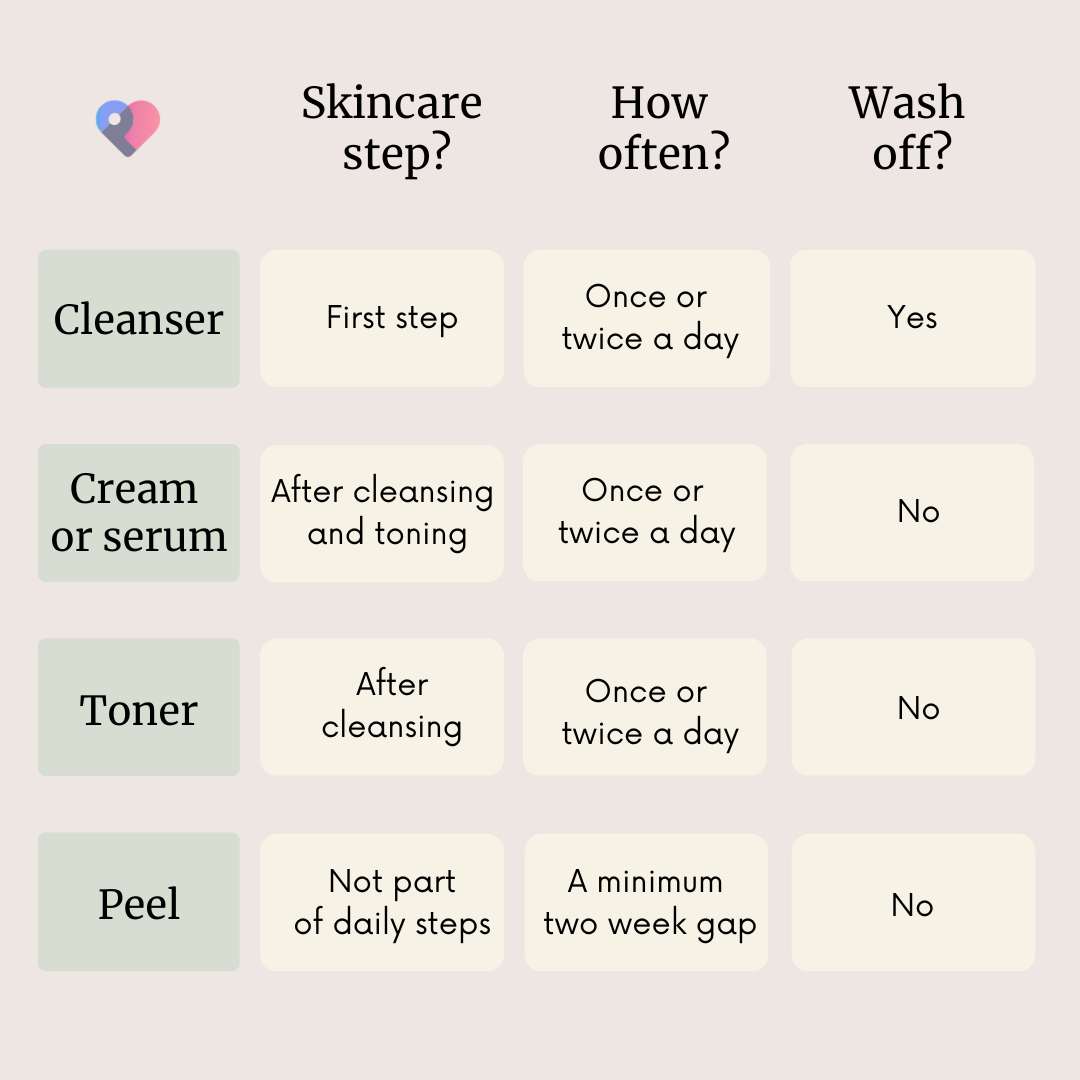
How often should you use glycolic acid?
Low to medium concentrations
Mayou cautions: "If using glycolic acid products containing 1-2% concentration, your skin should be able to tolerate this ingredient daily. However, it's important to build up gradually to avoid intolerance and sensitivity."
Beginners may wish to start by applying glycolic acid just three times per week for the first one or two weeks. If your skin doesn’t feel irritated, you can increase to four times per week for the same period. Continue gradually building up the frequency until it is used as part of your daily skincare routine.
Medium to high concentrations
Mayou says: "Products containing 10% and more should only be used once or twice a week as they are harsher and may cause a reaction. Remember, the higher the concentration the greater the peeling action."
If you have a generous skincare budget, professional glycolic acid peels contain the highest concentration and are a good option if you're looking to treat a specific skin issue. However, this means they carry a greater chance of irritation. You should aim to leave at least two weeks in between peels.
You can also purchase at-home glycolic acid peels. These tend to be more affordable and contain lower concentrations. Always read the label and don't exceed the recommended frequency of use.
Side effects and risks
Irritação
So why do you need to be mindful of how much glycolic acid you use? In short, using too much can upset your skin. For some skin types, even small amounts can lead to side effects.
These include skin:
Secura.
Vermelhidão.
Burning.
Coceira.
Inchaço.
If you notice any of these symptoms, stop using your product. If you wish to try again, give your skin a chance to recover fully, and then choose a smaller concentration and limit how often you apply it.
Danos causados pelo sol
While glycolic acid offers great anti-ageing benefits, it can leave you more vulnerable to harmful UV rays. One study found that glycolic acid led to DNA damage, sunburn, and eritema - a skin rash caused by inflamed blood vessels - in participants, whereas, another exfoliating and anti-inflammatory skin treatment did not.
When glycolic acid removes the top layer of dead skin cells, it exposes the cells underneath, leaving them more sensitive to sun damage. Therefore, Mayou advises wearing a sunscreen with sun protection factor (SPF) 50+ every day before going outside. You will need to do this for as long as you use glycolic acid and for one week afterwards.
Can you use glycolic acid when pregnant?
Glycolic acid is safe to use in gravidez e amamentação. However, Mayou advises you use a low concentration and remember to apply SPF.
Introducing glycolic acid to your skincare routine can provide a range of benefits. If you are seeking treatment from a dermatologist, then you should discuss your skincare products with them before use.
Leitura adicional
Campos, Pitassi, Gonçalves, Sant'Annhttps://pubmed.ncbi.nlm.nih.gov/33617668/am, and Correia "Clinical evaluation of the efficacy of a facial serum containing dioic acid, glycolic acid, salicylic acid, LHA, citric acid, and HEPES in treating post-inflammatory hyperchromia and controlling oily skin in patients with acne vulgaris".
Escolhas do paciente para Cuidado com a pele

Saúde da pele, unhas e cabelos
O que o sérum de vitamina C faz?
Um sérum de vitamina C de boa qualidade pode ser uma ótima adição à sua rotina de cuidados com a pele. Com tantas opções no mercado, veja como escolher um com os ingredientes mais eficazes e respaldados cientificamente.
por Victoria Raw
Saúde da pele, unhas e cabelos
Retinol: benefícios para a pele, efeitos colaterais e mais
Whatever your age, if you've ever thought about skincare, you've probably heard of retinol. But if you're unsure exactly what it is - or why you might need to know - you're not alone. To confuse matters, the term 'retinol' is used in similar contexts as 'retinoid' and 'retinoic acid' among others. Here's an overview of retinol, its benefits for the skin and things to think about before adding it to your skincare routine.
por Lynn Stephen
Sobre o autorVer biografia completa

Amberley Davis
Escritor sênior
BA (Hons), CPD
Amberley é uma escritora sênior na Patient e escreveu extensivamente sobre uma variedade de tópicos de saúde e bem-estar.
Sobre o revisorVer biografia completa

Dr Colin Tidy, MRCGP
Médico Generalista, Autor Médico
MBBS, MRCGP, MRCP (Paediatrics), DCH
Dr Colin Tidy é um médico do NHS, baseado em Oxfordshire.
Histórico do artigo
As informações nesta página são revisadas por pares por clínicos qualificados.
Artigo também disponível em Inglês, Alemão, Espanhol, Francês, Italiano, Português, Hindi, Hebraico, Árabe, e Sueco.
Próxima revisão agendada: 17 de nov de 2028
16 Nov 2025 | Última versão
2 Jul 2022 | Publicado originalmente
Escrito por:
Amberley Davis

Pergunte, compartilhe, conecte-se.
Navegue por discussões, faça perguntas e compartilhe experiências em centenas de tópicos de saúde.

Sentindo-se mal?
Avalie seus sintomas online gratuitamente
Inscreva-se no boletim informativo do Patient
Sua dose semanal de conselhos de saúde claros e confiáveis - escritos para ajudá-lo a se sentir informado, confiante e no controle.
Ao se inscrever, você aceita nossos Política de Privacidade. Você pode cancelar a inscrição a qualquer momento. Nunca vendemos seus dados.
Mais sobre saúde da pele, unhas e cabelos
- Biotina: vitaminas para crescimento capilar realmente funcionam?
- Causas comuns de coceira no couro cabeludo
- Gatilhos comuns da rosácea e como evitá-los
- Planos de manejo do eczema: eles ajudam a controlar seu eczema?
- Eczema, psoríase e micose: qual é a diferença?
- Veja como proteger uma cabeça careca do sol
- Como encontrar o tênis de corrida perfeito para seus pés
- Como se livrar das cicatrizes de acne: seu guia definitivo
- Como manter seus filhos protegidos do sol neste verão
- Como cuidar da sua pele durante a quimioterapia
- Como prevenir e aliviar cistos na pele: um guia simples
- Como diferenciar acne de outros problemas de pele
- Como tratar bolhas de queimadura solar
- Como o seu ambiente afeta as condições da pele
- Vídeos sobre condições de pele
- O que significa esfoliar e por que você deveria?
- O que fazer se a psoríase está te deixando para baixo
- O que fazer se você for picado por um ouriço-do-mar
- O que fazer quando seu filho tem uma erupção cutânea
- Por que temos unhas?