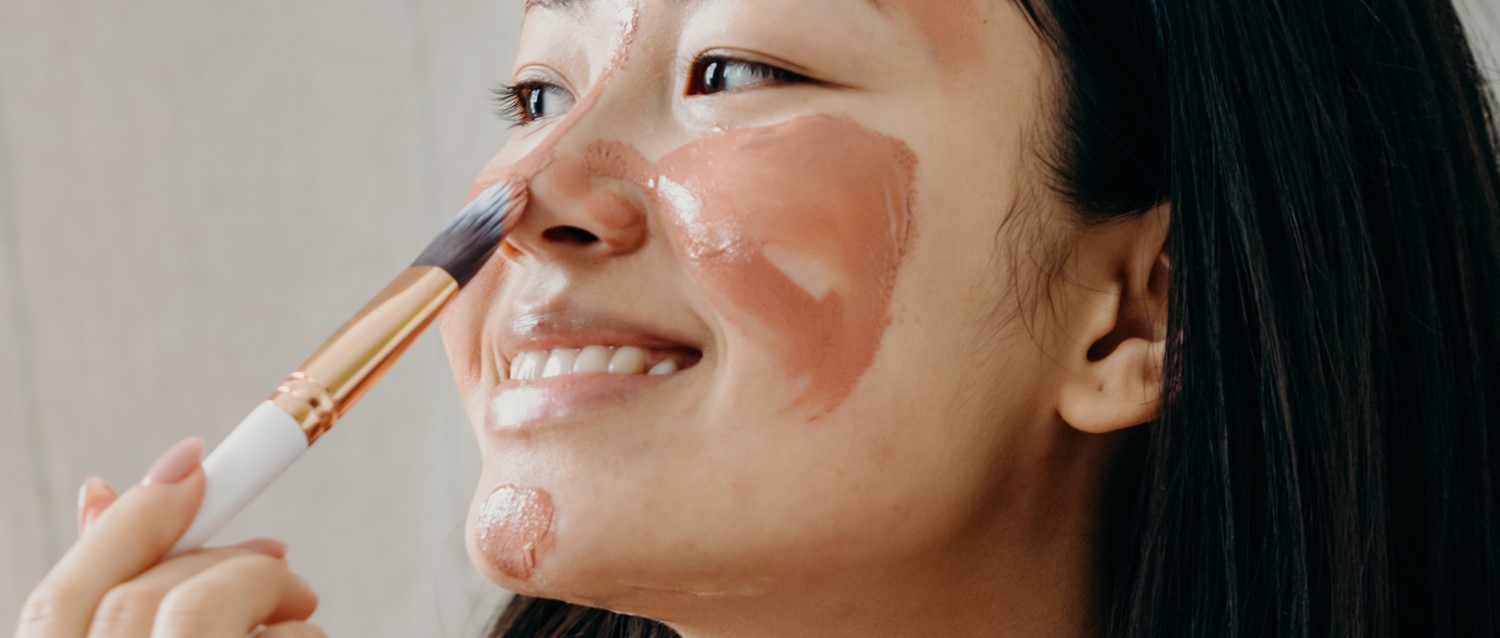
What does it mean to exfoliate, and why should you?
Peer reviewed by Dr Krishna Vakharia, MRCGPAuthored by Amberley DavisOriginally published 9 Aug 2022
Meets Patient’s editorial guidelines
- DownloadDownload
- Share
- Language
- Discussion
- Audio Version
- Add to preferred sources on Google
These days, a skincare routine can contain a lot of steps, but skin gurus still consider 'cleanse, exfoliate, moisturise' to be the most fundamental mantra for those seeking a healthy complexion. What exactly is exfoliation, and should everyone be doing it?
What does exfoliating do?
"Exfoliation means removing dead skin cells from the surface of your skin, using either a chemical, granular substance, or exfoliation tool," explains plastic surgeon Dr Osman Bashir Tahir1. "Your skin does shed dead skin cells, but it doesn't always get rid of them all."
No matter your skin type, shedding these cells can improve the appearance and health of your skin: "Exfoliating will help your skin to look brighter, but it also helps absorption of topical skin care products (ones you apply directly on to your skin) which will make them more effective."
Dull-looking skin is something that we're all more susceptible to as we age. Exfoliating can help skin look younger for longer.
Is exfoliating good for acne?
"Yes, it can be," says Dr Tahir. "Exfoliating can help prevent breakouts by unclogging pores. However, it can also exacerbate acne if performed too vigorously or with incorrect methods.
"The key with acne-prone skin is to make sure you choose a product that's gentle but also effective."
Physical versus chemical exfoliation
Not all products that exfoliate are created equal, and it's helpful to know which are more gentle, particularly if you have acne-prone skin. This is where physical versus chemical exfoliation comes in.
A physical exfoliant - also known as mechanically exfoliating products. Many face and body scrubs contain exfoliating particles that give them a grainy texture. These 'grains' physically slough off dead skin cells on your skin's outermost surface (your epidermis). Likewise, brushes and sponges designed with rough bristles work in a similar way - manually lifting off dead skin cells as you rub.
A chemical exfoliant - relies on chemicals to break the bonds between dead skin cells in order to loosen and remove them. Chemical ingredients can be included in facial cleansers, toners, gels, peels, and masks.
If you have acne or sensitive skin, Dr Tahir recommends using a chemical exfoliant: "Physical exfoliants may do more harm than good as they may irritate the skin."
Topical exfoliants
Massaging an exfoliant in a circular motion directly on to your skin is by far the most common and budget-friendly option. If cost is a factor, many affordable high street brands offer physical exfoliators in the form of scrubs, brushes, and sponges.
In contrast, topical chemical products are smooth in texture and come in a range of price tags. But you needn't pay an arm and a leg for a good product - the key is to check the label for the star exfoliating ingredients - alpha hydroxy acids (AHAs) and beta hydroxy acids (BHAs). These aren't as scary as they sound!
AHAs - is glycolic acid an exfoliant?
AHAs are water-soluble acids derived from plants and work well as natural exfoliants. Glycolic acid is the most popular AHA in skincare, gently dissolving bonds between cells while allowing your skin to stay moisturised. It also boosts collagen production, creating a smoother surface and reducing signs of ageing.
BHAs - is salicylic acid an exfoliant?
Also extracted from plants, BHAs are oil-soluble acids that exfoliate the skin in a similar way to AHAs. They also unclog dirt and sebum (oil) from pores, making them great for tackling oily skin and acne. Salicylic acid is a BHA that's used in many skincare products. Its antibacterial and anti-inflammatory properties make it an ideal choice for acne-prone skin2.
Facial peels
Exfoliating your skin needn't break the bank, but facial peels may be a good choice if you have certain skin problems and if you have the money to spend.
Chemical peels
Chemical peeling is usually carried out by a skincare professional (dermatologist) who applies a chemical solution to remove the top layer of skin cells. This penetrates deeper than topical products, making it a super exfoliant that can address a number of skin imperfections.
"Face peels can be used to offer very light rejuvenation right through to effectively treating acne scarring and pigmentation (patches of darker skin)," adds Dr Tahir. It all depends on the level of depth you choose:
Which depth is right for you?
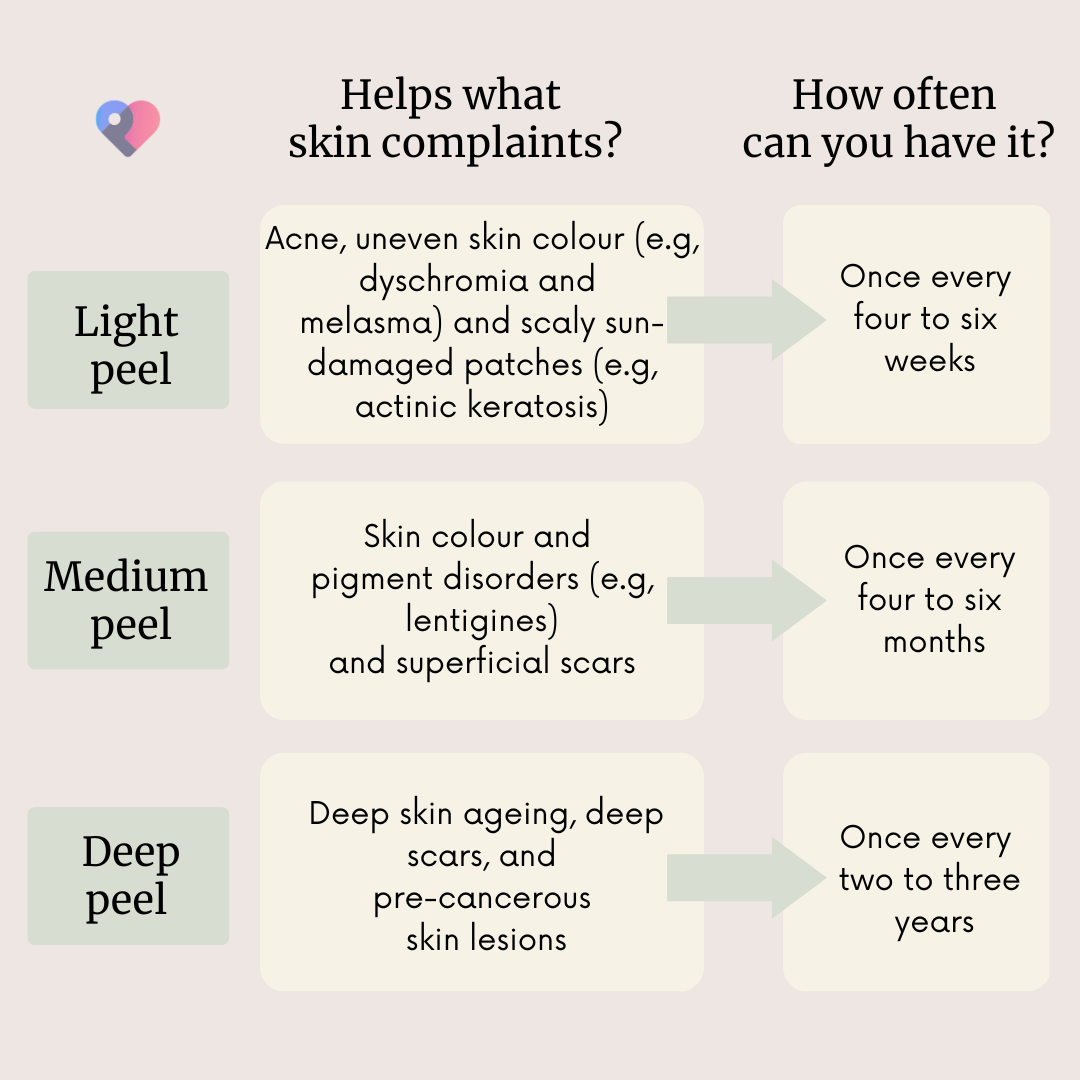
"Depending on the type and strength of each chemical peel, you can expect to experience redness and swelling which can last anywhere from just a couple of hours to two weeks," says Dr Tahir.
As chemical peels can irritate your skin, it's important that your dermatologist finds the right peel for you. There are many factors they should consider, including your medical history and skin tone. For example, if you have a dark skin tone you are more likely to experience inflammation and should avoid deep chemical peels3.
Laser peels
"There is some degree of overlap between laser and chemical peels but there are also major differences," explains Dr Tahir. For example, recovery following laser peels is often quicker because there is no risk of adverse chemical reactions.
"Technological advancements with laser peel treatments like the Hollywood Spectra from Lutronic4 can now leave patients with no downtime and no pain."
This said, the decision to have a laser or chemical peel will ultimately come down to the skin issues you want to address. Chemical peels may be more appropriate for uneven skin colour and other surface-level problems. According to Dr Tahir, laser peels are better at "improving overall skin texture" as well as treating deeper skin damage, such as “wrinkles, scars, redness, melasma, spider veins, acne, and acne scarring."
Facial peel side effects
A word of caution - because they expose new skin, all facial peels leave you more vulnerable to sun damage from UV (ultraviolet) rays. Be sure to apply a high SPF (sun protection factor) sunscreen when out and about.
Peels that are tailored to your skin are generally considered safe, but complications5 can include:
Infection.
Hyperpigmentation (patches of darker skin).
Hypopigmentation (patches of lighter skin).
Scarring.
How to exfoliate - Dr Tahir's tips
How often should I exfoliate?
If you exfoliate with topical products like scrubs, Dr Tahir does not recommend exfoliating more than once or twice a week. Facial peels should be undertaken even less frequently - see table above.
How to exfoliate your face
"For your face, I do recommend chemical and Hollywood Spectra peels as the best option, but these are of course not always affordable," says Dr Tahir. "If you're using a scrub at home, the key is not to rub it in too harshly. You want to massage the skin gently in small circular motions, otherwise it will hurt. Scrubs have the potential to create small tears in the skin."
How to exfoliate legs with ingrown hairs
"Keeping skin exfoliated can help prevent ingrown hairs by ensuring hair doesn't grow sideways into the skin. For legs, I would recommend using an exfoliating glove to wash away dead skin and clear out pores before you shave."
How to exfoliate your scalp
"If you want to exfoliate your scalp, I recommend doing it on wet, shampooed hair. However, you shouldn't exfoliate your scalp more than once or twice a week as it removes oil, and it may lead to an overproduction of oil."
Further reading
Patient picks for Skincare
Skin, nail and hair health
Retinol: skincare benefits, side effects and more
Whatever your age, if you've ever thought about skincare, you've probably heard of retinol. But if you're unsure exactly what it is - or why you might need to know - you're not alone. To confuse matters, the term 'retinol' is used in similar contexts as 'retinoid' and 'retinoic acid' among others. Here's an overview of retinol, its benefits for the skin and things to think about before adding it to your skincare routine.
by Lynn Stephen
Skin, nail and hair health
Is aloe vera good for your skin?
Aloe vera has long been a popular wellness choice for its calming and moisturising effects. Whether harvested directly from the plant itself or bought as a ready-made product, it's a top contender for promoting healthy skin. But what exactly makes this fleshy green succulent so good for our complexion?
by Victoria Raw
About the authorView full bio

Amberley Davis
Senior writer
BA (Hons), CPD
Amberley is a senior writer with Patient and has written extensively on a range of health and wellbeing topics.
About the reviewerView full bio

Dr Krishna Vakharia, MRCGP
Chief Medical Officer for Health, Optum UK
MBChB, MRCGP(2013), BMedSci (hons), DFSRH, DRCOG, PGDipDerm (Distn)
Dr Krishna Vakharia is an NHS GP. She is also a regular examiner for the postgraduate Diploma in Practical Dermatology at Cardiff University as well as being the Chief Medical Officer for health at Optum UK.
Article history
The information on this page is peer reviewed by qualified clinicians.
Article also available in English, German, Spanish, French, Italian, Portuguese, Hindi, Hebrew, Arabic, and Swedish.
9 Aug 2022 | Originally published
Authored by:
Amberley DavisPeer reviewed by
Dr Krishna Vakharia, MRCGP

Ask, share, connect.
Browse discussions, ask questions, and share experiences across hundreds of health topics.

Feeling unwell?
Assess your symptoms online for free
Sign up to the Patient newsletter
Your weekly dose of clear, trustworthy health advice - written to help you feel informed, confident and in control.
By subscribing you accept our Privacy Policy. You can unsubscribe at any time. We never sell your data.
More in skin, nail and hair health
- Are skincare products putting you at risk of sunburn?
- Common rosacea triggers and how to avoid them
- Common skin complaints: understanding tinea versicolor
- NewDo LED face masks really work?
- Does Bio-Oil work on stretch marks?
- How often should you wash your hair?
- How to get rid of acne scars: your ultimate guide
- How to look after your hair during chemotherapy
- How to look after your skin during chemotherapy
- How to spot bedbugs and get rid of them
- How to treat sunburn blisters
- Smoking effects on skin: from ageing to illness
- The best ways to prevent and treat insect bites
- Tick bites: how to recognise and treat
- Video: How do head lice spread?
- What are the dangers of drinking in hot weather?
- What does aftersun do and do you really need it?
- What does vitamin C serum do?
- When to worry about a mole