Sprays nasais de esteroides
Revisado por Dr Rosalyn Adleman, MRCGPÚltima atualização por Dr Rachel Hudson, MRCGPÚltima atualização 24 Abr 2023
Atende aos diretrizes editoriais
- BaixarBaixar
- Compartilhar
- Language
- Discussão
- Versão em Áudio
Nesta série:EsteroidesInjeções de esteroidesEsteroides oraisEsteroides tópicosFingertip units for topical steroids
Steroid nasal sprays are medicines that are commonly used to treat symptoms of stuffiness or congestion in the nose. They are used most often for allergies of the nose, such as rinite alérgica. They are also used for other causes of persistent inflammation of the nose (rinite). Steroid sprays reduce swelling and mucus in the nose, and usually work well.
People with hay fever only need to use them for a few months of the year. Others may need to use them long-term. You can buy some steroid nasal sprays from your supermarket or local pharmacy, without a prescription.

Inseguro sobre misturar medicamentos?
Verifique possíveis interações entre medicamentos, suplementos e alimentos antes de tomá-los juntos.
Neste artigo:
Vídeos selecionados para Respiratory medicines
Continue lendo abaixo
What are steroid nasal sprays?
A steroid nasal spray is a small bottle of a solution which you spray into your nose. It contains a medicine called a corticosteroid or steroid. Steroid sprays reduce swelling (inflammation) and mucus in the nose, and usually work well.
Because the medicine is mainly absorbed in your nose, it has very little effect anywhere else in your body. Therefore they are considered to be very safe to use.
A steroid nasal spray is commonly used to treat symptoms of the nose such as:
Blocked nose.
Runny nose.
Congestion of the nose.
Itchiness of the nose.
These symptoms may be caused by conditions such as:
Allergies of the nose, como febre do feno.
A steroid nasal spray may also be used to treat other conditions such as:
There are a number of different steroid nasal sprays - these include beclometasona, budesonida, fluticasona, mometasone e triamcinolone. They come in different brands. Ciclesonide and flunisolide are other steroid nasal sprays (they are not available in the UK).
How to use a steroid nasal spray
Voltar ao conteúdoSteroid nasal spray administration
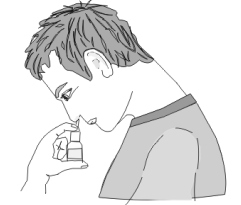
Blow your nose.
Shake the bottle.
Tilt your head forwards.
Hold the spray bottle upright.
Insert the tip of the spray bottle just inside one nostril. Close the other nostril with your other hand, and apply one or two sprays as prescribed.
Breathe in as you spray (but do not sniff hard as the spray then travels past the nose to the throat).
Do not angle the canister towards the middle or side of the nose, but straight up. With your head tilted forward, the spray should go to the back of your nose.
Repeat in the other nostril.
What if my nose is very blocked or runny?
Sometimes a very blocked or runny nose will prevent the steroid spray from getting through to work. A decongestant nasal spray which you can buy at pharmacies may then be useful. These contain decongestant medicines such as xilometazolina.
A decongestant spray has an immediate effect to clear a blocked nose. You can then use the steroid spray once the nose is clear.
Nota: decongestant sprays are not usually advised for more than a few days. If you use one for more than 5-7 days, a rebound, more severe congestion of the nose may develop. In contrast, steroid sprays work well to clear symptoms, and can be used for long periods.
What if my symptoms come and go?
If your symptoms are very mild, if they don't happen all that often or if they only start after a particular trigger - for example, if you have a cat allergy - a steroid nasal spray may not be the best treatment for you. A nasal spray containing a type of medicine called an antihistamine (such as azelastine or olopatadine) may be better. Only azelastine is available in the UK.
Continue lendo abaixo
How long does it take for steroid nasal sprays to work?
Voltar ao conteúdoIt takes several days for a steroid spray to build up to its full effect. Therefore, you will not have an immediate relief of symptoms when you first start it. In some people it can take up to two weeks or longer to get the maximum benefit.
If you use the spray for hay fever, it is best to start using it at least a couple of weeks before the hay fever season starts.
Qual é a duração usual do tratamento?
Voltar ao conteúdoSome people only need a nasal spray for the hay fever season (a few months). However, if you have a persistent rhinitis, you may have to take treatment long-term to keep symptoms away.
Once symptoms are gone, you are still likely to need to use a steroid nasal spray regularly, to keep symptoms away. Your doctor may advise that you reduce the dose to a lower maintenance dose once symptoms have gone. The aim is to find the lowest dose that controls symptoms.
An occasional forgotten dose should not be a problem, but symptoms usually return after a few days if you stop taking the spray.
Continue lendo abaixo
Side-effects of steroid nasal sprays
Voltar ao conteúdoSteroid nasal sprays rarely cause side-effects. This is because they are applied directly to the nose and very little of this medicine is absorbed into the body. Therefore, they are much less likely to cause side-effects in other parts of the body. Occasionally, they cause dryness, crusting, and bleeding of the nose.
If this occurs, stop it for a few days and then restart. There have been reports of nasal steroids possibly having an effect on behaviour, particularly in children. This is thought to be rare. However, a few people have reported hyperactivity, problems sleeping, ansiedade, depressão, and aggression.
Are nasal steroid sprays safe?
Long-term use of a steroid nasal spray is thought to be safe.
For a full list of possible side-effects please read the leaflet that came with your medicine.
Where to buy steroid nasal sprays
Voltar ao conteúdoYou can buy a number of steroid nasal sprays from the supermarket and your local pharmacy. These include beclometasone, fluticasone and triamcinolone.
Who cannot use a steroid nasal spray?
Voltar ao conteúdoMost people can use a steroid nasal spray, unless they have ever had an allergic reaction to this medicine. However, you should talk with your doctor or pharmacist before using a steroid nasal spray if you:
Have recently had surgery on your nose.
Have infection in your nose.
Are pregnant, trying for a baby or breastfeeding.
You may still be able to have this medicine - your doctor will advise you.
Escolhas do paciente para Respiratory medicines

Tratamento e medicação
Medicamentos para tosse
Cough medicines are commonly bought to treat various types of coughs that occur when you have an upper respiratory tract infection (URTI). Cough medicines that you can buy are often divided into those for a dry or tickly cough, and those for a chesty cough. It is thought that cough medicines do not really work. However, some people feel that they work for them and they are thought to be reasonably safe to use, though it is important to check with a pharmacist if you are taking other medications. Children who are aged 12 years and younger should only be given cough syrups which state they are suitable for the child's age.
por Dr. Doug McKechnie, MRCGP
Tratamento e medicação
Broncodilatadores orais
Oral bronchodilators are medicines that are sometimes used to treat breathing problems in people with asthma and other lung-related problems such as chronic obstructive pulmonary disease (COPD). They are not used very often, because inhaled bronchodilators usually work better. There are two types of oral bronchodilators available to prescribe in the UK. These are beta2 agonists (salbutamol, bambuterol and terbutaline) and methylxanthines (theophylline and aminophylline). Oral bronchodilators help to relieve symptoms such as coughing, wheezing and shortness of breath, by opening up the air passages in the lungs so that air can flow into the lungs more freely.
por Dr. Doug McKechnie, MRCGP
Leitura adicional e referências
- Inhaled and intranasal corticosteroids: risk of psychological and behavioural side effects; Medicines and Healthcare products Regulatory Agency (MHRA), September 2010
- Formulário Nacional Britânico (BNF); Serviços de Evidências NICE (acesso apenas no Reino Unido)
- Diretriz BSACI para o diagnóstico e manejo da rinite alérgica e não alérgica; Sociedade Britânica de Alergia e Imunologia Clínica (Julho de 2017)
- Corticosteroides - tópicos (pele), nariz e olhos; NICE CKS, junho de 2022 (acesso apenas no Reino Unido)
- Rinite alérgica; NICE CKS, janeiro de 2024 (acesso apenas no Reino Unido)
Continue lendo abaixo
Histórico do artigo
As informações nesta página são escritas e revisadas por clínicos qualificados.
Próxima revisão prevista: 22 Abr 2028
24 Abr 2023 | Última versão

Pergunte, compartilhe, conecte-se.
Navegue por discussões, faça perguntas e compartilhe experiências em centenas de tópicos de saúde.

Sentindo-se mal?
Avalie seus sintomas online gratuitamente
Inscreva-se no boletim informativo do Patient
Sua dose semanal de conselhos de saúde claros e confiáveis - escritos para ajudá-lo a se sentir informado, confiante e no controle.
Ao se inscrever, você aceita nossos Política de Privacidade. Você pode cancelar a inscrição a qualquer momento. Nunca vendemos seus dados.