Hypoparathyroidism
Peer reviewed by Dr Rosalyn Adleman, MRCGPLast updated by Dr Philippa Vincent, MRCGPLast updated 23 Nov 2023
Meets Patient’s editorial guidelines
- DownloadDownload
- Share
- Language
- Discussion
- Audio Version
- Add to preferred sources on Google
In this series:Thyroid and parathyroid problemsUnderactive thyroid glandThyroid cancerHyperparathyroidism
Hypoparathyroidism occurs when too little parathyroid hormone is released by the parathyroid glands. It can also occur if the parathyroid hormone that is released does not work properly.
Hypoparathyroidism leads to low levels of calcium in the blood, which can cause a number of different symptoms. The most common are muscle cramps, pain and twitching. Hypoparathyroidism can be successfully treated with calcium and vitamin D supplements but regular blood test monitoring is needed.
At a glance
Hypoparathyroidism is a rare condition where parathyroid glands don't produce enough parathyroid hormone.
This leads to low calcium and high phosphate levels in the blood.
Symptoms often relate to low calcium, such as muscle spasms or tingling.
It can be caused by neck surgery, certain medical conditions, or be inherited.
Diagnosis relies on blood tests showing low calcium and parathyroid hormone, and high phosphate.
Treatment involves lifelong calcium and vitamin D supplements.
Unmanaged low calcium can lead to complications such as kidney stones or heart rhythm issues.
What is hypoparathyroidism?
What are the parathyroid glands?
Parathyroid glands
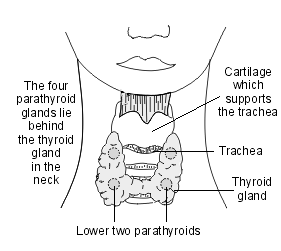
The four parathyroid glands are small, pea-sized glands, located in the neck just behind the butterfly-shaped thyroid gland. Two parathyroid glands lie behind each wing of the thyroid gland.
The parathyroid glands release a chemical (hormone) called parathyroid hormone, often known as PTH. This hormone helps to control calcium and phosphate levels in the body.
Hypoparathyroidism occurs when either:
The parathyroid glands do not produce enough parathyroid hormone, or
The parathyroid hormone that is released does not work properly.
This low level of active parathyroid hormone causes the calcium level in the blood to fall and the phosphate level to rise.
Hypoparathyroidism symptoms
People experience the different symptoms of hypoparathyroidism in different ways. The symptoms are largely due to the effects of low levels of calcium in the blood.
Possible symptoms that may occur include:
Muscle spasms and pains.
Tummy (abdominal) pains.
Tingling, vibrating, burning or numbness of the fingers, toes or face.
Twitching of the muscles of the face.
Carpopedal spasm (contraction, or tightening, of the muscles of the hands and feet).
Fits (seizures).
Fainting.
Confusion.
Memory problems.
Tiredness.
Eyesight problems.
Headaches.
Brittle nails.
Dry skin and hair.
Painful menstrual periods.
Mild symptoms usually develop slowly and may not need any treatment. Severe symptoms may come on rapidly and need urgent treatment. This may be with calcium given directly into the vein via a drip (intravenously).
Most of the symptoms above can be caused by a large number of other conditions or have no underlying cause at all but blood tests can assess whether they are due to hypoparathyroidism.
Is hypoparathyroidism the same as hypothyroidism?
No. Hypoparathyroidism is caused by the parathyroid glands being underactive. Hypothyroidism is caused by the thyroid glands being underactive. Sometimes the parathyroid glands can be damaged during surgery to the thyroid glands - and this can cause hypoparathyroidism as well as hypothyroidism - but they are usually separate conditions.
Why does the body need calcium and phosphorus?
Calcium and phosphate combine to make calcium phosphate in the body. Calcium phosphate gives hardness and strength to bones and teeth. Calcium and phosphate are also needed to help blood to clot after an injury. They are also needed for muscles and nerves to work properly.
How common is hypoparathyroidism?
Hypoparathyroidism is rare. Men and women are equally likely to develop hypoparathyroidism The age that someone is likely to develop hypoparathyroidism depends on the underlying cause.
Hypoparathyroidism causes
Hypoparathyroidism can be:
Something that develops in childhood or adult life (acquired).
Short-lived (transient).
Something that someone is born with (congenital).
Passed on through the genes from family members (inherited).
Acquired hypoparathyroidism
The commonest cause of acquired hypoparathyroidism is after surgery to the neck. For example, during surgery on the thyroid gland, the parathyroid glands in the neck may be accidentally damaged or need to be removed. Sometimes the parathyroid glands are removed because of potential cancer, or as a treatment for overactive parathyroid glands.
Radiotherapy treatment for a cancer in the neck or the chest can damage the parathyroid glands and make them underactive. Certain medicines used in the treatment of cancers can do the same.
The parathyroid glands can also become replaced and destroyed by cancer cells, spreading from cancer elsewhere in the body. This can cause hypoparathyroidism.
Transient hypoparathyroidism
This occurs most commonly in babies who are born too early (prematurely). It can also occur in otherwise healthy babies born at the normal time. Parathyroid hormone is in the glands but it isn't released after the baby is born as it would normally be. It is eventually released and all returns to normal.
Transient hypoparathyroidism is more likely to affect a baby if the mother has diabetes, or the mother has overactive parathyroid glands.
Congenital hypoparathyroidism
DiGeorge's syndrome is a congenital condition that some babies are born with. The parathyroid glands do not develop properly while the baby is growing in the womb. People with this syndrome have hypoparathyroidism. In addition, their immune system does not work properly and they may have heart problems and problems with the development of the roof of their mouth (a cleft palate).
Congenital hypoparathyroidism can also be associated with other syndromes. One example is hypoparathyroidism that occurs with deafness and problems with kidney development.
Autoimmune hypoparathyroidism
Hypoparathyroidism may be caused by an inherited problem caused by certain proteins (antibodies) attacking the parathyroid gland. This is called an autoimmune illness.
Normally, our body makes antibodies to fight infections - for example, when we catch a cold or have a sore throat. These antibodies help to kill the cells of the bacteria, viruses or other germs causing the infection. In autoimmune diseases the body makes similar antibodies (auto-antibodies) that attack its normal cells because they perceive them as a threat.
In autoimmune hypoparathyroidism, these auto-antibodies attack the cells of the parathyroid glands. Autoimmune hypoparathyroidism can exist alone, or as part of a syndrome including diabetes and thyroid disease.
Inherited hypoparathyroidism can also be caused by inherited problems with the gene that is needed for the body to make parathyroid hormone. This means that the gene does not function properly which leads to a lack of parathyroid hormone.
Pseudohypoparathyroidism
This is a rare disorder that is inherited. Parathyroid hormone is present in the body but the body is unable to respond to it normally. There is a low calcium level in the blood. Affected people tend to be short and have shortened bones in their feet and hands. They may also have diabetes and an underactive thyroid gland.
Pseudopseudohypoparathyroidism
This occurs when someone has the features of pseudohypoparathyroidism, as described above, but they have normal calcium and phosphate levels in the blood.
How is hypoparathyroidism diagnosed?
Physical examination
There is no specific examination to look for hypoparathyroidism. Examination can look for the effects of a very low calcium. However blood tests are much more useful for diagnosing the condition.
Blood tests
Blood tests can confirm hypoparathyroidism. In hypoparathyroidism, the blood calcium level is low, the blood phosphate level is high and the parathyroid hormone level is low.
If a doctor suspects that the hypoparathyroidism is caused by an autoimmune process, they may suggest some other blood tests, for example, tests to assess thyroid function or diabetes.
Other possible investigations
Referral to an endocrinologist is usually offered. They may suggest some other tests to look for the cause of the hypoparathyroidism. For example:
Hand X-rays - to look for the shortened bones seen in pseudohypoparathyroidism.
An ultrasound scan of the heart (echocardiogram) - to look for heart abnormalities associated with DiGeorge's syndrome.
Genetic studies - special blood tests can be performed if an endocrinologist suspects an inherited cause for the hypoparathyroidism.
Hypoparathyroidism treatment
Calcium and vitamin D supplements
Hypoparathyroidism is treated with calcium and vitamin D supplements taken by mouth. Vitamin D supplements are needed because vitamin D also helps to regulate calcium levels. It stimulates the release of calcium from bone and helps calcium to be absorbed from the gut and the kidneys. Calcium carbonate is the commonest form of calcium supplement that is used.
Regular blood tests are needed to ensure that the calcium and vitamin D dosage is correct. Closer monitoring is needed during pregnancy.
Treatment is usually lifelong. These are not dietary supplements that can be bought over the counter, but stronger medication requiring careful monitoring.
Intravenous calcium
Severe symptoms may result in calcium being needed to be given directly into the vein via a drip (intravenously).
Diet
A diet rich in calcium and vitamin D is recommended.
Other treatments
Man-made (synthetic) parathyroid hormone has been produced. It is an injectable treatment and, in the UK, is only used for some patients with osteoporosis and not for hypoparathyroidism. In animal studies, some animals developed bone tumours so more studies are required before it is used more widely.
What are the aims of treatment?
The aims of treatment are to ensure that there is an adequate level of calcium in the bloodstream. This should mean no symptoms associated with low calcium levels.
It is a good idea to have a medical emergency identification bracelet or equivalent to identify yourself as having hypoparathyroidism. This is so that if you collapse, are confused or are found unconscious, doctors will know that you need prompt treatment with calcium.
Hypoparathyroidism prognosis
If hypoparathyroidism is adequately treated with calcium and vitamin D, the outlook (prognosis) is good. However, daily medication for life is required. Regular blood tests are needed to ensure blood levels are correct and adjust the medication dose if needed.
Hypoparathyroidism complications
Any complications that may arise are largely due to the low levels of calcium in the body. Complications can include:
Disturbance of the normal electrical activity of the heart. This can lead to irregularities in the heart rhythm which can in turn lead to collapse.
Stunted growth, teeth problems and problems with mental development can occur if low calcium levels are not treated in childhood.
Can hypoparathyroidism be prevented?
During thyroid or neck surgery, the surgeon must identify the parathyroid glands and avoid damaging them if possible. Anybody who is undergoing thyroid or neck surgery, radiotherapy to the neck or the chest, or chemotherapy (a treatment for cancer) should be monitored for symptoms and signs of low calcium levels.
Patient picks for Parathyroid conditions

Hormones
Thyroid and parathyroid problems
This leaflet gives a brief overview of the thyroid and parathyroid glands and the common medical problems which can occur with these.
by Dr Caroline Wiggins, MRCGP
Hormones
Hyperparathyroidism
Hyperparathyroidism occurs when too much parathyroid hormone is released by the parathyroid glands in the neck. It generally leads to high levels of calcium in the blood. This can cause various symptoms, commonly tiredness, feeling sick (nausea), being sick (vomiting), kidney stones and bone pains. It can usually be treated with surgery.
by Dr Toni Hazell, FRCGP
Frequently asked questions
What is the difference between acquired and inherited hypoparathyroidism?
Acquired hypoparathyroidism develops either in childhood or adult life, often after neck surgery, radiotherapy, or due to certain cancer treatments. Inherited hypoparathyroidism is passed on through family genes, where there's an issue with the gene responsible for making parathyroid hormone, or it can be an autoimmune condition where the body attacks its own parathyroid glands.
What is pseudohypoparathyroidism and how is it different from hypoparathyroidism?
Pseudohypoparathyroidism is a rare, inherited disorder where the parathyroid hormone is present in the body, but the body's cells cannot respond to it normally. This still results in low calcium levels. In contrast, regular hypoparathyroidism means the parathyroid glands are not producing enough parathyroid hormone in the first place, or the hormone released isn't working properly.
What is the role of vitamin D supplements in treating hypoparathyroidism?
Vitamin D supplements are essential in treating hypoparathyroidism because vitamin D helps regulate calcium levels in the body. It stimulates the release of calcium from bones and aids in the absorption of calcium from both the gut and the kidneys. Therefore, it works alongside calcium supplements to maintain adequate calcium levels.
Why would someone with hypoparathyroidism need to wear a medical identification bracelet?
Wearing a medical emergency identification bracelet is recommended for individuals with hypoparathyroidism. This is to ensure that if you experience a medical emergency, such as collapsing, becoming confused, or being found unconscious, medical professionals will immediately know that you have hypoparathyroidism and require prompt treatment, specifically with calcium.
Can diet alone control hypoparathyroidism?
While a diet rich in calcium and vitamin D is recommended, hypoparathyroidism is primarily treated with carefully monitored calcium and vitamin D supplements. These are typically stronger medications than dietary supplements you can buy over the counter and require regular blood tests to adjust the dosage. Therefore, diet alone is usually not sufficient to control the condition.
Further reading and references
- Al-Azem H, Khan AA; Hypoparathyroidism. Best Pract Res Clin Endocrinol Metab. 2012 Aug;26(4):517-22. doi: 10.1016/j.beem.2012.01.004. Epub 2012 May 31.
- Michels TC, Kelly KM; Parathyroid disorders. Am Fam Physician. 2013 Aug 15;88(4):249-57.
- De Sanctis V, Soliman A, Fiscina B; Hypoparathyroidism: from diagnosis to treatment. Curr Opin Endocrinol Diabetes Obes. 2012 Dec;19(6):435-42. doi: 10.1097/MED.0b013e3283591502.
- Abate EG, Clarke BL; Review of Hypoparathyroidism. Front Endocrinol (Lausanne). 2017 Jan 16;7:172. doi: 10.3389/fendo.2016.00172. eCollection 2016.
About the authorView full bio

Dr Philippa Vincent, MRCGP
General Practitioner, Medical Author
MB BS, Bsc, MRCGP (2000), DCH, DFSRH, DRCOG
Dr Philippa Vincent is an NHS GP working in North London.
About the reviewerView full bio

Dr Rosalyn Adleman, MRCGP
MRCGP
Dr Rosalyn Adleman, is an NHS GP working in north London.
Article history
Article also available in English, German, Spanish, French, Italian, Portuguese, Hindi, Hebrew, Arabic, and Swedish.
Next review due: 21 Nov 2028
23 Nov 2023 | Latest version
Join the conversation
Share your thoughts or experiences with others in our patient communities.

Ask, share, connect.
Browse discussions, ask questions, and share experiences across hundreds of health topics.

Feeling unwell?
Assess your symptoms online for free
Sign up to the Patient newsletter
Your weekly dose of clear, trustworthy health advice - written to help you feel informed, confident and in control.
By subscribing you accept our Privacy Policy. You can unsubscribe at any time. We never sell your data.
More in hormones
- 10-Week Menopause Course
- Acromegaly
- Acute pancreatitis
- Alternatives to HRT for menopause symptoms
- Chronic pancreatitis
- Congenital adrenal hyperplasia
- Cushing's syndrome
- Diabetes insipidus
- Hormone replacement therapy (HRT)
- Hyponatraemia
- Low testosterone
- Menopause
- Menopause - what you need to know
- Ovarian cancer
- Ovarian cyst
- Overactive thyroid gland
- Pelvic pain in women
- Polycystic ovary syndrome
- Synacthen test
- Thyroid function tests