Corns and calluses
Peer reviewed by Dr Toni Hazell, FRCGPLast updated by Dr Colin Tidy, MRCGPLast updated 29 Dec 2023
Meets Patient’s editorial guidelines
- DownloadDownload
- Share
- Language
- Discussion
- Audio Version
- Add to preferred sources on Google
Corns and calluses on the feet are thickened areas of skin that can become painful. They are caused by excessive pressure or rubbing (friction) on the skin and can lead to foot problems, especially on walking. The common cause is wearing ill-fitting shoes. A person who is qualified to diagnose and treat foot disorders (a podiatrist) can cut away (pare) corns and calluses and can advise on footwear, shoe inserts and padding to prevent recurrences.
At a glance
Corns are thickened, roughly round areas of skin caused by pressure.
Calluses are usually larger, broader, and less defined areas of thickened skin.
Both are commonly caused by ill-fitting shoes or repeated friction on the feet.
To reduce discomfort, you can soften the skin and rub it down with a pumice stone.
A podiatrist can trim corns and calluses or advise on suitable footwear and pads.
If a corn or callus becomes red, sore, painful, or has pus, see your GP.
What are corns?
A corn is a small area of skin which has become thickened due to pressure on it. A corn is roughly round in shape. Corns press into the deeper layers of skin and can be painful.
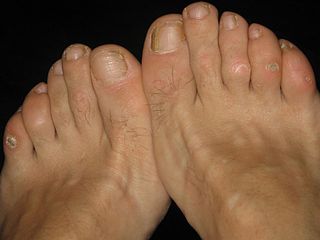
Hard corns commonly occur on the top of the smaller toes or on the outer side of the little toe. These are the areas where poorly fitted shoes tend to rub most.
Soft corns sometimes form in between the toes, most commonly between the fourth and fifth toes. These are softer because the sweat between the toes keeps them moist, Soft corns can very sometime become infected.
Toe corns
What are calluses?
A callus is usually larger and broader than a corn and has a less well-defined edge. These tend to form on the underside of your foot (the sole). They commonly form over the bony area just underneath the toes. This weight bearing area takes much of your weight when walking. They are usually painless but can become painful.
Callus
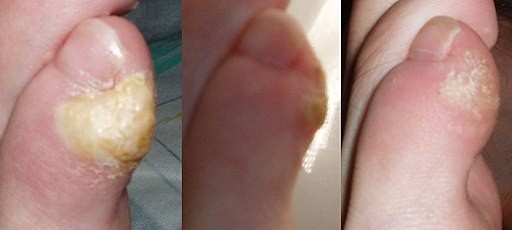
© Emilio J. Rodríguez Posada, CC BY-SA 3.0, via Wikimedia Commons
What causes corns and calluses?
The small bones of the toes and feet are broader and more lumpy near to the small joints of the toes. If there is repeated friction or pressure on the skin overlying a small rough area of bone, this will cause the skin to thicken. This may lead to corns or calluses forming.
The common causes of rubbing and pressure are tight or ill-fitting shoes which tend to cause corns on the top of the toes and side of the little toe. Also, too much walking or running which tends to cause calluses on the bottom of the feet (the soles). So participating in sports or activities that involve repeated pressure on the feet this will increase your risk of developing a callus.
Corns and calluses are more likely to develop if you have very prominent bony toes, thin skin, or any deformities of the toes or feet which cause the skin to rub more easily inside shoes. People with bunions are more likely to develop corns and calluses.
How to get rid of corns on feet
If you develop a painful corn or callus it is best to obtain expert advice from a person qualified to diagnose and treat foot disorders (a podiatrist - previously called a chiropodist). You should not cut corns yourself, especially if you are elderly or have diabetes.
Treatments for corns and calluses
Treatments such as corn plasters (corn pads) will reduce the pressure on your corn but will not actually treat the corn.
Advice and options to treat corns and calluses include the following:
Trimming (paring down)
The area of thickened skin of a corn or callus can be pared down by a podiatrist by using a scalpel blade. The pain is usually much reduced as the corn or callus is pared down and the pressure on the underlying tissues eased. Sometimes, repeated or regular trimming sessions are needed. Once a corn or callus has been pared down, it may not return if you use good footwear.
If the skin seems to be thickening up again, a recurrence may be prevented by rubbing down the thickening skin with a pumice stone or emery paper once a week. Many people can do this themselves.
It is best to soak your foot in warm water for 20 minutes to soften the thick skin before using a pumice stone or emery paper. A moisturising cream used regularly on a trimmed corn or callus will keep the skin softened and easier to rub down.
Chemical treatment
There are different types of medicated products which work by chemically paring down the thickened, dead skin on corns and calluses. These usually contain salicylic acid, which is also present in many wart-removal products.
Salicylic acid is a keratolytic, which means it dissolves the protein (keratin) that makes up most of both the corn and the thick layer of dead skin which usually tops it. It is important to use these products as directed in the package directions; these products are gentle and safe for most people. Salicylic acid treatments are available in different forms including drops, pads and plasters.
All these treatments will turn the top of your skin white and then you will be able trim or peel away the dead tissue. This results in the corn sticking out less, which will make it less painful.
Although these products can work well, they should not be used if you have diabetes or poor circulation. This is because your skin is less likely to heal well after using salicylic acid and there is a risk that an ulcer may develop.
Shoes and footwear
Tight or ill-fitting shoes are thought to be the main cause of most corns and calluses. Sometimes a rough seam or stitching in a shoe may rub enough to cause a corn. The aim is to wear shoes that reduce pressure and rubbing on the toes and forefeet.
Shoes should have plenty of room for the toes and have soft uppers and low heels. High heels, especially if they are tight fitting, can lead to repeated friction and make corns and calluses worse. In addition, extra width is needed if corns develop on the outer side of the little toe. Extra height is needed if corns develop on the top of abnormal toes such as 'hammer' or 'claw' toes.
Correcting poor footwear will reduce any rubbing or repeated friction on your skin. In many cases, a corn or callus will go away if rubbing or pressure is stopped with improved footwear. If you have had a corn or callus pared away, a recurrence will usually be prevented by wearing good footwear. If you are able, going barefoot when not outdoors will also help.
Some people with abnormalities of their feet or toes will need special shoes to prevent rubbing. A podiatrist can advise you about this.
Footpads and toe protection
Depending on the site of a corn or callus, a cushioning pad or shoe insole may be of benefit. For example, for a callus under the foot, a soft shoe insert may cushion the skin and help the callus to heal.
If there is a corn between your toes, a special sleeve worn around your toe may ease the pressure. A special toe splint may also help to keep your toes apart to allow a corn between toes to heal. A podiatrist will be able to advise you on any appropriate padding, insoles or appliances you may need.
Surgery
If you have a foot or toe abnormality causing recurring problems, an operation may be advised if all else fails. For example, an operation may be needed to straighten a deformed toe, or to cut out a part of a bone that is sticking out from a toe and causing problems.
If you need an operation then you will be referred to a surgeon who will be able to discuss this with you in more detail.
What happens if a corn becomes infected?
Occasionally corns or calluses can become infected. If this happens then your corn would become more painful and the skin around the corn (or callus) will become red and sore. Pus may come out of the corn. You should see your GP, who will be able to prescribe antibiotics if necessary.
Patient picks for Other skin conditions

Skin, nail and hair health
Erythema nodosum
Erythema nodosum is a condition that causes red rounded lumps (nodules) to form just below the skin surface, most commonly on the shins. In most people, no specific cause or trigger can be found. But in some people a trigger (commonly a streptococcal infection or sarcoidosis) can be identified. Usually, the nodules heal within six to eight weeks with no treatment needed. However, it is important to look for a possible underlying trigger, as this may need treatment.
by Dr Hayley Willacy, FRCGP

Skin, nail and hair health
Vitiligo
Vitiligo causes white patches on the skin which vary in size and number. There are usually no other symptoms, but it can have a significant effect on mood and self-esteem. Affected areas of skin can be covered by skin camouflage creams. Treatment has improved in recent years and in some cases the pigment can be restored.
by Dr Colin Tidy, MRCGP
Frequently asked questions
Can I remove a corn or callus myself using chemical treatments like salicylic acid?
While chemical treatments containing salicylic acid can help pare down thickened skin, they should not be used if you have diabetes or poor circulation. This is because your skin may not heal well, and there is a risk of developing an ulcer.
What is the difference between a corn and a callus in terms of appearance?
A corn is typically smaller and roughly round in shape, pressing deeper into the skin. A callus is usually larger, broader, and has a less defined edge, commonly forming on the sole of the foot over weight-bearing areas.
How can I prevent corns and calluses from returning after treatment?
After treatment, improving your footwear is key to preventing recurrence. Wear shoes with plenty of toe room, soft uppers, and low heels. Going barefoot when indoors can also help. Regularly rubbing the thickening skin with a pumice stone or emery paper after soaking your foot, and applying moisturising cream, can also help keep the skin softened and prevent build-up.
When should I consider surgery for corns or calluses?
Surgery is typically considered as a last resort if all other treatments have failed and you have a foot or toe abnormality causing recurring problems. This could involve straightening a deformed toe or removing a protruding part of a bone. You would be referred to a surgeon for a detailed discussion.
What are soft corns and how do they differ from hard corns?
Soft corns form between the toes, most commonly between the fourth and fifth toes. They are softer than hard corns because the sweat in this area keeps them moist. Hard corns, on the other hand, usually appear on the top of smaller toes or on the outer side of the little toe caused by rubbing from shoes.
Further reading and references
- Anderson J, White KG, Kelechi TJ; Managing common foot problems in older adults. J Gerontol Nurs. 2010 Oct;36(10):9-14. doi: 10.3928/00989134-20100831-03. Epub 2010 Sep 22.
- Becker BA, Childress MA; Common Foot Problems: Over-the-Counter Treatments and Home Care. Am Fam Physician. 2018 Sep 1;98(5):298-303.
About the authorView full bio

Dr Colin Tidy, MRCGP
General Practitioner, Medical Author
MBBS, MRCGP, MRCP (Paediatrics), DCH
Dr Colin Tidy is an NHS Doctor, based in Oxfordshire.
About the reviewerView full bio

Dr Toni Hazell, FRCGP
MBBS, BSc, FRCGP, DFSRH, Dip GU med, DRCOG, DCH (London, UK, 2000)
Dr. Toni Hazell qualified from St. Mary’s Hospital Medical School and did her VTS at Northwick Park Hospital.
Article history
Article also available in English, German, Spanish, French, Italian, Portuguese, Hindi, Hebrew, Arabic, and Swedish.
Next review due: 27 Dec 2028
29 Dec 2023 | Latest version
Join the conversation
Share your thoughts or experiences with others in our patient communities.

Ask, share, connect.
Browse discussions, ask questions, and share experiences across hundreds of health topics.

Feeling unwell?
Assess your symptoms online for free
Sign up to the Patient newsletter
Your weekly dose of clear, trustworthy health advice - written to help you feel informed, confident and in control.
By subscribing you accept our Privacy Policy. You can unsubscribe at any time. We never sell your data.