
What's causing my hearing loss?
Peer reviewed by Dr Krishna Vakharia, MRCGPAuthored by Dr Sarah JarvisOriginally published 10 Feb 2023
Meets Patient’s editorial guidelines
- DownloadDownload
- Share
- Language
- Discussion
- Audio Version
- Add to preferred sources on Google
We often take our hearing for granted, but as we get older, we shouldn't make assumptions. Hearing loss affects much more than your hearing - if untreated, it can lead to social isolation, anxiety, depression, and even falls or reduced independence.
We explain what affects your hearing and what you do to protect it.
Sponsored
Boots Hearingcare
Sponsored by Boots Hearingcare. Patient.info retains sole control of the content.

What causes hearing loss?
Hearing loss can develop for a wide variety of reasons. Sound waves are focused on to your eardrum, where vibrations are passed through tiny bones attached to your middle ear. From there, they travel to your hearing nerves, which pass them to your brain and interpret them.
You also have an inner ear, where your balance mechanisms reside. Problems your cochlea in the inner ear can lead to hearing loss. Also, your Eustachian tube connects your middle ear with the outside world, allowing you to equalise the pressure between the two.
Conductive hearing loss
Issues which affect how sound is conducted to your eardrum or middle ear is called conductive hearing loss. These include:
Inflammation of outer ear - otitis externa.
Earwax or a foreign body in your ear canal.
Scarring of your eardrum from repeated perforation.
Glue ear, most often seen in children, in which the air in the middle ear is replaced by a sticky liquid.
Eustachian tube dysfunction, often happens when you have a cold.
An uncommon growth in the ear called a cholesteatoma.
Middle ear infection - known as otitis media.
Otosclerosis, which affects one of the three bones in the middle ear.
Sensorineural hearing loss
Hearing loss related to the onwards passage of messages to the brain from the hearing nerve is known as sensorineural hearing loss. Causes include:
Age-related hearing loss, or presbyacusis - the commonest reason for hearing loss.
Meniere's disease, which causes episodes of hearing loss, vertigo - dizziness with a spinning sensation - and tinnitus.
A tumour on the hearing nerve called an acoustic neuroma.
Some conditions affecting the brain, including stroke, brain trauma, inflammation of the brain (encephalitis) and multiple sclerosis.
When should you worry about hearing loss?
Tinnitus is the term for noise that comes from inside your ears, rather than from the world outside. It's often perceived as a ringing, buzzing, roaring or whistling. It usually affects both ears and often goes hand in hand with hearing loss.
Treating the hearing problem may cure or improve your tinnitus. However, if you develop tinnitus in just one ear, contact your doctor urgently - occasionally this is a sign of an acoustic neuroma - a tumour on the hearing nerve. The same applies if you get sudden complete hearing loss in one ear, or hearing loss and tinnitus on one side.
What is Eustachian tube dysfunction?
If your Eustachian tube gets blocked by mucus when you have a cold, there's a mismatch of pressure which affects how efficiently messages from your eardrum are passed to your hearing nerve. This can result in dulled hearing and sometimes pain. The same principle applies if you're in an aeroplane which is changing height as it takes off or lands.
The hearing loss from blocked Eustachian tubes is common but usually temporary. With age, you're much more likely to have persistent age-related hearing loss. According to the RNID, in the UK more than 5 in 10 people aged 55 or more and 8 out of 10 over the age of 70 have hearing loss.
How does age affect your hearing?
One in three adults in the UK has some degree of hearing loss, and age is the single biggest cause.
One of the first signs of age-related hearing loss is difficulty in hearing when there's a lot of background noise. This can make it difficult to take part in social gatherings. As hearing loss progresses, even one to one conversations in quiet settings become harder. As a result, people with untreated hearing loss often avoid social situations.
Loss of social contact increases the risk of anxiety and depression. But without mental stimulation from conversation with others, there's also a higher risk of brain decline - memory loss and even dementia.
People with even mild untreated hearing loss are twice as likely to develop dementia as those without it. Moderate untreated hearing loss increases the risk three fold, while those with severe hearing loss are five times more likely to develop dementia as those with normal hearing.
Research has shown that people with hearing loss who used hearing aids were not at increased risk, and had the same chance of staying independent as those with normal hearing.
Yet hearing tests - and hearing aids - are underused. Around 7 million adults in the UK could benefit from hearing aids but only around 2 million people use them
Do you need a hearing test?
Most of us have our eyes checked every couple of years, or more often if advised. Yet on average, it takes 10 years for someone to seek help when they develop hearing loss. Doctors spend a lot of time advising patients to get into the habit of having hearing checks as they get older.
British and Irish Hearing Instrument Manufacturers Association goes one step further. It wants to see annual NHS hearing tests introduced routinely for everyone over the age of 55. On average, it's nine years since people aged 55 or over have had a hearing check, even though people of this age believe they should be getting their hearing tested every three years.
Mohammed Ismail, audiologist at the hearing specialist Amplifon, advises: "There's compelling clinical evidence linking untreated hearing loss to anxiety, depression and social isolation. There is even clear evidence that untreated hearing loss significantly increases the risk of cognitive decline, especially in older people. Yet all too often people wait many years before getting the issue sorted.
"Getting a first check early means you can be alerted to early signs of hearing loss, and monitored for any decline in hearing that needs treatment. If we could all get into the habit of having regular hearing checks over 55, in the same way as we get our eyes and teeth checked, it would make a real difference to the incidence of mental health and cognitive issues."
How do I get a hearing test?
You can book a free hearing test directly through many high street hearing centres. Alternatively, speak to your GP - they'll be happy to refer you on the NHS. The audiologist will carry out several tests.
One involves listening to different sounds through headphones and pressing a button when you hear something; another is similar but with speech; another checks for fluid behind your eardrum.
If there's an issue, your audiologist will talk about the options for hearing aids. Many are available on the NHS - and they are very different from the cumbersome, whistling devices of just a couple of decades ago.
Newer technologies - some of them only available through private providers - allow you to link your hearing aid to your phone or television, and even fine-tune your settings through bluetooth-enabled technology.
So if you've noticed your hearing is less sharp, don't delay - it could change your life.
With thanks to 'My Weekly' magazine where this article was originally published.
Patient picks for Hearing problems
Ear, nose and throat
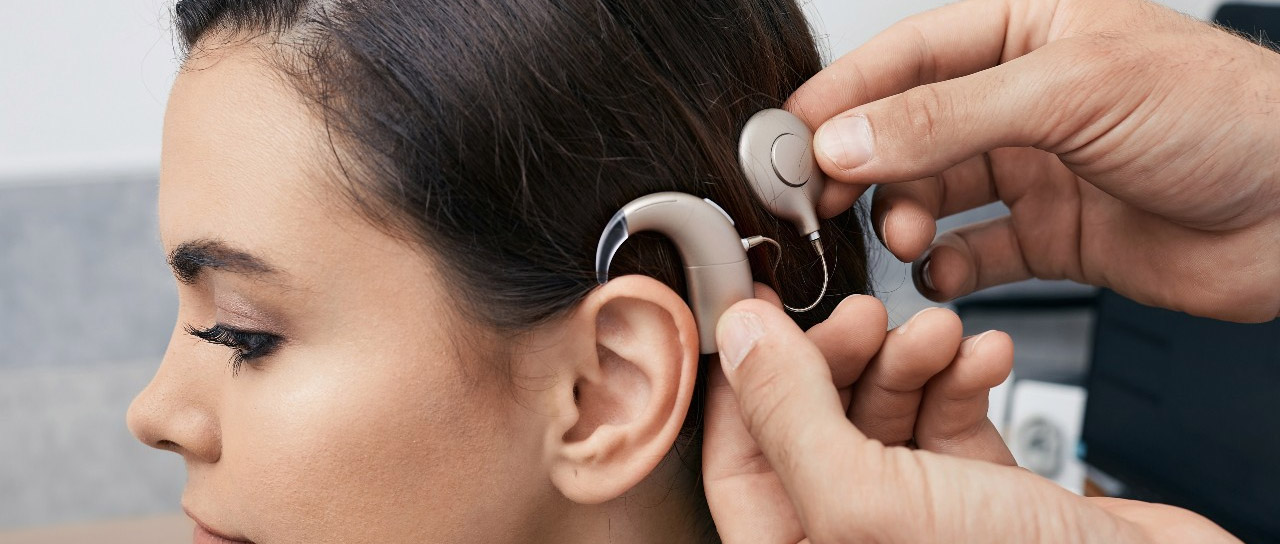
What is a cochlear implant and what effect do they have on hearing?
Opportunities and representation for the Deaf community have greatly improved over recent years. In 2022, a Bill passed through Parliament to make British Sign Language (BSL) a legally recognised and protected language. Despite these conversations being in the spotlight, there might be some aspects of deafness that you aren't familiar with and want to know more about.
by Emily Jane Bashforth

Ear, nose and throat
Sound advice: 6 ways to safeguard your hearing
Our ears do far more than let us enjoy music, laugh at a funny sound, or share jokes with friends. They help us stay alert to danger, support clear communication, and keep us connected to the world around us. While we might sometimes choose to tune things out - like ignoring a partner’s request to take out the rubbish - real hearing loss is no joke. It can be life-changing and debilitating, so it’s important to protect your hearing in any healthy way you can.
by Victoria Raw
About the authorView full bio
Authored by

Dr Sarah Jarvis
Clinical Consultant
MA (Cantab), BM, BCh (Oxon), DRCOG, FRCGP, MBE
After training in medicine at Cambridge and Oxford, Dr Sarah Jarvis MBE became a GP.
About the reviewerView full bio

Dr Krishna Vakharia, MRCGP
Chief Medical Officer for Health, Optum UK
MBChB, MRCGP(2013), BMedSci (hons), DFSRH, DRCOG, PGDipDerm (Distn)
Dr Krishna Vakharia is an NHS GP. She is also a regular examiner for the postgraduate Diploma in Practical Dermatology at Cardiff University as well as being the Chief Medical Officer for health at Optum UK.
Article history
Article also available in English, German, Spanish, French, Italian, Portuguese, Hindi, Hebrew, Arabic, and Swedish.
10 Feb 2023 | Originally published
Authored by:
Dr Sarah JarvisPeer reviewed by
Dr Krishna Vakharia, MRCGP
Join the conversation
Share your thoughts or experiences with others in our patient communities.

Ask, share, connect.
Browse discussions, ask questions, and share experiences across hundreds of health topics.

Feeling unwell?
Assess your symptoms online for free
Sign up to the Patient newsletter
Your weekly dose of clear, trustworthy health advice - written to help you feel informed, confident and in control.
By subscribing you accept our Privacy Policy. You can unsubscribe at any time. We never sell your data.