
What it's like to be a breast surgeon with breast cancer
Peer reviewed by Dr Sarah JarvisAuthored by Natalie HealeyOriginally published 12 Oct 2018
Meets Patient’s editorial guidelines
- DownloadDownload
- Share
- Language
- Discussion
- Audio Version
- Add to preferred sources on Google
As a consultant breast surgeon, Dr Liz O'Riordan was used to performing operations, reassuring frightened women and breaking bad news. What she wasn't so familiar with was being the patient herself.
But in July 2015, O'Riordan, then aged 40, found a lump in her left breast. The ultrasound, performed in the hospital she and her husband both worked at, showed a 2.5 cm lump. As soon as she saw the scan, she knew it was cancer. But her extensive medical knowledge didn't make coming to terms with the diagnosis of stage 3 breast cancer, and the treatment journey ahead of her, any easier.
"It took me a long time. I was in denial because I knew too much. Most patients are drip-fed information. You have a biopsy. 'It's cancer.' You have an operation. You find out if you need chemo. But the minute I saw my scan I knew everything," she reveals.
And it can be a very isolating place to be when you know far more about your diagnosis than your loved ones possibly could.
"It also meant I knew far more than my husband and my parents. And I was almost talking about myself as another patient. It was a really hard role to find myself in. I've seen the best and the worst of breast cancer and I think I wanted to protect myself from what it might be."
Online support
However, O'Riordan soon came to realise that her unique perspective was not something she could keep to herself. A prevalent Twitter user (@Liz_ORiordan), - she had previously used the social media platform mostly to chat about triathlons and baking - she felt compelled to tell her followers what was going on.
"I couldn't imagine not talking about cancer for nine months on Twitter. And I thought: 'I'm not going to hide this. It's a not dirty secret'. I needed to be able to talk about it. That was my way of helping people."
Dr Liz O'Riordan
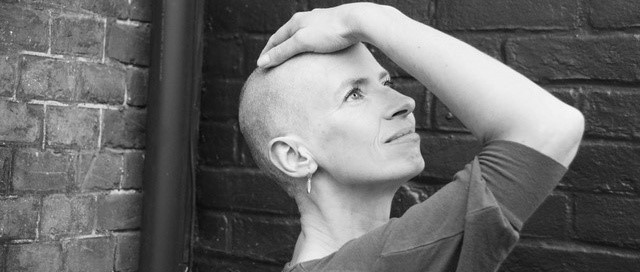
O'Riordan and her husband, Dermot, both pressed send on her 'coming out tweet' the day after she got her diagnosis. Within hours, her inbox was flooded with messages from people she'd never met before who had been through, or were going through, the same process.
"Twitter was my support network. I wouldn't be here today if not for that cancer network. It's been amazing. Coming out and sharing the story just meant I could help. And it might help doctors and nurses think about the words we say, just to improve patient care from the other side of the table."
O'Riordan soon started five months of gruelling chemotherapy, followed by a mastectomy and implant reconstruction. She later learned her cancer had not disappeared - it had unfortunately spread to her lymph nodes. Further surgery followed, and then three weeks of radiotherapy. Although given the all clear in April 2016, O'Riordan experienced a local recurrence in May 2018. She has just finished treatment (implant removal and more radiotherapy). You can find out more about her treatment journey in her refreshingly frank and funny blog.
A vital friendship
During the period where O'Riordan was having chemotherapy, she received a private message on Twitter from Dr Trisha Greenhalgh, professor of primary care at the University of Oxford. Greenhalgh wrote: "Hi, I also have breast cancer. And I'm having treatment on the same day as you."
"And for the whole five months, it was someone going through it all at the same time. And someone I could talk to about being a doctor and a patient, and the sickness and the constipation. So it was lovely having someone to share that with," O'Riordan recalls.
With their newfound friendship, Greenhalgh and O'Riordan hatched a plan. They realised a gap in the market for a publication that explains why doctors treat breast cancer the way they do.
"We were both constantly bombarded with snake oil stuff. Well-meaning people telling us to try juicing kale and turmeric, and other foods and products with absolutely no evidence behind them. And we thought if we could help just one person find their way through breast cancer more easily, then we've done our job," explains O'Riordan.
The result of this teamwork is The Complete Guide to Breast Cancer, authored by Greenhalgh and O'Riordan. Both doctors finished treatment in April 2016 and that's when the idea came together. It's a comprehensive guide to the disease, which brings together the knowledge the pair have gathered as both patients and doctors. They intended to write a trusted, thorough and up-to-date source of information for any woman going through breast cancer treatment.
"But we also wanted to address the things that doctors often don't have the time to talk about - like sex, and the menopause and relationships, and dealing with your body image," points out O'Riordan. "And you can find all that information on the amazing Breast Cancer Care website too. But here's everything in one place. You can dip in and out when you need it."
The new normal
Something O'Riordan wishes we discussed more is what happens after cancer treatment stops and you supposedly go back to 'normal life'.
"But actually that time alone is the worst bit. How do I live my life in this new normal? It's waking up and wondering if it's cancer or a cough. It's infertility - all your friends talking about their kids when you can't have any. The menopause. It's stuff that you're living with at a much earlier age than you should be. And I don't want, as doctors, for us to think that people should just be grateful to be alive. We want to talk about how they can get their lives back."
It also means talking about sex - something that many doctors still struggle to find the right words to do.
"We don't talk about sex with our partners, let alone our GPs. But it's such a huge issue," says O'Riordan. "Many younger women I've talked to, including myself, at our lowest points, wanted our husbands to divorce us, to go and find young, healthy women so they could have a healthy sex life! And luckily, all the husbands said: 'No, don't be silly; we love you!'. But when there's such a huge part of your relationship that's taken away for you overnight, it's really hard to cope. And there are solutions out there, women just have to be made aware of them. A brand of lubricants called Yes has been amazing for me, for instance, (and you can get it on prescription). But nobody talks about it."
The problem with pink
O'Riordan would also love us all to consider the breast cancer patients who find it hard to relate to the fluffiness of Breast Cancer Awareness month in October each year. Pink ribbons aren't doing enough to raise awareness of the impact the condition can have on people's lives, she opines.
"We all hate pink month because cancer isn't pretty. Cancer isn't about pink pretty bras on the cover of a magazine. I can't wear a bra because I don't have any breasts. And I've lost my hair. It isn't pink and fluffy. And there's not enough research trying to cure people who are dying from it. I wanted to make sure our book covers treatment for metastatic breast cancer, how to know if it's coming back, ending treatment if it's not working and how to get your affairs in order. And it's a scary thing to read but it's there for when patients are ready to go there."
O'Riordan and Greenhalgh's publication covers a lot of ground - including breast cancer in men, older people and LGBT people - but they're both aware it won't speak to everyone. However, they hope it starts some conversations and makes some of the people who read it feel empowered and more in control of their journey after diagnosis.
"We're aware it's only the experience of two people who have written this book. There's no right or wrong way to deal with cancer diagnosis. Whatever you read, you're free to ignore it because you have to do what's right for you," says O'Riordan.
The Complete Guide to Breast Cancer, published by Vermilion, is available now.
Patient picks for Breast cancer

Cancer
What happens when you find out you’re BRCA positive?
In 2013, the movie star Angelina Jolie made headlines when she announced she'd undergone a pre-emptive double mastectomy. She'd discovered she carried a mutation in the BRCA1 gene, which dramatically increases the risk a woman will develop breast cancer over her lifetime.
by Abi Millar

Cancer
Clinical Pilates: a support to breast cancer recovery
Breast cancer is the most common cancer among women in the UK, with around 55,000 women diagnosed each year. If you are recovering from breast cancer, incorporating gentle exercise into your routine can offer a range of benefits to support your recovery and wellbeing.
by Victoria Raw
About the authorView full bio

Natalie Healey
Freelance journalist
BSc (Hons) Biomedical Science
She is a London-based health journalist who has been writing about science and medicine for several years. She is the former head of editorial at Patient.
About the reviewerView full bio

Dr Sarah Jarvis
Clinical Consultant
MA (Cantab), BM, BCh (Oxon), DRCOG, FRCGP, MBE
After training in medicine at Cambridge and Oxford, Dr Sarah Jarvis MBE became a GP.
Article history
Article also available in English, German, Spanish, French, Italian, Portuguese, Hindi, Hebrew, Arabic, and Swedish.
12 Oct 2018 | Originally published
Authored by:
Natalie HealeyPeer reviewed by
Dr Sarah Jarvis
Join the conversation
Share your thoughts or experiences with others in our patient communities.

Ask, share, connect.
Browse discussions, ask questions, and share experiences across hundreds of health topics.

Feeling unwell?
Assess your symptoms online for free
Sign up to the Patient newsletter
Your weekly dose of clear, trustworthy health advice - written to help you feel informed, confident and in control.
By subscribing you accept our Privacy Policy. You can unsubscribe at any time. We never sell your data.
More in cancer
- 8 tips to help reduce your cancer risk at any age
- Blood test may detect ovarian cancer two years earlier
- Cancer symptoms you should never ignore
- Clinical Pilates: a support to breast cancer recovery
- Everything you need to know about cancer screening
- Friendly' bacteria in the vagina could protect against ovarian cancer
- How to check for breast cancer and what a lump feels like
- How to cope with a terminal illness at Christmas
- How to get over smear test fear
- How to manage the visible side effects of cancer treatment
- How to spot the signs of mouth cancer
- NHS to roll out world-first blood test for cancer
- Ways to help reduce your chance of bowel cancer
- What happens when you find out you’re BRCA positive?
- What is bowel cancer screening - and why do you need it?
- What is cancer 'prehabilitation'?
- What is Movember?
- What it's like to be diagnosed with skin cancer
- What it's like to have breast cancer when you're a man
- Your essential skin cancer checklist