Constipation
Peer reviewed by Dr Toni Hazell, FRCGPLast updated by Dr Caroline Wiggins, MRCGP Last updated 31 Mar 2026
Meets Patient’s editorial guidelines
- DownloadDownload
- Share
- Language
- Discussion
- Audio Version
- Add to preferred sources on Google
Constipation means you are pooing less than normal, are struggling to poo, or are having painful poos. It is usually caused by not eating enough fibre, or not drinking enough fluids.
Key points
Constipation is a common digestive problem that can affect people of any age. It involves infrequent bowel movements (pooing), hard or painful poos, straining, or a feeling of incomplete emptying.
It is commonly caused by dietary and lifestyle factors such as not eating enough fibre, not drinking enough fluid, a lack of physical activity, and changes in routine.
Most constipation can be relieved by increasing fibre and fluids, staying active, responding to the urge to open your bowels, and taking over-the-counter laxatives.
What is constipation?
Constipation means having difficulty pooing (passing stools), having fewer poos than usual, or having poos that are hard, dry, or painful to pass.
Some people with constipation can feel the need to strain to pass the poo, or feel that their bowels have not emptied completely.
This information leaflet discusses constipation in adults. For constipation in children, see our information leaflet called Constipation in children.
Constipation symptoms
You may be constipated if:
Your poo is hard and difficult or painful to pass.
You're pooing less frequently than usual.
You have stomach ache or cramps.
You feel bloated or sick.
It does not feel as though you have emptied your bowel or 'finished' after pooing.
How long does constipation last?
Constipation can last for just a day, or several days, depending on the cause and if steps are taken to improve it.
Chronic constipation lasts for at least 12 weeks out of the past 6 months.
What causes constipation?
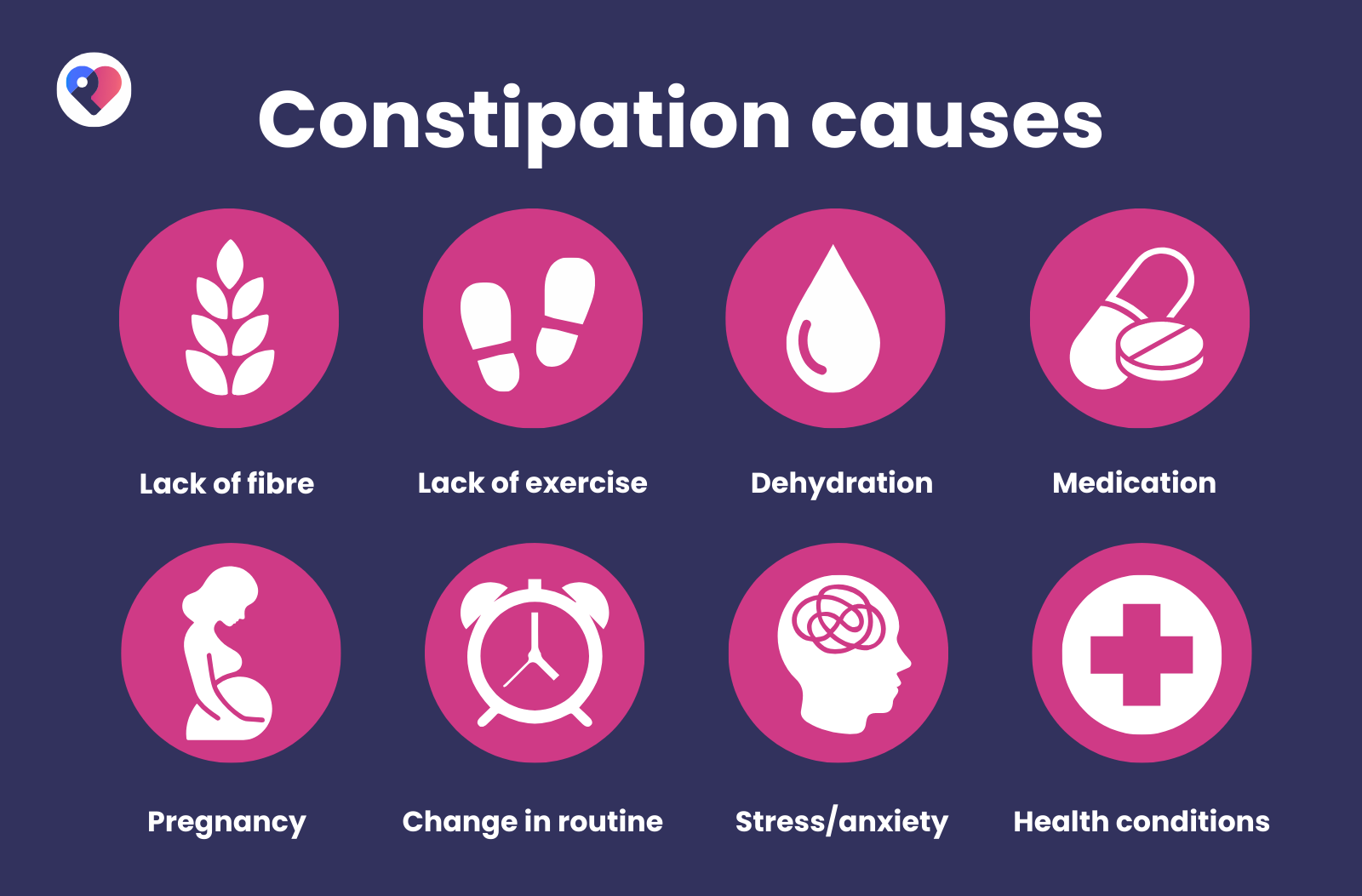
Common causes of constipation include:
Not eating enough fibre - this is found in foods such as fruits, vegetables, and cereals.
Not drinking enough fluids - which can lead to dehydration.
Lack of physical activity.
Certain medicines – such as painkillers (especially ones with codeine), antacids, antidepressants such as amitriptyline, iron tablets, and some blood pressure medicines.
Medical conditions - such as an underactive thyroid gland, irritable bowel syndrome, diverticular disease and colon cancer.
Pregnancy - caused by hormonal changes and pressure from the growing womb. About 1 in 5 pregnant women will become constipated.
Constipation can also be caused by:
Ignoring the urge to poo when you need to go to the toilet.
Changes to your routine.
Changes to your diet.
Stress, anxiety, and depression.
Difficulty accessing a toilet.
Functional constipation
Some people develop constipation despite a healthy diet, good fluid intake, and no underlying illness or medicines. It causes chronic (long term) constipation and has no identifiable cause. This is known as functional (primary) constipation.
It is common, affects women more often than men and it usually begins in childhood or early adulthood.
How to treat constipation
Lifestyle and diet changes
Gradually increase the fibre in your diet to 30g daily. Wholegrains, fruit and vegetables are higher in fibre than other foods. For information on increasing fibre in your diet see the information sheet on fibre by the British Dietetic Association (BDA) in Further Reading below.
Ensure you drink enough water each day to stay hydrated. The BDA information sheet on Fluid in Further Reading below shows why water is important and how much you need to drink.
Being physically active encourages your bowel to move food along through your gut, avoiding constipation.
Go to the toilet to poo as soon as you feel the need to.
Over-the-counter medicine
Some medicines to help short term constipation can be bought over the counter at a pharmacy or supermarket. These medicines can be used for up to one week. If your constipation lasts longer than a week you should see a doctor. If you are pregnant or breastfeeding you should discuss your constipation with a pharmacist so they can advise you which laxatives are safe to use.
When to see a doctor
You should see a doctor:
If your constipation lasts longer than one week.
If you have severe tummy pain.
You are regularly experiencing constipation and cannot identify an obvious cause.
You are sick (vomiting) and constipated.
You are losing weight.
You notice bleeding from your bottom (anus).
The feeling of not emptying your bowels completely after you have a poo continues once the constipation has got better.
How to prevent constipation
You can help prevent constipation by following the diet and lifestyle advice in the section "How to treat constipation" above.
Frequently asked questions
Can paracetamol cause constipation?
No, paracetamol does not cause constipation.
Are bananas good for constipation?
Ripe bananas can help improve constipation as they are high in fibre, but unripe bananas may contribute to constipation.
What foods should you avoid when constipated?
There are no particular foods to avoid, but try to focus on increasing wholegrain foods which are high in fibre and making sure you are drinking enough water.
How long should I sit on the toilet if I'm constipated?
There are no set rules. Instead, make sure you are relaxed when sitting on the toilet, sitting upright with your feet flat on a steady surface and stay on the toilet until you feel you have emptied your bowels.
Patient picks for Bowel conditions

Health research
Join a study investigating a new multi-strain bacterial product for constipation
Constipation can cause significant discomfort and disruption to daily life. A new research study run by The Functional Gut Clinic is investigating whether a multi-strain bacterial food product can help improve bowel regularity and gut function. The study has been approved by an independent ethics committee and adheres to Good Clinical Practice. Many people with constipation try different treatments before finding something that helps. This study aims to explore whether a targeted bacterial product could offer benefits for gut transit and digestive comfort.
by Thomas Andrew Porteus, MBCS
Children's health
Constipation in children
Constipation is a very common problem for children. For most children, constipation means passing hard stools (faeces), with difficulty, less often than normal. Regular soiling (often mistaken for runny diarrhoea) may indicate that a child has bad constipation causing a blockage of the lower part of the gut (impaction). Where no particular disease or illness is the cause of the constipation, it is called idiopathic constipation. It is important that constipation be recognised early to prevent it from becoming a long-term (chronic) problem. Note: for adults, see the separate leaflet called Constipation.
by Dr Hayley Willacy, FRCGP
Further reading and references
- Constipation; NICE CKS, November 2025 (UK access only)
- Fibre; The Association of UK Dietitians (BDA)
- Fluid. British Dietetic Association.
- Gastrointestinal tract (lower) cancers - recognition and referral; NICE CKS, August 2023 (UK access only)
About the authorView full bio

Dr Caroline Wiggins, MRCGP
General Practitioner, Medical Author
MBBS Honours (with Distinction), MRCGP (2016), MSc.SEM (with Distinction), BSc (Hons)
Dr Caroline Wiggins is a GP locum currently in the South-West of England.
About the reviewerView full bio

Dr Toni Hazell, FRCGP
MBBS, BSc, FRCGP, DFSRH, Dip GU med, DRCOG, DCH (London, UK, 2000)
Dr. Toni Hazell qualified from St. Mary’s Hospital Medical School and did her VTS at Northwick Park Hospital.
Article history
Article also available in English, German, Spanish, French, Italian, Portuguese, Hindi, Hebrew, Arabic, and Swedish.
Next review due: 31 Dec 2030
31 Mar 2026 | Latest version
Join the conversation
Share your thoughts or experiences with others in our patient communities.

Ask, share, connect.
Browse discussions, ask questions, and share experiences across hundreds of health topics.

Feeling unwell?
Assess your symptoms online for free
Sign up to the Patient newsletter
Your weekly dose of clear, trustworthy health advice - written to help you feel informed, confident and in control.
By subscribing you accept our Privacy Policy. You can unsubscribe at any time. We never sell your data.
More in digestive health
- Aminosalicylates
- Autoimmune hepatitis
- Constipation in children
- Duodenal ulcer
- Gallstones
- Gastroenteritis in children
- Giardia
- Hernia
- Hiatus hernia
- Itchy bottom
- Liver biopsy
- Pancreatic cancer
- Primary liver cancer
- Primary sclerosing cholangitis
- Rectal prolapse
- Right lower quadrant pain
- Rotavirus
- Stoma dietary care
- Stomach ulcer
- Toddler's diarrhoea