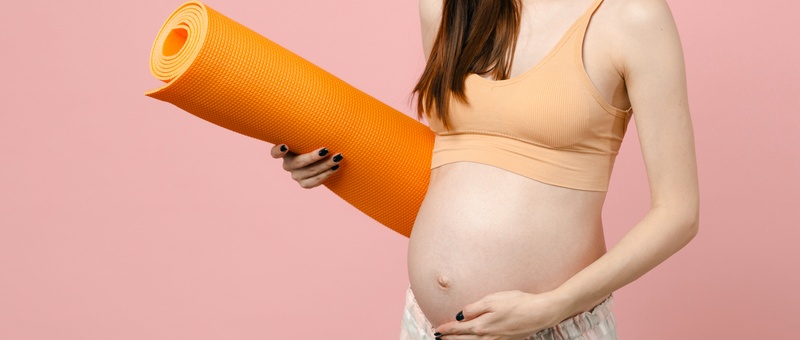
O Pilates pode ajudar a fortalecer o seu assoalho pélvico durante a gravidez?
Revisado por Dr Colin Tidy, MRCGPÚltima atualização por Lawrence HigginsÚltima atualização 8 de abr de 2026
Atende aos diretrizes editoriais
- BaixarBaixar
- Compartilhar
- Language
- Discussão
- Versão em Áudio
- Adicionar às fontes preferidas no Google
Pregnant women hear a lot about the importance of strengthening their pelvic floor muscles, particularly when it comes to labour and recovery post-birth. However, it can be tricky to know where these muscles are, what they do and how to make them stronger.
Some studies suggest prenatal Pilates can be a good way to work out your pelvic floor. Here we look at why and what you can do.
Inscreva-se no nosso curso gratuito de 8 semanas sobre Gravidez Saudável!
A cada semana, compartilharemos informações úteis e dicas essenciais sobre temas como nutrição, exercícios, saúde mental, sintomas a serem observados e preparação para o parto, para ajudá-la a navegar em sua jornada de gravidez, independentemente da fase em que você esteja.
Ao se inscrever, você aceita nossos Política de Privacidade. Você pode cancelar a inscrição a qualquer momento. Nunca vendemos seus dados.
What are pelvic floor muscles?
Both men and women have a exercícios de fortalecimento do assoalho pélvico. It's made up of layers of muscles and connective tissues which support your bladder, bowel, (in women) womb, and (in men) prostate gland. These muscles attach to your pubic bone at the front and the tail bone at the back, as well as the base of the pelvis. They act as a 'sling' or 'hammock' to support the pelvic organs.
You can find your pelvic floor muscles and how you control them by going to the toilet. When peeing, try to stop the flow for a second. The muscles you use to do this are your pelvic floor muscles. However, it's important not to do this repeatedly because stopping the flow regularly can lead to infecções do trato urinário.
Why is strengthening your pelvic floor muscles important during pregnancy?
Pregnancy and childbirth put a strain on your pelvic floor muscles. During pregnancy, the pelvic floor muscles loosen due to hormonal changes. For example, the hormone relaxin relaxes the ligaments in the pelvic floor, softening and widening the cervix in preparation for birth.
Also, your baby presses on your bladder as it grows, placing pressure on the pelvic floor and stretching these muscles. This can cause you to leak urine when you cough, laugh, exercise or sneeze. Constipação, which is a common problem during pregnancy, can also put a strain on the pelvic floor muscles.
"There is higher demand on your pelvic floor during pregnancy due to the growing baby. This additional loading can lead to the weakening and lengthening of the pelvic floor muscles," says Beth Davies, a personal trainer and coach specialising in pelvic health at Beth Davies Coaching.
"In addition to maintaining or building strength, it's also important to allow the pelvic floor muscles to relax too, especially at the later stages of pregnancy."
Benefits of strengthening the pelvic floor muscles
Exercising your pelvic floor muscles when pregnant can help your body cope with the increasing weight of the baby and with labour and birth. It can also help to heal the perineum - the area between the vagina and anus - after vaginal birth.
Strengthening your pelvic floor can also help to protect you from peeing (urine) incontinence while pregnant and after your baby is born. In the long-term, it can also help to prevent a prolapse, which happens when your womb, bowel, or bladder sag down and push against the walls of your vagina.
Can prenatal Pilates help to strengthen your pelvic floor muscles?
Pilates is a popular form of exercise which concentrates on strengthening the body with an emphasis on core strength. The aim of prenatal Pilates is to strengthen the muscles and improve posture, balance and flexibility.
Pilates is also a good way to relax as it focuses on exercícios de respiração. Because it is a low-intensity form of exercise, it can be suitable for pregnant women.
Research suggests prenatal Pilates can help to prepare you for labour and birth by promoting relaxation, lowering blood pressure, increasing flexibility, and easing back pain. Physical exercise in pregnancy - tailored to the abilities and needs of the pregnant women - can help to decrease the recovery time after birth. Prenatal Pilates may help to reduce the likelihood of perineal trauma during birth, such as tearing.
Strengthening the core and pelvic floor
"Pilates can be a useful and gentle form of exercise to help pregnant women strengthen their pelvic floor muscles and core to maintain good posture and mobility," says Davies.
"During pregnancy, the body's core - the team of muscles including the diaphragm, transverse abdominals, pelvic floor and multifidus - the muscles either side of the spinal column - can be challenged. This happens because of a changing centre of gravity, changes in posture, and weight of the growing baby."
Pilates promotes a gentle engagement of the pelvic floor, so it is useful for pelvic floor awareness, improving tone and control, Davies says.
"Combined with strengthening movements, it can also maintain body strength," she adds. "As with any form of pregnancy exercise, moves that create lots of intra-abdominal pressure - such as planks and abdominal crunches - may be less appropriate as pregnancy progresses."
If you're a beginner, it can be a good idea to go to Pilates classes so an instructor can ensure you are doing the exercises correctly to avoid injury. Beginners and pregnant women can start with basic exercícios that are tailored to their abilities.
How else can you exercise your pelvic floor muscles?
"Women may also benefit from isolated pelvic floor exercises called Kegels," says Davies. Once you've located your pelvic floor muscles, you can exercise them at any time by tightening and lifting the muscles. To do this, imagine squeezing as if to stop the flow of urine or as if to stop a poo.
Squeeze these muscles around ten times in a row, but make sure you have a rest afterwards. When you are used to doing the exercises, you can try holding the squeeze for a few seconds at a time every day. You can do pelvic floor exercises anywhere such as while you're waiting for the kettle to boil.
Escolhas do paciente para Dieta e estilo de vida

Gravidez
O que seus desejos de gravidez podem significar
Você tem sentido desejos por comida fora do comum durante a sua gravidez? Se nos últimos meses você teve mais do que alguns encontros com uma bandeja de cubos de gelo ou uma barra de chocolate gigante, você não está sozinha. Vamos explorar o que seus desejos podem significar.
por Sara Lindberg

Gravidez
Como viajar com segurança durante a gravidez
Nos últimos anos, um novo termo surgiu nos sites de viagens, a saber, 'babymoon'. Referindo-se às últimas férias que você faz enquanto está grávida, o babymoon idealmente tem pouco a ver com bebês. Pelo contrário, é uma oportunidade de um tempo muito necessário para você antes que o bebê chegue e as atividades sem crianças se tornem uma memória distante.
por Abi Millar
Sobre o autorVer biografia completa

Lydia Smith
Redatora de reportagens
BA, MA, MSc
Lydia Smith é uma jornalista premiada e escritora de reportagens que escreveu extensivamente sobre saúde da mulher e saúde mental. Atualmente, ela está cursando um mestrado em psicologia.
Sobre o revisorVer biografia completa

Dr Colin Tidy, MRCGP
Médico Generalista, Autor Médico
MBBS, MRCGP, MRCP (Paediatrics), DCH
Dr Colin Tidy é um médico do NHS, baseado em Oxfordshire.
Histórico do artigo
As informações nesta página são revisadas por pares por clínicos qualificados.
Artigo também disponível em Inglês, Alemão, Espanhol, Francês, Italiano, Português, Hindi, Hebraico, Árabe, e Sueco.
Próxima revisão agendada: 8 de abr de 2029
8 de abr de 2026 | Última versão
8 Feb 2022 | Publicado originalmente
Escrito por:
Lydia Smith

Pergunte, compartilhe, conecte-se.
Navegue por discussões, faça perguntas e compartilhe experiências em centenas de tópicos de saúde.

Sentindo-se mal?
Avalie seus sintomas online gratuitamente
Inscreva-se no boletim informativo do Patient
Sua dose semanal de conselhos de saúde claros e confiáveis - escritos para ajudá-lo a se sentir informado, confiante e no controle.
Ao se inscrever, você aceita nossos Política de Privacidade. Você pode cancelar a inscrição a qualquer momento. Nunca vendemos seus dados.
Mais na gravidez
- Você pode beber café quando está grávida?
- A pílula anticoncepcional aumenta o risco de coágulos sanguíneos?
- Pílula do dia seguinte gratuita agora disponível em farmácias do Reino Unido
- Como uma tireoide hipoativa afeta a fertilidade
- Como a gravidez impacta seu trabalho?
- Como lidar com dor na virilha e pélvica durante a gravidez
- Como manter sua rotina de exercícios com segurança durante a gravidez
- Como viajar com segurança durante a gravidez
- É seguro pular a menstruação tomando a pílula?
- Cuidando da sua saúde mental ao retornar ao trabalho após a licença maternidade
- Postpartum power: exercising after pregnancy
- Protegendo sua saúde mental durante o tratamento de fertilidade
- Você deve mudar seu método contraceptivo para o DIU ou implante?
- A verdade sobre o congelamento de óvulos
- Parto sem assistência: a tendência de parto livre é perigosa?
- O que acontece depois de descobrir que está grávida?
- O que acontece quando você para de tomar a pílula?
- O que é a síndrome pós-anticoncepcional?
- O que levar na sua viagem de babymoon
- Quando você deve e não deve se preocupar durante a gravidez