What to pack on your babymoon
Peer reviewed by Dr Hayley Willacy, FRCGP Authored by Abi MillarOriginally published 10 Apr 2018
Meets Patient’s editorial guidelines
- DownloadDownload
- Share
- Language
- Discussion
- Audio Version
- Add to preferred sources on Google
If you've just booked your 'babymoon' (ie the last holiday you take before the baby arrives), you probably have high expectations. More so than your average holiday, the babymoon is under pressure to deliver - after all, this might be your last child-free break in quite some time.
Sign up for our free 8-week Healthy Pregnancy course!
Each week we’ll share useful information and essential tips on topics such as nutrition, exercise, mental health, symptoms to look out for, and preparing for childbirth, to help you navigate your pregnancy journey whatever stage you are at.
By subscribing you accept our Privacy Policy. You can unsubscribe at any time. We never sell your data.
It stands to reason then, that you'll want to be super organised about what you bring along. There can be few situations more annoying than arriving at your destination, tired and frazzled after a long journey, only to realise you've forgotten something important.
It's advisable to jot down a list covering what you're likely to need. Since some of the essentials require a bit of forward planning (eg, insurance documents, letters from your doctor), you'll want to make a start on this well ahead of time.
Insect repellant and sunscreen
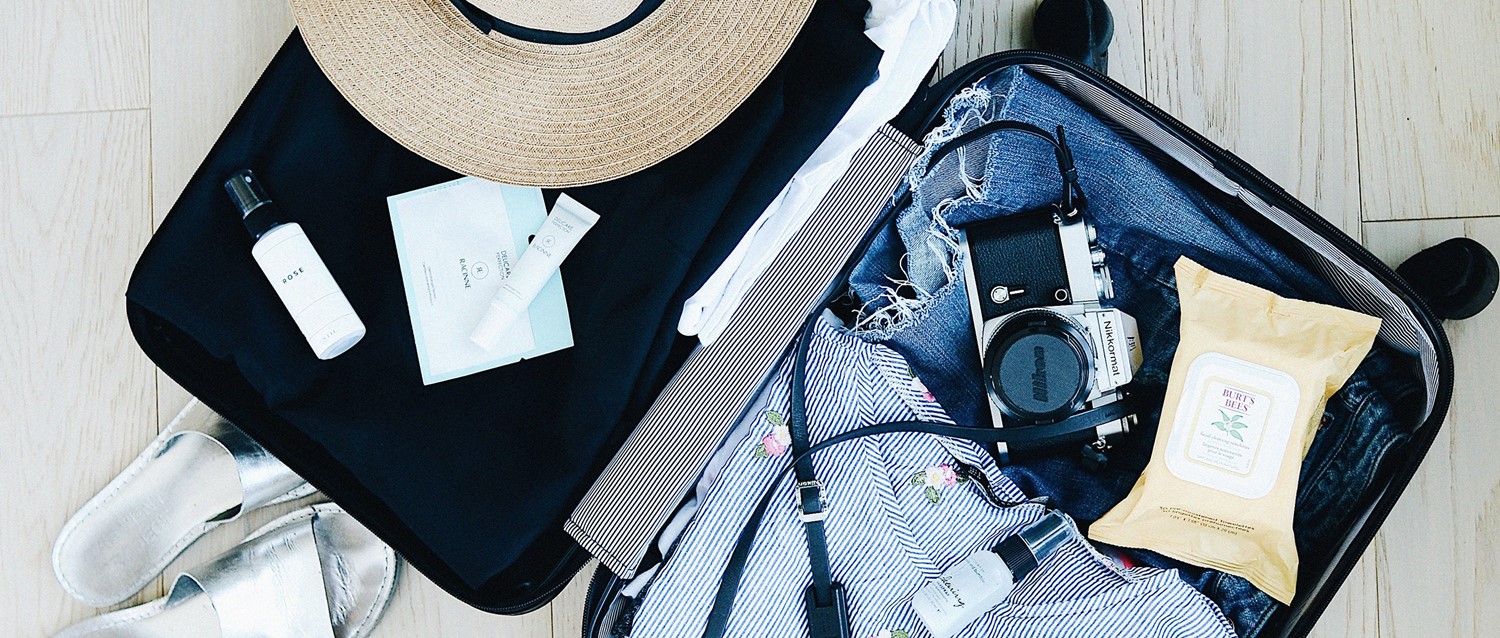
For the most part, these items won't be too far removed from what you'd ordinarily bring on holiday. Think travel-sized toiletries, passport, camera and guidebook. (Not to mention as many beach novels as you can cram into your suitcase - early parenthood is notoriously not the best time to read.)
While these are all very standard travel essentials, some of them acquire an extra importance during pregnancy.
"We say to always make sure you take a safe insect repellant, because there are places with malarial mosquitoes and so on, even in Europe," says Elizabeth Duff, senior policy advisor at NCT. "And it's generally good advice anyway, but make sure your sunscreen is a high factor because skin can be more susceptible to burning during pregnancy."
Regarding the malarial mosquitoes, pregnant women are actually more susceptible than their travel partners to being bitten. In one study, pregnant women attracted twice as many mosquitoes as their non-pregnant counterparts, likely due to increased body heat and volatile compounds released from the skin surface.
The sunscreen recommendation is crucial too. During pregnancy, your skin becomes drier and more sensitive, meaning that as well as sunburn, you are at greater risk of melasma, a darkening of the skin. Ideally pick a mineral-based sunscreen that contains no oxybenzone - some studies have linked chemicals of this kind with low birth weight in female infants.
Sensible clothes
Loose, light clothing is also critically important. Since pregnant women are more prone to temperature fluctuations, it's best to layer up.
"Remember if you're going away for two or three weeks, you are going to be quite a bit bigger by the end of the trip if you're at that stage of pregnancy," points out Duff. "Clothing is probably harder if you’re going to a colder country, so it needs a bit of thinking through."
You should also bring comfortable, easy-to-remove shoes, as your feet may swell in hot weather or during travelling. And if you're going to be flying long haul, you may want to look into compression stockings to improve your circulation and decrease the risk of deep vein thrombosis.
Snack selection
You might also want to bring a selection of snacks, both for the journey itself and for your actual stay. If there's a particular snack you like, it's worth keeping in mind that it may not be available at your destination. On a similar note, if you have particular nutritional requirements it's best to think about these ahead of time.
"You could bring dried fruit or something like that, because you might find you're going somewhere either fruit isn't easily available or could have been washed in unsafe water," says Duff. "Pregnant women can get a bit hungry at odd times, so if you've had jetlag you might wake up at times when a meal isn't on offer, feeling ravenous. Perhaps take some biscuits or crackers to safely assuage the hunger pangs."
Along with all your other essential documentation, you could include a list of foods to avoid abroad (this may differ from the foods you need to avoid at home) and keep it somewhere readily accessible.
Essential docs
However, the real priorities when it comes to documentation are you travel insurance and emergency contact details for your doctor. If you're past 28 weeks in your pregnancy, you should also include a letter from your doctor permitting travel, as your airline or ferry may require this.
"You should check your medical insurance obviously and make sure your stage of pregnancy is allowable within that," says Duff. "If you're travelling in Europe, there is the GHIC card. ."
On top of this, make sure to pack any prenatal vitamins and medication you regularly take, alongside other essential medications you might not be able to access. Chances are you won't need medical attention, but you want to feel safe and confident no matter what occurs.
As Duff points out: "The worst thing is not to be prepared if something goes wrong."
Patient picks for Diet and lifestyle
Pregnancy
How to safely maintain your exercise routine while pregnant
Exercising during pregnancy can be a confusing subject, with a wealth of conflicting advice doing the rounds. For every runner who goes into labour after running a marathon, or weightlifter who takes part in a CrossFit inspired maternity shoot, there's another woman who's convinced exercise will harm the baby.
by Abi Millar
Pregnancy
How to stay healthy and safe when pregnant at Christmas
Being pregnant at Christmas can be a bit different to your usual festive affair. Instead of enjoying prosecco and parties, it can be draining to navigate festive fun when you're feeling exhausted and achy. However, there are lots of ways to make the most of the holidays while staying healthy and safe.
by Lydia Smith
About the authorView full bio

Abi Millar
Freelance Journalist
BA (Hons), MA
Abi is a freelance journalist with a special interest in health and medicine writing.
About the reviewerView full bio

Dr Hayley Willacy, FRCGP
General Practitioner, Medical Author
MBChB (1992), DRCOG, DFFP, MRCOG (Part 1) MRCGP (2007), DFSRH (2013), MSc - medical education (2020)
Dr Hayley Willacy was an NHS GP working in northwest England, who retired from clinical practice in 2022 after 30 years.
Article history
The information on this page is peer reviewed by qualified clinicians.
Article also available in English, German, Spanish, French, Italian, Portuguese, Hindi, Hebrew, Arabic, and Swedish.
10 Apr 2018 | Originally published
Authored by:
Abi MillarPeer reviewed by
Dr Hayley Willacy, FRCGP
Join the conversation
Share your thoughts or experiences with others in our patient communities.

Ask, share, connect.
Browse discussions, ask questions, and share experiences across hundreds of health topics.

Feeling unwell?
Assess your symptoms online for free
Sign up to the Patient newsletter
Your weekly dose of clear, trustworthy health advice - written to help you feel informed, confident and in control.
By subscribing you accept our Privacy Policy. You can unsubscribe at any time. We never sell your data.
More in pregnancy
- Can pregnancy make you more sensitive to hay fever?
- How to cope with anxiety during pregnancy
- How to feel more confident about childbirth
- How to help your C-section recovery
- How to travel safely during pregnancy
- Looking after your mental health when returning to work after maternity leave
- Miscarriage: why it's important to break the taboo
- NewPerimenopause and birth control - how the pill can affect your symptoms
- Should you consider the copper coil for emergency contraception?
- The truth about egg freezing
- Video: Can stress cause a miscarriage?
- Video: How do you calculate a due date?
- Video: When are you most likely to get pregnant?
- What behaviour changes should you expect during pregnancy?
- What happens after finding out you're pregnant?
- What is pre-eclampsia and how can it affect pregnant women?
- What to do if you miss alcohol during pregnancy
- When will I become fertile again after coming off contraception?
- When you should and shouldn't worry during your pregnancy
- Which medications can affect your contraception?