Leucemia linfocítica crônica
CLL
Revisado por Dr John Cox, MRCGPÚltima atualização por Dr Laurence KnottÚltima atualização 15 Feb 2017
Atende aos diretrizes editoriais
- BaixarBaixar
- Compartilhar
- Language
- Discussão
- Versão em Áudio
- Adicionar às fontes preferidas no Google
Esta página foi arquivada.
Não foi revisado recentemente e não está atualizado. Links externos e referências podem não funcionar mais.
Leucemia linfocítica crônica (LLC) é uma condição em que você tem muitos linfócitos B anormais, que são glóbulos brancos.
Em resumo
Chronic lymphocytic leukaemia (CLL) is a condition with many abnormal white blood cells.
These abnormal cells build up because they live too long.
Often there are no symptoms at first, and it is found by chance from a blood test.
Symptoms can include tiredness, breathlessness, easy bruising, and swollen glands.
Many people with early-stage CLL do not need treatment.
Treatment for later stages aims to kill abnormal cells, often using chemotherapy.
A stem cell transplant can potentially cure CLL, especially for younger patients.
What is chronic lymphocytic leukaemia?
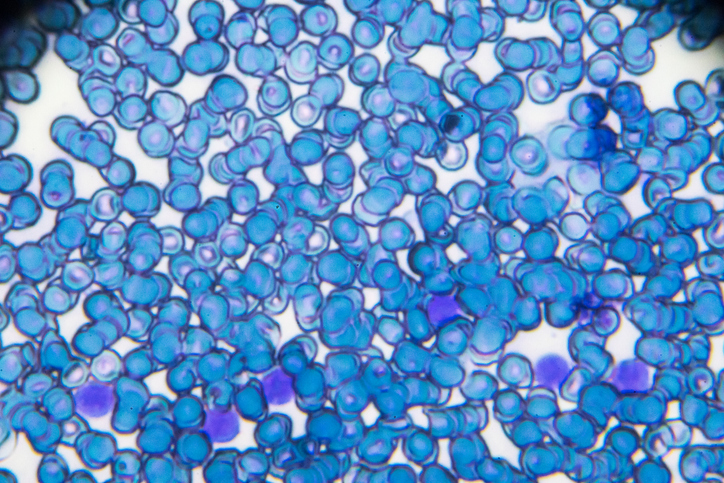
Chronic lymphocytic leukaemia (CLL) is a condition where you have many abnormal B lymphocyte white blood cells. The lymphocytes look normal under a microscope but are abnormal as they do not function properly. The main reason for the build-up of the abnormal lymphocytes is because they live too long - they do not die after the usual lifespan of a lymphocyte. (This is different to the acute types of leukaemias where the cells rapidly multiply 'out of control'. In CLL the abnormal lymphocytes are not thought to multiply faster than normal lymphocytes.) Typically, CLL progresses very slowly - over months or years, even without treatment.
Who gets chronic lymphocytic leukaemia?
CLL is the most common type of leukaemia. It occurs in around 2,750 people each year in the UK. Most cases occur in people over the age of 60 years. It is rare under the age of 40 years. It is more common in males. In about 1 in 10 cases it runs in families (is familial).
What causes chronic lymphocytic leukaemia?
A leukaemia is thought to first start from one abnormal cell. What seems to happen is that certain vital genes which control how cells divide, multiply and die, are damaged or altered. This makes the cell abnormal. If the abnormal cell survives it may multiply and develop into a leukaemia. However, it is not known what causes the damage which leads to abnormal lymphocytes developing into CLL.
What are the symptoms of chronic lymphocytic leukaemia?
At first, in many cases, there are no symptoms. The condition is often first diagnosed by chance when a blood test is taken for another reason. Nearly half of people with CLL have no symptoms when they are diagnosed with this condition. Over months or years, a large number of abnormal lymphocyte white blood cells may gradually build up in the bloodstream without causing any problems.
In time, the abnormal lymphocytes may fill much of the bone marrow. Because of this, it is difficult for normal cells in the bone marrow to survive and make enough normal blood cells. Therefore, the main problems which may eventually develop include:
Anaemia. This occurs as the number of red blood cells in the bloodstream goes down. This can cause tiredness, breathlessness and other symptoms. You may also look pale.
Blood clotting problems. This is due to low numbers of platelets in the bloodstream. This can cause easy bruising, bleeding from the gums and other bleeding-related problems.
Serious infections. The abnormal lymphocytes do not protect against infection. If there is a reduced number of normal white blood cells, which usually combat infection, there is a risk of serious infections developing.
The abnormal lymphocytes may also build up in lymph glands and in the spleen. With CLL it is also common to develop swollen glands in various parts of the body, particularly in the neck and armpits, and develop an enlarged spleen. Other common symptoms include: persistent high temperature (fever), night sweats and weight loss.
Some people with CLL also have an associated autoimmune disease
Lymphocytes normally make antibodies to attack bacteria, viruses, and other 'germs'. In people with autoimmune diseases, the immune system also makes antibodies against part or parts of the body. About 1 in 8 people with CLL make antibodies against red blood cells and/or platelets. This can destroy red cells and platelets. This can lead to anaemia and bleeding problems, or make anaemia and bleeding problems worse if the CLL is already causing these problems.
Transformation of CLL
In about 1 in 6 cases, the CLL changes at some point (transforms) to a more 'acute' form of leukaemia. This then progresses more rapidly and responds less well to treatment. If this occurs, symptoms may rapidly become worse.
How is chronic lymphocytic leukaemia diagnosed and assessed?
Um exame de sangue
Um exame de sangue typically shows a large number of lymphocyte white blood cells. These look normal under the microscope so further tests are needed to confirm the diagnosis.
Cell typing (immunophenotyping)
Detailed tests are done on the lymphocytes obtained from the blood test (or bone marrow sample). These help to confirm the diagnosis of CLL and to rule out other rarer related disorders. Some more detailed tests of the genes in the lymphocytes are being developed. These will help to subdivide CLL into different categories. This may help to predict which cases will develop into the more severe type of disease, and help to guide decisions about treatment. Consulte o folheto separado chamado Teste Genético para mais detalhes.
Uma amostra de medula óssea
This test is not always necessary to diagnose CLL. It may be done to confirm the diagnosis and rule out other conditions. For this test, a small amount of bone marrow is removed by inserting a needle into the pelvic bone or, sometimes, the breastbone (sternum). Local anaesthetic is used to numb the area. Sometimes a small core of marrow will also be taken (a trephine biopsy). The samples are put under the microscope to look for abnormal cells, and tested in other ways. See the separate leaflet called Bone Marrow Biopsy and Aspiration for more details.
Various other tests
Um raio-X do tórax, blood tests and other tests may be done to assess your general well-being.
Staging chronic lymphocytic leukaemia
The severity of CLL is commonly assessed by the following staging system:
Stage A - there are fewer than three areas in the body with swollen lymph glands.
Stage B - there are three or more areas in the body with swollen lymph glands.
Stage C - there is a low number of red cells (anaemia), a low number of platelets, or both.
What is the treatment for chronic lymphocytic leukaemia?
Nota do editor
August 2018 - Dr Hayley Willacy has recently read the British Society for Haematology guidelines dealing with the treatment of CLL - see further reading below. There have been significant developments in the treatment of CLL in recent years. An important German study showed that the addition of rituximab to the usual chemotherapy agents (fludarabine and cyclophosphamide) improved not just progression-free survival but also overall survival of fit patients with CLL. This combination is now recommended as initial therapy for previously untreated fit patients and is approved by the National Institute for Health and Care Excellence (NICE). Bendamustine and rituximab is an acceptable alternative for fit patients when this combination is contra-indicated due to certain conditions - eg, renal impairment, more advanced age, concerns about bone marrow or patient preference.
Treatment for stage A (early stage)
Many people with stage A CLL do not need any treatment. This is because many people with stage A disease do not have any symptoms, and it often causes little harm. In many cases of stage A disease, the disease progresses slowly and never needs treatment. For people in stage A CLL, the risks of treatment often outweigh the benefits of treatment. Treatment may be started if symptoms develop, or when blood tests show that the disease is progressing more rapidly. Your specialist will advise on the pros and cons of treatment and on when it should be started.
However, it is important to have regular checks to detect if the CLL has progressed to stage B or C when treatment is then commonly advised.
Treatment for stages B and C (later stages)
The aim of treatment is to kill the abnormal cells. This then allows the bone marrow to function normally again and to produce normal blood cells. The main treatment is chemotherapy. Other forms of treatment are sometimes used.
Chemotherapy is a treatment which uses anti-cancer medicines to kill cancer (leukaemia) cells, or to stop them from multiplying. See separate leaflet called Chemotherapy for more details. For CLL, the chemotherapy is usually taken as tablets which you take each day. Sometimes chemotherapy medicines are given by injection.
Monoclonal antibodies are a fairly new treatment which is sometimes used to treat CLL - for example, products called alemtuzumab and rituximab. Monoclonal antibodies are small proteins and are different to normal chemotherapy. They work by attaching to the abnormal lymphocyte white blood cells, which destroys them without harming other cells. Monoclonal antibodies may be used in addition to chemotherapy.
Radiotherapy may be used to reduce the size of enlarged lymph glands or spleen.
Steroid tablets are sometimes added to the treatment. They may help the chemotherapy medicines to work better. Steroids also help to control autoimmune complications which occur in some cases (described above).
Nota do editor
Dr Krishna Vakharia 21st June 2022
NICE has approved venetoclax for the treatment of chronic lymphocytic leukaemia (CLL).
Venetoclax causes a mechanism in the body to kill tumour cells. However, it can only be used under certain conditions which your doctor will talk to you about if it is the right one for you.
It is an option for those patients who may otherwise have supportive care and it could extend life at the end of life. See Further Reading below for more information.
The treatments described above do not cure CLL. The above treatments aim to keep you in remission - that is, to keep you with very low levels of abnormal lymphocytes, which enables your bone marrow to function normally.
A stem cell transplant
A stem cell transplant (SCT) - sometimes called bone marrow transplant - is sometimes used, especially in younger patients with progressing disease. It involves intense chemotherapy. A successful SCT can cure CLL, as the lymphocytes made by the transplanted stem cells will be normal. See the separate leaflet called Stem Cell Transplant for more details.
Tratamento de suporte
If needed, other treatments include antibiotics or antifungal medicines if infection occurs, and blood and platelet transfusions to improve low levels of red blood cells or platelets.
Qual é a perspectiva?
Overall, the outlook (prognosis) is reasonably good. Most patients are able to enjoy a good quality of life for many years, with little or no treatment. Although CLL is not a condition that can usually be cured, many cases are in stage A where the condition is not usually serious, and treatment is not usually needed. Treatment for stages B and C often puts the disease into remission. Your specialist will be able to give a more accurate prognosis for your particular circumstances.
Also, you have to bear in mind that most people with CLL are over the age of 60 years. CLL tends to be a slowly progressing disease which can last for years. Many people with CLL die of other unrelated conditions which affect older people.
The treatment of cancer and leukaemia is a developing area of medicine. New treatments continue to be developed and the information on outlook above is very general. There are some newer medicines that have been introduced in the last few years that show promise to improve the outlook. The specialist who knows your case can give more accurate information about the outlook for your particular situation.
Escolhas do paciente para Cânceres do sangue
Câncer
Leucemia
Leucemia é um câncer das células formadoras de sangue. Existem diferentes tipos de leucemia. Se você desenvolver leucemia, é importante saber qual tipo é. Isso porque o prognóstico e os tratamentos variam para os diferentes tipos.
por Dra. Hayley Willacy, FRCGP

Câncer
Transplante de células-tronco
Um transplante de células-tronco é quando células-tronco do sangue (as células produzidas pela medula óssea para se transformar em diferentes tipos de células sanguíneas) são reinseridas no seu corpo quando a medula óssea foi destruída e não consegue produzir células-tronco por conta própria. A medula óssea pode ser destruída por doenças como câncer, quimioterapia ou radioterapia. É utilizado para aumentar as chances de cura ou remissão se você tiver um tipo específico de câncer ou distúrbio sanguíneo. Geralmente envolve quimioterapia intensiva seguida de uma infusão de células-tronco. O tratamento requer cuidados médicos e de enfermagem próximos por várias semanas. Seu especialista aconselhará quando os benefícios prováveis deste procedimento superarem os riscos.
por Dra. Philippa Vincent, MRCGP
Perguntas frequentes
What specifically are 'abnormal B lymphocytes' and why are they a problem in CLL?
In Chronic Lymphocytic Leukaemia (CLL), the abnormal B lymphocytes are a type of white blood cell that look normal under a microscope but don't function correctly. The main issue isn't that they multiply too quickly, but that they live much longer than normal lymphocytes, leading to a build-up of these non-functional cells in the body. This accumulation can prevent your bone marrow from producing enough healthy blood cells.
How does CLL differ from other types of leukaemia mentioned?
CLL is distinct from 'acute' types of leukaemias because in CLL, the abnormal lymphocytes generally don't multiply faster than normal ones. Instead, the problem is that they don't die after their usual lifespan, causing them to accumulate. Acute leukaemias, by contrast, involve cells that multiply rapidly and 'out of control'.
If diagnosed with Stage A CLL, how often will I need check-ups?
If you have Stage A Chronic Lymphocytic Leukaemia (CLL), you will need regular check-ups. These checks are important to detect if the condition has progressed to Stage B or C, at which point treatment is commonly advised. Your specialist will guide you on the frequency of these appointments.
Are there any promising new treatments for CLL besides chemotherapy and monoclonal antibodies?
Yes, new treatments are continuously being developed. For instance, venetoclax has been approved by NICE for treating CLL under specific conditions, working by causing the body to kill tumour cells. Additionally, recent studies have shown that adding rituximab to standard chemotherapy agents can improve progression-free survival and overall survival for some patients.
What does it mean if my CLL 'transforms' and is this common?
In about 1 in 6 cases, CLL can 'transform' into a more aggressive, 'acute' form of leukaemia. If this happens, your symptoms may worsen rapidly, and the condition becomes more challenging to treat effectively because it progresses much faster.
Leitura adicional e referências
- Leucemia linfocítica crônica: Diretrizes de Prática Clínica da ESMO para diagnóstico, tratamento e acompanhamento; Sociedade Europeia de Oncologia Médica (2015)
- Guideline for the treatment of chronic lymphocytic leukaemia; British Society for Haematology (2018)
- Venetoclax for treating chronic lymphocytic leukaemia; Orientação de avaliação de tecnologia do NICE, junho de 2022
Sobre o autorVer biografia completa

Dr Laurence Knott
Médico Generalista, Autor Médico
Bacharelado (Hons) em Bioquímica, MBBS
O Dr. Laurence Knott se formou em 1973 e tem ampla experiência como Médico Generalista.
Sobre o revisorVer biografia completa

Dr John Cox, MRCGP
MA, MB, B Chir, DCH, DRCOG, MRCP (UK), MRCGP
O Dr. John Cox trabalhou como Médico Registrador no Reino Unido e na Nova Zelândia e como Médico Substituto na Nova Zelândia.
Histórico do artigo
As informações nesta página são escritas e revisadas por clínicos qualificados.
Artigo também disponível em Inglês, Alemão, Espanhol, Francês, Italiano, Português, Hindi, Hebraico, Árabe, e Sueco.
15 Feb 2017 | Última versão

Pergunte, compartilhe, conecte-se.
Navegue por discussões, faça perguntas e compartilhe experiências em centenas de tópicos de saúde.

Sentindo-se mal?
Avalie seus sintomas online gratuitamente
Inscreva-se no boletim informativo do Patient
Sua dose semanal de conselhos de saúde claros e confiáveis - escritos para ajudá-lo a se sentir informado, confiante e no controle.
Ao se inscrever, você aceita nossos Política de Privacidade. Você pode cancelar a inscrição a qualquer momento. Nunca vendemos seus dados.
Mais sobre câncer
- Genes BRCA
- Câncer de mama
- Fatos e fatores de risco do câncer de mama
- Exame de mama
- Tratamento do câncer
- Câncer cervical
- Rastreamento cervical
- Quimioterapia
- Cânceres infantis
- Teste imunológico fecal
- Câncer de pulmão
- Mamografia
- Mucosite
- Neuroblastoma
- Câncer de ovário
- Câncer peniano
- Câncer de próstata
- Câncer testicular
- Tumor de Wilms