Contraceptivos reversíveis de longa duração
LARCs
Revisado por Dr Colin Tidy, MRCGPÚltima atualização por Dr Rosalyn Adleman, MRCGPÚltima atualização 10 Fev 2023
Atende aos diretrizes editoriais
- BaixarBaixar
- Compartilhar
- Language
- Discussão
- Versão em Áudio
- Adicionar às fontes preferidas no Google
Nesta série:Implante contraceptivoInjeção contraceptivadispositivo contraceptivo intrauterinodispositivo intrauterino de levonorgestrel
Os contraceptivos reversíveis de longa duração são métodos de controle de natalidade muito eficazes. Quando você usa um desses, não precisa se lembrar de algo todos os dias. Eles duram entre 2 meses e 10 anos, dependendo da opção utilizada. Podem vir na forma de injeções, implantes e também dispositivos que são colocados no seu útero.
Em resumo
Long-acting reversible contraception (LARC) is a type of birth control.
There are four types of LARC: the implant, the injection, the IUCD, and the IUS.
Once fitted, LARCs can last for three, five, or ten years, depending on the type.
LARCs are very reliable because you do not need to remember to take them daily.
They are reversible, so you can become fertile again after removal.
Quer acessar contraceptivos online?
Inicie rapidamente uma consulta do NHS Pharmacy First online através do Patient.info.
- Online e disponível 24 horas por dia, 7 dias por semana, o tratamento muitas vezes pode ser entregue no dia seguinte.
- Serviço gratuito, just pay the NHS prescription charge online if required.
- Basta responder a algumas perguntas e, em seguida, escolher um horário para uma ligação com um profissional de saúde.
Desenvolvido pela Evaro, um serviço de saúde regulamentado no Reino Unido que atende mais de 2 milhões de pacientes. Revisado por profissionais de saúde registrados no Reino Unido.

What are the long-acting reversible contraceptive choices?
There are four types of long-acting reversible contraception (LARC).
The contraceptive implant. A minor procedure under local anaesthetic is needed to insert the small, rod-shaped implant under the skin in your upper arm, where it remains. The implant releases a progestogen hormone. Each implant lasts three years. Read about the implante contraceptivo.
The contraceptive injection. An injection of a progestogen hormone is given every three months (two months for one brand), most commonly into the muscle in your bottom. Read about the injeção contraceptiva.
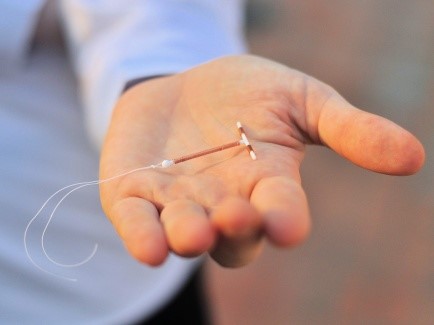
The intrauterine contraceptive device (IUCD). This is also known as 'the coil'. It sits inside the womb (uterus) and, once fitted, can stay in your womb for up to ten years. The device is called a coil because in the 1960s some devices were coil-shaped. Read about the intrauterine contraceptive device.
O sistema intrauterino (SIU). This is a specific type of IUCD which releases a progestogen hormone into the womb. It can last for up to five years. Read about the sistema intrauterino (SIU).
Why would I choose long-acting reversible contraception?
LARCs are ideal for women who do not want a baby in the near future. This might be because you think you have completed your family and don't want more children, but want to keep your options open. Or it might be because you are young and not wishing to have children for some years to come. Or because you don't want children at all. Or because you are not currently in a position to have children, because of your job, relationship or finances. The great thing about LARCs is the word "reversible" - so if your situation changes, you can stop using them and become fertile again.
You don't need to take a tablet every day, so for most LARCs, you can forget about contraception for years at a time. This makes them more reliable (as they don't need you to remember, other than when they are due to be replaced).
The main downside is that they all require a small procedure of some sort. However, this does not have to be done very often, and provides long-term, reliable contraception once you have done it.
Which LARC should I choose?
This is an individual choice. Different people will prefer different options. Pros and cons of each are weighed up in the separate leaflet called Contraception Methods, and there is plenty of information about each in their individual leaflets as linked above.
Quer acessar contraceptivos online?
Inicie rapidamente uma consulta do NHS Pharmacy First online através do Patient.info.
- Online e disponível 24 horas por dia, 7 dias por semana, o tratamento muitas vezes pode ser entregue no dia seguinte.
- Serviço gratuito, just pay the NHS prescription charge online if required.
- Basta responder a algumas perguntas e, em seguida, escolher um horário para uma ligação com um profissional de saúde.
Desenvolvido pela Evaro, um serviço de saúde regulamentado no Reino Unido que atende mais de 2 milhões de pacientes. Revisado por profissionais de saúde registrados no Reino Unido.
Escolhas do paciente para Contracepção

Saúde sexual
Sinais de que você está tomando a pílula anticoncepcional errada
A pílula anticoncepcional muitas vezes tem uma má reputação devido à sua gama de potenciais efeitos colaterais, que podem variar de levemente inconvenientes a extremamente debilitantes. No entanto, vale a pena notar que existem cerca de 30 tipos diferentes de pílulas anticoncepcionais atualmente disponíveis no Reino Unido, e nem todas as pílulas são criadas iguais.
por Sarah Graham

Saúde sexual
Pílula anticoncepcional somente de progestógeno
The progestogen-only contraceptive pill is commonly used when the combined pill is not suitable but is also used out of choice for many women. It can be taken safely when breastfeeding.
por Dra. Philippa Vincent, MRCGP
Perguntas frequentes
What makes LARCs more effective than methods like the pill?
LARCs are considered very reliable because, unlike daily pills, they don't require you to remember to do anything regularly. Once placed, they work continuously for years, which reduces the chance of human error affecting their effectiveness.
How often do I need to visit a doctor for LARC once it's fitted?
After the initial procedure to insert a LARC, you generally don't need frequent doctor visits for contraception. Depending on the type, you can forget about it for anywhere from three to ten years until it needs to be replaced.
Are all LARCs hormone-based?
Most LARCs release a progestogen hormone, such as the implant, injection, and the intrauterine system (IUS). However, there is also the intrauterine contraceptive device (IUCD), also known as 'the coil', which does not release hormones.
If I decide to have children earlier than planned, can I have my LARC removed at any time?
Yes, the term "reversible" in LARC means that if your situation changes and you wish to become pregnant, you can have the device removed. Once it's removed, you can become fertile again.
Is it painful to have a LARC fitted or removed?
The article mentions that inserting the contraceptive implant is a "minor procedure under local anaesthetic." For other LARCs, it states that they "require a small procedure of some sort." The article does not elaborate further on the pain experienced during fitting or removal for any of the devices.
Leitura adicional e referências
- Contracepção reversível de longa duração; Diretriz Clínica NICE (Outubro 2005 - atualizada em Julho 2019)
- Trussell J; Falha contraceptiva nos Estados Unidos, Contracepção, 2011
- Contracepção Intrauterina; Unidade de Eficácia Clínica da Faculdade de Saúde Sexual e Reprodutiva (março de 2023 - última atualização julho de 2023)
- Tabela Resumo dos Critérios de Elegibilidade Médica do Reino Unido para contracepção intrauterina e hormonal; Faculdade de Saúde Sexual e Reprodutiva, 2016 - emendado em setembro de 2019
- Contracepção - Métodos somente com progestógeno; NICE CKS, setembro de 2022 (acesso apenas no Reino Unido)
Sobre o autorVer biografia completa
Atualizado por

Dra. Rosalyn Adleman, MRCGP
MRCGP
A Dra. Rosalyn Adleman é uma médica do NHS que trabalha no norte de Londres.
Autoria de

Dra. Mary Harding, MRCGP
Médico Generalista, Autor Médico
BA, MA, MB, BChir, MRCGP, DFFP
A Dra. Mary Harding se formou na faculdade de medicina da Universidade de Cambridge em 1989.
Sobre o revisorVer biografia completa

Dr Colin Tidy, MRCGP
Médico Generalista, Autor Médico
MBBS, MRCGP, MRCP (Paediatrics), DCH
Dr Colin Tidy é um médico do NHS, baseado em Oxfordshire.
Histórico do artigo
Artigo também disponível em Inglês, Alemão, Espanhol, Francês, Italiano, Português, Hindi, Hebraico, Árabe, e Sueco.
Próxima revisão prevista para: 9 de fevereiro de 2028
10 Fev 2023 | Última versão
30 Out 2017 | Publicado originalmente
Escrito por:
Dra. Mary Harding, MRCGP
Participe da conversa
Compartilhe seus pensamentos ou experiências com outros em nosso comunidades de pacientes.

Pergunte, compartilhe, conecte-se.
Navegue por discussões, faça perguntas e compartilhe experiências em centenas de tópicos de saúde.

Sentindo-se mal?
Avalie seus sintomas online gratuitamente
Inscreva-se no boletim informativo do Patient
Sua dose semanal de conselhos de saúde claros e confiáveis - escritos para ajudá-lo a se sentir informado, confiante e no controle.
Ao se inscrever, você aceita nossos Política de Privacidade. Você pode cancelar a inscrição a qualquer momento. Nunca vendemos seus dados.