
É câncer de próstata ou outra coisa?
Revisado por Dr Colin Tidy, MRCGPÚltima atualização por Lawrence HigginsÚltima atualização 9 Set 2025
Atende aos diretrizes editoriais
- BaixarBaixar
- Compartilhar
- Language
- Discussão
- Ask Patient
- Versão em Áudio
- Adicionar às fontes preferidas no Google
One in eight men in the UK will get prostate cancer - but the earlier you spot it, the easier it is to treat.
However, many of the symptoms of prostate cancer are the same as those caused by several less serious conditions. Here we look at the signs to look out for and when to speak to your doctors.
Escolhas de vídeos para Câncer masculinoBiblioteca de vídeos
Câncer de próstata is the most common cancer in men in the UK, but many of its symptoms are also signs of less serious problems. Men's health specialist Dr Jeff Foster, a GP at H3Health, explains that in the early stages of prostate cancer, it's especially difficult to tell the difference between prostate cancer and benign prostatic hyperplasia (BPH), also called aumento da glândula prostática.
While prostate cancer can be life-threatening, BPH is a treatable prostate disease that doesn't lead to cancer. Although prostate cancer is much more serious, the doctor explains that the same principle applies to the two conditions:
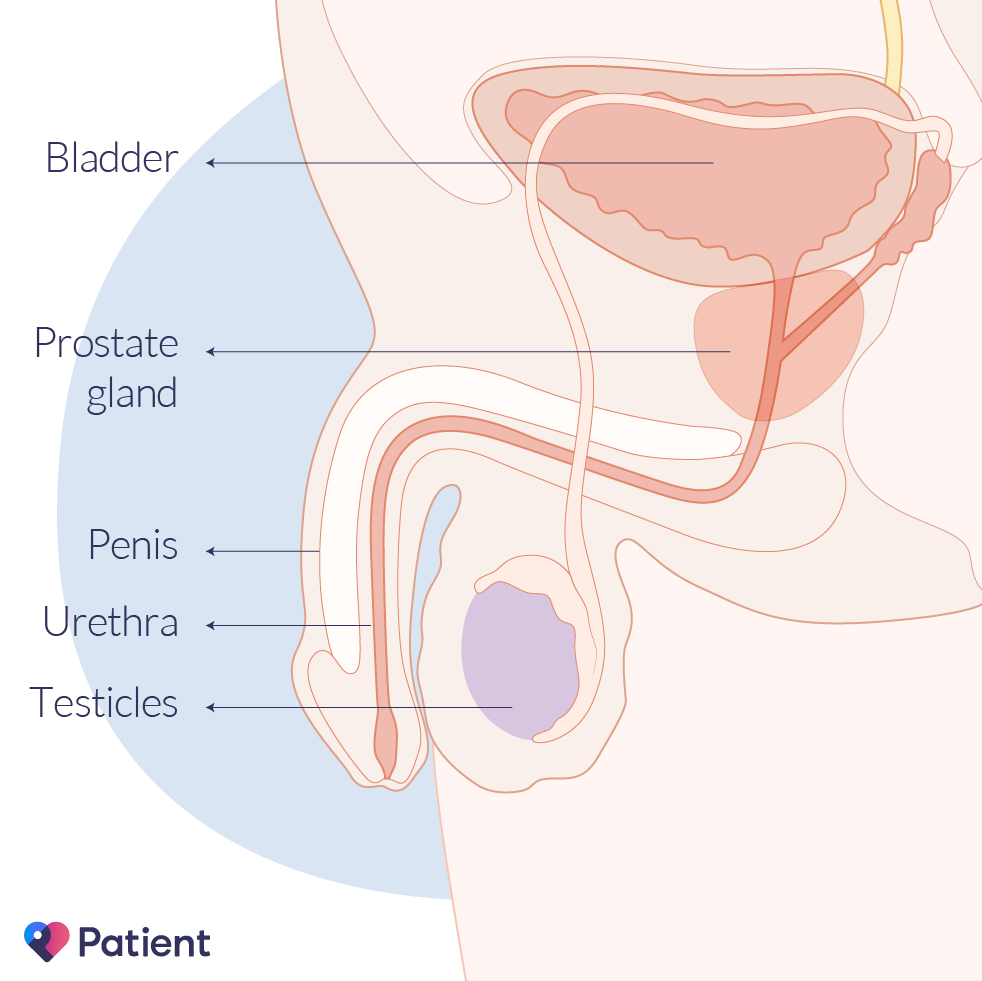
"In both cases, something in the prostate gland - which helps produce semen - gets larger and squashes the tube through which you pee (urethra), which causes problems while peeing. This is the principle of every prostate disease, and it means that they each have many of the same symptoms."
Here is an overview of each condition:
An enlarged prostate - it's usual for a man's prostate to grow with age, which tends to decrease your urine flow and range over time. This isn't a problem or sign of poor health.
BPH - this is when your prostate gets large enough to squeeze the urethra, causing issues. What's usually the size of a walnut or golf ball in adult men, may become as large as an orange.
Câncer de próstata - also involves the prostate getting bigger. However, this is caused by an abnormal growth of cancerous cells that can spread to other parts of the body. It's this spread that poses a serious risk to your health.
The prostate and nearby organs
What are the early symptoms of prostate cancer?
Problems when you pee
Early stage prostate cancer symptoms are caused by the extra pressure placed on your urethra. As BPH and other prostate problems can also squeeze this tube, the following symptoms could be a sign of any of them. The only way to know for sure is to get checked out by your doctor.
Incontinência urinária
Tendo incontinência urinária means you cannot always control when you pee, and you may regularly leak and dribble. It could also mean that you have urgency incontinence, where you feel a very sudden and intense urge to pee and only have a few seconds to get to a toilet before pee from your bladder is released.
Precisando urinar com mais frequência
Problems with peeing and needing to pee more frequently can become a constant disruption in your life. Night-time is one of the most obvious times you may notice an increase. According to Dr Foster, it's common for people with prostate problems to visit the toilet three or four times a night.
Difficulty peeing
Although your number of toilet trips may go up, once you're in front of the bowl you may find peeing difficult. For example, you may find it hard to release pee, notice that your flow has become much weaker, or frequently find that your bladder doesn't feel empty after peeing.
The speed of symptoms
You'll need to see a doctor to test if the symptoms mentioned indicate prostate cancer or something else. Dr Foster says you should take notice of how quickly these symptoms develop. If they come on suddenly, and quickly become more severe, this is one possible indicator that your urinary problems could be cancerous. Other benign prostate conditions like BPH will develop much more gradually.
What are the symptoms of advanced prostate cancer?
Advanced prostate cancer - also called metastatic prostate cancer - means the cancer has spread beyond your prostate gland. As the cancer begins to affect your lymph nodes and other parts of your body, you may notice other symptoms.
You have a better chance of recovering from prostate cancer the earlier it's caught, so if you experience any of the following advanced prostate cancer symptoms listed, you should see your doctor as soon as possible, especially if you also have problems when you pee.
These signs can also be caused by other, less serious issues - but don't self-diagnose, the tests performed by your doctor are the only way to know for sure.
Finding blood in pee or semen
Prostate cancer is one possible explanation for finding blood in your pee (haematuria) or in your semen (haematospermia). However, there are several conditions that could cause this, including urinary tract infections (UTIs) and other enlarged prostate problems such as prostatite.
Feeling pain in your pelvis, hips, or back
Advanced prostate cancer may spread to your bones, known as bone metastasis, and as a result, your bones may become painful. You're more likely to feel this in your back, pelvis, and hip bones, due to their close proximity to your prostate, which sits just beneath your bladder.
Disfunção erétil
Disfunção erétil means you repeatedly find it difficult to get or keep an erection. This has several possible causes, ranging from physical health issues, such as hormone changes, to mental health issues - such as ansiedade e depressão.
Erectile dysfunction affects around 4 out of 10 men at age 40 and around 7 out of 10 at age 70, and as a symptom on its own it's unlikely to be a sign of prostate cancer. However, it can be seen as a symptom in advanced prostate cancer but other symptoms would usually be present too.
Perda de peso inexplicada
Perda de peso não intencional isn't usually one of the first prostate cancer symptoms people notice. However, if you find you've lost weight without any changes in your lifestyle, and you're experiencing any other symptoms previously listed, it's worth getting tested. Weight loss tends to be a sign of advanced prostate cancer, due in part to the increased activity of cancer cells in the body - the more cancer cells there are, the more energy they use up.
Escolhas do paciente para Câncer masculino

Câncer
Quais são os sinais de câncer de próstata?
In the UK, prostate cancer is the most common cancer in men and is responsible for 12,300 deaths a year. Depending on how the cancer cells grow, you may or may not develop noticeable signs of prostate cancer. To give yourself the best chance of diagnosis and survival, it's important to be aware of the key signs, and also to attend regular GP check-ups once you hit your forties.
por Lynn Stephen

Saúde do homem
Problemas de próstata
Problemas na próstata e na uretra podem afetar o fluxo suave de urina nos homens. Este folheto fornecerá uma breve explicação das diferentes condições da próstata e da uretra e como o sistema urinário pode ser afetado.
por Dra. Rachel Hudson, MRCGP
Sobre o autorVer biografia completa
Atualizado por

Lawrence Higgins
Editor-chefe
Bacharelado em Ciências, Diploma de Pós-Graduação
Lawrence trabalhou como editor-chefe do Patient.info e também como autor colaborador. Ele também é membro da Guilda dos Redatores de Saúde.
Autoria de

Amberley Davis
Escritor sênior
BA (Hons), CPD
Amberley é uma escritora sênior na Patient e escreveu extensivamente sobre uma variedade de tópicos de saúde e bem-estar.
Sobre o revisorVer biografia completa

Dr Colin Tidy, MRCGP
Médico Generalista, Autor Médico
MBBS, MRCGP, MRCP (Paediatrics), DCH
Dr Colin Tidy é um médico do NHS, baseado em Oxfordshire.
Histórico do artigo
Artigo também disponível em Inglês, Alemão, Espanhol, Francês, Italiano, Português, Hindi, Hebraico, Árabe, e Sueco.
Next review due: 8 Sept 2028
9 Set 2025 | Última versão
9 Nov 2022 | Publicado originalmente
Escrito por:
Amberley Davis
Compartilhe seus pensamentos ou experiências com outros em nosso comunidades de pacientes.
Inscreva-se no boletim informativo do Patient
Sua dose semanal de conselhos de saúde claros e confiáveis - escritos para ajudá-lo a se sentir informado, confiante e no controle.
Ao se inscrever, você aceita nossos Política de Privacidade. Você pode cancelar a inscrição a qualquer momento. Nunca vendemos seus dados.