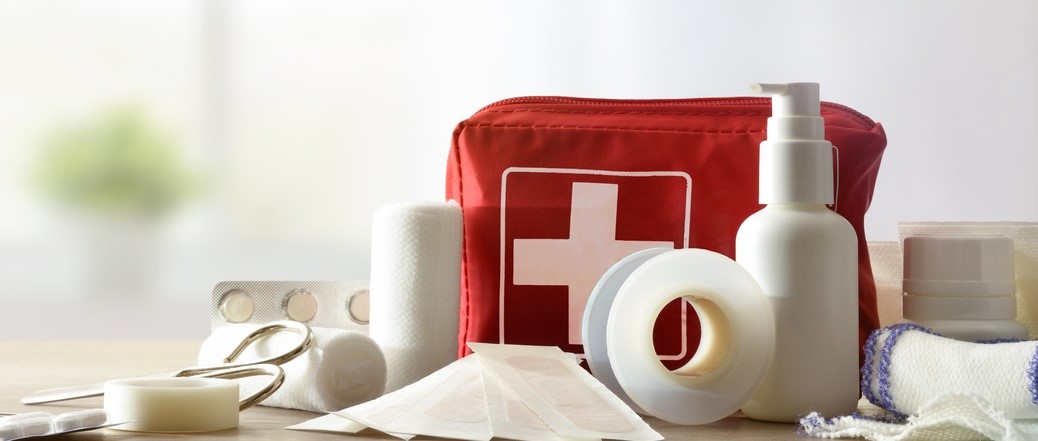
Itens essenciais de primeiros socorros para sua casa
Revisado por Dr Sarah JarvisÚltima atualização por Danny ChadburnÚltima atualização 19 de out de 2017
Atende aos diretrizes editoriais
- BaixarBaixar
- Compartilhar
- Language
- Discussão
- Versão em Áudio
- Adicionar às fontes preferidas no Google
Todos gostamos de estar preparados para situações de emergência médica em casa, especialmente aqueles que vivem com crianças, idosos ou qualquer pessoa particularmente propensa a acidentes. Desde cobrir um corte até tratar uma queimadura grave, um kit de primeiros socorros bem abastecido pode ser fundamental para a recuperação do paciente.
'You never know when you will need a first aid kit. It's not only useful for putting a plaster on a small cut, but also for more serious ailments from severe bleeding to broken bones,' says Isobel Kearl, product implementation officer at St John Ambulance.
'Immediate first aid attention can lessen the likelihood of injuries getting worse. Even small cuts and grazes can become infected if left untreated and, if sepsis takes hold, they can become life-threatening. By treating injuries with a sterile wipe and dressing the wound appropriately, this risk can be dramatically reduced.'
Kearl recommends these essential first aid kit items for every home:
Sterile medical wipes - useful to clean cuts and grazes, and other small wounds.
Waterproof plasters to keep small injuries clean.
Fabric plaster strip - if the wound is bigger or awkwardly shaped, you can cut your own plasters to size.
Adhesive wound dressing to protect wounds from dirt and germs.
Low-adherent wound dressing to protect wounds from dirt and germs, while allowing the skin to breathe and providing cushioning.
Crepe bandage to provide support for sprains and strains, and hold dressings in place.
Stretch bandage to keep dressings in place, especially in awkward areas like joints.
Microporous tape to hold dressings in place, or used alone for minor cuts and grazes.
Safety pins to secure bandages or slings.
Triangular bandage to make a sling or used to hold dressings in place in awkward areas.
Eye pad dressing for minor eye injuries.
Eye wash phial to wash a foreign body out of the eye.
Burn gel sachets to absorb and disperse heat from burn injuries if no water is available.
Heat-retaining foil blanket for treating shock or hypothermia.
Instant ice pack for reducing swelling in sprains and strains.
Disposable gloves to prevent infections to yourself and the patient - go for nitrile if you're worried about latex allergies.
Tweezers or a splinter remover.
Blunt-ended scissors to cut bandages or a patient's clothing to access a wound.
When to replace your items
When stored correctly, nitrile gloves have a shelf life around four years. Any topical creams or ointments have an expiration date around three years. You should also check for any dates printed on to tubes or packaging.
For sterile medical wipes and eye wash, always check the expiration date as the seal may have become compromised over time and caused contamination.
Many ice packs don't have expiration dates; however, some companies advise replacing them every few years as the plastic may have degraded causing them to leak.
Alternative first aid equipment
If you can't get to a first aid kit, there are some household items that will double up as first aid equipment too. These include:
Tweezers to remove ticks or splinters (not bee stings as they can push more venom into the skin) - sterilise beforehand with boiling water or rubbing alcohol.
A credit card for removing a bee stings - try scraping it across the surface of your skin so the stinger catches the edge and is pushed up.
Distilled white vinegar - this can be used to treat mild cuts and abrasions when diluted in a 50/50 mixture of water and vinegar, but beware that it may sting.
A bag of frozen vegetables can be used in place of an ice pack.
Duct tape can be used to seal an open wound - use a clean piece of cloth, such as an old T-shirt, between the skin and the tape to help protect the wound but make sure it's not so tight that it cuts off circulation.
Escolhas do paciente para Primeiros socorros
Tratamento e medicação
4 dicas de primeiros socorros para um Natal seguro e feliz
It’s that time of year we’ve all been waiting for - a chance to unwind and enjoy our favourite Christmas traditions. But even with the cosy, carefree vibes, it’s worth remembering that Christmas can actually bring a few extra hazards into your home. So as the festivities ramp up, St John Ambulance is sharing some down-to-earth first aid tips to help keep the season happy and safe.
por Victoria Raw
Tratamento e medicação
Como aprender primeiros socorros por conta própria
Você saberia o que fazer se alguém estivesse engasgado? Ou se perdesse a consciência? Conhecer os primeiros socorros pode ser a diferença entre a vida e a morte, por isso é importante saber o básico.
por Andrea Downey
Sobre o autor

Danny Chadburn
Chefe de Conteúdo
Danny foi o anterior Chefe de Conteúdo na Patient.
Sobre o revisorVer biografia completa

Dra. Sarah Jarvis
Consultora Clínica
MA (Cantab), BM, BCh (Oxon), DRCOG, FRCGP, MBE
Após se formar em medicina em Cambridge e Oxford, a Dra. Sarah Jarvis MBE tornou-se médica de clínica geral.
Histórico do artigo
As informações nesta página são revisadas por pares por clínicos qualificados.
Artigo também disponível em Inglês, Alemão, Espanhol, Francês, Italiano, Português, Hindi, Hebraico, Árabe, e Sueco.
19 de out de 2017 | Última versão

Pergunte, compartilhe, conecte-se.
Navegue por discussões, faça perguntas e compartilhe experiências em centenas de tópicos de saúde.

Sentindo-se mal?
Avalie seus sintomas online gratuitamente
Inscreva-se no boletim informativo do Patient
Sua dose semanal de conselhos de saúde claros e confiáveis - escritos para ajudá-lo a se sentir informado, confiante e no controle.
Ao se inscrever, você aceita nossos Política de Privacidade. Você pode cancelar a inscrição a qualquer momento. Nunca vendemos seus dados.
Mais em tratamento e medicação
- A hipnoterapia pode ajudar você a perder peso?
- Sua pele pode realmente ficar viciada em cremes esteroides?
- Os beta bloqueadores ajudam com os sintomas de ansiedade?
- Os aplicativos de saúde mental realmente funcionam?
- Você precisa de fisioterapia após a substituição da articulação?
- Obtendo comprimidos para malária na sua farmácia
- Rinite alérgica: como o seu farmacêutico pode ajudar
- Como escolher um terapeuta
- Como gerenciar os efeitos colaterais do Mounjaro e Wegovy
- Como a cirurgia de perda de peso mudou minha vida: a história de Gemma
- É realmente refluxo? Por que você pode estar recebendo prescrição errada de IBPs
- Maneiras práticas de gerenciar seus medicamentos em casa
- Você deve dar analgésicos para crianças?
- Você deve se preocupar com os esteroides e seus efeitos colaterais?
- Perguntas Frequentes sobre Wegovy: Respostas para dúvidas comuns sobre perda de peso
- O que acontece quando os medicamentos interagem
- Como é estar na lista de espera para transplante de órgãos
- Quais suprimentos você precisa para um kit de primeiros socorros esportivo?