Correr faz mal para os joelhos?
Revisado por Dr Colin Tidy, MRCGPÚltima atualização por Victoria RawÚltima atualização 18 de maio de 2026
Atende aos diretrizes editoriais
- BaixarBaixar
- Compartilhar
- Language
- Discussão
- Versão em Áudio
- Adicionar às fontes preferidas no Google
If you're taking up running, you may be wondering if it's is bad for your knees. In fact, this cardiovascular exercise can help to keep your knees and other joints healthy.
The key is not to put more stress on your knees than your body can handle.
Correr faz mal para os joelhos?
It is not corrida that's bad for your knees, but running when your knees can't take the stress that the activity places on them. If you have no existing knee or other joint issues, fitness specialists like Laura Williams advise running as a way to keep your knees healthy.
"Nowadays, it's thought that running helps to keep your joints healthy, as it increases strength in both your bones and muscles," she says. "Running involves several joints - including your hip, knee, and ankle joints."
The knee is one of the largest joints in your body, and is the area where your thighbone (femur) joins your kneecap (patella), shinbone (tibia) and the smaller bone that runs alongside it (fibula). Muscle-strengthening exercises are great for your joints because they build the muscles that surround them. This provides more support for your connecting bones, which in turn reduces stress and weight on your joints.
Why do my knees hurt when I run?
If running isn't bad for your knees, why then do knee pain and injuries sometimes occur? Running is high-impact because it involves jolting movements as your feet leave and hit the ground. This can be jarring on your joints and particularly your knees, the impact putting a high level of stress on them.
Experiencing knee pain during or after a run may be due to excessive pressure between your kneecap and thighbone. This pain may come and go and is usually felt at the front of your knee, although the exact site of pain is often hard to pinpoint.
Throughout your life, your joints will go through inevitable wear and tear. Regular physical activity is integral to maintaining a full range of motion in your joints, but it's important to balance high-impact exercise with low-impact activity and rest.
Williams summarises the essential considerations for runners, explaining: "Ultimately, how running impacts your joints will depend on how you run, how often you run, and how far you run, as well as any injury history."
The long-term effects of running
Having joint wear and tear is a natural part of ageing, and may lead to joint issues such as dor, stiffness, cirurgias de substituição articular, e osteoartrite later in life. Contrary to popular belief, high-impact activities such as running do not increase the likelihood of joint complaints on their own.
For instance, many estudos have found no correlation between running and osteoartrite - the wearing down of joint cartilage. When pesquisas has shown an association between high-volume or high-intensity running with osteoarthritis, it hasn't been possible to determine whether other factors such as previous injury have played a role.
On the other hand, a 2020 estudo not only found running to have no effect on joint cartilage volume or thickness, but also suggested that it promoted cartilage nutrition.
How do runners avoid joint damage?
To reduce your chance of knee injury, there are steps you can follow to keep your knees supported while running.
Running shoes
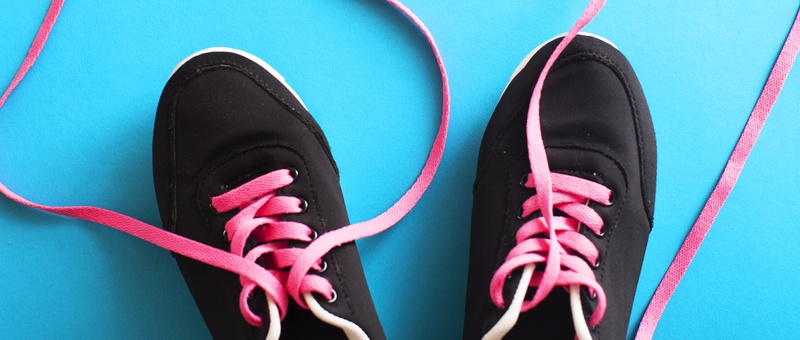
The first step is to find a supportive running shoe.
"Ensure you run in shoes that offer some cushioning and stability, and are suitable for the surface you'll be running on too," says Williams.
Factors include finding the perfect shoe width, cushion level, and arch support for your feet. Research shows that your shoes can significantly reduce your chance of running-related injury. If possible, it helps to have your shoes fitted properly in-store.
Alongamento
Alongamento before and after you run can help prevent knee injury. If you run with tight muscles, you're more likely to run with poor form and your muscles won't support your joints as effectively. Stretching after a run while your muscles are still warm will help maintain muscle flexibility - removing stress from your joints.
Running form
Good running form can significantly reduce the impact placed on your knees. This includes maintaining a good posture, looking ahead, keeping your elbows at 90° angles, and striking the ground with your mid-foot as opposed to your heel.
Adequate rest and gradual increases
"Allow your body to recover fully after each run," Williams cautions. "Take sufficient rest days, and avoid any sharp increases in mileage."
If you are embarking on a new running programme this year, don't ramp up the training routine too quickly. It's crucial to build up your running distance gradually and to start with plenty of rest days. Your body, including your knees, needs time to adapt to regular high-impact exercise.
This advice is not just for beginners. Many seasoned runners follow the 10% rule, increasing their weekly mileage by a maximum of 10% per week.
Softer surfaces
While running is high-impact, studies show that the impact exerted through your knees can be reduced by running on softer surfaces - including grass, woodchip, or a treadmill - as opposed to hard surfaces such as cement.
Adding variety to your fitness routine
Williams also recommends mixing up your fitness routine with other exercises that are low-impact.
"In order to keep your running as joint-friendly as possible, you should aim to combine it with other sports that are lower in impact," she says. "Cycling, swimming, and rowing will all help to maintain fitness, minus the load."
When should I avoid running?
Experts have identified the main risk factor for knee issues - or indeed any other running-related injuries - as previous injury in the previous 12 months. Running is bad for your knees if you attempt to run before existing knee pain, stiffness, and injury have fully healed.
If you experience knee pain or stiffness during or after running, listen to your body and rest until your joints have recovered. If after a few days of rest your knee is still causing you discomfort, you can consult your doctor who may refer you to a physiotherapist.
Escolhas do paciente para Exercício e atividade física

Vida saudável
Quais são os benefícios a longo prazo do exercício?
Staying active helps us to improve our flexibility, weight management, and mental health - and its effects can be seen almost immediately. But doing regular exercise also helps you stay healthier for longer in later life.
por Lynn Stephen

Saúde mental
Como lidar com o estresse através do exercício
There’s strong evidence to suggest that staying active helps us cope with stress - and as the cost of living continues to rise, so does the prevalence of burnout. Exercise and other techniques can help deal with signs of stress while you get to the root of the problem.
por Lynn Stephen
Perguntas frequentes
O que é a 'regra dos 10%' para corredores, e como ela ajuda a proteger meus joelhos?
A 'regra dos 10%' é uma diretriz que muitos corredores seguem para prevenir lesões. Significa que você deve aumentar sua quilometragem semanal de corrida em no máximo 10% a cada semana. Esse aumento gradual permite que seu corpo, incluindo seus joelhos, tenha tempo suficiente para se adaptar às exigências do exercício regular de alto impacto, reduzindo o risco de tensão ou lesão.
Como posso saber se meus tênis de corrida estão oferecendo suporte suficiente para meus joelhos?
Encontrar o tênis de corrida certo envolve garantir que eles ofereçam amortecimento e estabilidade adequados para seus pés e as superfícies em que você corre. Fatores-chave incluem a largura correta do calçado, um nível de amortecimento apropriado e suporte adequado para o arco. Se possível, obter um ajuste profissional dos seus tênis na loja pode ajudar significativamente na seleção de um par que reduza suas chances de lesões relacionadas à corrida.
O que especificamente se entende por 'boa forma de corrida' para proteger meus joelhos?
Uma boa forma de correr envolve vários elementos para minimizar o impacto nos seus joelhos. Isso inclui manter uma boa postura, olhar para frente, manter os cotovelos dobrados em ângulos de 90 graus e tocar o chão com o meio do pé em vez do calcanhar. Esses ajustes podem reduzir significativamente o estresse colocado nos seus joelhos enquanto corre.
Além de correr, que outros exercícios posso fazer para manter meus joelhos saudáveis?
Para manter sua corrida o mais amigável possível para as articulações e preservar a saúde geral dos joelhos, é benéfico combiná-la com outros esportes de baixo impacto. Atividades como ciclismo, natação e remo podem ajudar a manter sua forma física sem colocar o mesmo nível de impacto ou carga nas articulações como a corrida.
Se eu tive uma lesão no joelho no passado, quanto tempo devo esperar antes de correr novamente?
Se você teve uma lesão no joelho, especialistas identificam uma lesão anterior nos últimos 12 meses como um fator de risco principal para problemas futuros. É crucial evitar correr novamente até que qualquer dor, rigidez ou lesão no joelho existente tenha se curado completamente. Tentar correr antes da recuperação completa pode ser prejudicial para seus joelhos.
Sobre o autorVer biografia completa
Atualizado por

Victoria Raw
Redatora de Reportagens
BA (Hons), Literatura Inglesa
Victoria é redatora de conteúdo na Patient, com interesses especiais que abrangem o bem-estar mental, tendências sociais e o impacto da tecnologia na nossa saúde.
Autoria de

Amberley Davis
Escritor sênior
BA (Hons), CPD
Amberley é uma escritora sênior na Patient e escreveu extensivamente sobre uma variedade de tópicos de saúde e bem-estar.
Sobre o revisorVer biografia completa

Dr Colin Tidy, MRCGP
Médico Generalista, Autor Médico
MBBS, MRCGP, MRCP (Paediatrics), DCH
Dr Colin Tidy é um médico do NHS, baseado em Oxfordshire.
Histórico do artigo
Artigo também disponível em Inglês, Alemão, Espanhol, Francês, Italiano, Português, Hindi, Hebraico, Árabe, e Sueco.
Next review due: 18 May 2026
18 de maio de 2026 | Última versão
10 Jan 2022 | Publicado originalmente
Escrito por:
Amberley Davis
Participe da conversa
Compartilhe seus pensamentos ou experiências com outros em nosso comunidades de pacientes.

Pergunte, compartilhe, conecte-se.
Navegue por discussões, faça perguntas e compartilhe experiências em centenas de tópicos de saúde.

Sentindo-se mal?
Avalie seus sintomas online gratuitamente
Inscreva-se no boletim informativo do Patient
Sua dose semanal de conselhos de saúde claros e confiáveis - escritos para ajudá-lo a se sentir informado, confiante e no controle.
Ao se inscrever, você aceita nossos Política de Privacidade. Você pode cancelar a inscrição a qualquer momento. Nunca vendemos seus dados.