Stye
Eyelid infection
Peer reviewed by Dr Colin Tidy, MRCGPLast updated by Dr Hayley Willacy, FRCGP Last updated 15 Jan 2025
Meets Patient’s editorial guidelines
- DownloadDownload
- Share
- Language
- Discussion
- Audio Version
- Add to preferred sources on Google
A stye is a small painful red lump on the edge of the eyelid. Most styes get better on their own and do not need medical treatment. Hot compresses can ease the pain and encourage the stye to burst.
Key points
A stye is a small red bump on the edge of the eyelid that is caused by a bacterial infection. It usually only affects one eye.
Most styes go away on their own within a few days. Applying warm compresses 3-4 times a day can help ease pain and bring the stye to a head.
Don’t try to pop a stye, instead, let it drain naturally. If it doesn't go away after a few days, see a doctor who can offer advice and treatment options.
What is a stye?
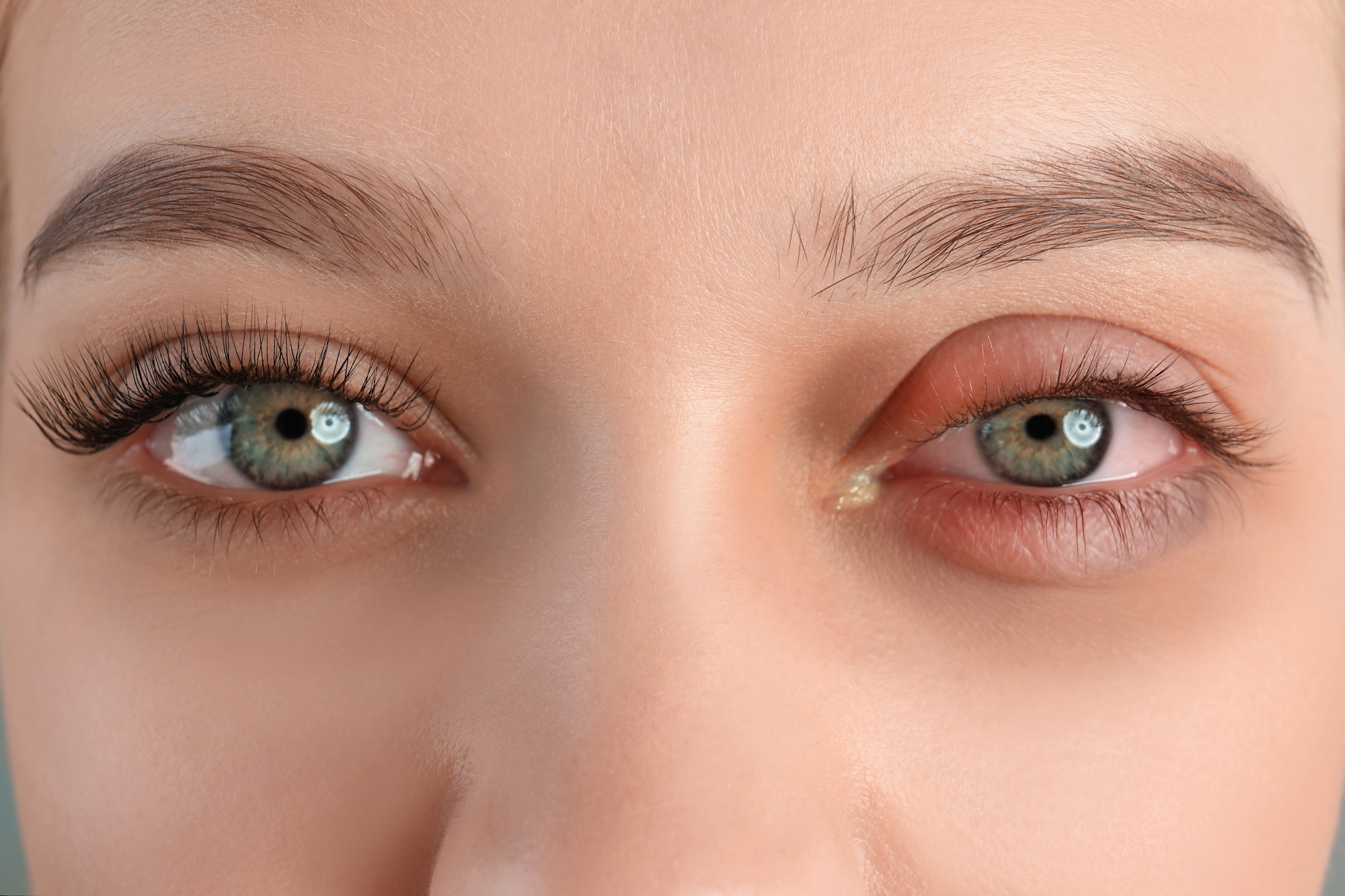
Styes are a type of bacterial infection of the eyelid, typically causing a painful red bump either inside or outside of it.
They are a very common eye problem and usually develop quite quickly, over a few days. Usually only one eye is affected, although you can develop more than one stye at a time, even on the same lid.
Types of stye
There are two types of stye: external styes (the common type) and internal styes (which are quite uncommon).
External stye (external hordeolum)
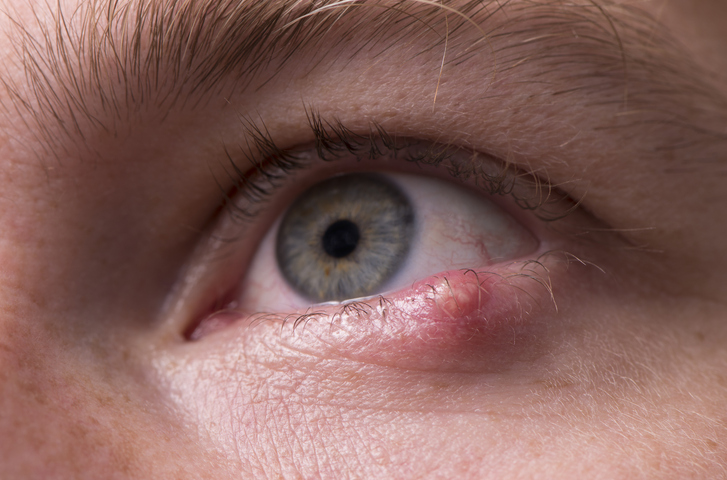
This is the common type of stye. Technically it is an external stye; however, it is often just called a stye. It appears along the edge of the eyelid, due to infection in the eyelash follicle (where one of your eyelashes attaches to your eyelid).
It may start off as a small red lump but, as it develops into a collection of pus (a little abscess), it looks like a yellow pus-filled spot. The edge of the eyelid around it becomes reddened and swollen, and the lid is painful.
Internal stye (internal hordeolum)
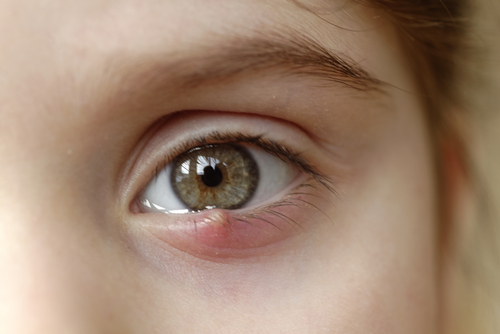
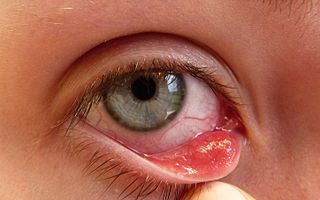
An internal stye arises when oil glands in the main part of the eyelid (meibomian gland) become clogged with oil and then infected. The infection comes to a head on the inner surface of the eyelid, against the eyeball, so that from the outside it is visible only as a swelling.
Internal styes may be painful, although often they cause a dull aching in the eyelid, sometimes with the sensation of a lump. Internal styes are much less common than external styes.
Internal stye
Stye symptoms
Signs and symptoms of a stye may include:
A red bump on the edge of the eyelid.
The bump may fill with yellow pus, which might leak out.
Pain in the affected eyelid.
Eyelid swelling.
Watery eye.
What causes a stye?
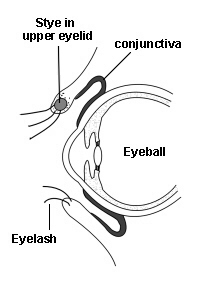
Eye with upper eyelid stye
People often ask 'what causes styes in adults'? Most styes usually occur for no obvious reason, although if your eyelids are itchy or rubbed a lot this may make an external stye more likely.
The usual germ (bacterium) that causes the infection is called Staphylococcus aureus. It is a common germ that is often found on healthy skin. It usually does no harm. However, it can occasionally get into the skin, where it causes infections such as spots, abscesses, and styes.
Risk factors
Some people have an eyelid condition called blepharitis. This is an inflammation of the eyelids in which they can become swollen, dry and itchy. Blepharitis can make you more prone to developing styes.
If you have acne, rosacea or seborrheic dermatitis you may be more prone to developing styes.
Diabetes that is not well controlled also increases the risk of infections.
Stye treatment
Most people want to know how to get rid of a stye.
Styes often need no treatment. The 'head' or 'point' usually bursts within 3-4 days.
Warm compresses may help to ease soreness and draw the pus to a head.
You should avoid wearing contact lenses and eye make-up until it resolves.
Taking antibiotics (ointments or medicines) is not recommended.
It is sensible to discard mascara and eyeliners that you used along the edge of your eyelid as the stye was forming. This is to avoid any chance of re-infecting the eye. Options to speed up resolution of the stye are:
No treatment
Often, no treatment is necessary to get rid of a stye. Once a 'head' or 'point' has formed on a stye, most burst within 3-4 days, with the tiny amount of pus draining away and leaving no further problem. 'Popping' the stye in the eye (like a zit) is not recommended.
Hot compresses
These may help to ease soreness and draw the pus to a head. You can do this yourself: Hold a clean flannel, which has been dipped in warm water and squeezed dry, gently but firmly against the closed eye. Do this for 5-10 minutes, 3-4 times a day. (The water should be hot; it should be comfortable and not scalding.)
Eventually the stye will 'pop' and drain - but do not be tempted to try to pop it yourself. You may make things worse by injuring the delicate eyelid, or by spreading infection deeper into the tissues.
Epilation of the eyelash
This is a treatment for an external stye. It means that the eyelash is plucked out. Epilation is briefly uncomfortable but it can help the infection from the hair follicle to drain.
Incision and drainage of an external stye
A health professional can perform this procedure, which is a treatment for an external stye. It is like lancing a boil. A sterile needle (or perhaps a small scalpel) can be used to open the stye and drain the pus.
You should not attempt this yourself, as you might spread the infection to the eyelid, with serious consequences.
Drainage of an internal stye
This procedure involves using an injection of local anaesthetic to numb your eyelid, which must be flipped 'inside out' in order to expose the stye before it can be scraped out.
Very occasionally this procedure is done under general anaesthetic, as it is uncomfortable and children, in particular, find it difficult. After this procedure, antibiotic eye drops are usually given.
How long does a stye last?
A stye will usually burst on its own in 3-4 days, but they can sometimes last up to 1-2 weeks.
Are there any complications?
Most styes are very minor infections that clear without any treatment and cause no problems. Styes do not affect your vision.
Stye prevention
Styes are caused by a bacterium (Staphylococcus) getting into the blocked oil glands of the eyelid, so paying attention to good eye hygiene will help prevent styes occurring.
Remove eye makeup before going to bed.
Replace eye makeup regularly to avoid bacterial growth.
Wash hands before touching eyes or contact lenses.
Avoid sharing makeup, towels, pillows, or other personal items.
Can a stye turn into a chalazion?
Sometimes the stye doesn't go away, and can turn into a cyst called a chalazion. If this happens it doesn't look particularly red and it doesn't hurt. However, you will have a lump on your eyelid.
Can a stye turn into conjunctivitis?
Very occasionally the infection can spread. It may spread to the surface of the eye, causing conjunctivitis, which may need antibiotic ointment or drops to clear the infection.
Alternatively the infection can spread around the eyelid, causing it to become more red and swollen. If this happens you should see your GP as you may need antibiotic tablets.
Can a stye turn into orbital cellulitis?
An extremely rare complication of a stye occurs when the infection spreads to involve the whole eyelid and tissues surrounding and behind the eye. This is called orbital cellulitis.
The eyelid may be very swollen and red, it may hurt or be impossible to open the eye and you may have a lot of pain and a high temperature (fever). Sometimes the eyeball is pushed forwards so that it bulges, and you may be very sensitive to the light.
If you develop this type of complication, you need to see a medical professional urgently. Treatment of orbital cellulitis is with antibiotics, usually given into a vein (intravenously) via a drip, in hospital.
Frequently asked questions
Why do I keep getting styes?
Recurrent styes often result from conditions such as blepharitis, acne, or diabetes, or from poor eye hygiene. To prevent them, manage underlying conditions and maintain good eye hygiene by removing makeup daily, replacing old products, washing hands before touching eyes or lenses, and avoiding sharing makeup, towels, or pillows.
Are styes contagious?
Styes are not contagious. However, to reduce the chance of the infection spreading you should always wash your hands after touching the affected eyelid and do not wear contact lenses or eye make-up until the infection has settled.
Is a stye caused by stress?
Stress itself doesn’t directly cause a stye, but it can weaken your immune system, making you more prone to infections like styes. When you’re run down or under pressure, bacteria are more likely to infect an eyelash follicle or oil gland.
Should you pop a stye?
No, you should never pop a stye. Squeezing it can spread the infection or make it worse. Instead, apply a warm compress several times a day to help it drain naturally.
Dr Mary Lowth is an author or the original author of this leaflet.
Patient picks for Eyelid problems

Eye health
Entropion
An entropion occurs where your eyelid turns towards the eye. The eyelashes then rub against the front of your eye (cornea). Irritation, pain and watering of the eye are the main symptoms. Taping the eyelid to your cheek, lubricant eye ointment and sometimes botulinum toxin injections help to control symptoms. People often require surgery if the problem persists.
by Dr Hayley Willacy, FRCGP
Eye health
Swollen eyelid
A swollen eyelid is very common and is usually due to allergy, inflammation, infection, or injury. It can affect either the upper or lower eyelid, or both.
by Dr Caroline Wiggins, MRCGP
Further reading and references
- Styes (hordeola); NICE CKS, October 2024 (UK access only)
- Willmann D, Guier CP, Patel BC, et al; Stye
- Lindsley K, Nichols JJ, Dickersin K; Non-surgical interventions for acute internal hordeolum. Cochrane Database Syst Rev. 2017 Jan 9;1:CD007742. doi: 10.1002/14651858.CD007742.pub4.
About the authorView full bio
Updated by

Dr Hayley Willacy, FRCGP
General Practitioner, Medical Author
MBChB (1992), DRCOG, DFFP, MRCOG (Part 1) MRCGP (2007), DFSRH (2013), MSc - medical education (2020)
Dr Hayley Willacy was an NHS GP working in northwest England, who retired from clinical practice in 2022 after 30 years.
About the reviewerView full bio

Dr Colin Tidy, MRCGP
General Practitioner, Medical Author
MBBS, MRCGP, MRCP (Paediatrics), DCH
Dr Colin Tidy is an NHS Doctor, based in Oxfordshire.
Join the conversation
Share your thoughts or experiences with others in our patient communities.

Ask, share, connect.
Browse discussions, ask questions, and share experiences across hundreds of health topics.

Feeling unwell?
Assess your symptoms online for free
Sign up to the Patient newsletter
Your weekly dose of clear, trustworthy health advice - written to help you feel informed, confident and in control.
By subscribing you accept our Privacy Policy. You can unsubscribe at any time. We never sell your data.