Furúnculo no canal auditivo
Revisado por Dr Colin Tidy, MRCGPÚltima atualização por Dr Doug McKechnie, MRCGPÚltima atualização 19 Dez 2024
Atende aos diretrizes editoriais
- BaixarBaixar
- Compartilhar
- Language
- Discussão
- Versão em Áudio
- Adicionar às fontes preferidas no Google
Nesta série:Dor de ouvidoDisfunção da tuba auditivaInfecção do ouvido médio (otite média)Infecção no ouvido externo (otite externa)Infecção fúngica no ouvidoBarotrauma no ouvido
Um pequeno furúnculo que ocorre no canal auditivo pode ser muito doloroso. Geralmente desaparece sem tratamento. No entanto, analgésicos e antibióticos são às vezes necessários. Dicas sobre como ajudar a prevenir novos episódios são fornecidas abaixo.
Em resumo
Uma furúnculo no canal auditivo pode causar dor, coceira, irritação e perda auditiva temporária.
Furúnculos no canal auditivo podem se desenvolver se a pele dentro do ouvido for danificada, por exemplo, ao cutucá-la.
Analgésicos e compressas quentes podem ajudar com o desconforto.
A maioria das furúnculos no canal auditivo desaparece naturalmente sem tratamento específico.
Consulte um médico se a furúnculo for grave, não desaparecer ou se tornar muito grande.
Evite cutucar ou limpar o canal auditivo com cotonetes, dedos ou toalhas.
Mantenha o canal auditivo seco, especialmente se seus ouvidos forem sensíveis a infecções.
Sintomas de um furúnculo no canal auditivo
Furúnculo no canal auditivo
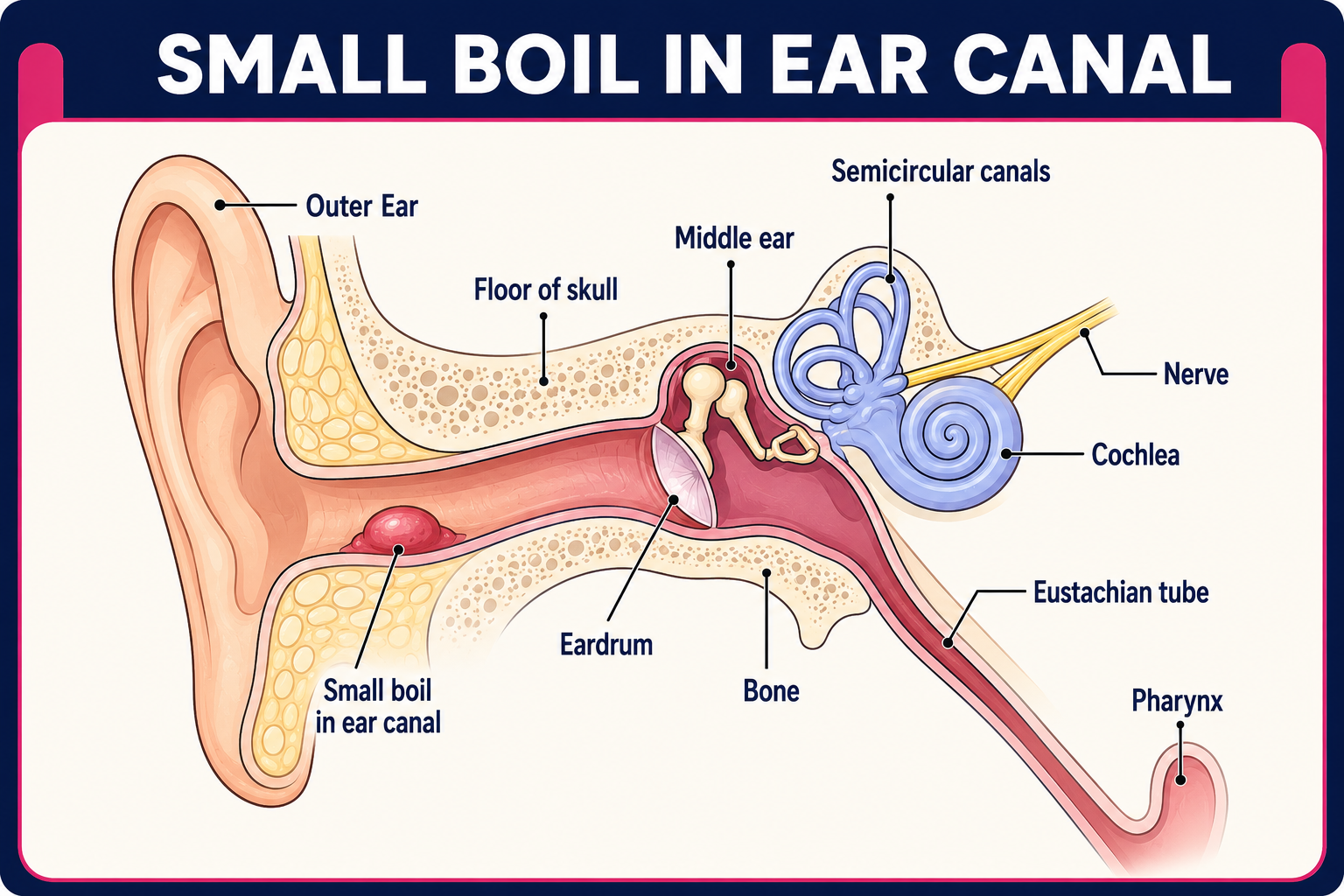
Uma furúnculo no canal auditivo pode causar:
Dor que pode se tornar bastante intensa, mesmo que o furúnculo geralmente seja pequeno.
Coceira e irritação na pele.
Perda auditiva temporária.
Descarga súbita do ouvido se o furúnculo estourar.
O que causa uma furúnculo no canal auditivo?
Na maioria das vezes, elas ocorrem 'do nada' sem razão aparente, como a maioria das manchas ou pequenas furúnculos que podem surgir em qualquer área da pele. Em alguns casos, a infecção se desenvolve em pele danificada. A pele no canal auditivo pode ser danificada ao ser cutucada com objetos como um cotonete. A pele levemente danificada pode rapidamente se inflamar e infectar.
Qual é o tratamento para uma furúnculo no canal auditivo?
Como a maioria das pequenas manchas ou furúnculos pequenos, um furúnculo provavelmente desaparecerá sem qualquer tratamento. O sistema imunológico do corpo geralmente consegue eliminar os germes (bactérias) que causam furúnculos. No entanto, a dor pode ser significativa até que desapareça.
O seguinte pode ser usado como tratamento:
Pcomuns como paracetamol ou ibuprofeno podem ser comprados sem receita.
Um pano (flanela) embebido em água quente e depois colocado contra o ouvido pode aliviar a dor.
Antibióticos, tais como flucloxacilina, às vezes são necessários se a infecção não desaparecer por conta própria ou se a infecção for grave.
Ocasionalmente, a furúnculo pode se tornar muito grande e doloroso. Pode ser necessário encaminhamento para um especialista em ouvido se isso acontecer.
Como prevenir infecções no canal auditivo
Algumas pessoas acham que substâncias como água, sabão ou shampoo que entram nos ouvidos podem causar irritação ou coceira. A coceira pode levá-las a cutucar ou coçar o canal auditivo com um dedo ou um cotonete. Isso pode danificar a pele no canal auditivo e causar inflamação. A pele inflamada pode rapidamente se infectar.
Algumas pessoas tentam limpar os ouvidos com cotonetes. Isso não é apenas desnecessário, mas pode danificar a pele no canal auditivo.
A prevenção de furúnculos ou infecções no canal auditivo pode ser auxiliada por:
Tentando não arranhar ou cutucar o canal auditivo com dedos, cotonetes, toalhas, etc.
Não limpar o canal auditivo com cotonetes. Eles podem arranhar ou irritar e empurrar sujeira e cera ainda mais para dentro do ouvido. O ouvido se limpará sozinho, e pedaços de cera cairão de vez em quando.
Para ouvidos particularmente sensíveis que sofrem infecções frequentes: Mantenha o canal auditivo seco e evite que sabão ou shampoo entrem. Isso pode ser feito durante o banho colocando um pedaço de algodão revestido com parafina branca macia (por exemplo, Vaselina®) na parte externa do ouvido. É melhor não usar cantos de toalhas ou cotonetes para secar qualquer água que entre no canal auditivo, pois isso só empurrará as coisas mais para dentro. É melhor deixar o ouvido secar naturalmente. Ao nadar, é melhor tentar manter os ouvidos secos. Isso pode ser feito usando uma touca bem ajustada que cubra os ouvidos. Alguns nadadores usam tampões de ouvido de borracha de silicone. Alguns tampões de ouvido podem causar mais irritação à pele no canal auditivo.
Escolhas do paciente para Infecções de ouvido

Ouvido, nariz e garganta
Neurite vestibular e labirintite
A neurite vestibular e a labirintite são consideradas causadas por uma infecção viral que afeta o ouvido interno. Essas duas condições geralmente causam vertigem, muitas vezes acompanhada de enjoo (vômito). Vertigem é a sensação de que você ou o ambiente ao seu redor está se movendo. Na maioria dos casos, os sintomas gradualmente diminuem e desaparecem em alguns dias ou semanas. Medicamentos podem ajudar a aliviar os sintomas.
por Dr. Surangi Mendis, MRCGP

Ouvido, nariz e garganta
Infecção fúngica no ouvido
Infecção fúngica no ouvido é uma infecção do ouvido causada por um fungo. Normalmente, envolve o canal auditivo que vai do orifício do ouvido até o tímpano (o canal auditivo externo). O termo médico para isso é otomicoses.
por Dr. Surangi Mendis, MRCGP
Perguntas frequentes
Uma fervura no canal auditivo pode afetar minha audição permanentemente?
Uma furúnculo no canal auditivo pode causar perda auditiva temporária. No entanto, o artigo não sugere que essa perda auditiva seja permanente.
O que devo fazer se uma furúnculo no meu canal auditivo estourar?
Se uma fervura no canal auditivo estourar, você pode experimentar uma descarga súbita do ouvido. O artigo não fornece instruções específicas adicionais para esta situação além de seu conselho geral sobre tratamento e prevenção de furúnculos.
Posso prevenir uma furúnculo se sentir que meu canal auditivo está ficando irritado?
Se o seu canal auditivo estiver irritado ou coçando, evite cutucá-lo ou coçá-lo com os dedos, cotonetes ou toalhas. Isso pode danificar a pele e levar à inflamação, que pode então se infectar e causar um furúnculo. Prevenir a irritação é fundamental para evitar a infecção.
Existem tipos específicos de protetores auriculares que são melhores para nadar e prevenir irritação no canal auditivo?
O artigo menciona que alguns nadadores usam tampões de ouvido de borracha de silicone para manter os ouvidos secos, mas também observa que alguns tampões podem causar mais irritação na pele do canal auditivo. Não especifica marcas ou tipos particulares que sejam menos irritantes.
Como posso saber se minha infecção no ouvido é grave o suficiente para precisar de antibióticos?
Antibióticos às vezes são necessários se a infecção não desaparecer por conta própria ou se for grave. O artigo não detalha sinais específicos de uma infecção grave que definitivamente exigiriam antibióticos, mas menciona que se o furúnculo se tornar muito grande e doloroso, pode ser necessário encaminhamento a um especialista em ouvido, o que pode envolver antibióticos.
Leitura adicional e referências
- Otite externa; NICE CKS, maio de 2024 (acesso apenas no Reino Unido)
- Furúnculos, carbúnculos e portadores de estafilococos; NICE CKS, maio de 2024 (acesso apenas no Reino Unido)
Sobre o autorVer biografia completa
Atualizado por

Dr Doug McKechnie, MRCGP
Redator Médico
MA, MBBS, MSc, DRCOG, MRCP(UK), MRCGP(2021), FHEA
O Dr. Doug McKechnie é um médico do NHS que trabalha em Londres. Ele trabalha em tempo integral na prática clínica e também é o Vice-Líder do módulo de Prática Clínica e Profissional na Faculdade de Medicina da University College London.
Sobre o revisorVer biografia completa

Dr Colin Tidy, MRCGP
Médico Generalista, Autor Médico
MBBS, MRCGP, MRCP (Paediatrics), DCH
Dr Colin Tidy é um médico do NHS, baseado em Oxfordshire.
Participe da conversa
Compartilhe seus pensamentos ou experiências com outros em nosso comunidades de pacientes.

Pergunte, compartilhe, conecte-se.
Navegue por discussões, faça perguntas e compartilhe experiências em centenas de tópicos de saúde.

Sentindo-se mal?
Avalie seus sintomas online gratuitamente
Inscreva-se no boletim informativo do Patient
Sua dose semanal de conselhos de saúde claros e confiáveis - escritos para ajudá-lo a se sentir informado, confiante e no controle.
Ao se inscrever, você aceita nossos Política de Privacidade. Você pode cancelar a inscrição a qualquer momento. Nunca vendemos seus dados.