Pênis preso no zíper
Revisado por Equipe de paciente e clínicoÚltima atualização por Dr Richard Draper, MRCGPÚltima atualização 18 Mar 2011
Atende aos diretrizes editoriais
- BaixarBaixar
- Compartilhar
- Language
- Discussão
- Ask Patient
- Versão em Áudio
- Adicionar às fontes preferidas no Google
Aviso sobre o conteúdo
Esta página não foi revisada recentemente, portanto, algumas informações ou links externos podem ter mudado.
Profissionais de Saúde
Os artigos de Referência Profissional são projetados para uso por profissionais de saúde. Eles são escritos por médicos do Reino Unido e baseados em evidências de pesquisa, diretrizes do Reino Unido e da Europa. Você pode encontrar um dos nossos artigos de saúde mais útil.
Descrição
An area of skin, often of the penis or neck, becomes painfully trapped in a zipper mechanism. Unzipping the zipper will lacerate the skin and cause further damage.
Epidemiologia
This condition is relatively rarely seen, but is the most common cause of prepuce injuries in children. In one study, only 6 boys were seen over a period of 3 years.1In another, there was only one case of zip entrapment in 4,068 new patient attendances.2
Gestão
Various options can be tried, some more invasive than others. It is usually necessary to dismantle the zip. If the skin trapped is minor and recent, dismantling the zip from below will sometimes work. If this is not successful then a technique to release the pressure between the zip plates will free the trapped skin. The options include the following:
It may be possible to dismantle the zip. If the median bar at the front of the moveable zip head is cut in half, the zipper falls apart freeing the skin relatively painlessly. Use bone cutter or wire clippers for this. Considerable force may be needed.
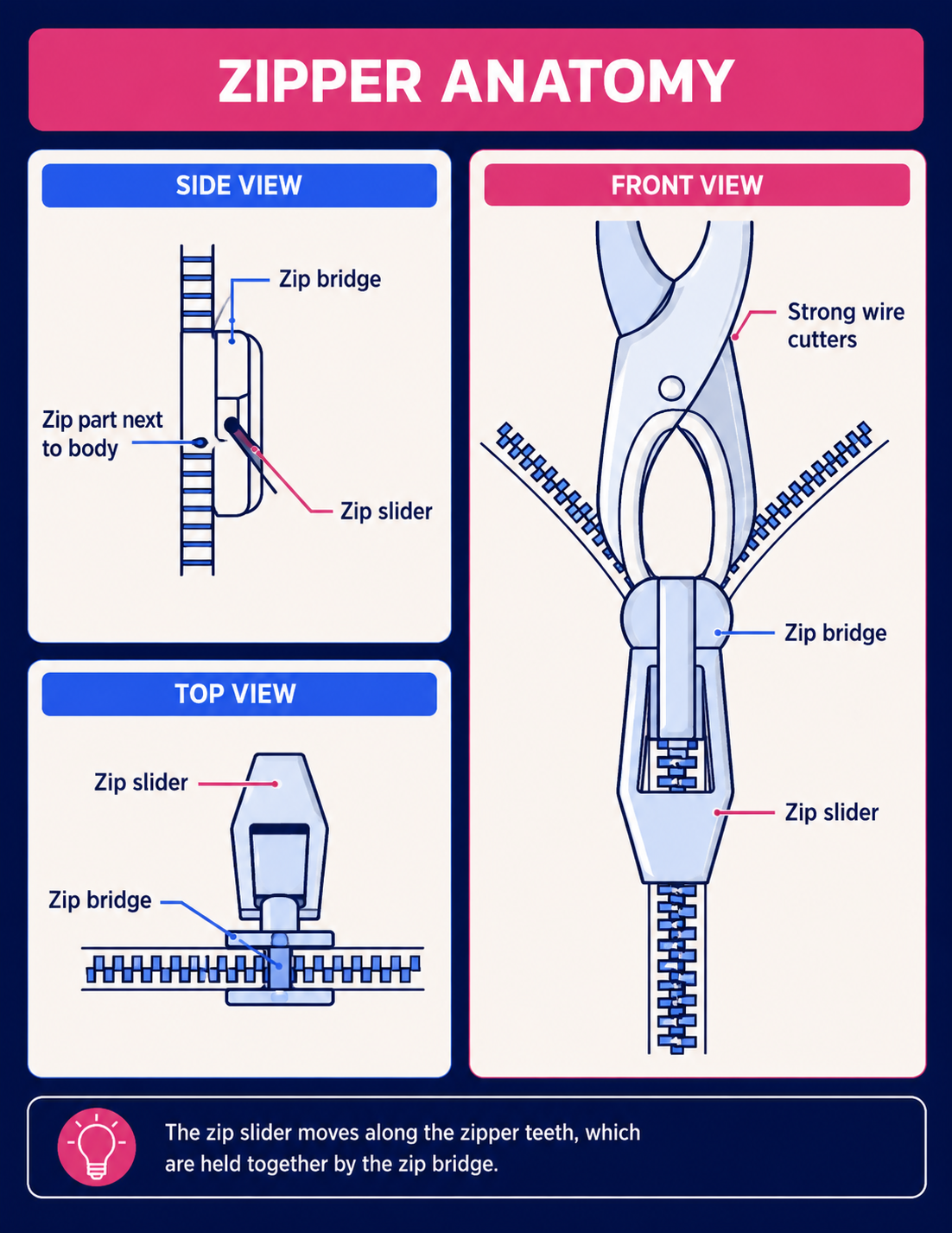
Lateral compression of the zip, using pliers, sometimes frees the prepuce.3
Cutting the teeth of the closed zipper is sometimes effective.4
The thin blade of a small screwdriver can be inserted between the outer and inner faceplates of the zip fastener and a twisting movement made toward the median bar. This will widen the gap between faceplates and may help to disengage the prepuce.5
If all else fails, the skin should be anaesthetised and the area of zipper and entrapped tissue should be excised. Mineral oil is sometimes used in these circumstances to lubricate the area and minimise trauma.6
Consider plastic surgical follow-up if the skin damage is significant.
Atualizações exclusivas para profissionais de saúde
Mantenha-se informado com as últimas atualizações clínicas, insights profissionais e orientações baseadas em evidências. O boletim informativo Patient Pro seleciona conteúdo essencial para profissionais de saúde—entregue diretamente na sua caixa de entrada.
Ao se inscrever, você aceita nossos Política de Privacidade. Você pode cancelar a inscrição a qualquer momento. Nunca vendemos seus dados.
Leitura adicional e referências
- Yip A, Ng SK, Wong WC, et al; Injury to the prepuce. Br J Urol. 1989 May;63(5):535-8.
- Wyatt JP, Scobie WG; The management of penile zip entrapment in children. Injury. 1994 Jan;25(1):59-60.
- Mishra SC; Safe and painless manipulation of penile zipper entrapment. Indian Pediatr. 2006 Mar;43(3):252-4.
- Inoue N, Crook SC, Yamamoto LG; Comparing 2 methods of emergent zipper release. Am J Emerg Med. 2005 Jul;23(4):480-2.
- Raveenthiran V; Releasing of zipper-entrapped foreskin: a novel nonsurgical technique. Pediatr Emerg Care. 2007 Jul;23(7):463-4.
- Mydlo JH; Treatment of a delayed zipper injury. Urol Int. 2000;64(1):45-6.
Sobre o autorVer biografia completa
Atualizado por

Dr Richard Draper, MRCGP
Médico Generalista, Autor Médico
MB, ChB, DCH, DRCOG, MRCGP, DA (UK)
Dr Richard Draper qualified in 1981 and has worked 24 years in general practice, currently as a GP partner, Oxshott Medical Practice, Oxshott Surrey.
Sobre o revisorVer biografia completa

Equipe de clínicos e pacientes
A equipe clínica do Patient.info cria e revisa nosso conteúdo de saúde para garantir que seja preciso, baseado em evidências e guiado por padrões confiáveis do NHS e NICE.
Acesso simples a tratamentos confiáveis e serviços de saúde online.
Common conditions
Get help with common conditions through the NHS, without a GP appointment.
 Sinusite aguda
 Amigdalite bacteriana
 Impetigo
 Mordidas de insetos
 Herpes zosterInfecção do trato urinário (ITUs)
Mais em medicina de emergência e trauma
- Fraturas de tornozelo
- Síndrome de Brown-Séquard
- Síndrome compartimental
- Delírio
- Delírios e alucinações
- Cetoacidose diabética
- Lesões e fraturas no cotovelo
- Hematoma extradural
- Hérnias femorais
- Corpos estranhos no ouvido
- Intoxicação por metais pesados
- Doença de altitude elevada
- Estado hiperglicêmico hiperosmolar
- Crise hipertireoidiana
- Infecção do trato respiratório inferior em crianças
- Síndrome de Mendelson
- Gestão do estado de mal epiléptico
- Doenças da tireoide e cirurgia
- Torsades de pointes