Tratamento de infecções fúngicas recorrentes
Revisado por Dr Philippa Vincent, MRCGPÚltima atualização por Dr Hayley Willacy, FRCGP Last updated 31 Jul 2024
Atende aos diretrizes editoriais
- BaixarBaixar
- Compartilhar
- Language
- Discussão
- Versão em Áudio
- Add to preferred sources on Google
Nesta série:Corrimento vaginalCandidíase vaginalVaginose bacterianaPreventing and treating bacterial vaginosis
Uma infecção recorrente por fungos (candidíase vaginal) é definida como um episódio de candidíase quatro ou mais vezes em um ano. Em alguns casos, há uma razão médica pela qual você é mais propenso a infecções por candidíase. Alguns tratamentos hormonais também podem afetar seu risco de episódios repetidos.
At a glance
Recurrent thrush is 4 or more vaginal yeast infections within a year.
It is often not known why some women get recurring thrush.
Poorly controlled diabetes can increase the risk of recurrent thrush.
Treatment for recurrent thrush often involves antifungal medicine, sometimes taken long-term.
Your doctor may do tests before treatment to rule out other causes.
Lifestyle measures can help reduce your risk of thrush returning.
See a doctor if treatment does not improve your symptoms.
Neste artigo:
Video picks for Problemas vaginais e vulvares
Uma infecção vaginal por fungos (candidíase vaginal) is an extremely common cause of corrimento vaginal - up to 3 in 4 women will have at least one episode during their lives. In most cases, thrush in women settles with simple treatment, either topical (applied to the vagina in the form of pessaries or antifungal creams) or oral (a tablet or tablets). However, some women either have repeated new infections, or find that they still have symptoms because the initial thrush treatment has not been effective.
Continue lendo abaixo
O que causa infecções recorrentes por fungos?
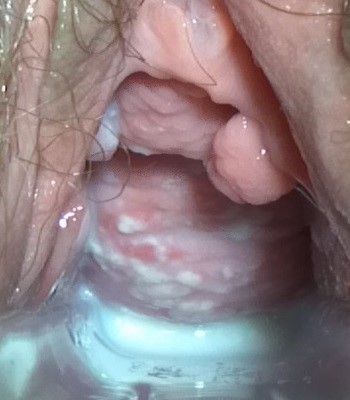
Exame com espéculo mostrando candidíase vaginal
© Mikael Häggström, CC0, via Wikimedia Commons
Das mulheres que desenvolvem um primeiro episódio de candidíase vaginal, cerca de 5 em 100 terão problemas com candidíase recorrente. Na maioria dos casos, a razão pela qual isso ocorre não é conhecida. Algumas mulheres parecem simplesmente mais propensas do que o normal a desenvolver candidíase. No entanto, mulheres com alto nível de açúcar no sangue (devido a diabetes mal controlada) e mulheres com sistemas imunológicos enfraquecidos podem ter mais probabilidade de desenvolver candidíase recorrente.
There is some debate as to whether women taking terapia de reposição hormonal (TRH) or birth control pills such as the pílula anticoncepcional oral combinada (COC) are more likely to develop a recurring yeast infection - the evidence is not yet clear.
Como posso me livrar de uma infecção por fungos recorrente?
Voltar ao conteúdoIf you have repeated bouts of thrush then one option is simply to treat each bout as and when it occurs. Consulte o folheto separado Candidíase vaginal (Infecção por fungos) para tratamentos para candidíase.
A candidíase recorrente é definida como 4 ou mais episódios sintomáticos por ano. Se você tiver quatro ou mais episódios de candidíase vaginal por ano, com pelo menos 2 episódios confirmados por um teste de esfregaço, seu médico pode sugerir uma abordagem diferente.
Antes de fazerem isso, eles podem querer excluir outra causa para os seus sintomas. Isso pode incluir:
Coletar uma amostra vaginal e enviá-la ao laboratório para verificar evidências de candidíase ou outra infecção.
Checking the pH (acidity level) in your vagina using a simple test strip. A lower pH (4.5 or below) makes it more likely that thrush is the cause. A higher pH (above 4.5) makes vaginose bacteriana (BV) or infecção por tricomonas (a sexually transmitted infection) more likely.
Outros swabs ou testes conforme apropriado.
Tratamento para candidíase recorrente
Using one of the usual treatments for vaginal thrush (topical treatments or tablets) - but for longer than usual. Your doctor will advise exactly how long to use the treatment for. Vaginal thrush can be treated with over the counter medicines, but as you need a longer course of treatment, your GP will give you a prescription for treatment if you need it.
Como a infecção recorrente por fungos é tratada também dependerá de suas preferências e outros fatores, como se você pode tolerar o tratamento, ou se já teve uma reação adversa a ele, sua idade e se está grávida (nesse caso, geralmente serão recomendados supositórios vaginais). Se você tem entre 12 e 15 anos, ou se não está claro se seus sintomas são devido a uma candidíase vaginal recorrente, seu médico pode recomendar uma consulta com um especialista hospitalar.
O 'tratamento de indução' recomendado de primeira linha é de três doses de comprimidos de fluconazol 150 mg (a serem tomadas a cada 72 horas).
Isso é seguido por um 'tratamento de manutenção' regular para evitar que a candidíase volte, com comprimidos semanais de fluconazol 150 mg durante seis meses.
Se você não puder tomar comprimidos de fluconazol por qualquer motivo, a terapia tópica (como o pessário vaginal de clotrimazol 500 mg) pode ser usada como tratamento de indução por 7-14 dias, dependendo de como seus sintomas respondem. O tratamento de manutenção seria então um pessário vaginal de clotrimazol 500 mg inserido uma vez por semana durante seis meses ou comprimidos de itraconazol 50-100 mg uma vez ao dia durante seis meses.
A maioria das mulheres permanece livre de candidíase durante o tratamento de manutenção. Se você e seu médico decidirem que o tratamento de manutenção é o melhor para você, ele geralmente durará seis meses.
Após a interrupção do tratamento, muitas mulheres permanecem livres de candidíase, ou desenvolvem apenas episódios ocasionais novamente. No entanto, algumas mulheres voltam a desenvolver infecções fúngicas recorrentes. Se isso acontecer, o plano de tratamento pode ser repetido, e o tratamento de manutenção continuado por mais tempo.
Independentemente do tratamento que você e seu médico concordem, é importante adotar medidas de estilo de vida para reduzir o risco de infecções fúngicas recorrentes (você pode saber mais abaixo). Além disso, você deve falar com seu médico se:
Seus sintomas não melhoram com o tratamento.
You develop thrush whilst on maintenance treatment. This may indicate that you have a resistant strain of Candida spp. which may require an alternative treatment.
Você engravida ou está amamentando.
Você desenvolve efeitos colaterais do medicamento.
Você desenvolve novos sintomas, como corrimento com odor desagradável, úlceras ou bolhas, sangramento vaginal anormal ou corrimento com sangue.
Você se sente mal consigo mesmo.
Continue lendo abaixo
Posso prevenir infecções recorrentes por fungos?
Voltar ao conteúdoThe yeast that causes yeast infections, called Candida spp. such as Candida albicans, thrives in warm, moist, airless environments. Mudanças gerais no estilo de vida that help prevent single episodes of vaginal thrush can also help reduce the risk of recurrent thrush.
If you have diabetes, o seu risco de infecções recorrentes por fungos é maior se o seu nível de açúcar no sangue estiver consistentemente alto. Trabalhar com a sua equipe de diabetes para controlar o nível de açúcar no sangue pode reduzir o risco de episódios recorrentes de candidíase.
If you experience recurring yeast infections, your doctor or nurse may also discuss your current method of contraception with you and suggest a change. There has been talk in the past about the pílula anticoncepcional oral combinada (COC) (the birth control pills that contain both oestrogen and progesterone hormones) possibly making recurrent vaginal thrush more likely. However, the evidence around this is a little unclear.
Patient picks for Problemas vaginais e vulvares
Saúde da mulher
Vulva com coceira
A maioria das mulheres experimenta coceira na vulva e na vagina de vez em quando. No entanto, no prurido vulvar, a coceira é persistente e causa desconforto.
por Dra. Rosalyn Adleman, MRCGP

Saúde da mulher
Vulvite
A vulvite é uma inflamação da sua vulva. Não é uma doença ou uma condição real. É muito comum e pode ocorrer em mulheres de todas as idades. Tem muitas causas diferentes, listadas abaixo. Às vezes, é difícil determinar a causa da vulvite.
por Dra. Rachel Hudson, MRCGP
Perguntas frequentes
What is considered a recurring yeast infection?
A recurring yeast infection, also known as recurrent thrush, is defined as having four or more symptomatic episodes in one year. For a doctor to consider different treatment approaches, at least two of these episodes should be confirmed by a vaginal swab test.
What is 'induction treatment' and 'maintenance treatment' for recurring thrush?
Induction treatment is the initial treatment to clear up an active thrush infection, usually involving three doses of fluconazole tablets taken every 72 hours. Maintenance treatment follows this and aims to prevent the thrush from returning, typically with once-weekly fluconazole tablets for six months. If fluconazole tablets cannot be used, topical treatments can be used for both induction and maintenance.
If I'm using the maintenance treatment, what should I do if the thrush comes back?
If you develop thrush while on maintenance treatment, you should speak to your doctor. This could suggest that you have a resistant strain of Candida (the yeast that causes thrush) which might mean you need a different type of treatment.
What lifestyle changes can help prevent recurring yeast infections?
The yeast that causes infections thrives in warm, moist, airless environments. General lifestyle changes that help prevent single episodes of thrush can also help reduce the risk of it returning. If you have diabetes, managing your blood sugar levels effectively can also significantly lower your risk of recurrent thrush.
Could my contraception be contributing to recurring yeast infections?
There has been discussion about whether the combined oral contraceptive (COC) pill might make recurrent vaginal thrush more likely, but the evidence on this is not yet clear. If you experience recurring yeast infections, your doctor or nurse might discuss your current contraception method with you and suggest a change.
When should I contact my doctor about my recurring thrush symptoms?
You should contact your doctor if your symptoms don't improve with treatment, if you develop thrush while on maintenance treatment, if you become pregnant or are breastfeeding, if you experience side-effects from the medication, if you develop new symptoms like smelly discharge, ulcers, blisters, or abnormal vaginal bleeding, or if you generally feel unwell.
Leitura adicional e referências
- Candida - genital feminino: infecção recorrente; NICE CKS, outubro de 2023 (acesso apenas no Reino Unido)
- Candida - genital feminino; NICE CKS, outubro de 2023 (acesso apenas no Reino Unido)
- Vaginose bacteriana; NICE CKS, julho de 2023 (acesso apenas no Reino Unido)
- Corrimento vaginal; NICE CKS, fevereiro de 2024 (acesso apenas no Reino Unido)
Continue lendo abaixo
About the authorView full bio

Dr Hayley Willacy, FRCGP
Médico Generalista, Autor Médico
MBChB (1992), DRCOG, DFFP, MRCOG (Part 1) MRCGP (2007), DFSRH (2013), MSc - medical education (2020)
Dr Hayley Willacy was an NHS GP working in northwest England, who retired from clinical practice in 2022 after 30 years.
About the reviewerView full bio

Dr Philippa Vincent, MRCGP
Médico Generalista, Autor Médico
MB BS, Bsc, MRCGP (2000), DCH, DFSRH, DRCOG
Dra Philippa Vincent is an NHS GP working in North London.
Histórico do artigo
As informações nesta página são escritas e revisadas por clínicos qualificados.
Próxima revisão prevista para: 30 Jul 2027
31 Jul 2024 | Última versão

Pergunte, compartilhe, conecte-se.
Navegue por discussões, faça perguntas e compartilhe experiências em centenas de tópicos de saúde.

Sentindo-se mal?
Avalie seus sintomas online gratuitamente
Inscreva-se no boletim informativo do Patient
Sua dose semanal de conselhos de saúde claros e confiáveis - escritos para ajudá-lo a se sentir informado, confiante e no controle.
By subscribing you accept our Política de Privacidade. Você pode cancelar a inscrição a qualquer momento. Nunca vendemos seus dados.