Como é realmente viver com rosácea
Revisado por Dr Sarah JarvisAutoria de Abi MillarPublicado originalmente 22 Jun 2018
Atende aos diretrizes editoriais
- BaixarBaixar
- Compartilhar
- Language
- Discussão
- Ask Patient
- Versão em Áudio
- Adicionar às fontes preferidas no Google
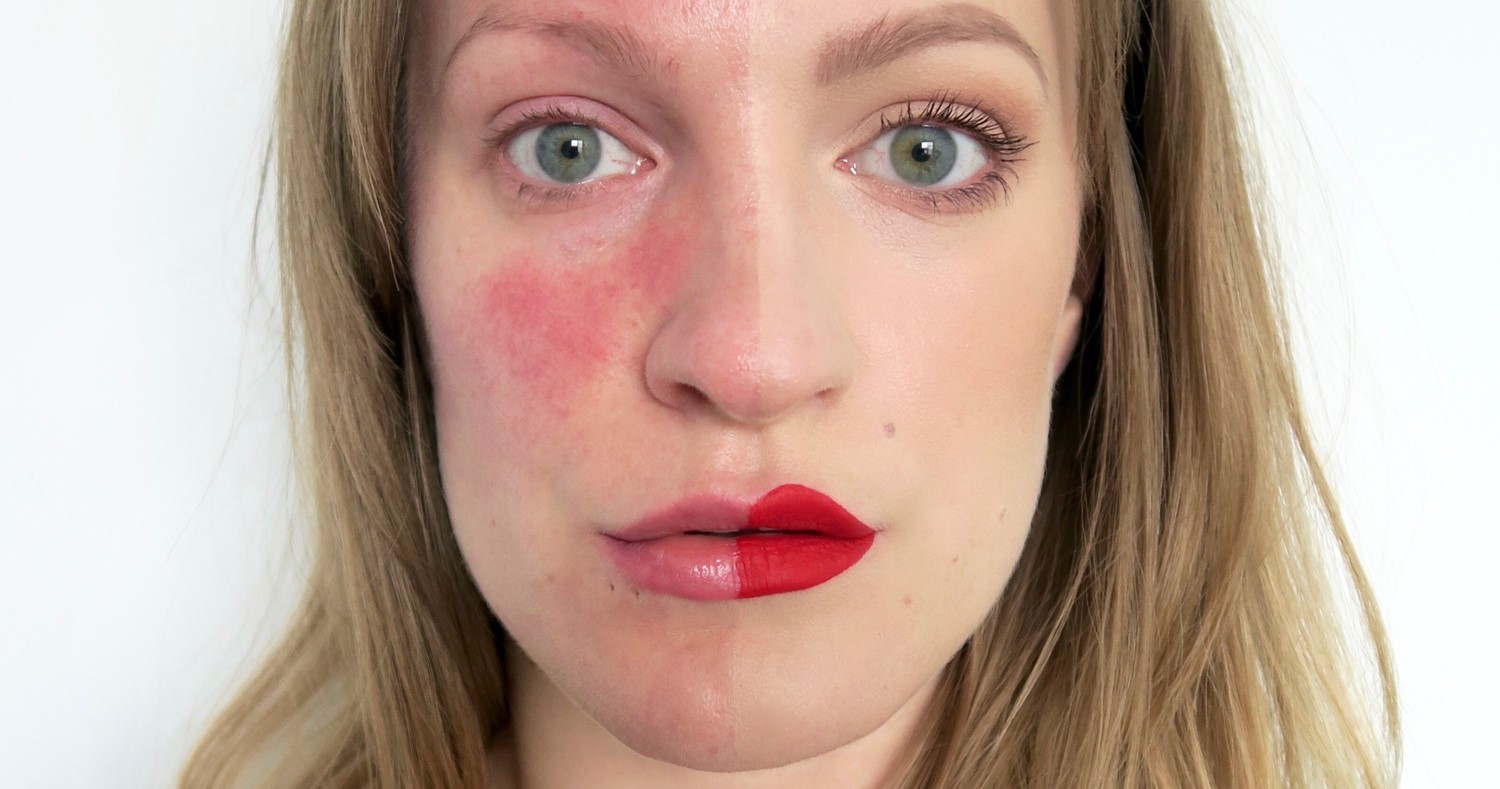
When Lex Gillies was 21, she went to the doctor with symptoms she describes as 'unbearable'. Over the previous three years, her always-sensitive skin had become increasingly prone to flushing, and that flushing was taking longer to go down.
Explore rosacea treatments
Obtenha aconselhamento especializado em saúde no conforto da sua casa. Faça uma consulta online rápida, disponível 24 horas por dia, 7 dias por semana, e tenha o seu pedido avaliado por um profissional de saúde registado no Reino Unido. Entrega no dia seguinte disponível para tratamentos elegíveis.

"I began to get pustules wherever the redness appeared and my skin became so dry that it would flake and crack," she says. "The doctor knew as soon as I walked in that I had rosácea - a word I had never even heard before - and he prescribed a metronidazol cream, which my skin hated, and a thick emollient cream."
Lex was suffering with a common inflammatory skin condition, characterised by facial skin sensitivity, redness, burning sensations and small red bumps known as papules. While rosacea can affect anybody, it is most commonly seen in fair-skinned individuals between 30 and 60 years old.
Women are more likely to develop the condition than men (one UK estudo placed the proportion of female sufferers at 61.5%) but men may be affected more severely. Men are more prone, for instance, to rhinophyma - a thickening of the skin of the nose.
For Lex, who was young to be dealing with rosacea, the diagnosis came as a serious blow.
"I think I was quite unlucky with my first doctor: he was dismissive of the way that my rosacea made me feel and told me that if I was serious about treating my rosacea I would remove every potential trigger immediately," she says. "Telling a young girl at university that she should stop drinking alcohol, eat healthily, stop wearing make-up, get eight hours of sleep a night, and avoid stressful situations is not realistic! I wish that I'd known that I could ask for another doctor if I didn't feel that the current one was working out for me. Later experiences with doctors showed me that they could be empathetic, understanding and really helpful."
Lex Gillies
Managing the condition
Now 33, Lex is an ambassador for the Fundação Britânica da Pele and writes about living with rosacea (and nail art) in her blog Talonted Lex. Although she is not 'cured' - rosacea, unfortunately, is a chronic condition - she has made a number of lifestyle changes and has learnt what exacerbates her symptoms.
"I have drastically altered my diet, my drinking habits, my skincare and make-up routine, and made impactful changes to my everyday habits," she says. "The biggest change for me was finding my triggers. It can be a laborious and seemingly endless task, but once you know what your skin loves and hates, you can start to make sensible and realistic choices."
Although the cause of rosacea is unknown, it is thought to stem from a number of factors: genetic predisposition, coupled with undefined environmental and inflammatory triggers that cause the blood vessels in the face to readily dilate. The exact triggers vary from person to person, but can include alcohol, stress, temperature, hot drinks and spicy foods.
According to Dr Anjali Mahto, consultant dermatologist and British Skin Foundation spokesperson, there are various ways of reducing symptom severity.
"Oral antibiotics, topical treatments, anti-flushing medication and laser therapies can all treat rosacea but must be used under the guidance of your dermatologist or doctor," she says. "It's extremely important to use sunscreen daily to help manage your rosacea, as UV radiation is one of the common triggers. Ideally, an SPF of 50 should be worn that provides broad-spectrum UVA and UVB protection. Avoid using perfumed soaps and use an emollient as an alternative. It's best to stick to unperfumed moisturiser too."
Lex found it helpful to take photos to compare the severity of flare-ups, cross-referencing these with a list of everything that may have had an impact on her skin.
"It can be overwhelming to see a list of potential triggers, but remember that you do not have to completely eliminate these things," she says. "For example, now that I know how my skin reacts to using hair straighteners, I make sure that I leave enough time between doing my hair and leaving the house so that my redness has a chance to calm down. There are ways to work around most of your triggers so you don't see them as completely forbidden."
"It does not define you"
Despite managing her condition well, she adds that rosacea has profoundly affected her psychologically. She is not the only one in this position: one American pesquisa found that 75% of respondents with rosacea had seen a knock-on effect on their autoestima, and 56% reported that they had felt robbed of pleasure or happiness.
"I used to be a very confident person who was thrilled to be the centre of attention. Rosacea destroyed my self-confidence and changed me into someone I didn't recognise when I look in the mirror," says Lex. "It can be difficult to explain to other people how much a condition like rosacea can affect your psychological well-being but, for me, this has been the biggest obstacle to overcome and one I still struggle with."
Lex now endeavours to help others in her position, through writing information, advice, recommendations and reviews. Her blog also includes links for those who wish to ask her further questions, or just want to vent to someone who understands.
"The most important piece of advice I always give to others is that rosacea does not define you," she says. "Although it feels all-encompassing, it is not the most interesting or important thing about you. You are still the person you were before rosacea - you just look a little different."
Explore rosacea treatments
Obtenha aconselhamento especializado em saúde no conforto da sua casa. Faça uma consulta online rápida, disponível 24 horas por dia, 7 dias por semana, e tenha o seu pedido avaliado por um profissional de saúde registado no Reino Unido. Entrega no dia seguinte disponível para tratamentos elegíveis.
Escolhas do paciente para Erupções cutâneas
Saúde da pele, unhas e cabelos
Aumento nos casos de sarna em todo o Reino Unido
O número de pessoas com sarna está cerca de duas vezes acima do esperado para esta época do ano. Explicamos o que é a sarna, como identificá-la e o que fazer a respeito.
por Amberley Davis
Saúde da pele, unhas e cabelos
Gatilhos comuns da rosácea e como evitá-los
One in ten people in the UK are thought to be affected by rosacea - a condition that causes redness and flushing of your skin. As with many skin conditions, its exact cause is unknown. But the good news is that treatments are available, and you can take steps to minimise redness and flare-ups.
por Lynn Stephen
Sobre o autorVer biografia completa
Autoria de

Abi Millar
Jornalista Freelancer
BA (Hons), MA
Abi é uma jornalista freelance com um interesse especial em escrever sobre saúde e medicina.
Sobre o revisorVer biografia completa

Dra. Sarah Jarvis
Consultora Clínica
MA (Cantab), BM, BCh (Oxon), DRCOG, FRCGP, MBE
Após se formar em medicina em Cambridge e Oxford, a Dra. Sarah Jarvis MBE tornou-se médica de clínica geral.
Histórico do artigo
Artigo também disponível em Inglês, Alemão, Espanhol, Francês, Italiano, Português, Hindi, Hebraico, Árabe, e Sueco.
22 Jun 2018 | Publicado originalmente
Escrito por:
Abi MillarRevisado por
Dra. Sarah Jarvis
Compartilhe seus pensamentos ou experiências com outros em nosso comunidades de pacientes.
Acesso simples a tratamentos confiáveis e serviços de saúde online.
Common conditions
Get help with common conditions through the NHS, without a GP appointment.
 Sinusite aguda
 Amigdalite bacteriana
 Impetigo
 Mordidas de insetos
 Herpes zosterInfecção do trato urinário (ITUs)
Inscreva-se no boletim informativo do Patient
Sua dose semanal de conselhos de saúde claros e confiáveis - escritos para ajudá-lo a se sentir informado, confiante e no controle.
Ao se inscrever, você aceita nossos Política de Privacidade. Você pode cancelar a inscrição a qualquer momento. Nunca vendemos seus dados.