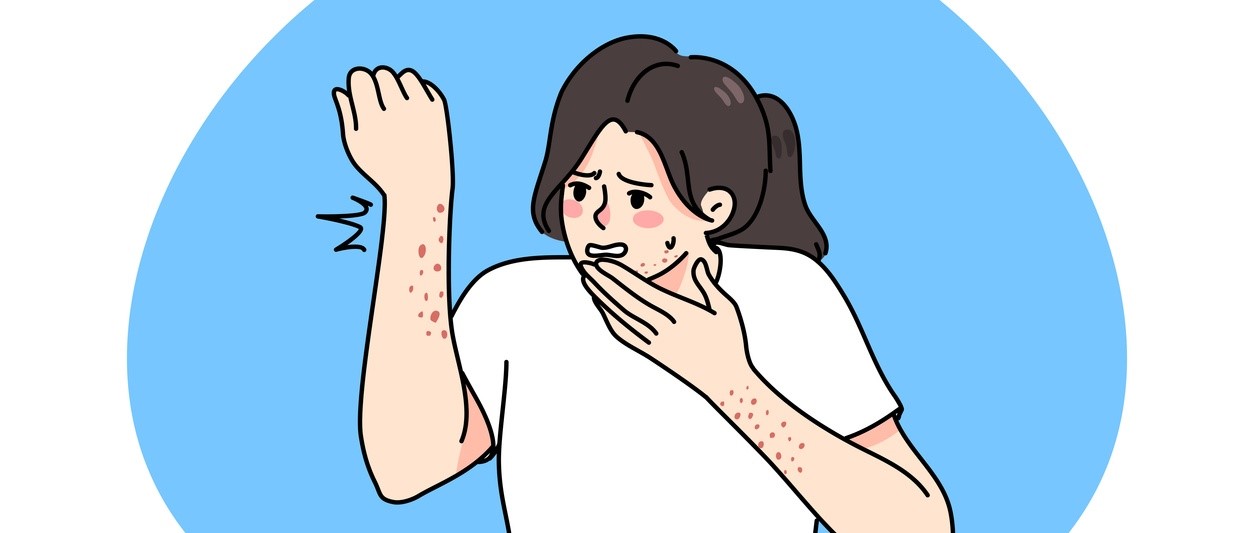
Aumento nos casos de sarna em todo o Reino Unido
Revisado por Dr Krishna Vakharia, MRCGPAutoria de Amberley DavisPublicado originalmente 4 Jan 2024
Atende aos diretrizes editoriais
- BaixarBaixar
- Compartilhar
- Language
- Discussão
- Versão em Áudio
- Adicionar às fontes preferidas no Google
O número de pessoas com sarna está cerca de duas vezes acima do esperado para esta época do ano. Explicamos o que é a sarna, como identificá-la e o que fazer a respeito.
Doctors report surge in scabies
According to a new report from the British Association of Dermatologists (BAD), 8 out of the 9 regions across the UK have seen an increase in scabies this year.
Professor Kamila Hawthorne, chair at the Royal College of General Practitioners (RCGP) commented on the surge: "Since July, GPs have seen a growing rate of scabies - at a consistently higher level than the five-year average and the seasonal norm. At the end of November, the rate of scabies was double the seasonal average."
The North of England appears to be most affected. Due to the highly contagious nature of scabies, outbreaks in nursing homes, care homes, and university accommodation are more common, where people are closer together.
How to prevent scabies
Sarna is an intensely itchy skin condition caused by tiny insects known as mites, which are almost invisible to the naked eye. It can spread between people through close skin contact.
Therefore, the best way to protect yourself against scabies is to:
Avoid touching someone who shows the symptoms below.
Avoid sharing clothes, towels, and bedsheets with them.
Hot wash your bedding and towels at 50°C or above if they have been used by them.
Anyone can get scabies, so it's important to know the signs so it can be treated and prevented from spreading.
How to spot scabies
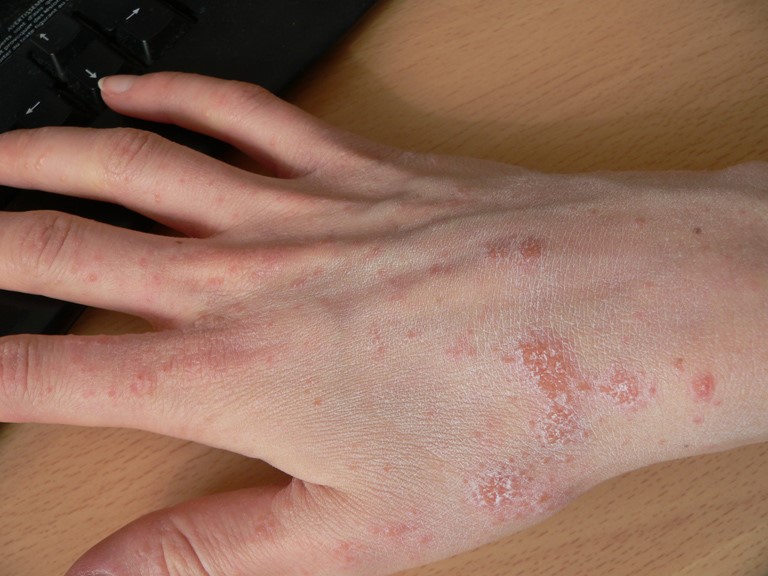
Scabies appears as blotchy, lumpy red rashes. It's common to first notice them on your hands, and they also tend to form on the stomach, lower back, and thighs - although they can appear anywhere on your body.
These rashes are often very itchy and cause you to scratch the affected areas, which can further damage your skin. It might be that this itchiness starts in one place, and then spreads to other areas you touch.
You might also see small dark-grey lines on your skin, most commonly in between your fingers, on your wrists, and in the palms of your hands. However, these aren't always visible.
Scabies rash on hand
What to do if you have scabies
If you think you might have scabies:
It's important to get treatment to help prevent the condition spreading to others.
Try and avoid skin contact with other people as much as possible.
Either your pharmacist or GP can diagnose this condition based on how your rash looks.
Treatment involves a cream or lotion you apply to your skin.
In the UK, the two main treatment creams are called permethrin and malathion. These are usually available in pharmacies and GP surgeries, however the surge in scabies cases comes during a shortage of both medicines.
This is thought to be due to the increase in demand, supply chain issues, a rise in the cost of raw materials, and the war in Ukraine, according to BAD1.
Currently, the availability of scabies treatment will depend on where you are, so it's important that you try your pharmacist or doctor, instead of suffering this uncomfortable condition and possibly passing it on to others.
If you have problems getting treatment, home remedies like neem, tea tree oil, and clove oil may help ease your itching in the meantime but it won't get rid of the mites.
Leitura adicional
Escolhas do paciente para Erupções cutâneas

Saúde da pele, unhas e cabelos
Gatilhos comuns da rosácea e como evitá-los
One in ten people in the UK are thought to be suffering from rosacea - a condition that causes redness and flushing of the skin. Like many skin conditions, its exact cause is unknown. But the good news is that treatments are available, and people living with rosacea can take steps to minimise redness and flare-ups.
por Gillian Harvey

Saúde da pele, unhas e cabelos
Queixas comuns de pele: entendendo a pitiríase versicolor
Se você notou o aparecimento de manchas de cores irregulares na sua pele, pode estar com tinea versicolor — também conhecida como pitiríase versicolor. Essa condição de pele comum pode acontecer com qualquer pessoa, independentemente de quão saudável e em forma ela esteja, e pode ser controlada com vários tratamentos.
por Amberley Davis
Sobre o autorVer biografia completa

Amberley Davis
Escritor sênior
BA (Hons), CPD
Amberley é uma escritora sênior na Patient e escreveu extensivamente sobre uma variedade de tópicos de saúde e bem-estar.
Sobre o revisorVer biografia completa

Dr Krishna Vakharia, MRCGP
Diretor Médico de Saúde, Optum UK
MBChB, MRCGP(2013), BMedSci (hons), DFSRH, DRCOG, PGDipDerm (Distn)
Dr. Krishna Vakharia é uma médica de clínica geral do NHS. Ela também é examinadora regular do Diploma de Pós-Graduação em Dermatologia Prática na Universidade de Cardiff, além de ser a Diretora Médica de Saúde na Optum UK.
Histórico do artigo
As informações nesta página são revisadas por pares por clínicos qualificados.
Artigo também disponível em Inglês, Alemão, Espanhol, Francês, Italiano, Português, Hindi, Hebraico, Árabe, e Sueco.
4 Jan 2024 | Publicado originalmente
Escrito por:
Amberley DavisRevisado por
Dr Krishna Vakharia, MRCGP

Pergunte, compartilhe, conecte-se.
Navegue por discussões, faça perguntas e compartilhe experiências em centenas de tópicos de saúde.

Sentindo-se mal?
Avalie seus sintomas online gratuitamente
Inscreva-se no boletim informativo do Patient
Sua dose semanal de conselhos de saúde claros e confiáveis - escritos para ajudá-lo a se sentir informado, confiante e no controle.
Ao se inscrever, você aceita nossos Política de Privacidade. Você pode cancelar a inscrição a qualquer momento. Nunca vendemos seus dados.
Mais sobre saúde da pele, unhas e cabelos
- Biotina: vitaminas para crescimento capilar realmente funcionam?
- Causas comuns de coceira no couro cabeludo
- O Bio-Oil ajuda nas cicatrizes de acne?
- Como as estações afetam seu eczema
- Como cuidar da pele negra durante o inverno
- Como escolher o protetor solar certo
- Como cuidar da sua pele durante a quimioterapia
- Como prevenir e aliviar cistos na pele: um guia simples
- Como evitar que a pele seca estrague seu inverno
- O óleo de coco é bom para o seu cabelo?
- Acne na gravidez: por que acontece e como tratar
- Erros de proteção solar que você provavelmente está cometendo
- A 'segunda puberdade': por que você pode estar tendo acne aos trinta anos
- O que causa eczema súbito em adultos?
- Para que serve o aftersun e você realmente precisa dele?
- O que é dermatite vulvar?
- O que fazer se a psoríase está te deixando para baixo
- O que fazer se você for picado por um ouriço-do-mar
- O que suas unhas dizem sobre sua saúde
- Por que o eczema coça - e como parar isso