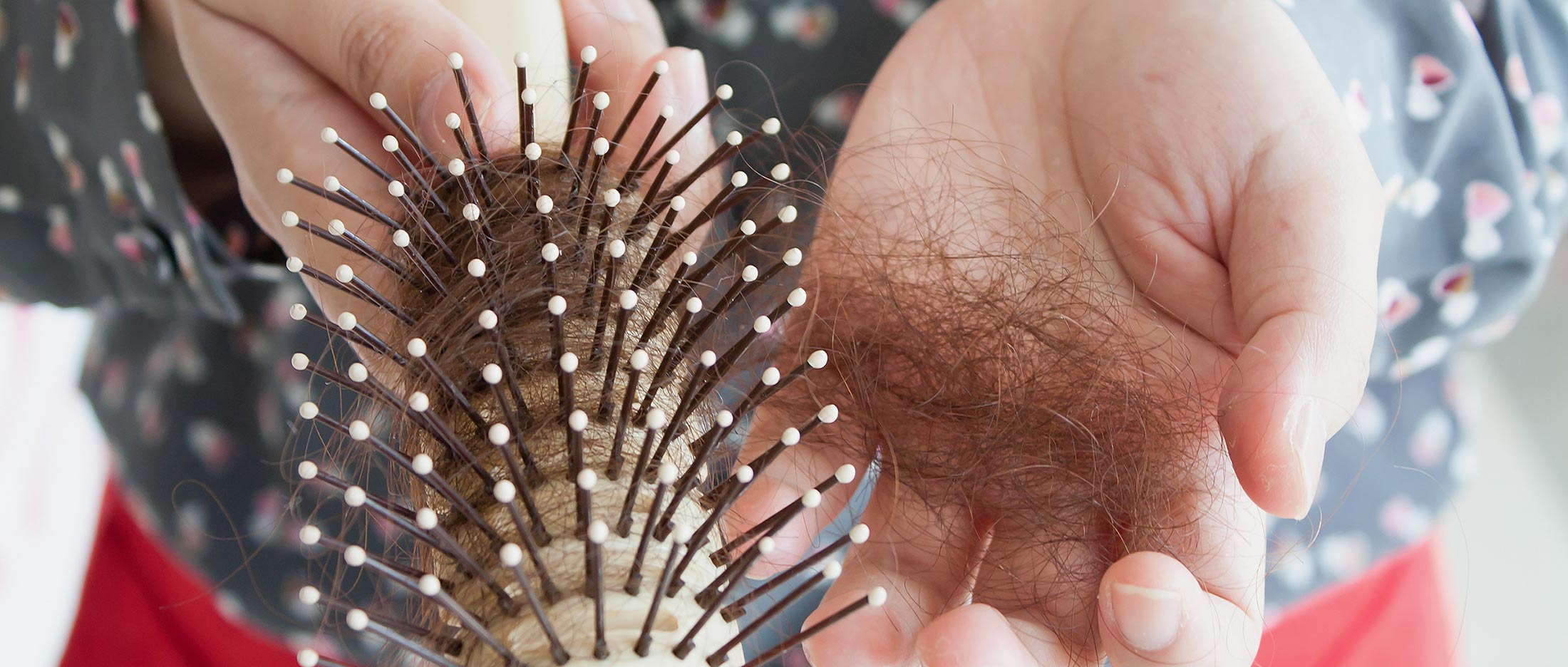
Compreendendo a queda de cabelo feminina
Revisado por Dr Hayley Willacy, FRCGP Última atualização por Dr Sarah JarvisÚltima atualização 18 Sept 2017
Atende aos diretrizes editoriais
- BaixarBaixar
- Compartilhar
- Language
- Discussão
- Versão em Áudio
- Adicionar às fontes preferidas no Google
Nós, mulheres, enfrentamos dores menstruais, trabalho de parto e menopausa. Mas, pelo menos, ao contrário dos homens, não precisamos nos preocupar em ficar carecas. Ou precisamos? Pode ser menos comum em mulheres, mas o afinamento do cabelo não é exclusividade masculina.
How our hair goes through three ‘lifetime’ phases
I never cease to be amazed at how often women consult me about hair loss – mostly because when I check their hair, I can’t find anything wrong. But your crowning glory has a huge effect on your self-esteem. That means it’s hardly surprising that panic sets in when you start waking up with hair all over your pillow. In fact, if you’re a woman, it virtually never means you’re going to lose all your hair.
Your hair naturally goes through three phases in its ‘lifetime’:
The first is the growing phase, which lasts for three to five years.
Next comes the ‘shrinking’ phase, which lasts just a couple of weeks
Then the resting phase for three months or so. Towards the end of this, the hair follicle starts a new growing phase and pushes the old hair out if it hasn’t fallen out or come out on your hairbrush.
In some animals these phases happen at around the same time, which is why some dogs moult in summer, leaving your house covered in hair. Most humans lose a few hairs every day, although it can be more in times of stress.
Some kinds of cancer quimioterapia can stop the hair growing phase, which is why hair loss is an issue. Wearing a cold cap (literally an ice cap for your head) before treatment starts cuts the risk of this happening – if you are due to start chemotherapy, your cancer nurse can advise.
Causes of thinning hair in women
Some of the causes of female hair loss can include:
Estresse, childbirth and crash diets, which can push your hair suddenly into the resting phase.
Certos medicamentos.
Going through menopausa.
Having an underactive glândula tireoide.
Being short of iron (even if you’re not anaemic).
Not enough high quality protein in your diet.
Your doctor may suggest a blood test to check your thyroid and iron levels if you are concerned about hair thinning.
O que é alopecia?
The medical term for hair loss is alopecia. One kind – alopecia areata – causes patches of total hair loss with completely normal hair around. These patches can vary from small spots, less than the size of a 10 pence piece, to the whole scalp. Much less often, eyebrows, eyelashes, the beard area and even pubic hair can be affected. Alopecia areata is an autoimmune disease – your body’s immune system recognises part of your body as an enemy and attacks it. It only affects your hair and won’t affect your general health in any way. However, you are at slightly higher risk of other autoimmune conditions like tireoide hipoativa ou artrite reumatoide. It can run in families, with men and women equally affected.
Does alopecia cause permanent hair loss?
The good news is that in alopecia areata, the hair follicles your hairs grow from aren’t permanently damaged, and many people regain a full head of hair within months. In fact, as long as less than half your scalp is affected, you have a four in five chance of full recovery within a year. The older you are when it starts, the less hair tends to be lost and the better the chance of regaining a full head of hair.
What are the treatments for hair loss?
Because alopecia areata doesn’t cause any other symptoms, treatment isn’t always necessary, especially if only small patches are affected and a change in hairstyle will hide the problem. For more extensive hair loss, steroid injections into your scalp may help. Steroid cream might also be tried, although it’s less effective.
In men, hair loss is often thought to be related to male hormone levels. In fact, men who go bald usually have normal testosterone levels, but the hair follicles become super-sensitive to testosterone, making the hair follicles shrink. Don’t forget the skin where hair has been lost is sensitive to sunlight and burns easily. That means hats and sunscreen from spring to autumn, even if you don’t think it’s sunny enough to burn!
Women also get hormone related, but it’s almost always general thinning rather than receding hairline or bald patch, and it does not lead to total baldness. For general thinning hair, you can buy a solution called ‘minoxidil’ from pharmacists – it’s not available on the NHS.
It is worth seeing your doctor if your hair starts thinning. Sometimes medications can be to blame. If underactive thyroid or iron deficiency are the cause, these can be treated.
With thanks to ‘My Weekly’ magazine where this article was originally published.
Escolhas do paciente para Hair and scalp
Saúde da pele, unhas e cabelos
Com que frequência você deve lavar o cabelo?
Embora você provavelmente tenha uma rotina de cuidados capilares que funciona para você e seu estilo de vida, você pode ter certeza de que está lavando o cabelo na frequência correta e usando os melhores produtos para o seu tipo de cabelo? Vamos explorar com que frequência você deve lavar o cabelo (provavelmente menos do que você pensa) e os métodos simples que pode usar para descobrir qual é o seu tipo de cabelo.
por Emily Jane Bashforth
Saúde da pele, unhas e cabelos
O shampoo de cafeína realmente funciona para queda de cabelo?
Shampoos com cafeína que estimulam o crescimento do cabelo (se você acreditar nas alegações de marketing) estão se tornando mais populares - mas eles realmente funcionam e podem causar problemas na pele ou no couro cabeludo? Perguntamos a uma dermatologista consultora sua opinião sobre o assunto.
por Julian Turner
Sobre o autorVer biografia completa

Dra. Sarah Jarvis
Consultora Clínica
MA (Cantab), BM, BCh (Oxon), DRCOG, FRCGP, MBE
Após se formar em medicina em Cambridge e Oxford, a Dra. Sarah Jarvis MBE tornou-se médica de clínica geral.
Sobre o revisorVer biografia completa

Dr Hayley Willacy, FRCGP
Médico Generalista, Autor Médico
MBChB (1992), DRCOG, DFFP, MRCOG (Part 1) MRCGP (2007), DFSRH (2013), MSc - medical education (2020)
A Dra. Hayley Willacy era uma médica do NHS atuando no noroeste da Inglaterra, que se aposentou da prática clínica em 2022 após 30 anos.
Histórico do artigo
As informações nesta página são revisadas por pares por clínicos qualificados.
Artigo também disponível em Inglês, Alemão, Espanhol, Francês, Italiano, Português, Hindi, Hebraico, Árabe, e Sueco.
18 Sept 2017 | Última versão

Pergunte, compartilhe, conecte-se.
Navegue por discussões, faça perguntas e compartilhe experiências em centenas de tópicos de saúde.

Sentindo-se mal?
Avalie seus sintomas online gratuitamente
Inscreva-se no boletim informativo do Patient
Sua dose semanal de conselhos de saúde claros e confiáveis - escritos para ajudá-lo a se sentir informado, confiante e no controle.
Ao se inscrever, você aceita nossos Política de Privacidade. Você pode cancelar a inscrição a qualquer momento. Nunca vendemos seus dados.
Mais sobre saúde da pele, unhas e cabelos
- Mudar sua dieta pode ajudar na psoríase?
- Os transplantes capilares podem melhorar a saúde mental?
- As vitaminas realmente podem prevenir a queda de cabelo?
- Você pode ser alérgico ao sol?
- Algum remédio natural realmente funciona para acne?
- Os probióticos promovem cabelos saudáveis?
- O vaping envelhece ou danifica sua pele?
- Eczema, psoríase e micose: qual é a diferença?
- Como se livrar das cicatrizes de acne: seu guia definitivo
- Ácido hialurônico: benefícios para a pele, efeitos colaterais e mais
- A sua rotina de exercícios está causando acne?
- Coceira na pele à noite neste verão? Aqui está o porquê
- Aumento nos casos de sarna em todo o Reino Unido
- Vídeo: Como os piolhos se espalham?
- Para que serve o aftersun e você realmente precisa dele?
- O que o sérum de vitamina C faz?
- O que é dermatite vulvar?
- Por que o eczema coça - e como parar isso
- Por que o cabelo fica grisalho - e como o estilo de vida pode desempenhar um papel
- Por que meu eczema facial piora no verão?