
How to treat a wasp sting
Peer reviewed by Dr Colin Tidy, MRCGPLast updated by Victoria RawLast updated 17 Jul 2025
Meets Patient’s editorial guidelines
- DownloadDownload
- Share
- Language
- Discussion
- Audio Version
- Add to preferred sources on Google
Anxiety around being stung by a wasp is why so many of us fear them. We've all been there, screaming hysterically and running in circles trying to escape a wasp when it starts buzzing around our heads. But did you know that the average person gets stung by an insect no more than five times in their life?
Do wasps sting?
Wasp stings are common - you probably know someone who's been stung at some point. However, they can cause a great deal of pain and discomfort, the severity of which might depend on the species you were stung by.
The most common types of wasps are yellow jackets and hornets. Wasps can sting for multiple reasons, but most only sting when they feel irritated by a presence or threatened - or when their nest has been disturbed, as a defence mechanism.
Wasp sting symptoms
Wasp sting
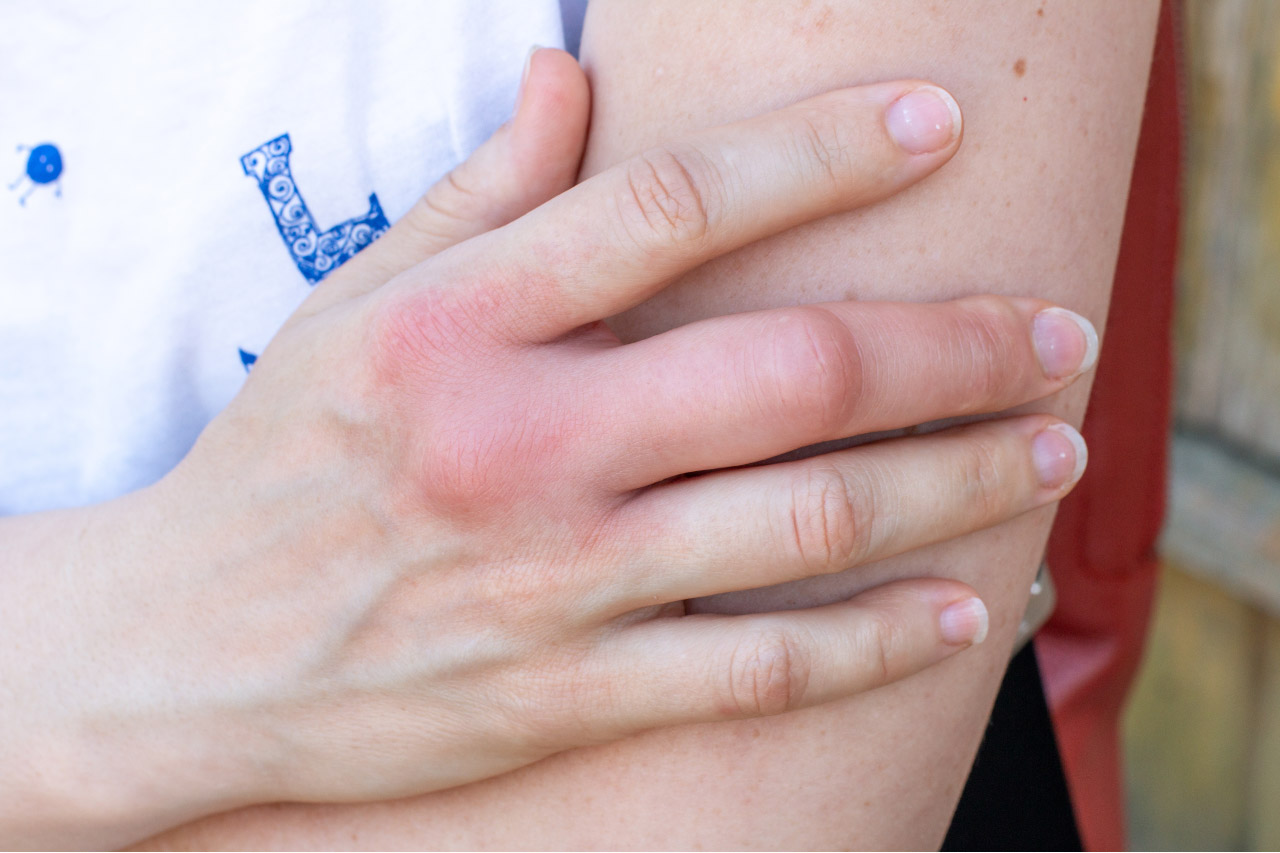
Thorrun Govind, pharmacist and former chair of the Royal Pharmaceutical Society explains that common symptoms of an insect bite can include:
Raised skin around the affected area.
A red, swollen, itchy lump.
A tiny white mark where the sting has punctured your skin.
There's also a chance of experiencing nausea and vomiting.
How to treat a wasp sting
You might be able to treat a wasp sting yourself at home. There are several things you can do to ease any pain and itchiness:
Govind's list of home remedies for treating a wasp sting:
Wash the area with soap and water.
Use a cold compress - for example, an ice pack - on the sting site to reduce swelling.
Elevate the body part - if it's an arm or leg - to prevent swelling.
Use calamine lotion or hydrocortisone cream to soothe stinging and irritation.
Take painkillers such as paracetamol or ibuprofen to manage pain if needed.
Take antihistamines if necessary to reduce itching.
How long does a wasp sting last?
After effects of a wasp sting should only last for a few hours, but can last for a few days - depending on the severity. A lot of people tend to have a mild reaction, where the surrounding area of the sting site swells and becomes painful. However, this typically passes within a week.
If your symptoms don't start to improve within a few days, you might need to seek medical advice.
Complications of wasp stings
Anaphylaxis resulting from a wasp sting
In serious cases, a person can experience anaphylaxis following a sting. Anaphylaxis occurs when the body essentially goes into shock, as the immune system releases a flood of chemicals. Blood pressure drops rapidly, airwaves narrow, and breathing becomes restricted.
Other symptoms of anaphylaxis include:
A racing or weakened pulse.
A wider skin rash.
Being sick.
How long after a wasp sting can anaphylaxis occur?
Anaphylactic shock from an insect sting may occur within a few minutes of being stung. Most severe life-threatening allergic reactions occur within 30 minutes.
"A severe allergic reaction to a sting will require emergency medical attention, so you should call the emergency services in these instances," says Govind.
Signs of a severe reaction to a wasp or bee sting
Call for an emergency ambulance - 999 in the UK - if you have any of the below symptoms:
Severe swelling of the face, lips, or throat.
Struggling to breathe/feeling like your throat is closing up.
Hives or itching on parts of the body that did not come into contact with the sting.
Dizziness/feeling faint - caused by a sudden drop in your blood pressure.
Wheezing or gasping.
Feeling sick or being sick.
Govind stresses that these symptoms constitute a medical emergency and must be dealt with straightaway.
"That is why people who have a history of anaphylaxis should carry a wasp and bee sting kit with them in case they come into contact with a wasp sting. There are different types of injections, but the most commonly known and used ones are EpiPen or Jext. They can help to stabilise the blood pressure and return respiration to normal."
Likewise, if you notice someone else showing signs of a severe reaction, you should act quickly, as this could save their life.
Wasp sting vs bee sting
You'd be forgiven for thinking wasp and bee stings are the same. If you hear something buzzing around you while outside, you probably don't care what it is and just want to swat it away. However, wasp and bee stings are different, particularly in their reasons for stinging.
For the most part, bees only sting once and if they are provoked - stood on, picked up or hit at. This is especially the case for honeybees and bumblebees. On the other hand, wasps can be aggressive and sting more than once.
A-Z Animals explains that wasps and bees have different venom and can cause varying levels of pain.
They write: "When it comes to venom, a bee and a wasp generally have similar effects but different ways of causing pain, as experienced by humans. Bees inject around 50-140 micrograms of toxin containing mostly melittin, plus hyaluronidase and phospholipase A2.
"Wasps inject 2-15 micrograms of venom per sting, mostly made up of antigen 5, enzymes, acetylcholine, and serotonin."
Don't get us wrong - both a wasp sting and a bee sting can be pretty painful. But if you were to rate the intensity of the pain from a sting, wasps are likely to come out on top. Although wasps inject less venom, studies show it contains a mix of neurotoxins that affect your body's nervous system, which causes their stings to hurt more.
There are thought to be 75,000 individual species of wasp. Within this group, there are wasps with stings considered to be the most painful in the entire animal kingdom.
The Schmidt sting pain index measures the pain caused by stinging insects. The scale ranges from 1-4, with 4 being the most painful.
Most bees fall between 1-2 on the scale - most sit at 1 - whereas most wasps sit at level 3. Only three insects are categorised as pain level 4, two of which are wasps.
How to avoid wasp stings
There are things you can do to avoid being stung by a wasp in the future. As annoying as it might be to hear, the first is to be still when you see a wasp and remain calm instead of panicking and waving your arms around. A frantic reaction means a wasp is actually more likely to sting you.
Govind offers other top tips for preventing wasp stings:
Cover your body with clothing where possible - long sleeves, trousers, closed-toe shoes.
Wear insect repellents on exposed skin - be mindful that these aren't always appropriate for those who are pregnant, or for children.
Avoid using products with strong perfumes in them.
Be mindful when walking around plants or rubbish outside, as wasps can congregate there.
Don't leave food or dirty dishes lying around, and cover food up if outdoors.
Wasp stings during pregnancy
If you get stung by a wasp while pregnant, it generally shouldn't harm your baby. However, speak to your doctor for advice on the best course of treatment. You should also make sure you seek immediate medical attention if you experience any severe symptoms associated with anaphylaxis.
Patient picks for Stings and bites

Skin, nail and hair health
How to soothe a nettle sting
Stinging nettles grow widely across the UK and Europe. Whilst nettle stings aren't usually too serious, they can be in rare cases. Either way, it's important to know what to do if you or someone else is stung, to ease discomfort and to potentially save a life.
by Victoria Raw
Skin, nail and hair health
Insect bites and stings
Insect bites and stings usually cause mild reactions such as pain, itching, and swelling. However, in rare cases can lead to a serious allergic response (anaphylaxis) or infection. Treatment focuses on symptom relief and urgent medical attention if symptoms worsen.
by Dr Rosalyn Adleman, MRCGP
About the authorView full bio
Updated by

Victoria Raw
Feature Writer
BA (Hons), English Literature
Victoria is a content writer at Patient, with special interests spanning mental wellbeing, societal trends and the impact of technology on our health.
Authored by

Emily Jane Bashforth
Feature Writer
NCTJ
Emily is a Feature Writer with Patient, writing articles on a variety of topics relating to health and well-being.
About the reviewerView full bio

Dr Colin Tidy, MRCGP
General Practitioner, Medical Author
MBBS, MRCGP, MRCP (Paediatrics), DCH
Dr Colin Tidy is an NHS Doctor, based in Oxfordshire.
Article history
Article also available in English, German, Spanish, French, Italian, Portuguese, Hindi, Hebrew, Arabic, and Swedish.
Next review due: 17 Jul 2028
17 Jul 2025 | Latest version
24 Aug 2022 | Originally published
Authored by:
Emily Jane Bashforth
Join the conversation
Share your thoughts or experiences with others in our patient communities.

Ask, share, connect.
Browse discussions, ask questions, and share experiences across hundreds of health topics.

Feeling unwell?
Assess your symptoms online for free
Sign up to the Patient newsletter
Your weekly dose of clear, trustworthy health advice - written to help you feel informed, confident and in control.
By subscribing you accept our Privacy Policy. You can unsubscribe at any time. We never sell your data.