Maneiras divertidas de manter a forma sem nem perceber
Revisado por Dr Sarah JarvisÚltima atualização por Georgia GallantÚltima atualização 26 Apr 2019
Atende aos diretrizes editoriais
- BaixarBaixar
- Compartilhar
- Language
- Discussão
- Versão em Áudio
- Adicionar às fontes preferidas no Google
Part of the journey to become someone who actually enjoys regular exercise is finding an activity that you love, especially if you have a health condition. But with so much choice out there, it can be hard to choose. We ask experts about three fun and alternative ways to keep fit that you may not have tried yet.
I never used to be someone who enjoyed exercising much; the thought of lifting weights was intimidating and running on a treadmill for 30 minutes didn't seem very appealing. However, after successfully completing my first 10k race, my confidence grew. I set out to find more ways to keep fit that would make the experience enjoyable and leave me coming back for more.
Group exercise classes
Many group exercise classes offer a high-intensity, fast-paced workout, completed in 45 minutes or less. But what makes it more enjoyable than the average workout? Steve Tansey, head of research and development at Les Mills says that group cohesion is the key.
"People recognise the benefits of being athletic, but cannot always conform to standard strength and conditioning practices of heavy squats and weightlifting," he explains.
Group exercise classes bring people together to create a shared interest and mentality of 'we're all in it together', making it more enjoyable and pushing participants to go further.
"As such, low-resistance high-repetition training (LRHR) programmes have increased in popularity, such as BodyPump," he adds.
The fast-paced, pumping music also helps to improve the experience of high-intensity exercise classes. The combination of movement in time to music narrows your focus and pushes you to go for longer as you have a decreased awareness of fatigue and exhaustion. Music can also trigger specific emotions, moods and memories, which further improves your endurance.
Some fun high-intensity classes to try include spinning, boxing, and Zumba. If you don't want to splash out on a gym membership, check to see if there are any local sports clubs near you who offer pay-as-you-go sessions. Often local church halls will host weekly fitness classes too.
Always let the instructor know if you have any injuries or health conditions before beginning the class to prevent further risk.
Bouldering and climbing
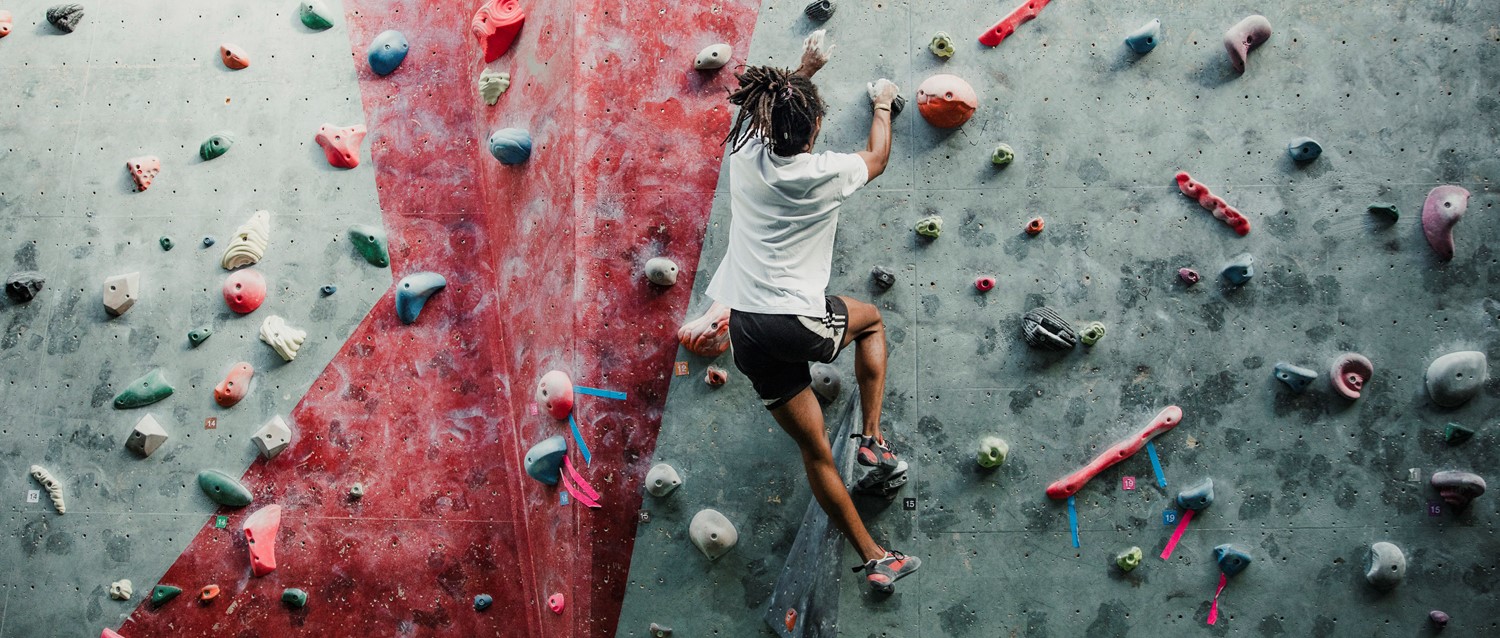
If you're looking for a more thrilling cardiovascular workout than a jog around the park, indoor bouldering and rock climbing could be for you.
"Climbing is not your normal sport - it requires you to problem solve and keep your brain engaged. This means that often you will be maximally exercising without even noticing," states Jez Tapping, head of climbing at Westway Sports & Fitness.
When it comes to improving your fitness, be prepared to work every muscle group.
"Some core attributes to climbing are balance, control, and joint stability. These will develop quickly as you get into regular practice," Tapping notes. "The fine muscles in the toes are used on small holds to contract the toes; this also passes up to the calves, hamstrings, quads, glutes and lower back and core."
"The fingers are obviously used extensively, and the forearms, shoulders, lats, and all of the upper posterior chain and back."
There are two different types of climbing you can try, depending on what your goals are. Bouldering doesn't require any ropes or equipment and the walls are usually only four to six metres high, whereas lead and rope climbing walls are much higher, so you are attached to a safety harness with someone spotting you at the bottom.
"Boulderers are typically more explosive and dynamic than lead and rope climbers, [who] are more static and controlled," he explains, so bouldering adds a bigger muscle-building element to the cardio workout.
As well as improving physical fitness, climbing is an extremely social sport as people often tackle problems together, making it a great option for those with depression or who feel lonely.
"The sport is sociable and goal orientated, and this - along with the natural physiological benefit of exercise - creates a really positive benefit to those people taking part," assures Tapping. It can help to conquer fear of heights too, which can be a huge confidence boost.
Another benefit to climbing is that you can join in whatever your age - whether you're nine or ninety-nine! Many centres also have specially crafted sessions for people with learning difficulties or physical disabilities.
Tapping suggests mentioning to the staff if you have any specific injuries and they will be able to work with you based on your ability.
"We try to gauge the capabilities of everyone who walks through the door, but they all have a climb and feel better because of it."
Barre fitness
If you're looking for a low-impact workout that still packs a punch, barre fitness is steadily gaining popularity and offers a unique set of movements that you won't find in any other class. Almost like a mix of ballet movements and Pilates.
"Because it's a low-impact but high-intensity exercise, it integrates the fat-burning format of interval training to exhaust each major muscle group, which in turn helps to lengthen muscles," explains Niki Rein, founder of Barrecore Fitness Studios.
"For this reason, it's an incredibly effective workout for safely reshaping the entire body," she adds.
Barre offers many benefits including improved strength, posture, balance and spatial awareness, with a focus on joint stabilising. The smaller your movements, the harder you work.
"Those who suffer from chronic knee and back pain tend to find relief from the stabilisation and core strengthening exercises after just a few weeks of regular barre classes," says Rein.
"Clients who suffer from minor escoliose also notice a considerable improvement with their levels of pain, posture, and energy levels," she reveals.
However, those with severe artrite, or spinal/disc damage should avoid group barre classes, Rein warns.
If you do have an injury, your instructor will be able to show you modified positions to ensure the range of movement is safe for your capabilities.
If those benefits weren't enough for you, Rein asks: "How often do you get to feel like a prima ballerina in your day-to-day?"
If you're unable to attend a class near you, try completing your own 10-minute barre workout at home - all you need is a chair.
Hopefully, you've been inspired to try something new. If you do want to explore more fun ways to keep fit, websites like This Girl Can have a whole range of activities for people of all ages that you may not have considered - even hula hooping!
Escolhas do paciente para Exercício e atividade física

Vida saudável
Como má postura afeta mais do que apenas suas costas
These days, being stuck at a desk all day isn’t just a habit - it's basically part of the job for a lot of people. Between our professional lives and the digital entertainment that fills our downtime, we are increasingly pulled into stationary, hunched positions. This environment makes the simple act of maintaining good posture a constant struggle. A physiotherapist explains exactly how poor posture impacts your wellbeing and offers simple, actionable tips to help you lead a happier, healthier life.
por Victoria Raw
Vida saudável
Exercícios de fim de semana podem ser suficientes para sua saúde
Um novo estudo revela que realizar 150 minutos de atividade física de moderada a vigorosa em 1 a 2 dias é tão eficaz quanto distribuí-la ao longo de uma semana. Essa abordagem de 'guerreiro de fim de semana' para o exercício pode melhorar significativamente sua saúde e até mesmo reduzir suas chances de morrer precocemente.
por Victoria Raw
Sobre o autorVer biografia completa

Georgia Gallant
BA (Hons), MA
Georgia se formou na Universidade de Bournemouth com um BA (Hons) em Roteiro para Cinema e Televisão e um MA em Mídia Literária.
Sobre o revisorVer biografia completa

Dra. Sarah Jarvis
Consultora Clínica
MA (Cantab), BM, BCh (Oxon), DRCOG, FRCGP, MBE
Após se formar em medicina em Cambridge e Oxford, a Dra. Sarah Jarvis MBE tornou-se médica de clínica geral.
Histórico do artigo
As informações nesta página são revisadas por pares por clínicos qualificados.
Artigo também disponível em Inglês, Alemão, Espanhol, Francês, Italiano, Português, Hindi, Hebraico, Árabe, e Sueco.
26 Apr 2019 | Última versão

Pergunte, compartilhe, conecte-se.
Navegue por discussões, faça perguntas e compartilhe experiências em centenas de tópicos de saúde.

Sentindo-se mal?
Avalie seus sintomas online gratuitamente
Inscreva-se no boletim informativo do Patient
Sua dose semanal de conselhos de saúde claros e confiáveis - escritos para ajudá-lo a se sentir informado, confiante e no controle.
Ao se inscrever, você aceita nossos Política de Privacidade. Você pode cancelar a inscrição a qualquer momento. Nunca vendemos seus dados.
Mais sobre vida saudável
- Construindo limites saudáveis para um novo começo no ano novo
- Os probióticos podem tratar a obesidade e o diabetes?
- É possível perder peso e ser positivo em relação ao corpo?
- É possível ser saudável e estar acima do peso?
- Você pode confiar na IA para cuidar da sua saúde?
- O vinagre de maçã ajuda na perda de peso?
- HIIT para perda de peso: como se compara ao cardio tradicional?
- Como enfaixar o peito com segurança
- Como conversar com seu filho sobre o peso dele
- Como conversar com seu parceiro sobre sexo doloroso
- Podridão cerebral é real - veja o que dizem os especialistas em saúde cerebral
- Obter um "divórcio do sono" é a chave para um melhor descanso?
- Correr faz mal para os joelhos?
- Esgotamento parental: seu guia para entender e superar isso
- Reenquadrando a solidão durante o período de férias de Natal
- Andar, correr, repetir: o que é Jeffing?
- Quais são os benefícios dos exercícios de força?
- Por que dietas da moda podem na verdade levar ao ganho de peso
- Por que você não precisa de desintoxicação
- Trabalhar, descansar, repetir: Como quebrar o ciclo de esgotamento