Colangite esclerosante primária
Revisado por Dr Doug McKechnie, MRCGPÚltima atualização por Dr Colin Tidy, MRCGPÚltima atualização 6 Mar 2025
Atende aos diretrizes editoriais
- BaixarBaixar
- Compartilhar
- Language
- Discussão
- Versão em Áudio
Primary sclerosing cholangitis is an uncommon condition affecting the bile ducts and liver. Inflammation and scarring of the bile ducts can lead to liver damage and cirrhosis - a condition where normal liver tissue is replaced by scar tissue (fibrosis). Different treatments are available to control symptoms that may develop and also to manage any complications which may occur. The outlook for people with primary sclerosing cholangitis can be very variable.
Neste artigo:
Vídeos selecionados para Fígado e vesícula biliar
Função do fígado
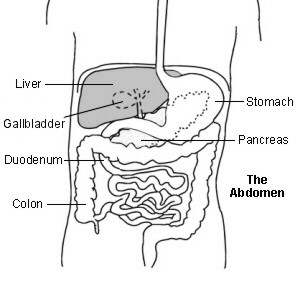
O fígado está na parte superior direita do abdômen. Ele tem muitas funções, incluindo:
Storing glycogen (fuel for the body), which is made from sugars. When required, glycogen is broken down into glucose which is released into the bloodstream.
Ajuda a processar gorduras e proteínas dos alimentos digeridos.
Produzindo proteínas essenciais para a coagulação do sangue (fatores de coagulação).
Processando muitos medicamentos que você pode tomar.
Ajuda a remover ou processar álcool, venenos e toxinas do corpo.
Making bile, which passes from the liver to the gut down the bile duct. Bile breaks down the fats in food so that they can be absorbed from the bowel.
Upper abdomen showing bile ducts
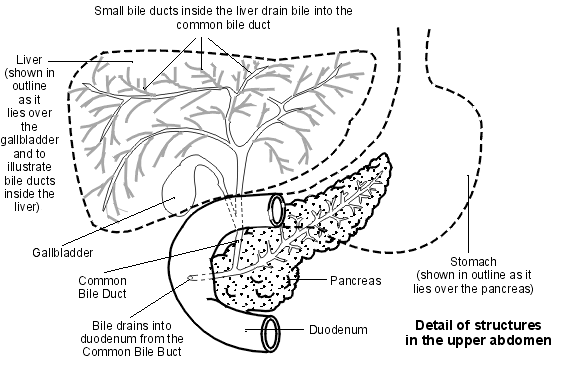
Bile is a yellow-green liquid that contains various chemicals and bile salts. Bile helps you to digest food, particularly fatty foods. It also helps the body to absorb certain vitamins (A, D, E and K) from the food that you eat.
Bile is made by liver cells. Liver cells pass out bile into a network of tiny tubes called bile ducts. They join together (like tributaries of a river) to form the larger common bile duct. Bile constantly drips down the tiny bile ducts, into the common bile duct, and into the first part of the small intestine (which is called the duodenum).
The gallbladder lies under the liver. It is like a pouch off the common bile duct and fills with bile. It is like a reservoir that stores bile. The gallbladder squeezes (contracts) when we eat, as the bile is needed to aid digestion. This empties the stored bile back into the common bile duct and out into the duodenum.
Continue lendo abaixo
O que é colangite esclerosante primária?
Primary sclerosing cholangitis (PSC) is a rare condition that affects the bile ducts and liver. PSC can occur at any age but is more common in people aged around 40 years. It is twice as common in men as in women. PSC is called:
Primary - because the cause is not known. (That is, it is not 'secondary' to any known cause such as alcohol or poisons.)
Sclerosing - because it causes scarring and thickening (sclerosis) of the bile ducts.
Cholangitis - which means inflammation of the bile ducts.
In this condition, the bile ducts both inside and outside the liver become inflamed and scarred. The scarring causes narrowing of these bile ducts which results in bile building up in the liver. The bile can then damage the liver cells. Eventually, the scar tissue can spread throughout the liver, causing cirrhosis and liver failure. Cirrhosis is a serious condition where normal liver tissue is replaced by scar tissue (fibrosis). It tends to progress slowly and often does not cause symptoms in its early stages. However, as the function of the liver gradually becomes worse, serious problems can develop.
Veja o folheto separado chamado Cirrose for more details.
Sintomas da colangite esclerosante primária
Voltar ao conteúdoIn many cases the symptoms develop gradually over weeks or months. At the beginning of the disease, many people have no symptoms at all. The most common early symptoms include:
Feeling more tired than usual.
Sentindo-se geralmente indisposto.
Pele coceira.
Perda de peso.
Having some discomfort in the right upper tummy (abdomen).
Jaundice is a symptom of PSC when the condition worsens. If you have jaundice, you 'go yellow'. You tend to notice it first when the whites of the eyes become yellow. This is due to a build-up of the chemical bilirubin, which is made in the liver and, in some liver conditions, spills into the blood.
Continue lendo abaixo
Primary sclerosing cholangitis causes
Voltar ao conteúdoThe cause is not clear. It can sometimes run in families. Around four out of five people with PSC also have inflammatory bowel disease (most often colite ulcerativa, but it can also be associated with Doença de Crohn). About 1 in 10 people with inflammatory bowel disease are affected by PSC.
Primary sclerosing cholangitis treatment
Voltar ao conteúdoAt present there is no specific treatment for PSC which either cures or slows the progression of PSC disease. Treatments aim to improve symptoms and also to manage any complications which may arise.
Treatment of symptoms. Itching of the skin can be difficult to treat but is usually eased with a medicine called colestyramine. Other medicines may be tried if this is not effective.
Medical treatment. Although vitamin supplements may be advised, there is no proven medical treatment that alters the progression or outcome in PSC. Ursodeoxycholic acid (UCDA) is often used and has been shown to improve liver function but clinical trials have not shown any benefit regarding any improved outcome.
Treatment of complications. Antibiotics will be given if you have an episode of infective cholangitis. If your cholangiogram shows that you have an obstruction to the bile duct outside your liver, it may be possible for a doctor to place a small drainage tube (a stent) or use a very small balloon to open up the blockage.
Liver transplant. Liver transplantation is the only treatment able to modify the outlook of the disease. It may be considered if your liver is affected badly. The outlook following a liver transplant is good. However, PSC recurs in around a fifth of cases following a liver transplant.
Diet and alcohol. Most people with PSC will be advised to eat a normal healthy diet. Ideally, anybody with inflammation of the liver não deve beber álcool, or only in very small amounts. If you already have liver inflammation, alcohol may increase the risk and speed of developing cirrhosis - where normal liver tissue is replaced by scar tissue (fibrosis).
Continue lendo abaixo
What are the complications?
Voltar ao conteúdoVarious complications can occur in some people with PSC. These include:
Deficiencies of some vitamins, usually vitamins A, D, E and K. These are the vitamins which are fat-soluble (rather than the other vitamins which are water-soluble). This means they dissolve in fat. Bile helps the fat to be broken down and these vitamins to be absorbed.
PSC cholangitis, which is infection of the blocked bile ducts. This is called infective cholangitis. This may cause chills, fever and upper tummy (abdominal) tenderness.
Cirrhosis - where normal liver tissue is replaced by scar tissue (fibrosis).
Insuficiência hepática.
Bile duct cancer. This eventually affects around 1 in 10 people who have PSC.
Diagnosing primary sclerosing cholangitis
Many people with PSC have no, or only vague, symptoms for quite some time in the early stages of the disease. Therefore, the diagnosis is often made when you have tests for an unrelated condition or routine tests if you have inflammatory bowel disease.
Tests usually include:
Exames de sangue chamados testes de função hepática. Eles medem a atividade de substâncias químicas (enzimas) e outras substâncias produzidas no fígado. Isso fornece um guia geral sobre se o fígado está inflamado e como ele está funcionando. See the separate leaflet called Abnormal liver function tests for more details.
Other blood tests may be performed to rule out (exclude) other causes of liver conditions, such as viral hepatitis.
Uma ultrassonografia do fígado may be performed.
A cholangiogram is a test which produces a picture of the bile ducts. This is often done using a magnetic resonance imaging (MRI) scan.
Taking a small sample (biopsy) of the liver. This may be carried out to look at the sample under the microscope. It can show inflammation and the extent of any cirrhosis (where normal liver tissue is replaced by scar tissue (fibrosis) in the liver). The liver biopsy can also assess how early or advanced the disease is. Consulte o folheto separado chamado Biópsia do fígado para mais detalhes.
Does primary sclerosing cholangitis alter life expectancy?
The course of PSC is variable. The outlook and life expectancy are poorer in older patients, those who have an enlarged liver and spleen, and in patients who are persistently jaundiced. There is also an increased risk of developing cancer of the bile duct (cholangiocarcinoma) or câncer intestinal (colorretal). The risk of developing bowel cancer is higher in people with PSC who also have ulcerative colitis.
Apart from liver transplantation, there are no effective treatments for PSC. Some US studies suggest life expectancy ranges from 9 to 18 years if the patient does not have a liver transplant. However, researchers in the Netherlands concluded that life expectancy may be longer than 21 years from the time when the diagnosis is made.
The treatment of PSC is a developing area of medicine. New treatments continue to be researched and the information above is very general. The specialist who knows your case can give more accurate information about the outlook for your particular situation.
Escolhas do paciente para Fígado e vesícula biliar

Saúde digestiva
Cálculos biliares
Gallstones are common but cause no symptoms in two out of three people who have them. They sometimes cause pain, yellowing of your skin or the whites of the eyes (jaundice), inflammation of the pancreas (pancreatitis) and gallbladder inflammation. Surgery is the usual treatment for gallstones that cause symptoms.
por Dr. Colin Tidy, MRCGP

Saúde digestiva
Cirrose
Cirrhosis is a serious condition where normal liver tissue is replaced by scar tissue (fibrosis). It tends to progress slowly and often does not cause symptoms in its early stages. However, as the function of the liver gradually becomes worse, serious problems can develop. In the UK, the two commonest causes of cirrhosis are alcohol drinking above recommended limits and hepatitis C infection. Treatments may vary, depending on the cause. If cirrhosis becomes severe, a liver transplant may be the only option.
por Dra. Philippa Vincent, MRCGP
Leitura adicional e referências
- Nicoletti A, Maurice JB, Thorburn D; Guideline review: British Society of Gastroenterology/UK-PSC guidelines for the diagnosis and management of primary sclerosing cholangitis. Frontline Gastroenterol. 2020 Mar 2;12(1):62-66. doi: 10.1136/flgastro-2019-101343. eCollection 2021.
- EASL Clinical Practice Guidelines on sclerosing cholangitis. J Hepatol. 2022 Sep;77(3):761-806. Epub 2022 Jun 21.
- Tan N, Lubel J, Kemp W, et al; Current Therapeutics in Primary Sclerosing Cholangitis. J Clin Transl Hepatol. 2023 Oct 28;11(5):1267-1281. doi: 10.14218/JCTH.2022.00068S. Epub 2023 Apr 17.
- Sarcognato S, Sacchi D, Grillo F, et al; Autoimmune biliary diseases: primary biliary cholangitis and primary sclerosing cholangitis. Pathologica. 2021 Jun;113(3):170-184. doi: 10.32074/1591-951X-245.
Continue lendo abaixo
Histórico do artigo
As informações nesta página são escritas e revisadas por clínicos qualificados.
Próxima revisão prevista para: 5 Mar 2028
6 Mar 2025 | Última versão

Pergunte, compartilhe, conecte-se.
Navegue por discussões, faça perguntas e compartilhe experiências em centenas de tópicos de saúde.

Sentindo-se mal?
Avalie seus sintomas online gratuitamente
Inscreva-se no boletim informativo do Patient
Sua dose semanal de conselhos de saúde claros e confiáveis - escritos para ajudá-lo a se sentir informado, confiante e no controle.
Ao se inscrever, você aceita nossos Política de Privacidade. Você pode cancelar a inscrição a qualquer momento. Nunca vendemos seus dados.