Congenital hypothyroidism
Última atualização 23 de janeiro de 2023
Atende aos diretrizes editoriais
- BaixarBaixar
- Compartilhar
- Language
- Discussão
- Versão em Áudio
- Adicionar às fontes preferidas no Google
Congenital hypothyroidism is a partial or complete loss of function of the thyroid gland (hypothyroidism) that affects infants from birth (congenital). The thyroid gland is a butterfly-shaped tissue in the lower neck. It makes iodine-containing hormones that play an important role in regulating growth, brain development, and the rate of chemical reactions in the body (metabolism). People with congenital hypothyroidism have lower-than-normal levels of these important hormones.
Descrição
Congenital hypothyroidism is a partial or complete loss of function of the thyroid gland (hypothyroidism) that affects infants from birth (congenital). The thyroid gland is a butterfly-shaped tissue in the lower neck. It makes iodine-containing hormones that play an important role in regulating growth, brain development, and the rate of chemical reactions in the body (metabolism). People with congenital hypothyroidism have lower-than-normal levels of these important hormones.
Congenital hypothyroidism occurs when the thyroid gland fails to develop or function properly. In 80 to 85 percent of cases, the thyroid gland is absent, severely reduced in size (hypoplastic), or abnormally located. These cases are classified as thyroid dysgenesis. In the remainder of cases, a normal-sized or enlarged thyroid gland (goiter) is present, but production of thyroid hormones is decreased or absent. Most of these cases occur when one of several steps in the hormone synthesis process is impaired; these cases are classified as thyroid dyshormonogenesis. Less commonly, reduction or absence of thyroid hormone production is caused by impaired stimulation of the production process (which is normally done by a structure at the base of the brain called the pituitary gland), even though the process itself is unimpaired. These cases are classified as central (or pituitary) hypothyroidism.
Signs and symptoms of congenital hypothyroidism result from the shortage of thyroid hormones. Affected babies may show no features of the condition, although some babies with congenital hypothyroidism are less active and sleep more than normal. They may have difficulty feeding and experience constipation. If untreated, congenital hypothyroidism can lead to intellectual disability and slow growth. In the United States and many other countries, all hospitals test newborns for congenital hypothyroidism. If treatment begins in the first two weeks after birth, infants usually develop normally.
Congenital hypothyroidism can also occur as part of syndromes that affect other organs and tissues in the body. These forms of the condition are described as syndromic. Some common forms of syndromic hypothyroidism include Pendred syndrome, Bamforth-Lazarus syndrome, and brain-lung-thyroid syndrome.
Padrões de herança
The source lists the following possible inheritance patterns: Autosomal dominant; Autosomal recessive. More than one pattern can apply in different cases.
Related genes
Other names
CH
CHT
Congenital myxedema
Cretinism
Related patient information and medicines
Patient information leaflet
Deficiência de iodo
How common is iodine deficiency. Underactive thyroid gland due para iodine deficiency from birth (congenital hypothyroidism) is the most common preventable cause of severe learning disability in the world. There has been a worldwide use of salt with added iodine (iodized salt) since the 1990s. In hypothyroidism, there is a reduced level of thyroid.
Patient information leaflet
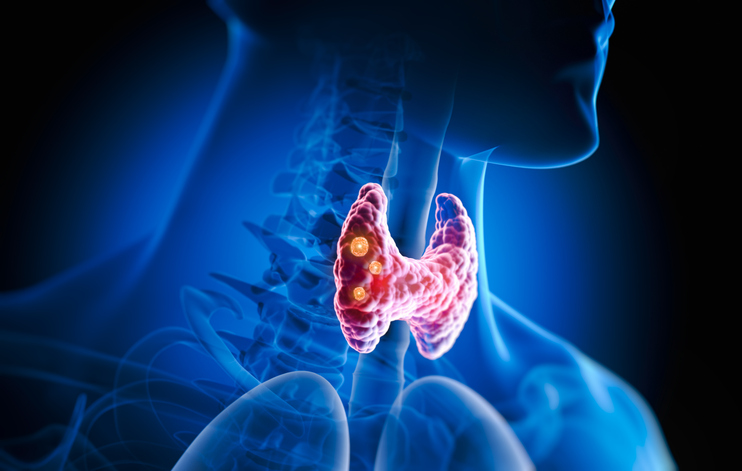
Glândula tireoide hipoativa
If you have an underactive thyroid gland, the condition is called hypothyroidism. In hypothyroidism, there is a reduced level of thyroid hormone in the body. This can cause various symptoms, th... If the pituitary does not make TSH then the thyroid cannot make enough thyroxine. This is called secondary hypothyroidism. Some children are born with.

Patient information leaflet
Teste do pezinho em recém-nascidos
Mothers of all newborn babies are offered testing for certain rare but serious health conditions by testing blood taken from the baby's heel. This is the blood spot screening programme and it is also kn... Early treatment significantly reduces the risk of brain problems and complications in the future. Congenital hypothyroidism - this is a rare.
Patient information leaflet
Hipoparatireoidismo
Something that someone is born with (congenital). Passed on through the genes from family members ... Transient hypoparathyroidism is more likely to affect a baby if the mother has diabetes, or the mother has overactive parathyroid glands. Congenital hypoparathyroidism DiGeorge's syndrome is a congenital condition that some babies are born with..

Patient information leaflet
Programa de rastreamento do NHS
Newborn babies screening. A number of screening programmes exist for newborn babies. These pick up uncommon abnormalities which may be corrected if picked up early enough. One example is the heel-prick test which takes a sample of blood to look for conditions such as congenital hypothyroidism or cystic fibrosis. If these are picked up and treated.
Patient information leaflet
Tratando problemas de saúde em recém-nascidos
Treatments include medicines, early antibiotics for infections, physiotherapy and special diets. Hipotireoidismo : babies with this condition do not produce enough of the thyroxine hormone and this can damage their development. If picked up early they can be treated with a medicine form of thyroxine hormone so that they develop normally. Sickle.
Leitura adicional e referências
- Congenital hypothyroidism; MedlinePlus, National Library of Medicine.
- Grasberger H, Refetoff S. Genetic causes of congenital hypothyroidism due to dyshormonogenesis. Curr Opin Pediatr. 2011 Aug;23(4):421-8. doi: 10.1097/MOP.0b013e32834726a4.
- Nettore IC, Cacace V, De Fusco C, Colao A, Macchia PE. The molecular causes of thyroid dysgenesis: a systematic review. J Endocrinol Invest. 2013 Sep;36(8):654-64. doi: 10.3275/8973. Epub 2013 May 22.
- Rastogi MV, LaFranchi SH. Congenital hypothyroidism. Orphanet J Rare Dis. 2010 Jun 10;5:17. doi: 10.1186/1750-1172-5-17.
- Szinnai G. Clinical genetics of congenital hypothyroidism. Endocr Dev. 2014;26:60-78. doi: 10.1159/000363156. Epub 2014 Aug 29.
- Van Vliet G, Deladoey J. Diagnosis, treatment and outcome of congenital hypothyroidism. Endocr Dev. 2014;26:50-9. doi: 10.1159/000363155. Epub 2014 Aug 29.
Participe da conversa
Compartilhe seus pensamentos ou experiências com outros em nosso comunidades de pacientes.

Pergunte, compartilhe, conecte-se.
Navegue por discussões, faça perguntas e compartilhe experiências em centenas de tópicos de saúde.
Inscreva-se no boletim informativo do Patient
Sua dose semanal de conselhos de saúde claros e confiáveis - escritos para ajudá-lo a se sentir informado, confiante e no controle.
Ao se inscrever, você aceita nossos Política de Privacidade. Você pode cancelar a inscrição a qualquer momento. Nunca vendemos seus dados.