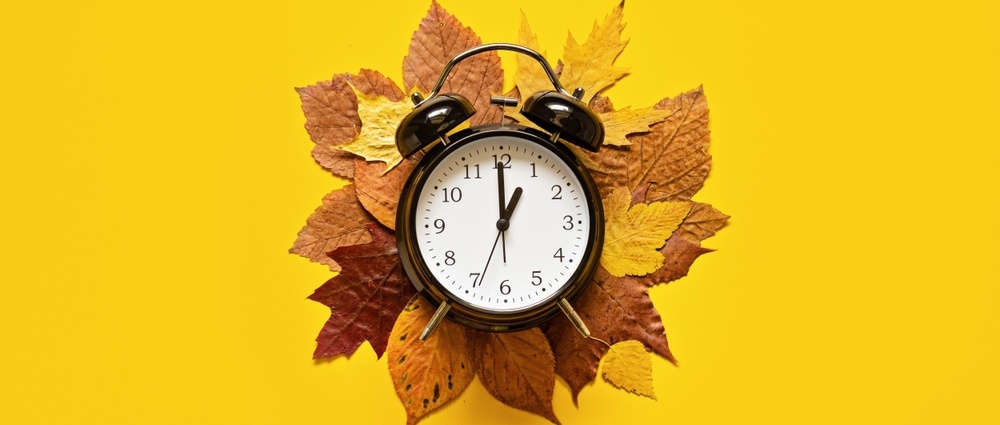
Horário de Verão: Por que a mudança dos relógios pode afetar nossa saúde
Revisado por Dr Colin Tidy, MRCGPÚltima atualização por Lynn StephenÚltima atualização 15 Out 2025
Atende aos diretrizes editoriais
- BaixarBaixar
- Compartilhar
- Language
- Discussão
- Versão em Áudio
- Adicionar às fontes preferidas no Google
The days are getting colder and shorter, which means autumn has arrived in the UK. Soon, the clocks will jump back by an hour to mark the end of Daylight Savings Time or British Summer Time. Although this will give us an extra hour in bed, the clocks changing could have an impact on our health.

Why do our clocks change?
In Britain, the clocks will move back by one hour at 2am on Sunday 26th October. We change the clocks to make better use of natural daylight in the morning.
Between March and October - during Daylight Saving Time - an hour of daylight is borrowed from the morning and added to the end of the day. At the end of October, we push the clocks back and return to standard time or Greenwich Mean Time.
The United States, Canada, Australia and New Zealand - as well as European countries such as France, Germany, Italy, Poland and Spain - also change their clocks.
Every year, the clock change causes a discussion about whether we should continue the practice. Some people welcome the change as it marks the start of a new season, but others argue that it’s an inconvenience.
However, some researchers suggest that changing the clocks can have a serious effect on our health because of the disruption to our circadian rhythms.
Circadian rhythms are physical, mental and behavioural changes that follow a 24-hour cycle, regulating things such as alertness, sleepiness e apetite. These processes tend to be aligned with the cycle of day and night.
How does the clocks changing affect health?
According to research, moving our clocks forward or back by an hour can disturb these natural rhythms - leading to several health issues.
Increase in mood disorders
Research has linked the clocks changing to an increase in mood disorders such as depressão ou seasonal affective disorder. When the clocks go forward in the spring, it means we have darker mornings and lighter evenings.
Less morning light can lower levels of the mood-boosting hormone serotonin, which can affect how you feel emotionally - especially if you already have a mental health issue such as depression.
Research has also linked the clocks going back to mood disorders. A US study found an 11% increase in depressive episodes during the switch from daylight saving to standard time.
Sono interrompido
The clocks changing can also affect our sleep schedules, which in turn can affect our mood and ability to concentrate. The shift may mean we go to bed and wake up earlier or later than usual - and the disruption could lead to insônia or interrupted sleep.
Although these issues are usually temporary - lasting a few days or weeks - it can make us feel tired and foggy.
Este fadiga may also lead to accidents. A study of 732,000 car accidents over two decades found that the annual switch to Daylight Saving Time is associated with a 6% increase in fatal car crashes that week.
Increased chance of cardiovascular disease
The disruption to our circadian rhythms may also be linked to heart disease, according to some studies - although the exact reason why is unknown.
A study review found that the chance of heart attacks increased “modestly but significantly” after the shift to daylight saving time in the spring but not in winter clock change.
According to the researchers, the abrupt change to the ‘sleep-wake cycle’ has been linked to inflammation and imbalances in the nervous system.
Another study found that moving into daylight saving time is associated with a higher chance of doença cardiovascular, mental health issues and immune-related disorders.
How to manage the clocks changing
Get fresh air
Getting ao ar livre and exercising frequently are both useful ways to help you reset your internal body clock. Going for a walk first thing after you wake up may help you adjust to the day after the clocks change.
Avoid caffeine
Stimulants such as cafeína can keep you awake and throw off the natural balance between sleep and wakefulness. If you are having trouble sleeping at night, it may help to avoid café after midday.
Limit light before bed
Artificial light exposure at night can interfere with your circadian rhythm. Try to avoid using electronic devices that emit blue light - such as phones and laptops - in the lead-up to bedtime.
Keep naps short and early in the afternoon
When you’re feeling tired, it’s tempting to have a nap - but longer naps or napping later in the day can mean you struggle to sleep at night. If you do have a nap, keep it short at around 20 minutes.
Follow a consistent sleep schedule
Sticking to a bedtime or morning wake-up time can help your body adjust to a stable circadian rhythm. Get your bedroom ready for a good night’s sleep by making it dark and comfortable. Try to relax before bed, for example, by having a bath or reading a book.
Seek help if you’re struggling with your mental health
If you’re experiencing depressão, ansiedade or another saúde mental problem, it’s important to speak to your doctor for advice. You can also self-refer for counselling on the NHS.
Escolhas do paciente para Depressão
Saúde mental
Como falar com as pessoas sobre sua saúde mental
Buscar ajuda costuma ser o primeiro passo para se recuperar e manter o bem-estar, mas falar sobre um problema de saúde mental nem sempre é fácil. É normal sentir-se nervoso ao falar sobre sua saúde com um amigo ou familiar de confiança - e procurar seu médico ou empregador por ajuda pode parecer assustador.
por Lawrence Higgins
Saúde mental
O que é 'boa saúde mental'?
Todos nós queremos nos sentir bem, tanto mental quanto fisicamente. Mas o que significa se sentir bem — especialmente em termos de saúde mental — varia de pessoa para pessoa. Cada um de nós precisa de coisas diferentes para se sentir no seu melhor.
por Lynn Stephen
Sobre o autorVer biografia completa

Lydia Smith
Redatora de reportagens
BA, MA, MSc
Lydia Smith é uma jornalista premiada e escritora de reportagens que escreveu extensivamente sobre saúde da mulher e saúde mental. Atualmente, ela está cursando um mestrado em psicologia.
Sobre o revisorVer biografia completa

Dr Colin Tidy, MRCGP
Médico Generalista, Autor Médico
MBBS, MRCGP, MRCP (Paediatrics), DCH
Dr Colin Tidy é um médico do NHS, baseado em Oxfordshire.
Histórico do artigo
As informações nesta página são revisadas por pares por clínicos qualificados.
Artigo também disponível em Inglês, Alemão, Espanhol, Francês, Italiano, Português, Hindi, Hebraico, Árabe, e Sueco.
Next review due: 15 Oct 2028
15 Out 2025 | Última versão
23 Out 2023 | Publicado originalmente
Escrito por:
Lydia Smith

Pergunte, compartilhe, conecte-se.
Navegue por discussões, faça perguntas e compartilhe experiências em centenas de tópicos de saúde.

Sentindo-se mal?
Avalie seus sintomas online gratuitamente
Inscreva-se no boletim informativo do Patient
Sua dose semanal de conselhos de saúde claros e confiáveis - escritos para ajudá-lo a se sentir informado, confiante e no controle.
Ao se inscrever, você aceita nossos Política de Privacidade. Você pode cancelar a inscrição a qualquer momento. Nunca vendemos seus dados.
Mais em saúde mental
- Construindo hábitos mais saudáveis com a Holly Health
- Construindo limites saudáveis para um novo começo no ano novo
- O riso 'prescrito' pode ajudar as pessoas a se recuperarem de traumas?
- O estresse pode causar ataques cardíacos?
- Lidando com o luto após perder um ente querido para o câncer de pulmão
- Lidando com depressão e ansiedade causadas pela acne adulta
- Como estudantes e professores podem vencer o estresse dos exames
- Como lidar com a ansiedade em relação às mudanças climáticas
- Como lidar com a morte de um animal de estimação
- Como superar o medo do dentista
- Como melhorar sua autoestima e ser mais gentil consigo mesmo
- Como gerenciar o estresse ao viver com cardiomiopatia
- Como superar o medo de voar
- Como falar com as crianças sobre a morte
- Gerenciando o luto durante seu primeiro Natal sem um ente querido
- Mais do que apenas entretenimento: Jeanie Y. Chang sobre K-dramas e saúde mental
- O que é a síndrome da serotonina e o que a causa?
- O que é masculinidade tóxica e como ela afeta os homens?
- Por que me sinto deprimido no Ano Novo?
- Por que usamos humor negro como mecanismo de enfrentamento?