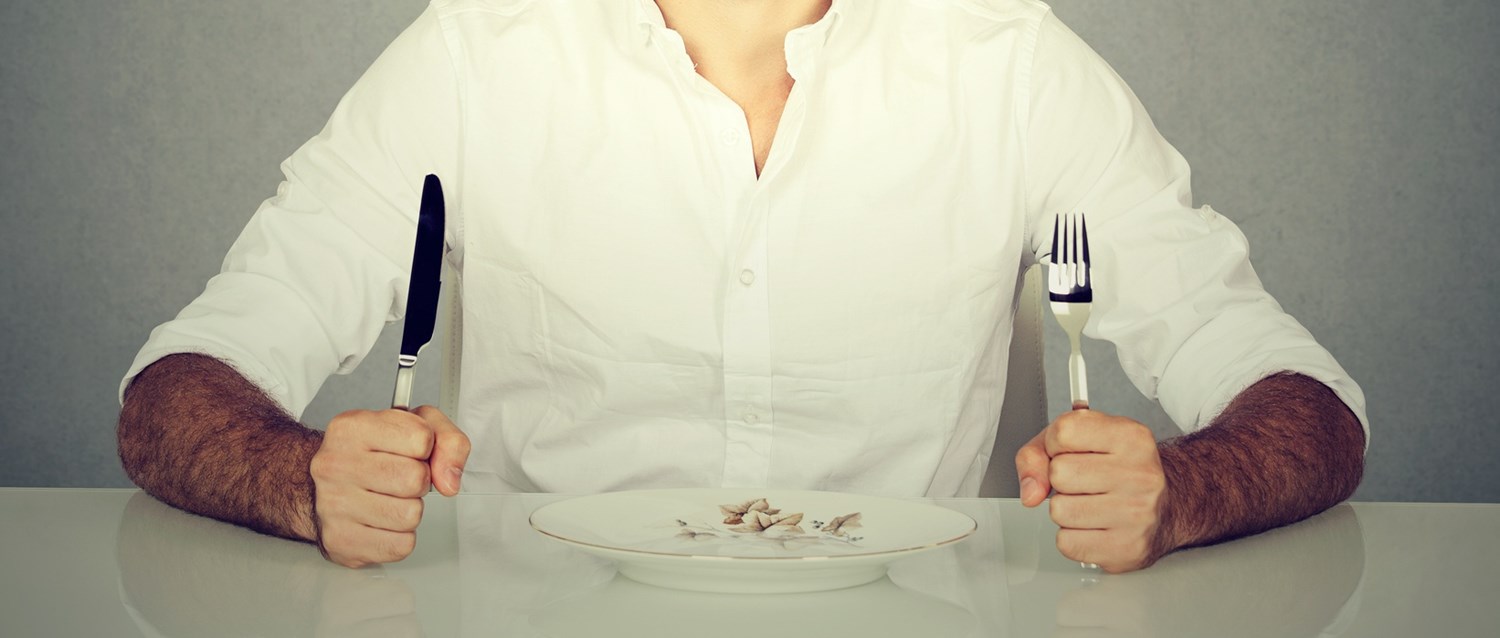
What triggers eating disorders in men?
Peer reviewed by Dr Hayley Willacy, FRCGP Authored by Dr Sarah JarvisOriginally published 13 Nov 2017
Meets Patient’s editorial guidelines
- DownloadDownload
- Share
- Language
- Discussion
- Audio Version
- Add to preferred sources on Google
Our image-conscious world puts pressure on both sexes to look perfect, but while for girls and women it's all about being model slender, for men the perfect chiselled, muscular physique is often the Holy Grail. That means that the proportion of men with bulimia or binge eating disorder is much higher than the proportion with anorexia. Men are less likely to purge and more likely to exercise to excess than women are. But the underlying mental suffering is very much the same.
Mental health support for adults and children
Online CBT and psychological therapy for adults and children aged 8–17. Onebright’s accredited clinicians support people experiencing anxiety, depression and other emotional challenges.
Oh, it's such a shame
We know that young women with eating disorders often feel intensely ashamed, and may hide their problem. With anorexian, they often cover up with baggy clothes and pretend at mealtimes that they've already eaten. With bulimia, empty food packets can be smuggled into the bin and public toilets used for purging.
But men aren't 'supposed' to worry about their weight, and they certainly aren't expected to show they're vulnerable. Since 'everyone knows that eating disorders are a girl's problem', admitting not only to emotional distress but also to an apparently unmasculine response to it carries a double stigma.
Men are from Mars, women are from Venus
Many of the triggers for eating disorders differ between men and women. Men who develop eating disorders have often been overweight at some point. Women, on the other hand, are more likely to have felt they were overweight when they weren't. Men are also more likely to worry about their weight because of how it might affect their athletic ability: for women, a 'beautiful' body is an issue all by itself.
While most men with eating disorders aren't gay, men who are gay are up to 10 times more likely than heterosexual men to develop an eating disorder. Interestingly, lesbian women are less likely to be concerned about their appearance than gay men.
Muscle dysmorphia - an obsession with developing the right muscles, which has much overlap with eating disorders - is much more common in men than in women. Closely linked to this is the use of anabolic steroids, as common in men as anorexia and bulimia combined in women.
Media madness
If a fitness instructor asked a video company to produce an exercise video in which they deliberately covered up their toned physique, chances are they'd be sent packing in very short order, or dismissed as mad. In the same way, no magazine is going to let a photo go out on their front page in which the model has a flabby stomach protruding from under her shirt: everyone knows that beauty sells. And Photoshop® means they don't have to.
Few icons have either the power or the inclination to fight back - when Kate Winslet announced that she was refusing to allow her photos in a recent cosmetic advert to be photoshopped, it made international headlines. Yet young women who watch exercise videos led by an instructor in a body-contour outfit are more likely to feel unhappy afterwards, compared to doing the same workout while watching the same instructor covered up.
Men and media
Men, too, are more likely to be dissatisfied with their bodies when they're exposed to images of muscular, idealised men. These same images are more likely to causemento drive themselves at the gym to increase their own muscularity - and, as we've seen above, a desire for the perfect muscular body is often a precursor to an eating disorder in men.
Then there's social media - do endless carefully vetted images of everyone you know having a marvellous time, or pictured only in the most flattering poses, play a role? Dr Sandeep Ranote is a consultant child and adolescent psychiatrist, who has specialised in eating disorders for 15 years. She warns that we ignore this element at our peril. "We would be naive to say that there is no link between social media and eating disorders as well as other mental health problems like low self-esteem, depression and self-harm. We don't have absolute proof yet, and we don't know how to deal with it - but we definitely need to keep looking at it."
What's the solution?
As in so many walks of life, forewarned is forearmed. Doctors have a duty to recognise that men may well show different first signs of an eating disorder than women, and to keep it in mind as a possible diagnosis.
The fashion industry pays lip service to behaving responsibly where body image is concerned: I have seen endless stories over the years about fashion houses 'joining forces to ban size zero models', yet they constantly creep back in. For men, it may be more difficult still. in a world where obesity levels are sky-rocketing, fitness carries huge social cachet and the finely-honed athlete's physique is unlikely to become unpopular any time soon.
Dr Ranote is convinced that who gives the message is crucial. "Using role models is, if anything, more important for boys and men than for girls and women. Men will engage with their stories - the State of Mind campaign, set up six years ago by the Rugby League and Rugby Union, has done amazing work in raising awareness of mental health problems. They've largely focused on depressive disorders, but they're starting to look at eating disorders as well, getting people to start conversations at local club level. The Football Association (FA) is also working at local levels to raise awareness - I would love to see the FA working with the Royal College of Psychiatrists so we can maximise our impact. I would love the English Cricket Board doing more - they have the power to get through to men in a way that doctors never could."
There are other shining examples of how we can beat the stigma. The brave decision of the international rugby referee Nigel Owens to share his 27-year battle with bulimia is a case in point. You don't get much more manly than a rugby referee. And if it could happen to him, it could happen to anyone.
Patient picks for Eating disorders

Mental health
Debunking eating disorder myths and stereotypes
Mental health care provider The Priory Group estimates that 1.25-3.4 million people in the UK have an eating disorder. Despite this number, there are still many eating disorder myths and stereotypes surrounding the reality of eating disorders. While these misconceptions remain prevalent, people with eating disorder symptoms are likely to face barriers when reaching out for help. In this piece, we’ll explore some of the most common eating disorder myths, and assess why they are damaging.
by Emily Jane Bashforth
Mental health
Anorexia may be a physical illness, as well as psychological
New research shows that the origins of anorexia are both in the mind and the body.
by Milly Evans
About the authorView full bio
Authored by

Dr Sarah Jarvis
Clinical Consultant
MA (Cantab), BM, BCh (Oxon), DRCOG, FRCGP, MBE
After training in medicine at Cambridge and Oxford, Dr Sarah Jarvis MBE became a GP.
About the reviewerView full bio

Dr Hayley Willacy, FRCGP
General Practitioner, Medical Author
MBChB (1992), DRCOG, DFFP, MRCOG (Part 1) MRCGP (2007), DFSRH (2013), MSc - medical education (2020)
Dr Hayley Willacy was an NHS GP working in northwest England, who retired from clinical practice in 2022 after 30 years.
Article history
Article also available in English, German, Spanish, French, Italian, Portuguese, Hindi, Hebrew, Arabic, and Swedish.
13 Nov 2017 | Originally published
Authored by:
Dr Sarah JarvisPeer reviewed by
Dr Hayley Willacy, FRCGP
Join the conversation
Share your thoughts or experiences with others in our patient communities.

Ask, share, connect.
Browse discussions, ask questions, and share experiences across hundreds of health topics.

Feeling unwell?
Assess your symptoms online for free
Sign up to the Patient newsletter
Your weekly dose of clear, trustworthy health advice - written to help you feel informed, confident and in control.
By subscribing you accept our Privacy Policy. You can unsubscribe at any time. We never sell your data.