Lidando com uma criança que não responde
Revisado por Dr Rachel Hudson, MRCGPÚltima atualização por Dr Philippa Vincent, MRCGPÚltima atualização 5 Dec 2023
Atende aos diretrizes editoriais
- BaixarBaixar
- Compartilhar
- Language
- Discussão
- Versão em Áudio
- Adicionar às fontes preferidas no Google
Nesta série:Dificuldades respiratórias em crianças
If someone becomes unresponsive they need someone to help keep them safe and prevent further harm. The type of help they need varies depending on why they have become unresponsive, whether they are breathing or not breathing and if they are a baby, child or adult.
Em resumo
If a child is unresponsive, check if they are breathing normally.
Se eles estiverem respirando, coloque-os na posição de recuperação e ligue para 999 ou 112.
Se você suspeitar de uma lesão na coluna, use a técnica de elevação da mandíbula para abrir as vias aéreas.
Se eles não estiverem respirando, inicie a RCP dando 5 ventilações de resgate, depois 30 compressões torácicas e 2 ventilações de resgate.
Se estiver sozinho, faça um minuto de RCP antes de ligar para 999 ou 112.
Continue a RCP até que a ajuda chegue ou a criança comece a respirar normalmente.
If a child is unresponsive, you should shout for help and dial 999. Make sure an ambulance is on its way.
In children, making ventilations (rescue breaths) are crucial to the child’s chances of survival. For those not trained in paediatric resuscitation, seeking help quickly is the most important thing. In any case, calling an ambulance and taking immediate action is critical.
This leaflet is created from first aid advice provided by St John Ambulance, the nation's leading first aid charity. This advice is no substitute for first aid training - encontre um curso de treinamento perto de você.
Unresponsive and breathing
O que procurar
If a child is not responding to you and you think they are unresponsive, ask loudly: 'What has happened?' or 'Open your eyes'. Place one hand on their shoulder and tap gently. If they still do not respond, it's likely they're unresponsive.
O que você precisa fazer
If you think your child is unresponsive, check to see if they are still breathing normally. If they are unresponsive and breathing, here's what you need to do:
Step 1 - Open their airway
Place one hand on the child's forehead and gently tilt their head back. As you do this, their mouth will fall open slightly.
Place the fingertips of your other hand on the point of their chin and lift it.
Open the airway
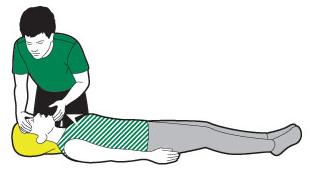
Step 2 - Check to ensure they are breathing normally
Look, listen and feel for normal breathing - chest movement, sounds and breaths on your cheek. Do this for no more than ten seconds.
Check breathing
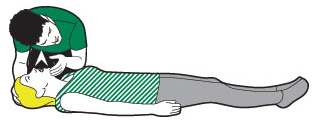
If they are breathing normally, put them into the recovery position to keep their airway open.
Step 3 - Put them in the recovery position
The next three steps are for if you find the child lying on their back. If you find them lying on their side or their front you may not need all three.
Place their arm nearest you at a right angle to their body, with the palm facing upwards.
Take their other arm and place it across their chest so the back of their hand is against their cheek nearest you, and hold it there. With your other hand, lift their far knee and pull it up until their foot is flat on the floor.
Now roll the child on to their side. Carefully pull on their bent knee and roll them towards you. Once you've done this, the top arm should be supporting their head and the bent leg should be on the floor to stop them from rolling over too far.
Recovery position
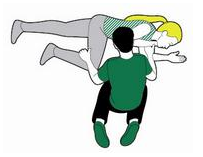
Next, check that their airway is open, so they can breathe, and any fluid in their mouth can drain away. To do this, tilt their head back, gently tilt their chin forward and make sure that their airway will stay open and clear.
Step 4 - If you suspect a spinal injury
If you think the child could have a spinal injury, you must try and keep their neck as still as possible. Instead of tilting their neck, use the jaw thrust technique:
Place your hands on either side of their face and with your fingertips gently lift the jaw to open the airway, avoiding any movement of their neck.
Suspect spinal injury
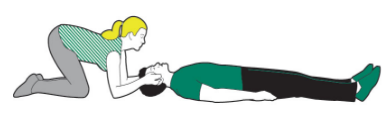
Step 5 - Call for help
Once you've put them safely into the recovery position, call 999 or 112 for emergency help.
Remember that until help arrives you must keep checking that they're still breathing normally.
If they stop breathing normally at any point, call 999 or 112 straight away and get ready to give them chest compressions and rescue breaths - CPR.
Unresponsive and not breathing
If a child is not responding to you and you think they are unresponsive, ask loudly 'What's happened?' or say to them: 'Open your eyes!'. Place one hand on their shoulder and tap gently. If they still do not respond, it's likely that they're unresponsive.
Open their airway and check to see if they are breathing normally by looking for chest movement, listening for the sounds of normal breathing and seeing if you can feel their breaths on your cheek.
If they are not breathing, you need to start CPR (cardiopulmonary resuscitation - a combination of chest compressions and rescue breaths) straight away.
O que você precisa fazer
If someone is with you, get them to call 999 or 112 for emergency help.
If you're on your own, you need to give one minute's worth of CPR - cardiopulmonary resuscitation - before you call for help. This involves giving chest compressions and rescue breaths to keep the child's circulation going.
How to perform CPR on a child
Kneel down beside the child on the floor, level with their chest.
Give five initial rescue breaths before starting the sequence of 30 chest compressions and two rescue breaths.
Step 1 of 1
Ensure the child's airway is open.
Open airway child
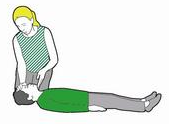
Step 2 of 7
Pinch their nose firmly closed.
Pinch nose child
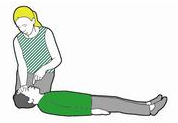
Step 3 of 7
Take a deep breath and seal your lips around their mouth.
Blow steadily into the mouth until the chest rises.
Rescue breath child
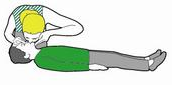
Step 4 of 7
Remove your mouth and allow the chest to fall.
Check breathing child
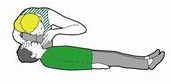
Give two more rescue breaths.
Now give 30 chest compressions.
Step 5 of 7
Place the heel of one hand towards the end of their breastbone, in the centre of their chest, making sure you keep the fingers off the ribs.
Lean over the child, with your arm straight, pressing down vertically on the breastbone, and press the chest down by at least one third of its depth.
CPR finger position child
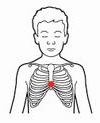
CPR child 1
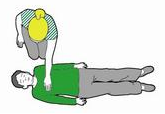
Release the pressure without removing your hand from their chest. Allow the chest to come back up fully - this is one compression.
CPR child 2
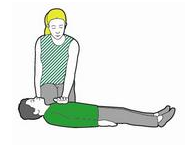
Repeat this 30 times, at a rate of about twice a second or the speed of the song 'Staying Alive'.
Now give two rescue breaths.
Step 6 of 7 Call for help
Remember to call for emergency help after about a minute if you are on your own.
Carry on giving 30 chest compressions followed by two rescue breaths for as long as you can, or until help arrives. If the child starts breathing normally again, stop CPR and put them in the recovery position.
Nota: these hints are no substitute for thorough knowledge of first aid. St John Ambulance holds cursos de primeiros socorros throughout the country.
Copyright for this leaflet is with St John Ambulance.
Escolhas do paciente para Primeiros socorros

Tratamento e medicação
Cortes
This leaflet gives a guide as to what you should do following a cut.
por Dr. Doug McKechnie, MRCGP

Tratamento e medicação
Lidando com um adulto que não responde
This leaflet is created from first aid advice provided by St John Ambulance, the nation's leading first aid charity. If someone becomes unresponsive they need someone to help keep them safe and prevent further harm. The type of help they need varies depending on why they have become unresponsive, whether they are breathing or not breathing and if they are baby, child or adult.
por Dr. Colin Tidy, MRCGP
Perguntas frequentes
O que devo fazer se estou sozinho e uma criança está inconsciente e não respira?
Se você estiver sozinho, deve realizar um minuto de RCP (reanimação cardiopulmonar) antes de ligar para 999 ou 112 para obter ajuda de emergência. Este minuto inicial de RCP envolve realizar compressões torácicas e respirações de resgate para ajudar a manter a circulação da criança.
Por quanto tempo devo continuar a RCP em uma criança inconsciente e que não está respirando?
Você deve continuar fazendo 30 compressões torácicas seguidas de duas respirações de resgate pelo maior tempo possível, ou até que a ajuda médica de emergência chegue. Se a criança voltar a respirar normalmente em algum momento, pare a RCP e coloque-a na posição de recuperação.
Em quais situações específicas devo usar a técnica de elevação da mandíbula em vez de inclinar a cabeça para trás?
Você deve usar a técnica de elevação da mandíbula se suspeitar que a criança possa ter uma lesão na coluna. Esta técnica ajuda a abrir as vias aéreas enquanto mantém o pescoço o mais imóvel possível, prevenindo lesões adicionais.
Qual é a taxa recomendada de compressões torácicas em uma criança?
As compressões torácicas devem ser realizadas a uma taxa de aproximadamente duas vezes por segundo, ou na velocidade da música 'Staying Alive'.
Qual deve ser a profundidade das compressões torácicas em uma criança?
Ao realizar compressões torácicas em uma criança, você deve pressionar o peito dela para baixo por pelo menos um terço de sua profundidade.
Sobre o autorVer biografia completa

Dr Philippa Vincent, MRCGP
Médico Generalista, Autor Médico
MB BS, Bsc, MRCGP (2000), DCH, DFSRH, DRCOG
Dra Philippa Vincent é um médico do NHS trabalhando no norte de Londres.
Sobre o revisorVer biografia completa

Dra. Rachel Hudson, MRCGP
Médico Generalista e Autor Médico
MBChB, MRCGP (2008), BSc (Medical Science), DFSRH, DRCOG, DCH
Dra. Rachel Hudson é uma médica do NHS que trabalha no Noroeste da Inglaterra.
Histórico do artigo
As informações nesta página são escritas e revisadas por clínicos qualificados.
Artigo também disponível em Inglês, Alemão, Espanhol, Francês, Italiano, Português, Hindi, Hebraico, Árabe, e Sueco.
Next review due: 3 Dec 2028
5 Dec 2023 | Última versão

Pergunte, compartilhe, conecte-se.
Navegue por discussões, faça perguntas e compartilhe experiências em centenas de tópicos de saúde.

Sentindo-se mal?
Avalie seus sintomas online gratuitamente
Inscreva-se no boletim informativo do Patient
Sua dose semanal de conselhos de saúde claros e confiáveis - escritos para ajudá-lo a se sentir informado, confiante e no controle.
Ao se inscrever, você aceita nossos Política de Privacidade. Você pode cancelar a inscrição a qualquer momento. Nunca vendemos seus dados.
Mais em tratamento e medicação
- Controle da raiva
- Imunização BCG
- Bifosfonatos
- Bloqueadores dos canais de cálcio
- Medicina complementar e alternativa
- Lentes de contato
- Cortes
- Insulina
- Vacina contra encefalite japonesa
- Picada de água-viva
- Medicação e tratamento para demência
- Substituição de heroína por metadona
- Mucolíticos
- Terapia ocupacional
- Broncodilatadores orais
- Radioterapia
- Consulte os serviços de saúde sexual do NHS
- Autoencaminhamento
- Terapia por ondas de choque
- Esteroides tópicos