Indigestão e refluxo ácido na gravidez
Dispepsia
Revisado por Dr Rachel Hudson, MRCGPÚltima atualização por Dr Caroline Wiggins, MRCGP Última atualização 14 Mar 2024
Atende aos diretrizes editoriais
- BaixarBaixar
- Compartilhar
- Language
- Discussão
- Versão em Áudio
- Adicionar às fontes preferidas no Google
A indigestão (dispepsia) ocorre em algum momento em cerca de metade de todas as mulheres grávidas. Geralmente é devido ao refluxo ácido do estômago para o esôfago.
Em resumo
Indigestion in pregnancy is usually caused by acid reflux from the stomach into the gullet.
Pregnancy hormones, the growing baby, and slower stomach emptying can increase the chance of acid reflux.
Symptoms often include heartburn, sour-tasting saliva, and upper tummy discomfort.
Lifestyle changes like eating smaller meals, avoiding trigger foods, and raising the head of the bed may help.
Antacids and alginates can relieve symptoms; omeprazole may be prescribed for persistent issues.
Always check with a pharmacist or doctor before taking any medication during pregnancy.
See a healthcare professional urgently if you experience severe pain, vomiting blood, or difficulty swallowing.
Inscreva-se no nosso curso gratuito de 8 semanas sobre Gravidez Saudável!
A cada semana, compartilharemos informações úteis e dicas essenciais sobre temas como nutrição, exercícios, saúde mental, sintomas a serem observados e preparação para o parto, para ajudá-la a navegar em sua jornada de gravidez, independentemente da fase em que você esteja.
Ao se inscrever, você aceita nossos Política de Privacidade. Você pode cancelar a inscrição a qualquer momento. Nunca vendemos seus dados.
What is indigestion and acid reflux?
Indigestion (dyspepsia) is a term which includes a group of symptoms (detailed below) that come from a problem in your upper gut. The gut (gastrointestinal tract) is the tube that starts at the mouth and ends at the anus. The upper gut includes the gullet (oesophagus), stomach and the first part of the small intestine (duodenum). Various conditions cause dyspepsia.
Indigestion is really common in pregnancy - it occurs at some point in around half of all pregnant women. Indigestion in pregnancy is usually due to reflux of acid from the stomach into the oesophagus.
Compreendendo o esôfago e o estômago
Acid reflux inflammation
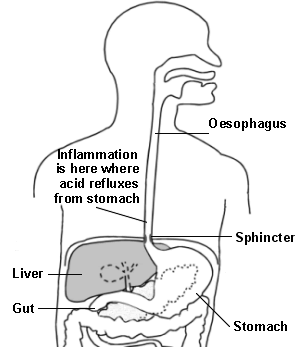
When we eat, food passes down the gullet (oesophagus) into the stomach. Cells in the lining of the stomach make acid and other chemicals which help to digest food.
Stomach cells also make mucus which protects them from damage caused by the acid. The cells lining the oesophagus are different and have little protection from acid.
There is a circular band of muscle (a sphincter) at the junction between the oesophagus and stomach. This relaxes to allow food down but normally tightens up and stops food and acid leaking back up (refluxing) into the oesophagus.
What causes acid reflux in pregnancy?
Acid reflux in pregnancy occurs in the same way as for people who are not pregnant, and gives the same symptoms. Being pregnant increases the chance of getting acid reflux because of:
Pregnancy hormones. The increased level of certain hormones when pregnant has a relaxing effect on the sphincter muscle. That is, the tightness (tone) of the sphincter is reduced during pregnancy.
The growing baby. The size of the baby in the tummy (abdomen) causes an increased pressure on the stomach.
Slower emptying of the stomach. When pregnant, food and drinks stay in your stomach for longer before moving along the gut into your intestines. Having food and drinks in your stomach for longer can make you more likely to have indigestion.
One or all of the above increase the chance that acid will reflux into the oesophagus. The indigestion usually settles on its own after the birth of your baby when your hormones change back to their non-pregnant state and the baby is no longer increasing pressure on your stomach.
You are more likely to develop indigestion in pregnancy if you have previously had gastro-oesophageal reflux before you were pregnant.
Acid reflux symptoms during pregnancy
Acid reflux symptoms are the same as for people who are not pregnant. Symptoms can vary from mild (in most cases) to severe. They can include one or more of the following:
Heartburn. This is a burning sensation which rises from the upper tummy (abdomen) or lower chest up towards the neck. (It is a confusing term as it has nothing to do with the heart!)
Waterbrash. This is a sudden flow of sour-tasting saliva in your mouth.
Upper tummy (abdominal) pain or discomfort.
Pain in the centre of the chest behind the breastbone (sternum).
Feeling sick (nausea) and being sick (vomiting).
Arrotar (eructar).
Inchaço.
Sentir-se cheio rapidamente após comer.
Symptoms tend to come and go, rather than being present all the time. They may begin at any time during pregnancy but happen more often, or are more severe, in the last three months of pregnancy.
Nota: various other problems, associated with pregnancy and unrelated to pregnancy, are sometimes confused with indigestion. The following are symptoms which are not typical of indigestion. If you have any of these, it is important to see a healthcare professional urgently.
Vômito.
Severe tummy (abdominal) pain.
Vômito com sangue.
Losing weight.
Dificuldade para engolir.
Black, sticky, tar-like poo (faeces) that smells very bad. Note that iron supplements can turn your poo black.
A cough which does not go away within 3 weeks.
If you experience any of the above, discuss them with a healthcare professional. If your symptoms become severe, or are repeated (recurring), or not improving with treatment, you should see your doctor.
Preciso de alguma investigação?
Indigestion in pregnancy is usually diagnosed from your symptoms by your healthcare professional such as your midwife or doctor. Investigations are generally not needed.
How to ease indigestion
The following are commonly advised. There has been little research to prove how well these lifestyle changes may help your symptoms. However, they are certainly worth a try and may avoid the need for medication.
Avoid certain foods and drinks
Some foods and drinks may make reflux worse in some people. (It is thought that some foods may relax the sphincter and allow more acid to reflux.) It is difficult to be certain to what extent specific foods contribute to the problem.
Let common sense be your guide. If it seems that a food is causing symptoms, try avoiding it for a while to see if symptoms improve. Many of the culprits are high in acid, fat, caffeine or spices. Foods and drinks that have been suspected of making symptoms worse in some people include:
Tomates.
Comidas picantes.
Fatty foods
Sucos de frutas.
Bebidas quentes.
Café.
Alcoholic drinks. (Current advice is that you avoid all alcohol in pregnancy anyway.)
Coma refeições menores
Also, avoid large meals if they bring on symptoms. Some women find that eating smaller meals more frequently is helpful.
Pare de fumar
The chemicals from cigarettes relax the sphincter muscle and make acid reflux more likely. Symptoms may ease if you stop smoking. In any case, it is strongly advised that pregnant women should not smoke for other reasons as well. See the separate leaflet called Pregnancy and smoking.
Have good posture
Try to sit upright with good posture to reduce the pressure on your tummy.
Bedtime
If symptoms happen most nights, it may help to go to bed with an empty, dry stomach. To do this, don't eat in the last three hours before bedtime and don't drink in the last two hours before bedtime.
Try raising the head of the bed by 10-15 cm (with sturdy books or bricks under the bed's legs). This helps gravity to keep acid from refluxing into the gullet (oesophagus).
Consider any medicines that you are taking
Some medicines may make symptoms worse. Women are rarely prescribed these medicines during pregnancy. However, it's worth checking with your pharmacist or your doctor if you think medication you are taking could be making your symptoms worse.
How to treat indigestion
For many women (especially if they have mild symptoms), making some lifestyle changes as above is enough to ease indigestion. However, if lifestyle changes do not help, medication may be needed to improve your symptoms.
Before taking any medication whilst pregnant you should speak with a pharmacist or doctor to check which medications are the safest choices when pregnant.
Antacids and alginates
Antacids are alkaline liquids or tablets that neutralise the acid. A dose usually gives rapid relief. You can use antacids when you need them for mild or infrequent bouts of indigestion.
Alginates are often combined with antacids. Alginates, such as Peptac or Gaviscon, help to protect the gullet (oesophagus) from stomach acid. They form a protective raft when they come into contact with stomach acid, blocking the acid from entering the oesophagus. Some alginates are specifically licensed for use in pregnancy.
There are many types of antacids and alginates available to buy, and some are available on prescription. Liquid types often work faster and are more effective than tablets. A doctor or pharmacist can advise which are suitable for you. Some points about these medicines are:
They can interfere with the absorption of other medication you are taking. The medications it can interfere with are normally printed on the medicine information leaflet that comes with the medicine.
Indigestion medicines suitable for pregnant people are lower in salt than the other medicines available.
Some medicines are specifically licensed for pregnant people.
Medicamentos que suprimem o ácido
Omeprazol is an acid-suppressing medicine that is licensed for use in pregnancy to treat indigestion that is still troublesome despite any lifestyle changes and antacids. Omeprazole needs to be taken regularly to be effective. Other acid-suppressing medicines are available but omeprazole is usually chosen as there is evidence it is the safest choice in pregnancy.
It is important to speak to a pharmacist or doctor before taking any medication whilst pregnant, to check it is safe for you to take in pregnancy.
Escolhas do paciente para Complicações na gravidez
Gravidez
Dor no quadrante inferior esquerdo na gravidez
Seu quadrante inferior esquerdo é a parte inferior esquerda da sua barriga (abdômen), abaixo do umbigo. Existem muitas causas para dor no quadrante inferior esquerdo durante a gravidez. A maioria não é preocupante, mas é importante procurar ajuda médica se a dor for intensa, não passar ou estiver acompanhada de outros sintomas.
por Dr. Toni Hazell, FRCGP

Gravidez
Pré-eclâmpsia
Pré-eclâmpsia envolve pressão alta e proteína na urina. Pode não apresentar sintomas, mas algumas mulheres podem ter dor de cabeça, visão turva, dor abdominal e tornozelos inchados. A gravidade da pré-eclâmpsia geralmente (mas nem sempre) está relacionada ao nível da sua pressão arterial. Pode ser uma condição séria, mas cuidados especializados ajudarão a manter a mãe e o bebê seguros.
por Dr. Toni Hazell, FRCGP
Perguntas frequentes
Can indigestion in early pregnancy be an indicator of how severe it will be later on?
Indigestion symptoms can begin at any time during pregnancy. They tend to occur more often, or become more severe, in the last three months of pregnancy, rather than being linked to early symptoms.
How long does indigestion in pregnancy typically last after giving birth?
Indigestion usually settles on its own after your baby is born. This is because your hormones return to their non-pregnant state, and the pressure on your stomach from the growing baby is no longer present.
Are there any specific types of antacids or alginates that are recommended during pregnancy?
Some alginate products, such as Peptac or Gaviscon, are specifically licensed for use in pregnancy. When choosing, it's worth noting that indigestion medicines suitable for pregnant people are generally lower in salt than other available options. A doctor or pharmacist can advise on the most suitable choice for you.
If I had acid reflux before pregnancy, will it definitely get worse when I'm pregnant?
You are more likely to develop indigestion in pregnancy if you have previously had gastro-oesophageal reflux before you were pregnant. However, the severity can vary.
Leitura adicional e referências
- Cuidados pré-natais; Orientação NICE (Agosto 2021)
- Dispepsia - associada à gravidez; NICE CKS, junho de 2024 (acesso apenas no Reino Unido)
- Náusea/vômito na gravidez; NICE CKS, abril de 2025 (acesso apenas no Reino Unido)
- Cuidados pré-natais - gravidez sem complicações; NICE CKS, janeiro de 2025 (acesso apenas no Reino Unido)
Sobre o autorVer biografia completa

Dr Caroline Wiggins, MRCGP
Médico Generalista, Autor Médico
MBBS Honras (com Distinção), MRCGP (2016), MSc.SEM (com Distinção), BSc (Hons)
A Dra. Caroline Wiggins é uma médica substituta atualmente no sudoeste da Inglaterra.
Sobre o revisorVer biografia completa

Dra. Rachel Hudson, MRCGP
Médico Generalista e Autor Médico
MBChB, MRCGP (2008), BSc (Medical Science), DFSRH, DRCOG, DCH
Dra. Rachel Hudson é uma médica do NHS que trabalha no Noroeste da Inglaterra.
Histórico do artigo
As informações nesta página são escritas e revisadas por clínicos qualificados.
Artigo também disponível em Inglês, Alemão, Espanhol, Francês, Italiano, Português, Hindi, Hebraico, Árabe, e Sueco.
Próxima revisão prevista para: 13 Mar 2027
14 Mar 2024 | Última versão

Pergunte, compartilhe, conecte-se.
Navegue por discussões, faça perguntas e compartilhe experiências em centenas de tópicos de saúde.

Sentindo-se mal?
Avalie seus sintomas online gratuitamente
Inscreva-se no boletim informativo do Patient
Sua dose semanal de conselhos de saúde claros e confiáveis - escritos para ajudá-lo a se sentir informado, confiante e no controle.
Ao se inscrever, você aceita nossos Política de Privacidade. Você pode cancelar a inscrição a qualquer momento. Nunca vendemos seus dados.