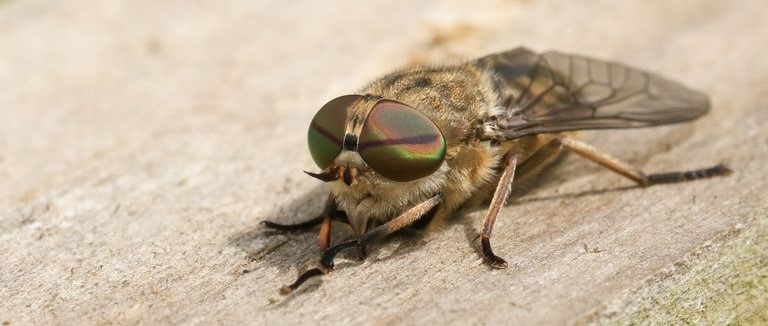
Como tratar uma picada de mutuca
Revisado por Dr Krishna Vakharia, MRCGPÚltima atualização por Amberley DavisÚltima atualização 18 Jun 2024
Atende aos diretrizes editoriais
- BaixarBaixar
- Compartilhar
- Language
- Discussão
- Versão em Áudio
- Adicionar às fontes preferidas no Google
O verão tem muitas vantagens, mas as picadas de mutucas não são uma delas. Você sabe como prevenir essas picadas de insetos desagradáveis, o que pode aliviar sua dor e desconforto, e quais sintomas indicam uma possível infecção ou reação alérgica?
What is a horsefly?
If you've spent a lot of time outdoors this summer, you may have spotted the short, sturdy horsefly, a member of the Tabanidae insect family.
Like houseflies, horseflies have large eyes and rather thick bodies, but they are larger in size - ranging from around 6-20 millimetres in length.
It's the female horsefly that's most intimidating, with a jaw shaped like scissor blades, called a mandible, which the fly uses to latch on to large animals and feed on blood. Horseflies are drawn to big, dark-coloured animals like horses, but this doesn't stop them from biting humans during the warm summer daylight hours, when they're most active1.
What does a horsefly bite look like?
Skin specialist Sreedar Krishna says: "A horsefly bite can look very similar to a mosquito bite, or any other form of picada de inseto, so it can be difficult to identify the exact offender.
"Typically, a horsefly bite will be a raised, itchy, and tender lump. The pain, redness and swelling can often expand a distance away from the initial bite."
What does a horsefly bite feel like?
Like other insect bites and stings, a horsefly bite can be painful and irritating. Common symptoms include:
A sharp, burning sensation.
Coceira.
Redness and swelling around the bite.
Sometimes, bruising around the bite.
The good news is these symptoms should disappear within a few hours or days.
Why are horsefly bites so painful?
On the downside, these typically short-lived symptoms often hurt more than other insect bites: "In contrast to other insects, horseflies bite through the skin using their sharp jaws rather than simply piercing the skin," says Krishna.
"Moreover, mosquitoes release a mild anaesthetic into the skin during bites which numbs the area. Horseflies do not, and so are appreciably more painful."
Are horsefly bites dangerous?
Aside from disrupting your summer with temporary pain and discomfort, a horsefly bite is generally not something to worry about. In fact, they are much more of a problem for their preferred target - horses - because horseflies can carry a disease that's life threatening to them (equine infectious anaemia, also known as 'swamp fever'2).
Horseflies do not transmit severe diseases to humans, but sometimes being bitten by a horsefly may cause an reação alérgica3 or lead to an infecção.
Horsefly bite symptoms of concern
"You should seek medical attention immediately if you feel unwell after a horsefly bite - this can include feeling light-headed or dizzy," warns Krishna.
Infecção - the small puncture wound of a horsefly bite can also increase the risk of infection. Be sure to look out for signs of infection such as pus or a foul smell.
Anafilaxia - this severe allergic reaction requires urgent medical attention - call for an emergency ambulance (999 in the UK). Signs include worsening pain, wheezing, dificuldade para respirar, a rash that spreads, and swelling of the lips.
How to avoid horsefly bites
Apply insect repellent before going outside.
Wear light-coloured clothing - horseflies are attracted to darker colours.
Cover up your arms and legs and wear closed-toed shoes.
Don't wear any perfume - scents attract these flying insects.
Be wary during strenuous outdoor activities - horseflies love the scent of carbon dioxide, which you exhale in greater amounts during exercise3. Of course, exercise is important, so if you're going to be active ensure you use other protective measures in high-risk areas.
Know the high-risk horsefly bite areas - frequent hot spots include farms - as horseflies are attracted to horses and cattle - and warm water sources like ponds, streams, and rivers - as many horseflies lay their eggs near water and are most active during hot and humid conditions.
Avoid walking through long grass with exposed feet, ankles, and legs.
Como tratar uma picada de mutuca
"Remember, in most cases time is a healer, although you will want something to help control the pain and irritation."
Krishna's advice on treating a horsefly bite:
Effective home remedies include applying an ice pack or a bag of frozen peas to the area. If the horsefly bite is on an area of skin you can elevate (such as your foot or hand), it would be worthwhile keeping it raised - for example, by lying down and propping it up with a cushion - as this will reduce swelling.
Over-the-counter anti-histamínicos such as cetirizine can help reduce itching and swelling.
Simple painkillers such as paracetamol, e anti-inflammatory medication such as ibuprofen, can help to reduce pain. You may wish to check with your doctor if you are allowed to take ibuprofen. For example, some people with asthma are advised to avoid anti-inflammatory medication.
Try your very best not to scratch the bite as this can break the skin and lead to infections.
How long do horsefly bites last?
"Assuming that the skin does not become infected, I would expect a horsefly bite to settle within seven days," advises Krishna. "If it does not, or the pain is worsening, I would recommend seeing your doctor for further guidance."
In most cases, the irritation and pain of horsefly bites are short-lived. Avoid spending the summer months worrying about these critters by following our prevention and treatment tips when you can and enjoying the warm weather!
Leitura adicional
Escolhas do paciente para Picadas e mordidas
Saúde da pele, unhas e cabelos
Como tratar uma picada de vespa
A ansiedade de ser picado por uma vespa é a razão de tantos de nós temermos elas. Todos já passamos por isso, gritando hystericamente e correndo em círculos tentando escapar de uma vespa quando ela começa a zunir ao redor de nossas cabeças. Mas você sabia que a pessoa média é picada por um inseto no máximo cinco vezes na vida?
por Victoria Raw

Saúde da pele, unhas e cabelos
Mordidas de carrapato: como reconhecer e tratar
The UK Health Security Agency (UKHSA) is warning people to protect themselves against tick bites this summer, as the latest figures shows that there were 1,581 confirmed cases of Lyme disease reported in 2024. The warning coincides with music superstar Justin Timberlake revealing he has been diagnosed with the sometimes debilitating disease. Here we look at what happens if you get bitten by a tick and what to do about it.
por Lawrence Higgins
Sobre o autorVer biografia completa

Amberley Davis
Escritor sênior
BA (Hons), CPD
Amberley é uma escritora sênior na Patient e escreveu extensivamente sobre uma variedade de tópicos de saúde e bem-estar.
Sobre o revisorVer biografia completa

Dr Krishna Vakharia, MRCGP
Diretor Médico de Saúde, Optum UK
MBChB, MRCGP(2013), BMedSci (hons), DFSRH, DRCOG, PGDipDerm (Distn)
Dr. Krishna Vakharia é uma médica de clínica geral do NHS. Ela também é examinadora regular do Diploma de Pós-Graduação em Dermatologia Prática na Universidade de Cardiff, além de ser a Diretora Médica de Saúde na Optum UK.
Histórico do artigo
As informações nesta página são revisadas por pares por clínicos qualificados.
Artigo também disponível em Inglês, Alemão, Espanhol, Francês, Italiano, Português, Hindi, Hebraico, Árabe, e Sueco.
Próxima revisão prevista para: 17 Jun 2027
18 Jun 2024 | Última versão
16 Ago 2022 | Publicado originalmente
Escrito por:
Amberley Davis

Pergunte, compartilhe, conecte-se.
Navegue por discussões, faça perguntas e compartilhe experiências em centenas de tópicos de saúde.

Sentindo-se mal?
Avalie seus sintomas online gratuitamente
Inscreva-se no boletim informativo do Patient
Sua dose semanal de conselhos de saúde claros e confiáveis - escritos para ajudá-lo a se sentir informado, confiante e no controle.
Ao se inscrever, você aceita nossos Política de Privacidade. Você pode cancelar a inscrição a qualquer momento. Nunca vendemos seus dados.
Mais sobre saúde da pele, unhas e cabelos
- Um guia para óculos de sol com proteção UV
- Gatilhos comuns da rosácea e como evitá-los
- O Bio-Oil funciona em estrias?
- Ácido glicólico: benefícios para a pele, efeitos colaterais e mais
- Como cuidar da sua pele no inverno
- Como tratar uma picada de vespa
- A babosa é boa para a sua pele?
- Neurocosméticos: uma mudança cerebral para sua saúde?
- Tratamentos para rosácea: qual é o certo para você?
- Efeitos do fumo na pele: do envelhecimento à doença
- Os benefícios do mar para a saúde
- O impacto das condições de pele na saúde mental
- Quais são os perigos de beber em clima quente?
- O que o sérum de vitamina C faz?
- O que é dermatite vulvar?
- O que fazer se você for picado por uma água-viva
- Quais remédios naturais ajudam a aliviar o eczema?
- Por que o eczema coça - e como parar isso
- Por que o cabelo fica grisalho - e como o estilo de vida pode desempenhar um papel
- Por que meu eczema facial piora no verão?