Supraventricular tachycardia
SVT
Peer reviewed by Dr Rachel Hudson, MRCGPLast updated by Dr Caroline Wiggins, MRCGP Last updated 7 Apr 2025
Meets Patient’s editorial guidelines
- DownloadDownload
- Share
- Language
- Discussion
- Audio Version
- Add to preferred sources on Google
Supraventricular tachycardia (SVT) causes an abnormally fast heart rate. It can cause symptoms such as palpitations, dizziness and shortness of breath. Many episodes of SVT don't last very long and stop without any treatment. Sometimes treatment is needed to stop an episode of SVT.
At a glance
Supraventricular tachycardia (SVT) makes your heart beat very fast in a regular rhythm.
Symptoms include a very fast heart rate, thumping heart sensations, dizziness, and shortness of breath.
Episodes of SVT can be triggered by medications, stimulants, alcohol, stress, or smoking.
Many episodes of SVT stop on their own, or can be stopped by vagal manoeuvres.
Medical help may be needed if SVT episodes are frequent or cause many symptoms.
You must tell the DVLA if SVT affects your ability to drive.
What is SVT?
Supraventricular tachycardia (SVT) causes your heart to beat very fast in a regular rhythm. It is a type of heart palpitation. During an episode of SVT, the heartbeat is not controlled by the sinoatrial (SA) node (the normal timer of the heart). Another part of the heart overrides this timer with faster impulses. The source of this impulse in SVT is somewhere above (supra) the ventricles and causes a very fast, regular heart rate.
Types of SVT
There are three main types of SVT:
Atrioventricular junctional tachycardias. The most common type of SVT is atrioventricular nodal re-entry tachycardia (AVNRT), which is in this category. It is most commonly seen in people in their twenties and thirties and is more common in women. It occurs when there is an electrical short circuit in the centre of the heart. An extra impulse starts to race around this short circuit causing your heart to beat very fast.
Atrial tachycardias. This article does not contain information about atrial fibrillation which is managed differently to SVT. For more information about this condition see atrial fibrillation.
Atrioventricular re-entrant tachycardia (AVRT).
SVT symptoms
Symptoms last as long as the episode of SVT lasts. This may be seconds, minutes, hours or, rarely, longer. Symptoms start quickly when the SVT begins, and stop rapidly when it ends. Possible symptoms include the following:
Very fast heart rate. Your heart rate rises to 140-200 beats per minute (bpm) or sometimes faster. (A normal heart rate is 60-100 bpm.)
'Thumping heart' sensations (palpitations).
Dizziness, or feeling light-headed.
Shortness of breath.
You may look pale.
Chest discomfort. You may feel mild chest discomfort.
Angina. If you have angina then it may be triggered by an episode of SVT.
You may have no signs or symptoms, or just be aware of your fast heartbeat. Sometimes your blood pressure may become low, especially if it continues for several hours. In some cases this causes a faint or collapse. This is more likely if you are older and have other heart or lung problems.
The time between episodes of SVT can vary greatly. How often they happen varies between people. Some people have several very short episodes of SVT daily, whilst others have one episode every few years.
Most people who have a first episode of SVT will seek a medical professional, as the symptoms can be distressing. They will then usually be referred to a heart specialist to decide if they need further investigations and treatment.
Triggers for SVT
Episodes of SVT may be triggered by:
Certain medications - for example, some asthma inhalers, antidepressants, herbal supplements and cold remedies.
Stimulants such as caffeine
Avoiding these triggers will often reduce the frequency of SVTs.
Treatment for SVT
There are different ways to stop an episode of SVT.
No treatment. Many episodes of SVT soon stop on their own, and no treatment is needed.
Vagal manoeuvres. Some people can stop an episode of SVT by stimulating their vagus nerve which can slow your heart rate. If you are diagnosed with SVT you are likely to be taught these manoeuvres.
Medical help. You may need to be admitted to hospital to stop it. In hospital they may use:
Medicine. A medicine called adenosine is given by injection into a vein. It usually stops SVT. It works by blocking electrical impulses in the heart. Alternatives can be given if you cannot have adenosine.
Cardioversion. This is when an electrical impulse is applied to the heart at a certain part of the heartbeat.
Driving
In the UK, if you have a Group 1 entitlement (car and motorcycle) you must not drive if the SVT has caused or is likely to cause incapacity (you are unable to control or stop the vehicle). You may be able to resume driving if an underlying cause is identified and the SVT has been controlled for at least 4 weeks. You must tell the DVLA if the SVT caused or is likely to cause incapacity, or it is not controlled for 4 weeks, or an underlying cause is not identified.
If you have a Group 2 entitlement you must notify the DVLA. You must not drive if the SVT caused or is likely to cause incapacity. Driving may be permitted only after an underlying cause has been identified and the SVT has been controlled for at least 3 months and a measure of your heart function meets the requirement.
Preventing SVT
People with SVT are referred to heart specialists when they are diagnosed. They will discuss the options with you. This may involve:
Avoiding triggers. See above for details.
Not treating. This is an option if the episodes of SVT are infrequent, short or cause few symptoms.
Medication. Examples include verapamil and beta-blockers. If one does not work or causes side-effects, another can often be tried.
Tissue destruction using a catheter (catheter ablation). A small wire (catheter) is passed via a large vein in the top of the leg into the chambers of the heart. The tip of the catheter can destroy a tiny section of heart tissue that is the source of the abnormal electrical signals.
Patient picks for Heart palpitations
Heart health and blood vessels
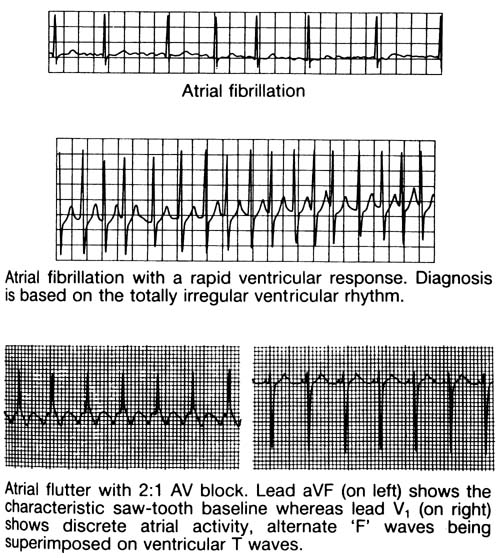
Atrial fibrillation
Atrial fibrillation (AF) is an abnormal fast irregular heartbeat. An abnormal heartbeat rhythm is called an arrhythmia. A normal heart rate is between 60 and 100 beats a minute (bpm) when you're resting. In AF the heart rate can sometimes be very fast (often between 140 and 180 bpm) as well as being irregular.
by Dr Doug McKechnie, MRCGP
Heart health and blood vessels
Postural tachycardia syndrome
Postural tachycardia syndrome (PoTS) is an abnormal response of your body when you are upright (usually when standing). Your heart rate increases too much after getting up from lying or sitting down. It is caused by a problem with the nervous system which controls the autonomic functions in the body. This part of the nervous system is called the autonomic nervous system. The symptoms of PoTS occur when you are upright and are relieved when lying down. These symptoms are associated with an abnormally high and persistent increase in heart rate within ten minutes of standing. Lifestyle adjustments are usually very effective for the treatment of PoTS but some people with PoTS need medication to control the symptoms. The outcome (prognosis) is very good for most people with PoTS but some may have severe long-term difficulties with normal daily activities.
by Dr Rosalyn Adleman, MRCGP
Frequently asked questions
What is the difference between SVT and atrial fibrillation?
SVT is a type of heart palpitation where the heart beats very fast in a regular rhythm, due to faster impulses coming from somewhere above the ventricles. Atrial fibrillation, while also causing an irregular heart rhythm, is managed differently from SVT and is a separate condition not detailed further in this article.
How long do episodes of SVT typically last?
The duration of SVT episodes can vary greatly. They may last for seconds, minutes, hours, or, on rare occasions, even longer. Symptoms begin quickly when an episode starts and stop rapidly once it ends.
Does having SVT mean I have a more serious heart condition?
SVT is a condition where your heart beats very fast in a regular rhythm. It is a type of heart palpitation. While SVT can cause distressing symptoms, the article does not state that it inherently means you have a more serious underlying heart condition, although it can be triggered by existing angina. It is common for people to be referred to a heart specialist for investigation and treatment after a first episode.
What are vagal manoeuvres and how do they help with SVT?
Vagal manoeuvres are specific actions some people can use to stop an episode of SVT. They work by stimulating the vagus nerve, which can help to slow down your heart rate. If you are diagnosed with SVT, you are likely to be taught these manoeuvres by a medical professional.
Could my regular medications be causing my SVT?
Yes, certain medications can trigger episodes of SVT. These include some asthma inhalers, antidepressants, herbal supplements, and cold remedies. If you suspect your medication is a trigger, discussing this with a healthcare professional is advisable.
What is catheter ablation and how does it prevent SVT?
Catheter ablation is a procedure used to prevent SVT. It involves inserting a small wire (catheter) into a large vein, usually in the leg, and guiding it to the heart. The tip of this catheter is used to destroy a tiny section of heart tissue that is responsible for producing the abnormal electrical signals causing the SVT. This can effectively stop the SVT from recurring.
Further reading and references
- Brugada J, Katritsis DG, Arbelo E, et al; 2019 ESC Guidelines for the management of patients with supraventricular tachycardia. The Task Force for the management of patients with supraventricular tachycardia of the European Society of Cardiology (ESC). Eur Heart J. 2020 Feb 1;41(5):655-720. doi: 10.1093/eurheartj/ehz467.
- Kotadia ID, Williams SE, O'Neill M; Supraventricular tachycardia: An overview of diagnosis and management. Clin Med (Lond). 2020 Jan;20(1):43-47. doi: 10.7861/clinmed.cme.20.1.3.
- Bibas L, Levi M, Essebag V; Diagnosis and management of supraventricular tachycardias. CMAJ. 2016 Dec 6;188(17-18):E466-E473. doi: 10.1503/cmaj.160079. Epub 2016 Oct 24.
- Helton MR; Diagnosis and Management of Common Types of Supraventricular Tachycardia. Am Fam Physician. 2015 Nov 1;92(9):793-800.
- Palpitations; NICE CKS, February 2026 (UK access only)
- Tisdale JE, Chung MK, Campbell KB, et al; Drug-Induced Arrhythmias: A Scientific Statement From the American Heart Association. Circulation. 2020 Oct 13;142(15):e214-e233. doi: 10.1161/CIR.0000000000000905. Epub 2020 Sep 15.
- Assessing fitness to drive: guide for medical professionals; Driver and Vehicle Licensing Agency
About the authorView full bio
Updated by

Dr Caroline Wiggins, MRCGP
General Practitioner, Medical Author
MBBS Honours (with Distinction), MRCGP (2016), MSc.SEM (with Distinction), BSc (Hons)
Dr Caroline Wiggins is a GP locum currently in the South-West of England.
About the reviewerView full bio

Dr Rachel Hudson, MRCGP
General Practitioner and Medical Author
MBChB, MRCGP (2008), BSc (Medical Science), DFSRH, DRCOG, DCH
Dr Rachel Hudson, is an NHS GP working in the North West of England.
Join the conversation
Share your thoughts or experiences with others in our patient communities.

Ask, share, connect.
Browse discussions, ask questions, and share experiences across hundreds of health topics.

Feeling unwell?
Assess your symptoms online for free
Sign up to the Patient newsletter
Your weekly dose of clear, trustworthy health advice - written to help you feel informed, confident and in control.
By subscribing you accept our Privacy Policy. You can unsubscribe at any time. We never sell your data.