COL4A1-related brain small-vessel disease
Última atualização 18 de ago de 2020
Atende aos diretrizes editoriais
- BaixarBaixar
- Compartilhar
- Language
- Discussão
- Versão em Áudio
- Adicionar às fontes preferidas no Google
COL4A1-related brain small-vessel disease is part of a group of conditions called the COL4A1-related disorders. The conditions in this group have a range of signs and symptoms that involve fragile blood vessels. COL4A1-related brain small-vessel disease is characterised by weakening of the blood vessels in the brain. Stroke is often the first symptom of this condition, typically occurring in mid-adulthood. In affected individuals, stroke is usually caused by bleeding in the brain (hemorrhagic stroke) rather than a lack of blood flow in the brain (ischemic stroke), although either type can occur. Individuals with this condition are at increased risk of having more than one stroke in their lifetime. People with COL4A1-related brain small vessel disease also have leukoencephalopathy, which is a change in a type of brain tissue called white matter that can be seen with magnetic resonance imaging (MRI). Affected individuals may also experience seizures and migraine headaches accompanied by visual sensations known as auras.
Descrição
COL4A1-related brain small-vessel disease is part of a group of conditions called the COL4A1-related disorders. The conditions in this group have a range of signs and symptoms that involve fragile blood vessels. COL4A1-related brain small-vessel disease is characterised by weakening of the blood vessels in the brain. Stroke is often the first symptom of this condition, typically occurring in mid-adulthood. In affected individuals, stroke is usually caused by bleeding in the brain (hemorrhagic stroke) rather than a lack of blood flow in the brain (ischemic stroke), although either type can occur. Individuals with this condition are at increased risk of having more than one stroke in their lifetime. People with COL4A1-related brain small vessel disease also have leukoencephalopathy, which is a change in a type of brain tissue called white matter that can be seen with magnetic resonance imaging (MRI). Affected individuals may also experience seizures and migraine headaches accompanied by visual sensations known as auras.
Some people with COL4A1-related brain small-vessel disease have an eye abnormality called Axenfeld-Rieger anomaly. Axenfeld-Rieger anomaly involves underdevelopment and eventual tearing of the colored part of the eye (iris) and a pupil that is not in the center of the eye. Other eye problems experienced by people with COL4A1-related brain small-vessel disease include clouding of the lens of the eye (cataract) and the presence of arteries that twist and turn abnormally within the light-sensitive tissue at the back of the eye (arterial retinal tortuosity). Axenfeld-Rieger anomaly and cataract can cause impaired vision. Arterial retinal tortuosity can cause episodes of bleeding within the eye following any minor trauma to the eye, leading to temporary vision loss.
The severity of the condition varies greatly among affected individuals. Some individuals with COL4A1-related brain small-vessel disease do not have any signs or symptoms of the condition.
Padrões de herança
The source lists the following possible inheritance patterns: Autosomal dominant. More than one pattern can apply in different cases.
Related genes
Other names
Brain small-vessel disease with hemorrhage
Related patient information and medicines

Patient information leaflet
Doença celíaca
Doença celíaca (also spelled celiac disease) mainly afeta the part of the gut called the small intestine. Coeliac disease is caused by a reaction of the gut to gluten. (For this reason it is sometimes also called gluten-sensitive enteropathy). What is coeliac disease. Coeliac disease is a condition that causes inflammation in the lining of part.
Patient information leaflet
Coarctação da aorta
Coarctação da aorta is a type of doença cardíaca congênita where there is a narrowing in part of the aorta, the main artery that leaves the left side of the heart. What is coarctation of the aorta. In coarctation of the aorta, there is a narrow... See separate leaflet called Infective endocarditis for more details. About 4 in 100 people who.
Patient information leaflet
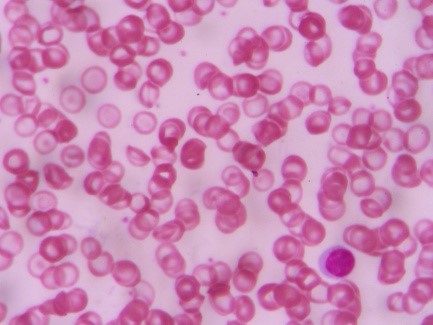
Doença falciforme
Sickle cell disease (SCD) is a serious, inherited condition affecting the blood and various organs in the body. It affects the red blood cells, causing episodes of 'sickling', which produce episodes of pain and other symptoms. In between episodes of sickling, people with SCD are normally well. Long-term complications can occur. Good treatment,.

Patient information leaflet
Doença renal policística
Polycystic kidney disease (PKD) causes many fluid-filled sacs (cysts) to develop in the kidneys. The most common type of PKD is an inherited condition called autosomal dominant polycystic kidney disease (ADPKD). With ADPKD, problems commonly do not develop until the... However, even if these develop, they rarely cause any problems. Aneurysm of a.
Patient information leaflet
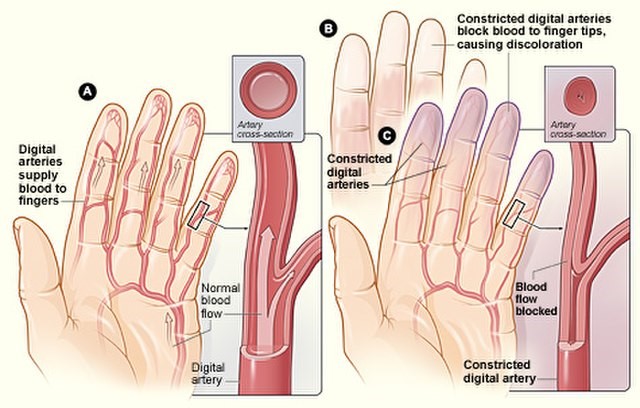
fenômeno de Raynaud
Raynaud phenomenon (often just called Raynaud's), is a condition where the small blood vessels of the fingers become narrow (constrict). This happens most often when they are in a cool environment. Blood vessels to other extremities such as the toes, ears and nose may also be affected. It is named after Dr Maurice Raynaud, the man who first.
Patient information leaflet
Encefalite
Encefalite é inflammation of the brain. It is usually caused by a viral infection. In the UK, the most common virus to cause encephalitis is herpes simplex virus. Symptoms usually start with the common symptoms of a viral infection such as high temperature (fever), headache, muscle aches, feeling tired and feeing sick (nausea). Confusion,.
Leitura adicional e referências
- COL4A1-related brain small-vessel disease; MedlinePlus, National Library of Medicine.
- Lanfranconi S, Markus HS. COL4A1 mutations as a monogenic cause of cerebral small vessel disease: a systematic review. Stroke. 2010 Aug;41(8):e513-8. doi: 10.1161/STROKEAHA.110.581918. Epub 2010 Jun 17.
- Sibon I, Coupry I, Menegon P, Bouchet JP, Gorry P, Burgelin I, Calvas P, Orignac I, Dousset V, Lacombe D, Orgogozo JM, Arveiler B, Goizet C. COL4A1 mutation in Axenfeld-Rieger anomaly with leukoencephalopathy and stroke. Ann Neurol. 2007 Aug;62(2):177-84. doi: 10.1002/ana.21191.
- Vahedi K, Alamowitch S. Clinical spectrum of type IV collagen (COL4A1) mutations: a novel genetic multisystem disease. Curr Opin Neurol. 2011 Feb;24(1):63-8. doi: 10.1097/WCO.0b013e32834232c6.
- Volonghi I, Pezzini A, Del Zotto E, Giossi A, Costa P, Ferrari D, Padovani A. Role of COL4A1 in basement-membrane integrity and cerebral small-vessel disease. The COL4A1 stroke syndrome. Curr Med Chem. 2010;17(13):1317-24. doi: 10.2174/092986710790936293.
Participe da conversa
Compartilhe seus pensamentos ou experiências com outros em nosso comunidades de pacientes.

Pergunte, compartilhe, conecte-se.
Navegue por discussões, faça perguntas e compartilhe experiências em centenas de tópicos de saúde.
Inscreva-se no boletim informativo do Patient
Sua dose semanal de conselhos de saúde claros e confiáveis - escritos para ajudá-lo a se sentir informado, confiante e no controle.
Ao se inscrever, você aceita nossos Política de Privacidade. Você pode cancelar a inscrição a qualquer momento. Nunca vendemos seus dados.