Câncer de bexiga
Última atualização 17 Set 2024
Atende aos diretrizes editoriais
- BaixarBaixar
- Compartilhar
- Language
- Discussão
- Versão em Áudio
- Adicionar às fontes preferidas no Google
Bladder cancer is a disease in which certain cells in the bladder become abnormal and multiply uncontrollably to form a tumour. The bladder is a muscular organ in the lower abdomen that stores urine until it can be removed (excreted) from the body.
Descrição
Bladder cancer is a disease in which certain cells in the bladder become abnormal and multiply uncontrollably to form a tumour. The bladder is a muscular organ in the lower abdomen that stores urine until it can be removed (excreted) from the body.
Bladder cancer may cause blood in the urine, pain during urination, frequent urination, the feeling of needing to urinate without being able to, or lower back pain. Many of these signs and symptoms are nonspecific, which means they may occur in multiple disorders. People who have one or more of these nonspecific health problems often do not have bladder cancer, but have another condition such as an infection.
Bladder cancer develops when tumours form in the tissue that lines the bladder. There are several types of bladder cancer, categorized by the type of cell in the tissue that becomes cancerous. The most common type is transitional cell carcinoma (also known as urothelial carcinoma); others include squamous cell carcinoma and adenocarcinoma. If the tumour spreads (metastasizes) beyond the lining of the bladder into nearby tissues or organs, it is known as invasive bladder cancer.
Padrões de herança
The source lists the following possible inheritance patterns: Not inherited; Autosomal dominant. More than one pattern can apply in different cases.
Related genes
Other names
Bladder carcinoma urinary
tumor de bexiga
Cancer of the urinary bladder
Cancer, bladder
Cancer, urinary bladder
Malignant bladder neoplasm
Malignant bladder tumour
Neoplasm of the bladder
Neoplasm of the urinary bladder
Tumour of the urinary bladder
Urinary bladder carcinoma
Urinary bladder neoplasm
Related patient information and medicines

Patient information leaflet
Câncer de bexiga
If the canc... If the cancer spreads to other parts of the body, various other symptoms can develop. How common is bladder cancer. Bladder cancer is a common cancer; isso is the seventh most common cancer in the UK. About 10,000 people develop bladder cancer in the UK each year. A most common type de bladder cancer in the UK is transitional cell.
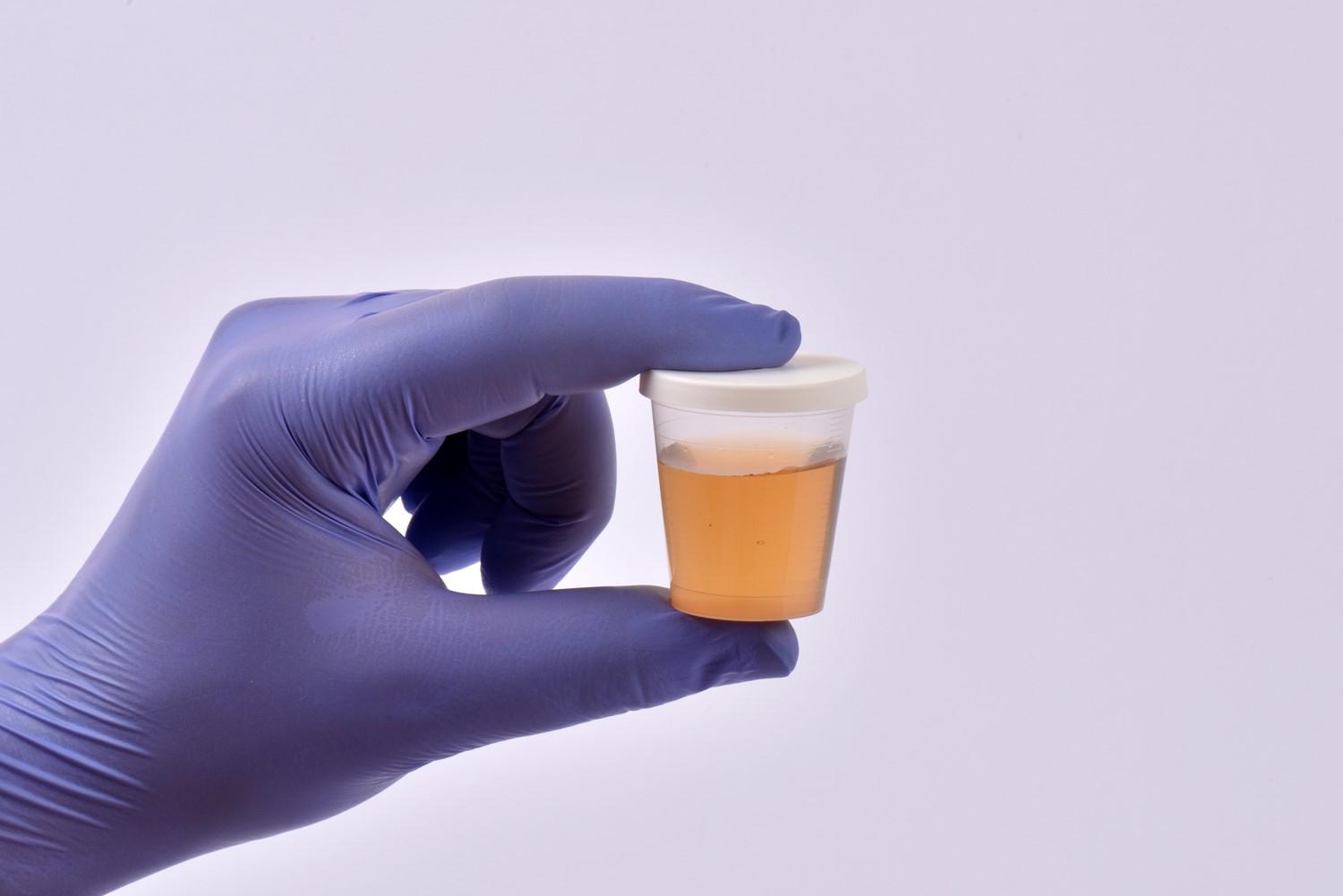
Patient information leaflet
Coleta de urina de meio de fluxo
A midstream specimen of urine (MSU or MSSU) is usually tested to look for infection, although in some cases, illness other than infection might be diagnosed b... To look for other abnormalities in the urine Abnormalities such as red or white blood cells, which should not be there - in the absence of infection, or blood in the urine can sometimes.

Patient information leaflet
Câncer de rim
Most cases of kidney cancer develop in people between the ages of 60 and 70 although it can affect any age group. Transitional cell cancer is common in the bladder but in some cases it develops in the renal pelvis. Wilms' tumour and clear cell sarcoma of the kidney a... (There are many causes of blood in the urine apart from kidney cancer, such as.

Patient information leaflet
Rabdomiossarcoma
A rhabdomyosarcoma is a type of soft tissue sarcoma. A sarcoma is a tumour that starts in the supporting tissues (connective tissues) of the body - for example, bone, muscle, fat, cartilage and ligaments. Embryonal rhabdomyosarcoma may also occur in the womb, vagina, bladder or the prostate gland. One type of embryonal rhabdomyosarcoma is called.

Patient information leaflet
Tipos de câncer
Links to detailed leaflets on each are provided below: Câncer de Bexiga Cérebro Câncer and Brain Tumours Breast Cancer Cancer of the Uterus (Endometrial Cancer) Cervical Cancer Childhood Leukaemias Colon, Rectal and Bowel Cancer (Colorectal Cancer) Gynaecological Cancer Hodgkin's Lymphoma Kidney Cancer Leukaemia Lung Cancer Mouth Cancer (Oral Cancer).

Patient information leaflet
Causas do câncer
Certain risk factors are known to increase the chance that one or more of your cells will become abnormal and lead to cancer. How does cancer start. The body is made u... As a general rule, the more the exposure to a carcinogen, the greater the risk. Well-known examples include: Tobacco. If you smoke , you are more likely to develop cancer of the.
Leitura adicional e referências
- Câncer de bexiga; MedlinePlus, National Library of Medicine.
- American Cancer Society: What Are the Key Statistics for Bladder Cancer?
- Audenet F, Attalla K, Sfakianos JP. The evolution of bladder cancer genomics: What have we learned and how can we use it? Urol Oncol. 2018 Jul;36(7):313-320. doi: 10.1016/j.urolonc.2018.02.017. Epub 2018 Mar 21.
- Cancer Genome Atlas Research Network. Comprehensive molecular characterization of urothelial bladder carcinoma. Nature. 2014 Mar 20;507(7492):315-22. doi: 10.1038/nature12965. Epub 2014 Jan 29.
- Dinney CP, McConkey DJ, Millikan RE, Wu X, Bar-Eli M, Adam L, Kamat AM, Siefker-Radtke AO, Tuziak T, Sabichi AL, Grossman HB, Benedict WF, Czerniak B. Focus on bladder cancer. Cancer Cell. 2004 Aug;6(2):111-6. doi: 10.1016/j.ccr.2004.08.002. No abstract available.
- Flaig TW, Spiess PE, Agarwal N, Bangs R, Boorjian SA, Buyyounouski MK, Downs TM, Efstathiou JA, Friedlander T, Greenberg RE, Guru KA, Hahn N, Herr HW, Hoimes C, Inman BA, Jimbo M, Kader AK, Lele SM, Meeks JJ, Michalski J, Montgomery JS, Pagliaro LC, Pal SK, Patterson A, Petrylak DP, Plimack ER, Pohar KS, Porter MP, Preston MA, Sexton WJ, Siefker-Radtke AO, Tward J, Wile G, Johnson-Chilla A, Dwyer MA, Gurski LA. NCCN Guidelines Insights: Bladder Cancer, Version 5.2018. J Natl Compr Canc Netw. 2018 Sep;16(9):1041-1053. doi: 10.6004/jnccn.2018.0072.
- Flaig TW. NCCN Guidelines Updates: Management of Muscle-Invasive Bladder Cancer. J Natl Compr Canc Netw. 2019 May 1;17(5.5):591-593. doi: 10.6004/jnccn.2019.5017.
- Lindgren D, Liedberg F, Andersson A, Chebil G, Gudjonsson S, Borg A, Mansson W, Fioretos T, Hoglund M. Molecular characterization of early-stage bladder carcinomas by expression profiles, FGFR3 mutation status, and loss of 9q. Oncogene. 2006 Apr 27;25(18):2685-96. doi: 10.1038/sj.onc.1209249.
- McConkey DJ, Lerner SP. SIU-ICUD consultation on bladder cancer: basic science. World J Urol. 2019 Jan;37(1):15-29. doi: 10.1007/s00345-018-2594-y. Epub 2018 Dec 13.
- Oxford G, Theodorescu D. The role of Ras superfamily proteins in bladder cancer progression. J Urol. 2003 Nov;170(5):1987-93. doi: 10.1097/01.ju.0000088670.02905.78.
- Robertson AG, Kim J, Al-Ahmadie H, Bellmunt J, Guo G, Cherniack AD, Hinoue T, Laird PW, Hoadley KA, Akbani R, Castro MAA, Gibb EA, Kanchi RS, Gordenin DA, Shukla SA, Sanchez-Vega F, Hansel DE, Czerniak BA, Reuter VE, Su X, de Sa Carvalho B, Chagas VS, Mungall KL, Sadeghi S, Pedamallu CS, Lu Y, Klimczak LJ, Zhang J, Choo C, Ojesina AI, Bullman S, Leraas KM, Lichtenberg TM, Wu CJ, Schultz N, Getz G, Meyerson M, Mills GB, McConkey DJ; TCGA Research Network; Weinstein JN, Kwiatkowski DJ, Lerner SP. Comprehensive Molecular Characterization of Muscle-Invasive Bladder Cancer. Cell. 2017 Oct 19;171(3):540-556.e25. doi: 10.1016/j.cell.2017.09.007. Epub 2017 Oct 5.
- Smith ND, Rubenstein JN, Eggener SE, Kozlowski JM. The p53 tumor suppressor gene and nuclear protein: basic science review and relevance in the management of bladder cancer. J Urol. 2003 Apr;169(4):1219-28. doi: 10.1097/01.ju.0000056085.58221.80.
- Spiess PE, Agarwal N, Bangs R, Boorjian SA, Buyyounouski MK, Clark PE, Downs TM, Efstathiou JA, Flaig TW, Friedlander T, Greenberg RE, Guru KA, Hahn N, Herr HW, Hoimes C, Inman BA, Jimbo M, Kader AK, Lele SM, Meeks JJ, Michalski J, Montgomery JS, Pagliaro LC, Pal SK, Patterson A, Plimack ER, Pohar KS, Porter MP, Preston MA, Sexton WJ, Siefker-Radtke AO, Sonpavde G, Tward J, Wile G, Dwyer MA, Gurski LA. Bladder Cancer, Version 5.2017, NCCN Clinical Practice Guidelines in Oncology. J Natl Compr Canc Netw. 2017 Oct;15(10):1240-1267. doi: 10.6004/jnccn.2017.0156.
- Woldu SL, Bagrodia A, Lotan Y. Guideline of guidelines: non-muscle-invasive bladder cancer. BJU Int. 2017 Mar;119(3):371-380. doi: 10.1111/bju.13760. Epub 2017 Jan 24.
- Wolff EM, Liang G, Jones PA. Mechanisms of Disease: genetic and epigenetic alterations that drive bladder cancer. Nat Clin Pract Urol. 2005 Oct;2(10):502-10. doi: 10.1038/ncpuro0318.
Participe da conversa
Compartilhe seus pensamentos ou experiências com outros em nosso comunidades de pacientes.

Pergunte, compartilhe, conecte-se.
Navegue por discussões, faça perguntas e compartilhe experiências em centenas de tópicos de saúde.
Inscreva-se no boletim informativo do Patient
Sua dose semanal de conselhos de saúde claros e confiáveis - escritos para ajudá-lo a se sentir informado, confiante e no controle.
Ao se inscrever, você aceita nossos Política de Privacidade. Você pode cancelar a inscrição a qualquer momento. Nunca vendemos seus dados.