COVID-19: como manter as crianças ativas durante o confinamento por coronavírus
Revisado por Dr Sarah JarvisAutoria de Gillian HarveyPublicado originalmente 15 Apr 2020
Atende aos diretrizes editoriais
- BaixarBaixar
- Compartilhar
- Language
- Discussão
- Ask Patient
- Versão em Áudio
- Adicionar às fontes preferidas no Google
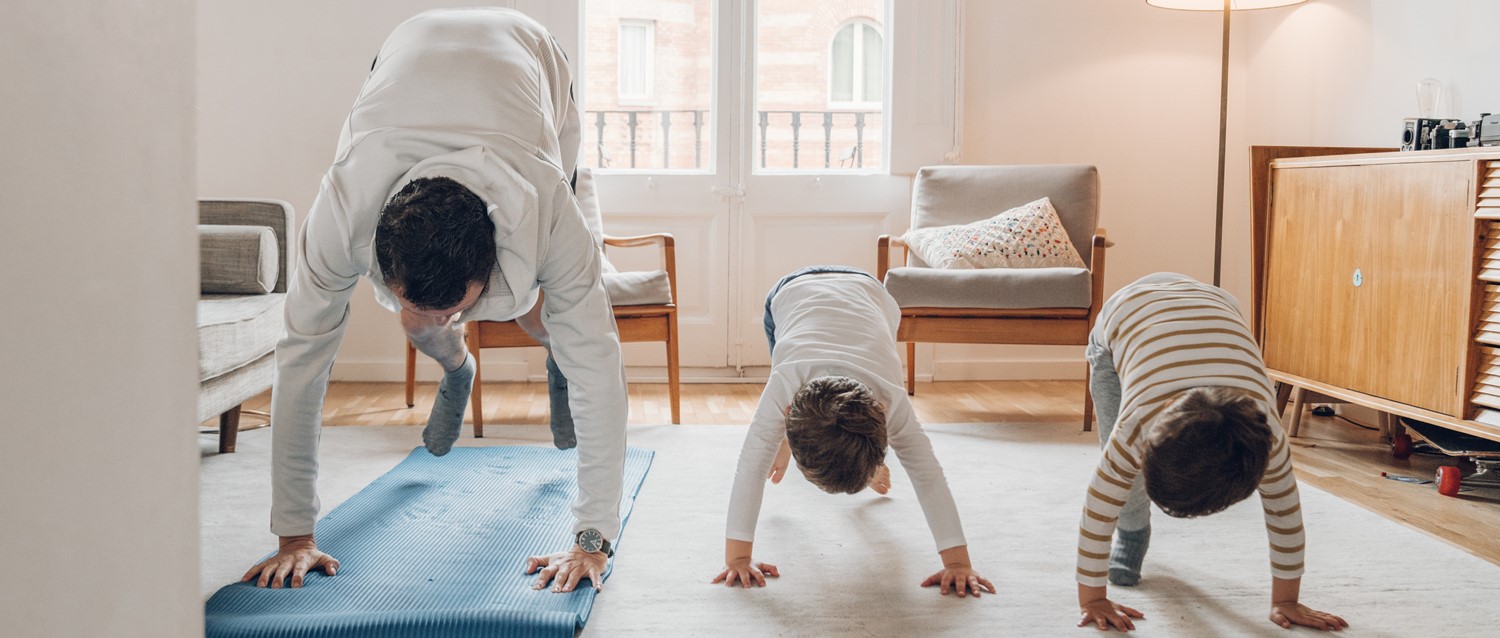
Even though we're all stuck inside as a result of the coronavirus pandemic, there's no reason we should let COVID-19 stop us keeping fit. For children, making sure they can burn off energy and stay active is crucial for their well-being - and to stop them bouncing off the walls.
Usar do Paciente ferramenta de verificação de coronavírus do Paciente se você tiver qualquer sintoma de febre ou uma nova tosse. Até que você tenha usado a ferramenta e recebido orientação sobre o que fazer, por favor, fique em casa e evite contato com outras pessoas.
When you're going through a difficult time, it can be hard to think about taking exercise - especially if you’re stuck indoors for most of the day. But for adults and children alike, keeping fit and working out can do wonders for both our physical and mental health.
"With so much uncertainty going on and everyone really anxious about the future, exercise is a fantastic way to decrease stress and take a break from everyday life," agrees Richard Goodman, who runs sports-inspired nanny agency Athlete Mannies.
But with play centres closed and parks out of bounds, how can we keep our kids, from toddlers to teenagers, active during isolation?
What counts as a good workout?
If we're used to attending classes, or counting our laps of the park, how how can we measure whether exercise we're doing in our front room or back garden is enough to keep us fit?
"It's important to get aerobic exercise, which helps to reduce the risk of cardiovascular disease, diabetes type 2 and high blood pressure among many other health benefits," advises Hannah Murphy, Director of Globe Fit. "You should be aiming to reach 55-85% of your maximum heart rate, which you can calculate by using 220 minus your age."
If you'd rather not get too technical, any exercise that gets heart pumping and has you working up a sweat is probably ticking the right boxes.
"All movement is good," adds Goodman. "Running around having fun or putting the radio on to have a dance - it doesn't matter what you do as long as you do something."
Having a routine
So, is it a good idea to set a time-slot for our kids' daily workout? Or should we be more flexible?
"It really depends on the child, and the other commitments you may have," explains Murphy. "Some children - particularly those with anxiety or special needs - may benefit from a routine. But it's not one-size-fits-all. Routines don't always fit with family life and work."
"It doesn't really matter when you choose to exercise," agrees Goodman. "Your exercise sessions need to be something you want to do, that you're going to have fun with. As long as it happens at some point, it doesn't really matter."
Improvising
If we're more used to lifting weights at the local gym, or jumping on trampolines at the leisure centre, it's hard to know what tools to use at home to enhance our workout. But this is where we can get creative - and encourage the kids to join in too.
"Hula hoops are cheap and don't take up a lot of room so they're a great thing to add to your workout," advises Murphy. "But really anything goes - you can fill up water bottles or use baked bean tins for weight resistance. Use the sofa to do push-ups. Get inventive with things around your home."
"Try things like boxing - which just needs pads or pillows and doesn't require a lot of space," suggests Goodman. "Jump rope skipping can be really motivational - especially if you team it with a YouTube video."
Many of us have also tried Joe Wicks' daily PE class on YouTube, and there are others to choose from too. "Key players from the fitness industry and even Olympic athletes are posting amazing workouts. They can be really influential role-models for kids," says Goodman.
Encouraging reluctant teens
Anyone with experience of parenting a teenager knows that it can sometimes be difficult to motivate a child of this age-group to try something new. Your teen may well be missing friends, or the routine of school or have other worries that also mean their motivation is low. But encouraging exercise is crucial for their health and well-being.
"To motivate kids of any age, the key is making it fun and engaging," says Murphy. "Asking them to do an hour-long class probably won't work. Try to stick to shorter bursts of 30 minutes. And it's got to be something they find fun. Pop dance workouts can be good - they don't always realise they're exercising! And try dancing along to videos on TikTok."
Kids who are used to playing football may be struggling without their teammates and the space of the football fields, but there are ways they can indulge their favourite pastime from the garden or living room. For example, "there's a 'keepy up' challenge currently on YouTube that your footballer could try," suggests Murphy.
For those who need additional motivation, see what their favourite celebrities are doing to keep fit during isolation.
What if you're under the weather?
Of course, there may be days when, however motivated you are, you or your children don't feel up to working out. And it's important to listen to our bodies at these times.
"I always recommend paying attention to your health and well-being," advises Goodman. "If you're starting to feel mild symptoms try to continue to move, but keep things simple. Walk around the garden to get some fresh air and keep some light level of exercise if you can."
Escolhas do paciente para artigos sobre a pandemia
COVID-19
Enfrentando o TOC à medida que o lockdown diminui
À medida que pubs, salões e restaurantes reabrem suas portas, para alguns de nós — e para muitos com TOC — mais liberdade significa mais estresse. Um psicólogo especializado no tratamento do TOC explica quais passos as pessoas podem tomar para gerenciar problemas de saúde mental.
por Ellie Broughton

COVID-19
Coronavírus COVID-19: quando teremos uma vacina?
Especialistas médicos de todo o mundo estão trabalhando sem parar para desenvolver uma vacina contra a COVID-19, enquanto o vírus continua se espalhando pelo planeta. Mas como as vacinas são produzidas e quando provavelmente teremos uma contra o coronavírus?
por Andrea Downey
Sobre o autorVer biografia completa
Autoria de

Gillian Harvey
Escritor Freelancer
BA (Hons) Inglês
Gillian é uma escritora freelancer e colunista para uma variedade de jornais e revistas nacionais.
Sobre o revisorVer biografia completa

Dra. Sarah Jarvis
Consultora Clínica
MA (Cantab), BM, BCh (Oxon), DRCOG, FRCGP, MBE
Após se formar em medicina em Cambridge e Oxford, a Dra. Sarah Jarvis MBE tornou-se médica de clínica geral.
Histórico do artigo
Artigo também disponível em Inglês, Alemão, Espanhol, Francês, Italiano, Português, Hindi, Hebraico, Árabe, e Sueco.
15 Apr 2020 | Publicado originalmente
Escrito por:
Gillian HarveyRevisado por
Dra. Sarah Jarvis
Compartilhe seus pensamentos ou experiências com outros em nosso comunidades de pacientes.
Acesso simples a tratamentos confiáveis e serviços de saúde online.
Common conditions
Get help with common conditions through the NHS, without a GP appointment.
 Sinusite aguda
 Amigdalite bacteriana
 Impetigo
 Mordidas de insetos
 Herpes zosterInfecção do trato urinário (ITUs)
Inscreva-se no boletim informativo do Patient
Sua dose semanal de conselhos de saúde claros e confiáveis - escritos para ajudá-lo a se sentir informado, confiante e no controle.
Ao se inscrever, você aceita nossos Política de Privacidade. Você pode cancelar a inscrição a qualquer momento. Nunca vendemos seus dados.