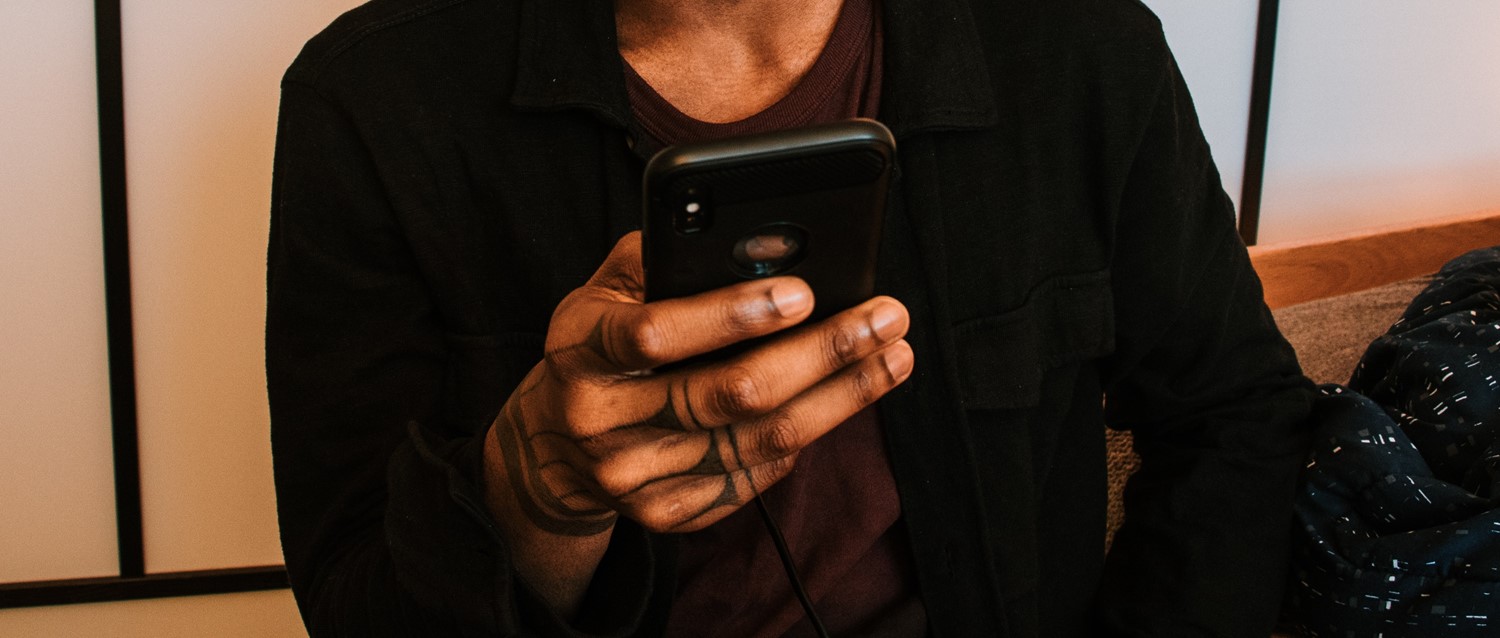
Can apps help you manage your mental health during the pandemic?
Peer reviewed by Dr Sarah JarvisAuthored by Ellie BroughtonOriginally published 1 Jul 2020
Meets Patient’s editorial guidelines
- DownloadDownload
- Share
- Language
- Discussion
- Audio Version
- Add to preferred sources on Google
For people with mild depression and anxiety, and those in treatment, apps may provide useful support during lockdown - or while restrictions to face-to-face consultations remain in place even as lockdown eases - to help them manage and improve their mental health.
At Samaritans, demand on services has soared during lockdown. But the service had to make changes to keep callers and volunteers safe. Branches could no longer offer face-to-face consultations, and some had to reduce the number of volunteers to maintain social distancing.
The charity's new app, called Self-Help, was due for launch this summer, so when call volumes rose, the charity brought the launch forward.
Self-Help had originally been designed with people in mind who have found it difficult to talk over the phone - for example, people facing abuse at home who don't have the privacy to call the helpline. The app has tools like a mood tracker, breathing exercises, and a guide to making a safety plan to prepare for a mental health crisis or an urge to self-harm. Although online chat isn't available yet, Samaritans plans to introduce the service to the app and web later this year.
Self-Help is a newcomer to the market, but it arrives at a time when more and more people are looking for mental health support that they can use when calls, conversations and appointments are over.
Popular now
Among other mental health apps which are available to download is Calm Harm, which helps people 'ride out' the urge to self-harm. It was launched in 2016 and is the oldest app by developer stem4. It is available free and is recommended via the NHS app library, a collection of healthcare apps that have been successfully tested against NHS standards.
In fact, the NHS apps library currently has 22 apps in its mental health section, covering stress, anxiety, panic attacks, insomnia, relaxation techniques and more.
The Calm Harm app usually averages about 5,000 downloads a month but in the last three weeks of May, it was averaging out at more like 7,000. User numbers for Stem4's app for anxiety, Clear Fear, went up 98%.
Dr Nihara Krause is the CEO and consultant clinical psychologist of stem4. Dr Krause saw downloads for all three of its apps go up during lockdown.
"A lot of services have been suspended or deferred," she points out. "A lot of self-harm management occurs in groups, so those have all been put on hold. We have lots of young people saying 'I miss that contact'."
"Apps are a tool, rather than a treatment," Dr Krause advises. "But apps themselves are actually quite adaptable to lockdown because a lot of the tasks you can do whilst you're socially distancing or in self-isolation."
The company's fourth app, Move Mood, launches at the end of the month.
No substitute
Maresa Segura is a psychotherapist from London. Many of her clients use mental health apps such as Recovery Record (a US app for recovery from eating disorders), Calm (for sleep), and Headspace (for meditation) in times of stress.
"Where there is relatively mild 'situational' anxiety and depression, mental health apps come very much into their own, providing a service in times of crisis to bridge the gap and give practical advice that is within the individual's capacity to action," she says.
In circumstances where therapy is unavailable (for instance, where NHS services are limited and private options out of budget) but would otherwise have been the first choice, Maresa advises people to contact their GP and to use free 'human' services such as Samaritans' phone service.
"This is a time of great unrest and financial anxiety and some people may not feel confident or able to enter into the commitment of more traditional modes of therapy when their lives feel so up in the air," she says. "The cost and upkeep of a therapy relationship on balance may only add to anxieties rather than resolve them, so an app may be a useful short-term intervention until they can access the right avenue of support."
But, she says, apps are no substitute for a conversation.
"People may be tempted to turn to apps in a bid for self-sufficiency, which may stem from worries around burdening their friends and family in hard times," she explains. "But they would in fact most benefit from something no app can replace - human interaction and relationship, a time and space to be heard, seen and responded to with care and commitment."
Offline support
Dr Knut Schroeder is a GP in Bristol. He helped design distrACT, another app in the NHS library launched three years ago. Aimed at all ages facing the urge to self-harm, it has had 25,000 downloads to date.
"I've had contact with a few people who have mental health problems and who self-harm," he says. "They told me that the most difficult thing was the lack of face-to-face contact. What they found hard to deal with was being isolated at home, not being able to go out to see people physically, and in particular, not seeing their therapist.
The app works offline, which is valuable to those with no internet access at home (a tiny, but massively overlooked 7% of us). Although users without internet won't be able to access the online services distrACT links to, they can still use the phone links to call helplines.
"DistrACT is not meant to replace face-to-face contact," Dr Schroeder says. "But it's there in between appointments."
Whether it's the loneliness of lockdown or anxiety about illness or work, over the last three months stress levels have been yo-yoing. Helplines are swamped. Mental healthcare and routines that worked well before lockdown have been cancelled, disrupted, or are simply no longer enough. Until normal service resumes, people will do what they can to get by.
Talking therapy services are available for free on the NHS through the IAPT scheme and still available during the pandemic. If you would prefer to book private talking therapy, you can now book an appointment via Patient Access.
Patient picks for Pandemic articles

COVID-19
Lockdown easing: what is the plan and is it realistic?
After a whole year in and out of lockdown and our lives turned upside down, it's a relief to many to hear the government announce its plans to ease COVID-19 restrictions over the next few months. But are they realistic?
by Milly Evans
COVID-19
Coping with OCD as lockdown eases
As pubs, salons and restaurants reopen their doors, for some of us - and for many with OCD - more freedom means more stress. A psychologist who specialises in treating OCD explains what steps people can take to manage mental health problems.
by Ellie Broughton
About the author

Ellie Broughton
About the reviewerView full bio

Dr Sarah Jarvis
Clinical Consultant
MA (Cantab), BM, BCh (Oxon), DRCOG, FRCGP, MBE
After training in medicine at Cambridge and Oxford, Dr Sarah Jarvis MBE became a GP.
Article history
Article also available in English, German, Spanish, French, Italian, Portuguese, Hindi, Hebrew, Arabic, and Swedish.
1 Jul 2020 | Originally published
Authored by:
Ellie Broughton
Peer reviewed by
Dr Sarah Jarvis
Join the conversation
Share your thoughts or experiences with others in our patient communities.

Ask, share, connect.
Browse discussions, ask questions, and share experiences across hundreds of health topics.

Feeling unwell?
Assess your symptoms online for free
Sign up to the Patient newsletter
Your weekly dose of clear, trustworthy health advice - written to help you feel informed, confident and in control.
By subscribing you accept our Privacy Policy. You can unsubscribe at any time. We never sell your data.
More in cOVID-19
- COVID-19: how to avoid catching viruses at work
- COVID-19: how to stay safe at work
- COVID-19: how to stay safe this Christmas
- COVID-19: is handwashing still important when you're self-isolating?
- Flurona: What we know about COVID-19 and flu combined infection
- How has the COVID-19 pandemic affected access to contraception?
- Is the pandemic affecting children's development?
- Not quite 'back to normal': a guide to post-pandemic family healing
- Should children get the COVID-19 vaccine?
- What are the differences between colds, flu and COVID-19?
- What are the options for COVID treatment at home?
- What happens if you catch flu and COVID-19 at the same time?
- What impact has COVID-19 had on HIV testing?
- When will I get my COVID-19 vaccine?