hemoglobin subunit alpha 1
Última atualização 11 Apr 2023
Atende aos diretrizes editoriais
- BaixarBaixar
- Compartilhar
- Language
- Discussão
- Ask Patient
- Versão em Áudio
- Adicionar às fontes preferidas no Google
A HBA1 gene provides instructions for making a protein called alpha-globin. This protein is also produced from a nearly identical gene called HBA2. These two alpha-globin genes are located close together in a region of chromosome 16 known as the alpha-globin locus.
Escolhas de vídeos para GenesBiblioteca de vídeos
Normal function
A HBA1 gene provides instructions for making a protein called alpha-globin. This protein is also produced from a nearly identical gene called HBA2. These two alpha-globin genes are located close together in a region of chromosome 16 known as the alpha-globin locus.
Alpha-globin is a component (subunit) of a larger protein called hemoglobin, which is the protein in red blood cells that carries oxygen to cells and tissues throughout the body. Hemoglobin is made up of four subunits: two subunits of alpha-globin and two subunits of another type of globin. Alpha-globin is a component of both fetal hemoglobin, which is active only before birth and in the newborn period, and adult hemoglobin, which is active throughout the rest of life.
Each of the four protein subunits of hemoglobin carries an iron-containing molecule called heme. Heme molecules are necessary for red blood cells to pick up oxygen in the lungs and deliver it to the body's tissues. A complete hemoglobin protein is capable of carrying four oxygen molecules at a time (one attached to each heme molecule). Oxygen attached to hemoglobin gives blood its bright red colour.
Conditions referring to this gene or chromosome
Other names
alpha 1 globin
alpha one globin
alpha-1 globin
alpha-1-globin
CD31
HBA-T3
HBA_HUMAN
hemoglobin alpha 1 globin chain
hemoglobin alpha-1 chain
hemoglobin, alpha 1
MGC126895
MGC126897
Related patient information and medicines

Patient information leaflet
Exames de sangue
One drop of blood contains ... A constant new supply of red blood cells is needed to replace old cells that break down. Millions of red blood cells are made each day. Red cells contain a chemical called haemoglobin. This binds to oxygen and takes oxygen from the lungs to all parts of the body. White cells (leukocytes) There are different types of.

Patient information leaflet
Talasemia
What causes thalassaemia. The cause is an inherited (genetic) change, involving the genes which tell the body how to make an important chemical called haemoglobin. Haemoglobin is the chemical which carries oxygen in the blood - it is the one which gives blood its red colour. Haemoglobin is located in cells called red blood cells which are part of.
Patient information leaflet
Diabetes
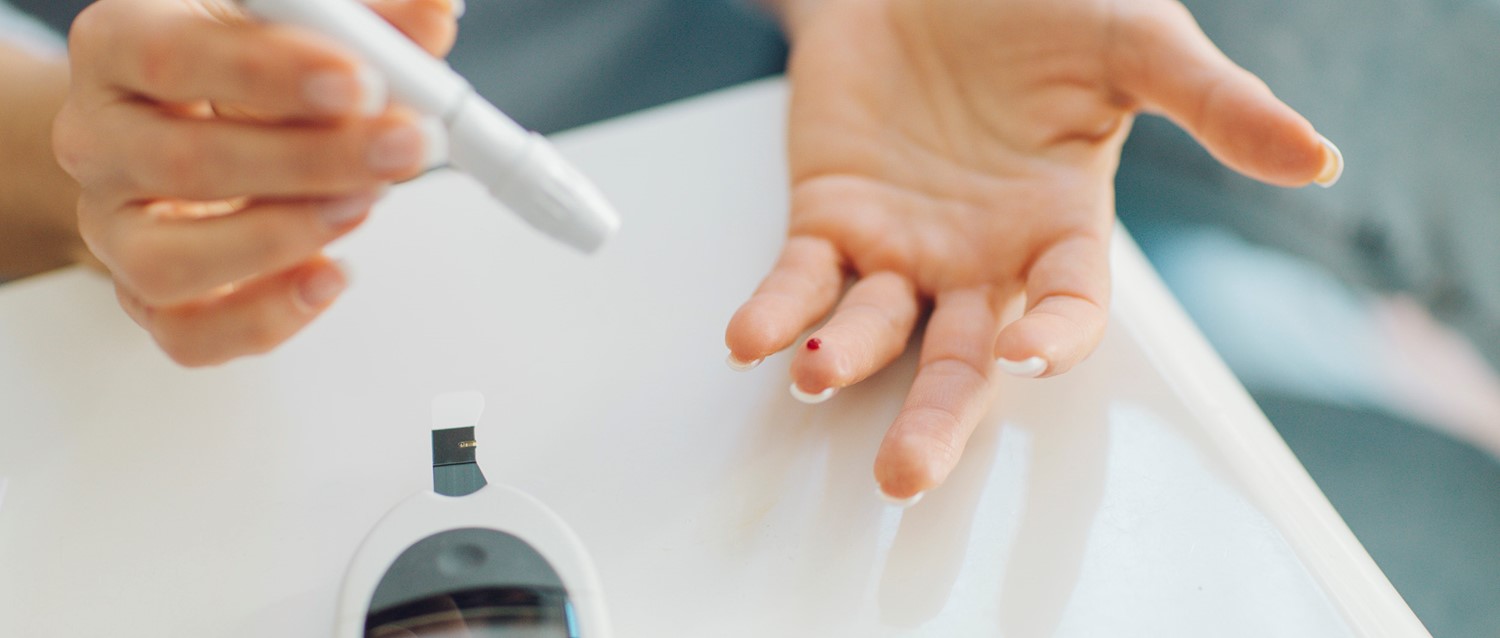
Many people with type 2 diabetes do not have any sy... There are several ways of diagnosing diabetes. These include: A blood test to look at the level of glucose in the blood. A different blood test for glycosylated haemoglobin (haemoglobin A1c, ou HbA1c). HbA1c measures the average level of blood sugar over the last 3 months. This is very.

Patient information leaflet
Síndrome de Gilbert
The condition is... What is bilirubin. Bilirubin is constantly being made. It is a breakdown product of haemoglobin. Haemoglobin is a chemical that is in red blood cells and carries oxygen to the tissues. Many red blood cells break down each day releasing haemoglobin, and bilirubin is one of the waste products. Bilirubin is carried in the.
Patient information leaflet
Porfiria
The porphyrias are a group of disorders in which there is a problem with the production of haem (also spelled heme) within the body. Haem is used to make haemoglobin in red blood cells. There are seven different types of porphyria and in most cases they run in families (are inherited). It is important that the type of porphyria that you have.
Patient information leaflet
Traço falciforme
If you inherit a gene from one of your parents, called a sickle cell gene, you have a condition called sickle cell trait. ... You inherit haemoglobin genes from both parents. One sickle cell gene gives you sickle cell trait; two sickle cell genes give you SCD. The result of these genes is that an important body chemical called haemoglobin is.
Leitura adicional e referências
- hemoglobin subunit alpha 1; MedlinePlus, National Library of Medicine.
- Harteveld CL, Kriek M, Bijlsma EK, Erjavec Z, Balak D, Phylipsen M, Voskamp A, di Capua E, White SJ, Giordano PC. Refinement of the genetic cause of ATR-16. Hum Genet. 2007 Nov;122(3-4):283-92. doi: 10.1007/s00439-007-0399-y. Epub 2007 Jun 28.
- Harvard University: Hemoglobin Synthesis
- Higgs DR, Weatherall DJ. The alpha thalassaemias. Cell Mol Life Sci. 2009 Apr;66(7):1154-62. doi: 10.1007/s00018-008-8529-9.
- Kalle Kwaifa I, Lai MI, Md Noor S. Non-deletional alpha thalassaemia: a review. Orphanet J Rare Dis. 2020 Jun 29;15(1):166. doi: 10.1186/s13023-020-01429-1.
- Ribeiro DM, Sonati MF. Regulation of human alpha-globin gene expression and alpha-thalassemia. Genet Mol Res. 2008 Oct 14;7(4):1045-53. doi: 10.4238/vol7-4gmr472.
- Tamary H, Greenberg-Kushnir N, Dgany O. Alpha-Thalassemia. 2005 Nov 1 [updated 2026 Apr 23]. In: Adam MP, Bick S, Mirzaa GM, Wallace SE, Amemiya A, editors. GeneReviews(R) [Internet]. Seattle (WA): University of Washington, Seattle; 1993-2026. Available from http://www.ncbi.nlm.nih.gov/books/NBK1435/
- Zhang HB, Liu DP, Liang CC. The control of expression of the alpha-globin gene cluster. Int J Hematol. 2002 Dec;76(5):420-6. doi: 10.1007/BF02982807.
Compartilhe seus pensamentos ou experiências com outros em nosso comunidades de pacientes.
Acesso simples a tratamentos confiáveis e serviços de saúde online.
Common conditions
Get help with common conditions through the NHS, without a GP appointment.
 Sinusite aguda
 Amigdalite bacteriana
 Impetigo
 Mordidas de insetos
 Herpes zosterInfecção do trato urinário (ITUs)
Inscreva-se no boletim informativo do Patient
Sua dose semanal de conselhos de saúde claros e confiáveis - escritos para ajudá-lo a se sentir informado, confiante e no controle.
Ao se inscrever, você aceita nossos Política de Privacidade. Você pode cancelar a inscrição a qualquer momento. Nunca vendemos seus dados.