glutamate ionotropic receptor NMDA type subunit 2A
Última atualização 11 Apr 2023
Atende aos diretrizes editoriais
- BaixarBaixar
- Compartilhar
- Language
- Discussão
- Versão em Áudio
- Adicionar às fontes preferidas no Google
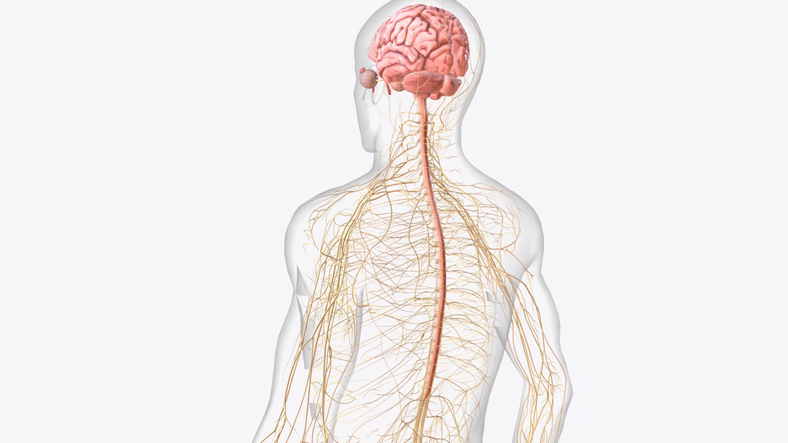
The GRIN2A gene provides instructions for making a protein called GluN2A (formerly known as NR2A). This protein is found in nerve cells (neurons) in the brain and spinal cord, including regions of the brain involved in speech and language.
Normal function
The GRIN2A gene provides instructions for making a protein called GluN2A (formerly known as NR2A). This protein is found in nerve cells (neurons) in the brain and spinal cord, including regions of the brain involved in speech and language.
The GluN2A protein is one component (subunit) of a subset of NMDA receptors. There are several types of NMDA receptors, made up of different combinations of protein components. NMDA receptors are glutamate-gated ion channels; when brain chemicals called glutamate and glycine attach to the receptor, a channel opens, allowing positively charged particles (cations) to flow through. The flow of cations generates currents that activate (excite) neurons to send signals in the brain. NMDA receptors are involved in normal brain development, changes in the brain in response to experience (synaptic plasticity), learning, and memory. They also appear to play a role during deep (slow-wave) sleep.
The GluN2A subunit of NMDA receptors determines where in the brain the receptor is located and how it functions. It also provides the site to which glutamate binds.
Conditions referring to this gene or chromosome
Other names
EPND
GluN2A
glutamate receptor ionotropic, NMDA 2A isoform 1 precursor
glutamate receptor ionotropic, NMDA 2A isoform 2 precursor
glutamate receptor, ionotropic, N-methyl D-aspartate 2A
LKS
N-methyl D-aspartate receptor subtype 2A
N-methyl-D-aspartate receptor channel, subunit epsilon-1
N-methyl-D-aspartate receptor subunit 2A
NMDAR2A
NR2A
Related patient information and medicines

Patient information leaflet
Mastocitose e distúrbios de mastócitos
A mast cell is a type of white blood cell. There are several forms of mastocytosis. I... These include: Physical triggers - for example, heat, cold, rubbing, sunlight, tiredness, lots of exercise, a high temperature (fever). Emotional triggers - for example, stress. Some foods - for example, cheese, spices, shellfish, food preservatives,.
Patient information leaflet
Doença do neurônio motor
Motor neurone disease (MND) is a neurological condition causes a progressive weakness and wasting of many of the muscles in the body. This leaflet is mainly about amyotrophic lateral sclerosis (ALS), which is the most common type of motor neurone disease. It can slow down the disease ... Riluzole works by its effect on glutamate - a chemical which.

Patient information leaflet
Câncer de mama
Types of breast cancer Carcinoma in situ Some people are diagnosed when the cancerous cells are still totally within a duct or lobule. These are called carcinoma in situ (or non-invasive breast cancer), as no cancer cells have grown out from their original site. Ductal carcinoma in situ (DCIS) is the most common type of non-invasive breast cancer.

Patient information leaflet
Câncer de boca
Mouth cancer can affect any part of the mouth, including the tongue and lips. The most common symptoms are having a sore or ulcer for more than three weeks. You should see your dentist or doctor if you have any symptoms in your mouth that are unusual. The outlook (prognosis) for people with mouth cancer is good if it is diagnosed early. What is.

Patient information leaflet
Diabetes e doença
Acting quickly and following advice helps to keep your glucose levels in the normal range or only slightly high. Sick day diabetes guidelines The following guidance is provided by Diabetes UK: Contact your general practice or diabetes team who will help you if you have any queries or if you are unsure about what to do. In general, you should keep.

Patient information leaflet
Miastenia gravis
Myasthenia gravis (MG) is a condition where muscles become easily cansado e weak. It is due to a problem with how the nerves stimulate the muscles to tighten (contract). The muscles around the eyes are commonly affected first. This causes drooping eyelids and double vision. Treatment is usually effective. However, relapses are common and many.
Leitura adicional e referências
- glutamate ionotropic receptor NMDA type subunit 2A; MedlinePlus, National Library of Medicine.
- Burnashev N, Szepetowski P. NMDA receptor subunit mutations in neurodevelopmental disorders. Curr Opin Pharmacol. 2015 Feb;20:73-82. doi: 10.1016/j.coph.2014.11.008. Epub 2014 Dec 11.
- Carvill GL, Regan BM, Yendle SC, O'Roak BJ, Lozovaya N, Bruneau N, Burnashev N, Khan A, Cook J, Geraghty E, Sadleir LG, Turner SJ, Tsai MH, Webster R, Ouvrier R, Damiano JA, Berkovic SF, Shendure J, Hildebrand MS, Szepetowski P, Scheffer IE, Mefford HC. GRIN2A mutations cause epilepsy-aphasia spectrum disorders. Nat Genet. 2013 Sep;45(9):1073-6. doi: 10.1038/ng.2727. Epub 2013 Aug 11.
- Lemke JR, Lal D, Reinthaler EM, Steiner I, Nothnagel M, Alber M, Geider K, Laube B, Schwake M, Finsterwalder K, Franke A, Schilhabel M, Jahn JA, Muhle H, Boor R, Van Paesschen W, Caraballo R, Fejerman N, Weckhuysen S, De Jonghe P, Larsen J, Moller RS, Hjalgrim H, Addis L, Tang S, Hughes E, Pal DK, Veri K, Vaher U, Talvik T, Dimova P, Guerrero Lopez R, Serratosa JM, Linnankivi T, Lehesjoki AE, Ruf S, Wolff M, Buerki S, Wohlrab G, Kroell J, Datta AN, Fiedler B, Kurlemann G, Kluger G, Hahn A, Haberlandt DE, Kutzer C, Sperner J, Becker F, Weber YG, Feucht M, Steinbock H, Neophythou B, Ronen GM, Gruber-Sedlmayr U, Geldner J, Harvey RJ, Hoffmann P, Herms S, Altmuller J, Toliat MR, Thiele H, Nurnberg P, Wilhelm C, Stephani U, Helbig I, Lerche H, Zimprich F, Neubauer BA, Biskup S, von Spiczak S. Mutations in GRIN2A cause idiopathic focal epilepsy with rolandic spikes. Nat Genet. 2013 Sep;45(9):1067-72. doi: 10.1038/ng.2728. Epub 2013 Aug 11.
- Lesca G, Rudolf G, Bruneau N, Lozovaya N, Labalme A, Boutry-Kryza N, Salmi M, Tsintsadze T, Addis L, Motte J, Wright S, Tsintsadze V, Michel A, Doummar D, Lascelles K, Strug L, Waters P, de Bellescize J, Vrielynck P, de Saint Martin A, Ville D, Ryvlin P, Arzimanoglou A, Hirsch E, Vincent A, Pal D, Burnashev N, Sanlaville D, Szepetowski P. GRIN2A mutations in acquired epileptic aphasia and related childhood focal epilepsies and encephalopathies with speech and language dysfunction. Nat Genet. 2013 Sep;45(9):1061-6. doi: 10.1038/ng.2726. Epub 2013 Aug 11.
- Paoletti P. Molecular basis of NMDA receptor functional diversity. Eur J Neurosci. 2011 Apr;33(8):1351-65. doi: 10.1111/j.1460-9568.2011.07628.x. Epub 2011 Mar 14.
- Reutlinger C, Helbig I, Gawelczyk B, Subero JI, Tonnies H, Muhle H, Finsterwalder K, Vermeer S, Pfundt R, Sperner J, Stefanova I, Gillessen-Kaesbach G, von Spiczak S, van Baalen A, Boor R, Siebert R, Stephani U, Caliebe A. Deletions in 16p13 including GRIN2A in patients with intellectual disability, various dysmorphic features, and seizure disorders of the rolandic region. Epilepsia. 2010 Sep;51(9):1870-3. doi: 10.1111/j.1528-1167.2010.02555.x.
- Turner SJ, Mayes AK, Verhoeven A, Mandelstam SA, Morgan AT, Scheffer IE. GRIN2A: an aptly named gene for speech dysfunction. Neurology. 2015 Feb 10;84(6):586-93. doi: 10.1212/WNL.0000000000001228. Epub 2015 Jan 16.
- Wyllie DJ, Livesey MR, Hardingham GE. Influence of GluN2 subunit identity on NMDA receptor function. Neuropharmacology. 2013 Nov;74:4-17. doi: 10.1016/j.neuropharm.2013.01.016. Epub 2013 Jan 31.
Participe da conversa
Compartilhe seus pensamentos ou experiências com outros em nosso comunidades de pacientes.

Pergunte, compartilhe, conecte-se.
Navegue por discussões, faça perguntas e compartilhe experiências em centenas de tópicos de saúde.
Inscreva-se no boletim informativo do Patient
Sua dose semanal de conselhos de saúde claros e confiáveis - escritos para ajudá-lo a se sentir informado, confiante e no controle.
Ao se inscrever, você aceita nossos Política de Privacidade. Você pode cancelar a inscrição a qualquer momento. Nunca vendemos seus dados.