coagulation factor XIII B chain
Última atualização 18 de ago de 2020
Atende aos diretrizes editoriais
- BaixarBaixar
- Compartilhar
- Language
- Discussão
- Versão em Áudio
- Adicionar às fontes preferidas no Google
A F13B gene provides instructions for making one part, the B subunit, of a protein called factor XIII. This protein is part of a group of related proteins called coagulation factors that are essential for normal blood clotting. They work together as part of the coagulation cascade, which is a series of chemical reactions that forms blood clots in response to injury. After an injury, clots seal off blood vessels to stop bleeding and trigger blood vessel repair. Factor XIII acts at the end of the cascade to strengthen and stabilize newly formed clots, preventing further blood loss.
Normal function
A F13B gene provides instructions for making one part, the B subunit, of a protein called factor XIII. This protein is part of a group of related proteins called coagulation factors that are essential for normal blood clotting. They work together as part of the coagulation cascade, which is a series of chemical reactions that forms blood clots in response to injury. After an injury, clots seal off blood vessels to stop bleeding and trigger blood vessel repair. Factor XIII acts at the end of the cascade to strengthen and stabilize newly formed clots, preventing further blood loss.
Factor XIII in the bloodstream is made of two A subunits (produced from the F13A1 gene) and two B subunits (produced from the F13B gene). The role of the B subunits is to carry and stabilize the A subunits, protecting them from being broken down. When a new blood clot forms, the A and B subunits separate from one another, and the A subunits are cut (cleaved) to produce the active form of factor XIII (factor XIIIa). The active protein links together molecules of fibrin, the material that forms the clot, which strengthens the clot and keeps other molecules from breaking it down.
Studies suggest that factor XIII has additional functions, although these are less well understood than its role in blood clotting. Specifically, factor XIII is likely involved in other aspects of wound healing, immune system function, maintaining pregnancy, bone formation, and the growth of new blood vessels (angiogenesis).
Conditions referring to this gene or chromosome
Other names
coagulation factor XIII B chain precursor
coagulation factor XIII, B polypeptide
fibrin-stabilizing factor B subunit
FXIIIB
protein-glutamine gamma-glutamyltransferase B chain
TGase
transglutaminase B chain
Related patient information and medicines

Patient information leaflet
Testes de coagulação do sangue
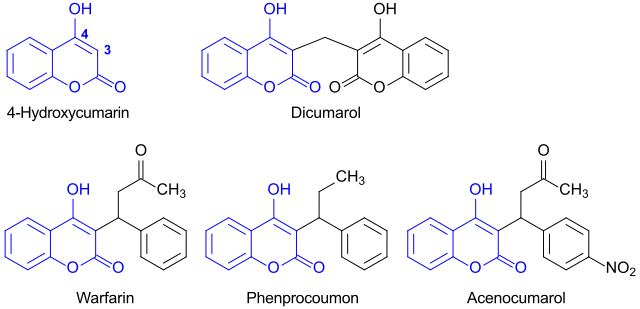
Testes de coagulação do sangue are used to diagnose and assess bleeding problems and to monitor people who take varfarina or other anticoagulant medicines. You may be advi... These chemicals then react with other chemicals and proteins in the plasma, called clotting factors. There are 13 known clotting factors which are called by their Roman numbers - factor.
Patient information leaflet
Anticoagulantes
Within seconds of cutting a blood vessel, the damaged tissue causes tiny cells in the blood (platelets) to become sticky and clump ... These activated platelets and the damaged tissue release chemicals which react with other chemicals and proteins in the blood, called clotting factors. There are 13 known clotting factors which are called by their.

Patient information leaflet
Trombofilia
A normal clotting process is called haemostasis. It helps to stop bleeding if you have an injury such as a cut. When a blood vessel is injured, the clotting process is triggered. This is called the clotting cascade. It is a chain reaction de different chemicals no sangue which are called clotting factors. The clotting cascade makes the blood.

Patient information leaflet
Síndrome do anticorpo antifosfolipídico
Primary and secondary APS are still commonly used terms. However, most people now say 'APS with or without associat... The presence of the antiphospholipid antibodies causes the increased tendency of the blood to clot - they can trigger the coagulation cascade. The coagulation cascade is a chain reaction of events or chemical reactions that occur.

Patient information leaflet
Esofago de Barrett
The coil then emits heat energy which destroys the abnormal cells. Nearby normal cells then multiply and replace the destroyed abnormal cells. Argon plasma coagulation This treatment uses a jet of argon gas, together with an electric current, to burn away dysplastic cells. Endoscopic mucosal resection (EMR) This is a procedure that is done via.
Patient information leaflet
Posso tomar Apixabana e Bisoprolol juntos?
There is no direct interaction between apixaban and bisoprolol. They work in different ways and do not interfere with how the body processes each other. Why this happens Apixabana é um anticoagulant (blood thinner) that works by blocking a clotting factor called Factor Xa. Bisoprolol is a beta-blocker that slows the heart rate and lowers blood.
Leitura adicional e referências
- coagulation factor XIII B chain; MedlinePlus, National Library of Medicine.
- Bagoly Z, Koncz Z, Harsfalvi J, Muszbek L. Factor XIII, clot structure, thrombosis. Thromb Res. 2012 Mar;129(3):382-7. doi: 10.1016/j.thromres.2011.11.040. Epub 2011 Dec 24.
- Biswas A, Ivaskevicius V, Seitz R, Thomas A, Oldenburg J. An update of the mutation profile of Factor 13 A and B genes. Blood Rev. 2011 Sep;25(5):193-204. doi: 10.1016/j.blre.2011.03.001. Epub 2011 Jun 2.
- Biswas A, Ivaskevicius V, Thomas A, Oldenburg J. Coagulation factor XIII deficiency. Diagnosis, prevalence and management of inherited and acquired forms. Hamostaseologie. 2014;34(2):160-6. doi: 10.5482/HAMO-13-08-0046. Epub 2014 Feb 7.
- Hethershaw EL, Cilia La Corte AL, Duval C, Ali M, Grant PJ, Ariens RA, Philippou H. The effect of blood coagulation factor XIII on fibrin clot structure and fibrinolysis. J Thromb Haemost. 2014 Feb;12(2):197-205. doi: 10.1111/jth.12455.
- Levy JH, Greenberg C. Biology of Factor XIII and clinical manifestations of Factor XIII deficiency. Transfusion. 2013 May;53(5):1120-31. doi: 10.1111/j.1537-2995.2012.03865.x. Epub 2012 Aug 28.
- Muszbek L, Bereczky Z, Bagoly Z, Komaromi I, Katona E. Factor XIII: a coagulation factor with multiple plasmatic and cellular functions. Physiol Rev. 2011 Jul;91(3):931-72. doi: 10.1152/physrev.00016.2010.
- Schroeder V, Kohler HP. Factor XIII deficiency: an update. Semin Thromb Hemost. 2013 Sep;39(6):632-41. doi: 10.1055/s-0033-1353392. Epub 2013 Aug 8.
Participe da conversa
Compartilhe seus pensamentos ou experiências com outros em nosso comunidades de pacientes.

Pergunte, compartilhe, conecte-se.
Navegue por discussões, faça perguntas e compartilhe experiências em centenas de tópicos de saúde.
Inscreva-se no boletim informativo do Patient
Sua dose semanal de conselhos de saúde claros e confiáveis - escritos para ajudá-lo a se sentir informado, confiante e no controle.
Ao se inscrever, você aceita nossos Política de Privacidade. Você pode cancelar a inscrição a qualquer momento. Nunca vendemos seus dados.