Factor XIII deficiency
Última atualização 18 de ago de 2020
Atende aos diretrizes editoriais
- BaixarBaixar
- Compartilhar
- Language
- Discussão
- Versão em Áudio
- Adicionar às fontes preferidas no Google
Factor XIII deficiency is a rare bleeding disorder. Researchers have identified an inherited form and a less severe form that is acquired during a person's lifetime.
Descrição
Factor XIII deficiency is a rare bleeding disorder. Researchers have identified an inherited form and a less severe form that is acquired during a person's lifetime.
Signs and symptoms of inherited factor XIII deficiency begin soon after birth, usually with abnormal bleeding from the umbilical cord stump. If the condition is not treated, affected individuals may have episodes of excessive and prolonged bleeding that can be life-threatening. Abnormal bleeding can occur after surgery or minor trauma. The condition can also cause spontaneous bleeding into the joints or muscles, leading to pain and disability. Women with inherited factor XIII deficiency tend to have heavy or prolonged menstrual bleeding (menorrhagia) and may experience recurrent pregnancy losses (miscarriages). Other signs and symptoms of inherited factor XIII deficiency include nosebleeds, bleeding of the gums, easy bruising, problems with wound healing, bleeding after surgery, and abnormal scar formation. Inherited factor XIII deficiency also increases the risk of spontaneous bleeding inside the skull (intracranial hemorrhage), which is the leading cause of death in people with this condition.
Acquired factor XIII deficiency becomes apparent later in life. People with the acquired form are less likely to have severe or life-threatening episodes of abnormal bleeding than those with the inherited form.
Padrões de herança
The source lists the following possible inheritance patterns: Autosomal recessive. More than one pattern can apply in different cases.
Related genes
Other names
Deficiency of factor XIII
Deficiency, Laki-Lorand factor
Fibrin stabilizing factor deficiency
Related patient information and medicines

Patient information leaflet
Testes de coagulação do sangue
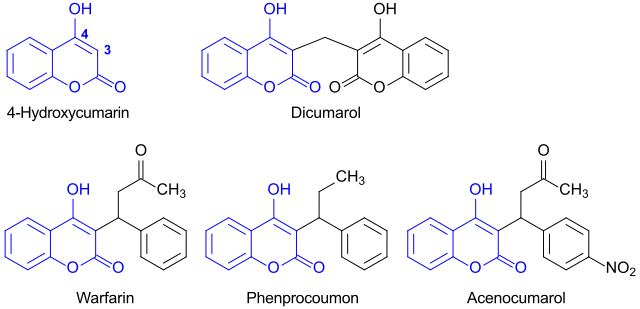
Testes de coagulação do sangue are used to diagnose e assess bleeding problems and to monitor people who take warfarin or other anticoagulant medicines. You may be advi... These chemicals then react with other chemicals and proteins in the plasma, called clotting factors. There are 13 known clotting factors which are called by their Roman numbers - factor.
Patient information leaflet
Anticoagulantes
These activated platelets and the damaged tissue release chemicals which react with other chemi... There are 13 known clotting factors which are called by their Roman numbers - factor I para factor XIII. A complex cascade of chemical reactions involving these clotting factors, called the clotting cascade, quickly occurs. The final step de this.

Patient information leaflet
Trombofilia
Trombofilia occurs if the normal balance of the clotting system is upset. There may be too much of a clotting factor, or too little of a substance that opposes clotting. Thrombophilia can cause unwanted blood clots (thromboses). Some types of thrombophilia can cause a blood clot in an unusual site such as the brain, gut or liver. This can cause.

Patient information leaflet
Sol e queimaduras solares
Benefícios of sunshine Vitamin D Vitamin D is vital for good health. Vitamin D is... Sunlight is the main source of vitamin D for the body, as there is not enough found in the foods that we eat. People need vitamin D for bone health as well as our body functions. Children with severe deficiência de vitamina D may develop a condition conhecido como rickets..

Patient information leaflet
Hemofilia
Hemofilia is a rare bleeding disorder that affects your ability to make a clot. The blood contains substances called clotting factors that work with platelets to form a clot. When you injure yourself the clot stops you bleeding. What is haemophilia. Haemophilia is a rare bleeding disorder caused by deficiency of clotting factors. Coagulação.
Patient information leaflet
Disfunção sexual feminina
Doctors group FSD into three main types of symptom. They are: Sexual interest/arousal disorder : you have reduced or absent interest in sex, reduced responsiveness to sexual situations, reduced erotic thoughts or masturbation, and/or reduced pleasure in sex. If you have serious m... What is the Female Sexual Function Index. Este is a questionnaire.
Leitura adicional e referências
- Factor XIII deficiency; MedlinePlus, National Library of Medicine.
- Biswas A, Ivaskevicius V, Thomas A, Oldenburg J. Coagulation factor XIII deficiency. Diagnosis, prevalence and management of inherited and acquired forms. Hamostaseologie. 2014;34(2):160-6. doi: 10.5482/HAMO-13-08-0046. Epub 2014 Feb 7.
- de Jager T, Pericleous L, Kokot-Kierepa M, Naderi M, Karimi M. The burden and management of FXIII deficiency. Haemophilia. 2014 Nov;20(6):733-40. doi: 10.1111/hae.12474. Epub 2014 Jul 17.
- Kohler HP, Ichinose A, Seitz R, Ariens RA, Muszbek L; Factor XIII And Fibrinogen SSC Subcommittee Of The ISTH. Diagnosis and classification of factor XIII deficiencies. J Thromb Haemost. 2011 Jul;9(7):1404-6. doi: 10.1111/j.1538-7836.2011.04315.x. No abstract available.
- Levy JH, Greenberg C. Biology of Factor XIII and clinical manifestations of Factor XIII deficiency. Transfusion. 2013 May;53(5):1120-31. doi: 10.1111/j.1537-2995.2012.03865.x. Epub 2012 Aug 28.
- Muszbek L, Bagoly Z, Cairo A, Peyvandi F. Novel aspects of factor XIII deficiency. Curr Opin Hematol. 2011 Sep;18(5):366-72. doi: 10.1097/MOH.0b013e3283497e3e.
- Schroeder V, Kohler HP. Factor XIII deficiency: an update. Semin Thromb Hemost. 2013 Sep;39(6):632-41. doi: 10.1055/s-0033-1353392. Epub 2013 Aug 8.
Participe da conversa
Compartilhe seus pensamentos ou experiências com outros em nosso comunidades de pacientes.

Pergunte, compartilhe, conecte-se.
Navegue por discussões, faça perguntas e compartilhe experiências em centenas de tópicos de saúde.
Inscreva-se no boletim informativo do Patient
Sua dose semanal de conselhos de saúde claros e confiáveis - escritos para ajudá-lo a se sentir informado, confiante e no controle.
Ao se inscrever, você aceita nossos Política de Privacidade. Você pode cancelar a inscrição a qualquer momento. Nunca vendemos seus dados.