Task-specific focal dystonia
Última atualização 18 de ago de 2020
Atende aos diretrizes editoriais
- BaixarBaixar
- Compartilhar
- Language
- Discussão
- Ask Patient
- Versão em Áudio
- Adicionar às fontes preferidas no Google
Task-specific focal dystonia is a movement disorder that interferes with the performance of particular tasks, such as writing, playing a musical instrument, or participating in a sport. Dystonias are a group of movement problems characterised by involuntary, sustained muscle contractions, tremors, and other uncontrolled movements. The term "focal" refers to a type of dystonia that affects a single part of the body, such as the hand or jaw.
Escolhas de vídeos para Condições genéticasBiblioteca de vídeos
Descrição
Task-specific focal dystonia is a movement disorder that interferes with the performance of particular tasks, such as writing, playing a musical instrument, or participating in a sport. Dystonias are a group of movement problems characterised by involuntary, sustained muscle contractions, tremors, and other uncontrolled movements. The term "focal" refers to a type of dystonia that affects a single part of the body, such as the hand or jaw.
Researchers have described several forms of task-specific focal dystonia. The most common is writer's cramp, in which muscle cramps or spasms in the hand, wrist, or forearm interfere with holding a pen or pencil. Writer's cramp begins in the hand used for writing (the dominant hand) and is usually limited to that task, but with time it can spread to the other hand and affect other fine-motor activities such as shaving or typing.
Musician's dystonia is a form of task-specific focal dystonia characterised by muscle cramps and spasms that occur while playing a musical instrument. This condition can affect amateur or professional musicians, and the location of the dystonia depends on the instrument. Some musicians (such as piano, guitar, and violin players) develop focal hand dystonia, which causes loss of fine-motor control in the hand and wrist muscles. This condition reduces finger coordination, speed, and endurance while playing. Musicians who play woodwind or brass instruments can develop what is known as embouchure dystonia. This condition causes muscle cramps or spasms involving the lips, tongue, or jaw, which prevents normal positioning of the mouth around the instrument's mouthpiece. Musician's dystonia often occurs only when playing a particular instrument. However, over time focal hand dystonia may impair other activities, and embouchure dystonia can worsen to affect eating and speech.
Task-specific focal dystonia can affect people who play sports and engage in other occupations involving repetitive, highly practiced movements. For example, some golfers experience involuntary jerking of the wrists during putting, a condition known informally as "the yips." Cramps and spasms of the hand and arm muscles can also affect tennis players, billiards players, dart throwers, and other athletes. Additionally, task-specific dystonia has been reported in tailors, shoemakers, hair stylists, and people who frequently type or use a computer mouse.
The abnormal movements associated with task-specific focal dystonia are usually painless, although they can cause anxiety when they interfere with musical performance and other activities. Severe cases can cause professional disability.
Padrões de herança
The source lists the following possible inheritance patterns: Autosomal dominant. More than one pattern can apply in different cases.
Other names
Focal hand dystonia
Focal task-specific dystonia
FTSD
Occupational cramp
Occupational dystonia
Task-specific dystonia
Related patient information and medicines

Patient information leaflet
Distonia
A dystonia is a lasting or frequently recurring and unwanted (involuntary) muscle contraction. It can affect one or more muscles in the body. They can be described according to what has caused the dystonia, the age the person was when they first had the symptoms, or by w... For example, when described by which parts of the body are affected, there.

Patient information leaflet
Blefaroespasmo
This leaflet is mainly about primary blepharospasm, also called benign essential blepharospasm (BEB). BEB cannot be cured, but is usually successfully managed with botulinum toxin injections, repeated at intervals. An increase in blink frequency and strength is called blepharospasm. Blefaroespasmo is a type de focal dystonia. 'Dystonia' means.

Patient information leaflet
Doença de Huntington
What are the symptoms of Huntington's disease. The symptoms of Huntington's disease can vary from person to person, and gradually worsen over time. Movement problems Huntington's disease can cause both involuntary and impaired movement problems, which include: Jerky, involuntary movements in the head, face, arms or legs (chorea). Muscle spasms.

Patient information leaflet
Torcicolo
Torticollis means 'twisted neck'. Fixed torticollis can also arise due to incorrect development or fusion of the vert... Cervical dystonia Cervical dystonia (also known as spasmodic torticollis) is a problem where abnormal movements develop in the muscles of the neck. It occurs most frequently in people over the age of 40 years. You cannot control.

Patient information leaflet
Medicamentos antipsicóticos
Antipsychotics are medicines that are mainly used to treat schizophrenia or mania caused by bipolar disorder. Akathisia - this is like a restlessness of the legs. Dystonia Dystonia - this means abnormal movements do face and body. Tardive dyskinesia (TD) - this is a movement disorder that can occur in some people who have taken antipsychotics.
Patient information leaflet
Botox
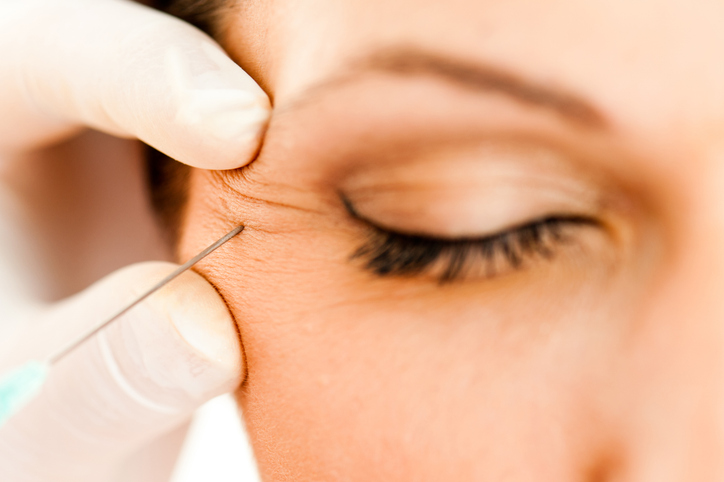
This leaflet is provided by the British Association of Aesthetic Plastic Surgeons , the professional body responsible for the advancement of education and safety in aesthetic plastic surgery. Botox® and Dysport® are the trade names for Botulinum toxin, produced by a bacterium called Clostridium botulinum. Botox was first used in 1978 to weaken.
Leitura adicional e referências
- Task-specific focal dystonia; MedlinePlus, National Library of Medicine.
- Adler CH, Crews D, Kahol K, Santello M, Noble B, Hentz JG, Caviness JN. Are the yips a task-specific dystonia or "golfer's cramp"? Mov Disord. 2011 Sep;26(11):1993-6. doi: 10.1002/mds.23824. Epub 2011 Jun 14.
- Altenmuller E, Jabusch HC. Focal dystonia in musicians: phenomenology, pathophysiology and triggering factors. Eur J Neurol. 2010 Jul;17 Suppl 1:31-6. doi: 10.1111/j.1468-1331.2010.03048.x.
- Frucht SJ. Embouchure dystonia--Portrait of a task-specific cranial dystonia. Mov Disord. 2009 Sep 15;24(12):1752-62. doi: 10.1002/mds.22550.
- Hallett M. Pathophysiology of writer's cramp. Hum Mov Sci. 2006 Oct;25(4-5):454-63. doi: 10.1016/j.humov.2006.05.004. Epub 2006 Jul 21.
- Jankovic J, Ashoori A. Movement disorders in musicians. Mov Disord. 2008 Oct 30;23(14):1957-65. doi: 10.1002/mds.22255.
- Schmidt A, Jabusch HC, Altenmuller E, Hagenah J, Bruggemann N, Hedrich K, Saunders-Pullman R, Bressman SB, Kramer PL, Klein C. Dominantly transmitted focal dystonia in families of patients with musician's cramp. Neurology. 2006 Aug 22;67(4):691-3. doi: 10.1212/01.wnl.0000230148.00035.f9.
- Schmidt A, Jabusch HC, Altenmuller E, Hagenah J, Bruggemann N, Lohmann K, Enders L, Kramer PL, Saunders-Pullman R, Bressman SB, Munchau A, Klein C. Etiology of musician's dystonia: familial or environmental? Neurology. 2009 Apr 7;72(14):1248-54. doi: 10.1212/01.wnl.0000345670.63363.d1.
- Suzuki K, Takano M, Hashimoto K, Numao A, Nakamura T, Sakuta H, Hirata K. Computer mouse-related dystonia: a novel presentation of task-specific dystonia. J Neurol. 2012 Oct;259(10):2221-2. doi: 10.1007/s00415-012-6519-1. Epub 2012 May 9. No abstract available.
- Torres-Russotto D, Perlmutter JS. Task-specific dystonias: a review. Ann N Y Acad Sci. 2008 Oct;1142:179-99. doi: 10.1196/annals.1444.012.
Compartilhe seus pensamentos ou experiências com outros em nosso comunidades de pacientes.
Acesso simples a tratamentos confiáveis e serviços de saúde online.
Common conditions
Get help with common conditions through the NHS, without a GP appointment.
 Sinusite aguda
 Amigdalite bacteriana
 Impetigo
 Mordidas de insetos
 Herpes zosterInfecção do trato urinário (ITUs)
Inscreva-se no boletim informativo do Patient
Sua dose semanal de conselhos de saúde claros e confiáveis - escritos para ajudá-lo a se sentir informado, confiante e no controle.
Ao se inscrever, você aceita nossos Política de Privacidade. Você pode cancelar a inscrição a qualquer momento. Nunca vendemos seus dados.