Juvenile primary lateral sclerosis
Última atualização 18 de ago de 2020
Atende aos diretrizes editoriais
- BaixarBaixar
- Compartilhar
- Language
- Discussão
- Versão em Áudio
- Adicionar às fontes preferidas no Google
Juvenile primary lateral sclerosis is a rare disorder characterised by progressive weakness and tightness (spasticity) of muscles in the arms, legs, and face. The features of this disorder are caused by damage to motor neurons, which are specialized nerve cells in the brain and spinal cord that control muscle movement.
Descrição
Juvenile primary lateral sclerosis is a rare disorder characterised by progressive weakness and tightness (spasticity) of muscles in the arms, legs, and face. The features of this disorder are caused by damage to motor neurons, which are specialized nerve cells in the brain and spinal cord that control muscle movement.
Symptoms of juvenile primary lateral sclerosis begin in early childhood and progress slowly over many years. Early symptoms include clumsiness, muscle weakness and spasticity in the legs, and difficulty with balance. As symptoms progress, the spasticity spreads to the arms and hands and individuals develop slurred speech, drooling, difficulty swallowing, and an inability to walk.
Padrões de herança
The source lists the following possible inheritance patterns: Autosomal recessive. More than one pattern can apply in different cases.
Related genes
Other names
JPLS
Juvenile PLS
PLSJ
Primary lateral sclerosis, juvenile
Related patient information and medicines
Patient information leaflet
Esclerodermia localizada
Localised scleroderma causes one or more patches of hard skin. There are different types. It is two or three times more common in women t... It can occur at any age and is as common in children as it is in adults. About 3 in a million children in the UK and Ireland develop localised scleroderma every year. Children are nine or ten times more.

Patient information leaflet
Doença de Huntington
Treatment is aimed at trying to control symptoms as... What is Huntington's disease. Huntington's disease is a genetically inherited condition that gradually damages brain function. It progresses over time, often proving fatal by the age of 40 - 50. It can lead to a change in your behaviour and interfere with: Movements of your body. Between 5-10.

Patient information leaflet
Dor nas articulações
These include: Juvenile idiopathic arthritis (JIA). Osgood-Schlatter disease. Sinding-Larsen Johansson disease. Henoch-Schönlein purpura. Growing pains. Juvenile idiopathic arthritis (JIA) A condition in which joint inflammation occurs in children under the age of 16 years. See the separate leaflet called Juvenile idiopathic arthritis..
Patient information leaflet
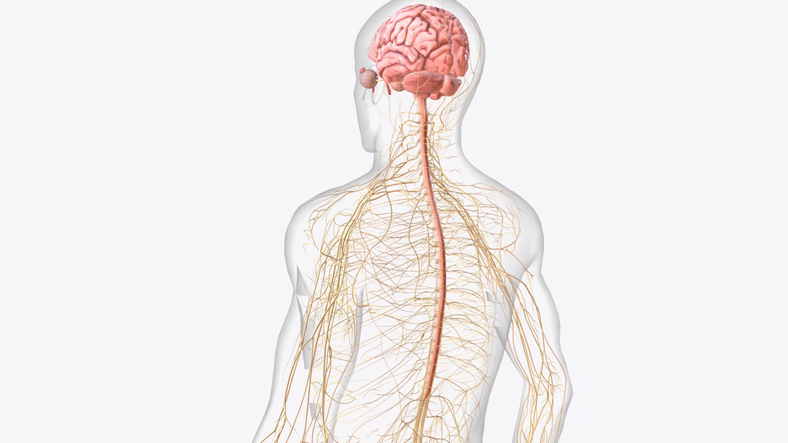
Doença do neurônio motor
Doença do neurônio motor (DNM) is a neurological condition causes a progressive weakness and wasting of many of the muscles in the body. There are various types of motor neurone disease. This leaflet is mainly about amyotrophic lateral sclerosis (ALS), which is the most common type of motor neurone disease. Although there is no cure for motor neurone.

Patient information leaflet
COVID-19
Conditions causing weakened immune systems. Medical treatments causing weakened immune systems (like steroid medicines , antibody treatments, or chemotherapy ). Rare conditions affecting the brain and nerves, like multiple sclerosis , motor neurone disease , Huntington's disease and myasthenia gravis. Cerebral palsy. Severe or multiple learning.
Patient information leaflet
Hepatite autoimune
For example, alcohol excess and various viral infections são the common causes of hepatitis. Please read the separate leaflet called Hepatite to read more about the liver, where it is and what it does, and about other causes of hepatitis. Autoimmune hepatitis is an uncommon cause of chronic hepatitis. Chronic means that the inflammation is.
Leitura adicional e referências
- Juvenile primary lateral sclerosis; MedlinePlus, National Library of Medicine.
- Hadano S, Kunita R, Otomo A, Suzuki-Utsunomiya K, Ikeda JE. Molecular and cellular function of ALS2/alsin: implication of membrane dynamics in neuronal development and degeneration. Neurochem Int. 2007 Jul-Sep;51(2-4):74-84. doi: 10.1016/j.neuint.2007.04.010. Epub 2007 May 4.
- Mintchev N, Zamba-Papanicolaou E, Kleopa KA, Christodoulou K. A novel ALS2 splice-site mutation in a Cypriot juvenile-onset primary lateral sclerosis family. Neurology. 2009 Jan 6;72(1):28-32. doi: 10.1212/01.wnl.0000338530.77394.60.
- Orrell RW. ALS2-Related Disorder. 2005 Oct 21 [updated 2021 May 13]. In: Adam MP, Bick S, Mirzaa GM, Wallace SE, Amemiya A, editors. GeneReviews(R) [Internet]. Seattle (WA): University of Washington, Seattle; 1993-2026. Available from http://www.ncbi.nlm.nih.gov/books/NBK1243/
- Panzeri C, De Palma C, Martinuzzi A, Daga A, De Polo G, Bresolin N, Miller CC, Tudor EL, Clementi E, Bassi MT. The first ALS2 missense mutation associated with JPLS reveals new aspects of alsin biological function. Brain. 2006 Jul;129(Pt 7):1710-9. doi: 10.1093/brain/awl104. Epub 2006 May 2.
- Yang Y, Hentati A, Deng HX, Dabbagh O, Sasaki T, Hirano M, Hung WY, Ouahchi K, Yan J, Azim AC, Cole N, Gascon G, Yagmour A, Ben-Hamida M, Pericak-Vance M, Hentati F, Siddique T. The gene encoding alsin, a protein with three guanine-nucleotide exchange factor domains, is mutated in a form of recessive amyotrophic lateral sclerosis. Nat Genet. 2001 Oct;29(2):160-5. doi: 10.1038/ng1001-160.
Participe da conversa
Compartilhe seus pensamentos ou experiências com outros em nosso comunidades de pacientes.

Pergunte, compartilhe, conecte-se.
Navegue por discussões, faça perguntas e compartilhe experiências em centenas de tópicos de saúde.
Inscreva-se no boletim informativo do Patient
Sua dose semanal de conselhos de saúde claros e confiáveis - escritos para ajudá-lo a se sentir informado, confiante e no controle.
Ao se inscrever, você aceita nossos Política de Privacidade. Você pode cancelar a inscrição a qualquer momento. Nunca vendemos seus dados.