Hereditary sensory and autonomic neuropathy type V
Última atualização 18 de ago de 2020
Atende aos diretrizes editoriais
- BaixarBaixar
- Compartilhar
- Language
- Discussão
- Ask Patient
- Versão em Áudio
- Adicionar às fontes preferidas no Google
Hereditary sensory and autonomic neuropathy type V (HSAN5) is a condition that primarily affects the sensory nerve cells (sensory neurons), which transmit information about sensations such as pain, temperature, and touch. These sensations are impaired in people with HSAN5.
Escolhas de vídeos para Condições genéticasBiblioteca de vídeos
Descrição
Hereditary sensory and autonomic neuropathy type V (HSAN5) is a condition that primarily affects the sensory nerve cells (sensory neurons), which transmit information about sensations such as pain, temperature, and touch. These sensations are impaired in people with HSAN5.
The signs and symptoms of HSAN5 appear early, usually at birth or during infancy. People with HSAN5 lose the ability to feel pain, heat, and cold. Deep pain perception, the feeling of pain from injuries to bones, ligaments, or muscles, is especially affected in people with HSAN5. Because of the inability to feel deep pain, affected individuals suffer repeated severe injuries such as bone fractures and joint injuries that go unnoticed. Repeated trauma can lead to a condition called Charcot joints, in which the bones and tissue surrounding joints are destroyed.
Padrões de herança
The source lists the following possible inheritance patterns: Autosomal recessive. More than one pattern can apply in different cases.
Related genes
Other names
Congenital insensitivity to pain
Congenital sensory neuropathy with selective loss of small myelinated fibers
Hereditary sensory and autonomic neuropathy, type 5
HSAN type V
HSAN V
HSAN5
Related patient information and medicines

Patient information leaflet
Neuropatia periférica
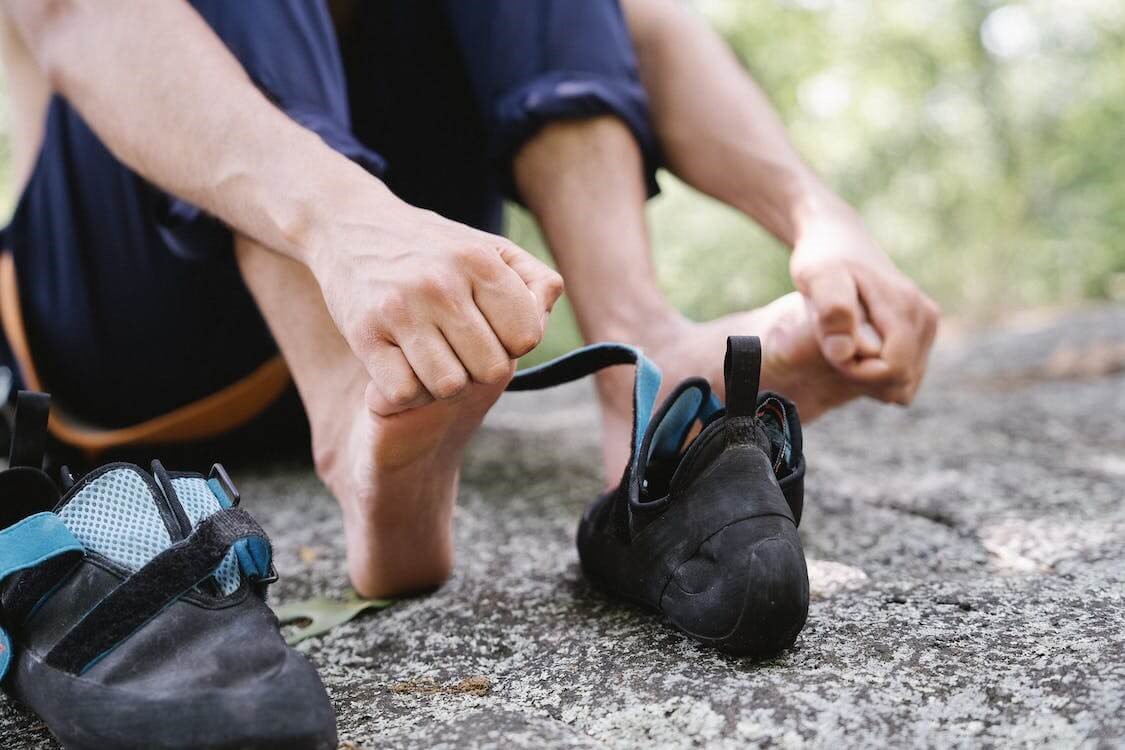
Peripheral neuropathy means damage to one or more of your peripheral nerves. If sensory nerves are damaged, this is known as sensory neuropathy. It can cause sym... Muscle paralysis (the muscle is unable to move at all and you don't have any control over it; you are unable to move a part of your body). If autonomic nerves are affected, this is.
Patient information leaflet
Neuropatia diabética
Neuropatia diabética é a type of nerve damage that can occur if you have diabetes. Diabetic neuropathy is a common complication of both type 1 diabetes and type 2 diabetes. Autonomic neuropathy Damage to the autonomic nervous system may cause a variety of symptoms, such as: Problems with the function of your gut (bowel), such as bloating,.

Patient information leaflet
Prevenção de quedas em idosos
Although most falls do not cause injury, the results of a fall can be serious. If you break a bone this can lead to long-term disability. Broken bones do not always heal completely as you get older and a serious injury could mean that you would no longer be able to live without support. This is why, if you are aged 65 or older and have had a fall,.
Patient information leaflet
Síndrome de Guillain-Barré
Guillain-Barré syndrome affects the nerves of the limbs and body and is usually triggered by an infection. The main symptom is sudden onset weakness of the muscles that are supplied by the affected nerves. With ... What is Guillain-Barré syndrome. Guillain-Barré syndrome (GBS) is a disease that affects nerves throughout the body and limbs. It is.

Patient information leaflet
síndrome de Sjögren
síndrome de Sjögren é um autoimmune disease that causes the glands that produce tears and saliva to stop working. It is a life-long condition but treatments can help control symptoms such as dry eyes and dry mouth. Key points Sjögren’s syndrome is an autoimmune condition where the immune system attacks glands that produce moisture, mainly the tear.

Patient information leaflet
Transtornos psicossomáticos
Psychosomatic means mind (psyche) e body (soma). A psychosomatic disorder is a disease which involves both mind and body. What are psychosomatic disorders. Transtornos psicossomáticos are conditions which causam troublesome, distressing physical symptoms, caused by the autonomic nervous system not functioning correctly. The autonomic nervous system.
Leitura adicional e referências
- Hereditary sensory and autonomic neuropathy type V; MedlinePlus, National Library of Medicine.
- Capsoni S, Covaceuszach S, Marinelli S, Ceci M, Bernardo A, Minghetti L, Ugolini G, Pavone F, Cattaneo A. Taking pain out of NGF: a "painless" NGF mutant, linked to hereditary sensory autonomic neuropathy type V, with full neurotrophic activity. PLoS One. 2011 Feb 28;6(2):e17321. doi: 10.1371/journal.pone.0017321.
- Einarsdottir E, Carlsson A, Minde J, Toolanen G, Svensson O, Solders G, Holmgren G, Holmberg D, Holmberg M. A mutation in the nerve growth factor beta gene (NGFB) causes loss of pain perception. Hum Mol Genet. 2004 Apr 15;13(8):799-805. doi: 10.1093/hmg/ddh096. Epub 2004 Feb 19.
- Kaplan DR, Miller FD. Neurotrophin signal transduction in the nervous system. Curr Opin Neurobiol. 2000 Jun;10(3):381-91. doi: 10.1016/s0959-4388(00)00092-1.
- Larsson E, Kuma R, Norberg A, Minde J, Holmberg M. Nerve growth factor R221W responsible for insensitivity to pain is defectively processed and accumulates as proNGF. Neurobiol Dis. 2009 Feb;33(2):221-8. doi: 10.1016/j.nbd.2008.10.012. Epub 2008 Nov 8.
- Lewin GR, Mendell LM. Nerve growth factor and nociception. Trends Neurosci. 1993 Sep;16(9):353-9. doi: 10.1016/0166-2236(93)90092-z.
- Ritter AM, Lewin GR, Kremer NE, Mendell LM. Requirement for nerve growth factor in the development of myelinated nociceptors in vivo. Nature. 1991 Apr 11;350(6318):500-2. doi: 10.1038/350500a0.
- Verhoeven K, Timmerman V, Mauko B, Pieber TR, De Jonghe P, Auer-Grumbach M. Recent advances in hereditary sensory and autonomic neuropathies. Curr Opin Neurol. 2006 Oct;19(5):474-80. doi: 10.1097/01.wco.0000245370.82317.f6.
- Verpoorten N, De Jonghe P, Timmerman V. Disease mechanisms in hereditary sensory and autonomic neuropathies. Neurobiol Dis. 2006 Feb;21(2):247-55. doi: 10.1016/j.nbd.2005.08.004. Epub 2005 Sep 23.
Compartilhe seus pensamentos ou experiências com outros em nosso comunidades de pacientes.
Acesso simples a tratamentos confiáveis e serviços de saúde online.
Common conditions
Get help with common conditions through the NHS, without a GP appointment.
 Sinusite aguda
 Amigdalite bacteriana
 Impetigo
 Mordidas de insetos
 Herpes zosterInfecção do trato urinário (ITUs)
Inscreva-se no boletim informativo do Patient
Sua dose semanal de conselhos de saúde claros e confiáveis - escritos para ajudá-lo a se sentir informado, confiante e no controle.
Ao se inscrever, você aceita nossos Política de Privacidade. Você pode cancelar a inscrição a qualquer momento. Nunca vendemos seus dados.