origin recognition complex subunit 1
Última atualização 18 de ago de 2020
Atende aos diretrizes editoriais
- BaixarBaixar
- Compartilhar
- Language
- Discussão
- Ask Patient
- Versão em Áudio
- Adicionar às fontes preferidas no Google
A ORC1 gene provides instructions for making a protein that is important in the copying of a cell's DNA before the cell divides (a process known as DNA replication). The protein produced from this gene is one of a group of proteins known as the origin recognition complex (ORC). (The complex is made up of the proteins ORC1 to ORC6, which are produced from different genes.) ORC attaches (binds) to certain regions of DNA known as origins of replication (or origins), where the process of DNA copying begins. This complex attracts additional proteins to bind to it, forming a larger group of proteins called the pre-replication complex. When the pre-replication complex is attached to the origin, replication is able to begin at that location. This tightly controlled process, called replication licensing, helps ensure that DNA replication occurs only once per cell division and is required for cells to divide.
Escolhas de vídeos para GenesBiblioteca de vídeos
Normal function
A ORC1 gene provides instructions for making a protein that is important in the copying of a cell's DNA before the cell divides (a process known as DNA replication). The protein produced from this gene is one of a group of proteins known as the origin recognition complex (ORC). (The complex is made up of the proteins ORC1 to ORC6, which are produced from different genes.) ORC attaches (binds) to certain regions of DNA known as origins of replication (or origins), where the process of DNA copying begins. This complex attracts additional proteins to bind to it, forming a larger group of proteins called the pre-replication complex. When the pre-replication complex is attached to the origin, replication is able to begin at that location. This tightly controlled process, called replication licensing, helps ensure that DNA replication occurs only once per cell division and is required for cells to divide.
ORC also attaches to a form of DNA called heterochromatin. Heterochromatin is densely packed DNA that contains few functional genes, but it is important for controlling gene activity and maintaining the structure of chromosomes. It is unclear what effect ORC binding has on heterochromatin.
In addition to its roles as part of ORC, the ORC1 protein is involved in the copying of cell structures called centrosomes and centrioles, which are important for the process of cell division. ORC1 blocks centrosomes and centrioles from being copied more than once, which is key to normal cell division. In addition, some research suggests that ORC1 is involved in the function of cilia, which are microscopic, finger-like projections that stick out from the surface of cells. Cilia participate in signaling pathways that transmit information within and between cells and are important for the development and function of many types of cells and tissues, including bone.
Conditions referring to this gene or chromosome
Other names
HSORC1
ORC1_HUMAN
ORC1L
origin recognition complex, subunit 1
origin recognition complex, subunit 1 homolog
PARC1
replication control protein 1
Related patient information and medicines
Patient information leaflet
Traço falciforme
If you inherit a gene from one of your parents, called a sickle cell gene, tem hemocromatose já a condition called sickle cell trait. If you inherit a sickle cell gene from both parents, you get a double dose of the sickle cell gene. This causes a condition called sickle cell d... What is sickle cell trait. Sickle cell trait means having one gene for a.
Patient information leaflet
Vacinação contra o vírus sincicial respiratório (VSR)
The RSV vaccine helps protect babies and older people from the common infectious disease of the airways and lungs. Here we have information about the respiratory syncytial virus (RSV) vaccine and who should get it. RSV infection also causes more severe lung infections in older people, and often causes them to be admitted to hospital. The RSV.

Patient information leaflet
Hemocromatose
If treatment is started early enough and before complications occur then the outlook for people with haemoch... Find out more here: [/health/haemochromatosis-leaflet](https://patient.info/health/haemochromatosis-leaflet) People with haemochromatosis have inherited a faulty gene, which directs the body to absorb too much iron.

Patient information leaflet
Cirurgia de perda de peso
Dr Krishna Vakharia, 28th July 2023 NICE have updated their guidance to advise consideration of: A referral for people of South Asian, Chinese, other Asian, Middle Eastern, Black African ou African-Caribbean family background using a lower BMI threshold - 37.5 or 32.5 and 37.5 with a health condition named above. An expedited referral for people.

Patient information leaflet
Planejando engravidar
Screening tests Pregn... Some women may wish to have the screening test before becoming pregnant, especially if their family origins make these diseases more likely. People from families originating from Africa, the Caribbean, Southeast Asia, Sardinia, Greece, Turkey or Cyprus are more likely to have one of these conditions or to be a carrier for.
Patient information leaflet
Doença falciforme
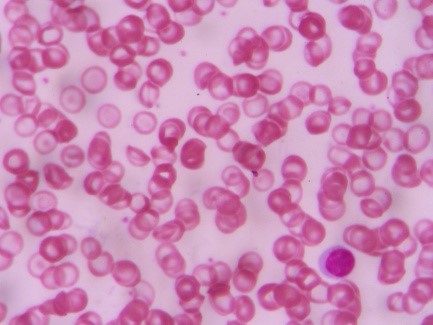
Normal and sickle-shaped blood cells Blood cell normal e sickle shaped SCD is therefore a group of conditions that cause red cells to become sickle-shaped. Sickle cell trait is not the same as SCD or sickle cell anaemia. Sickle cell trait means you carry a single sickle cell gene, but it does not normally cause illness. The rest of this leaflet.
Leitura adicional e referências
- origin recognition complex subunit 1; MedlinePlus, National Library of Medicine.
- Bicknell LS, Bongers EM, Leitch A, Brown S, Schoots J, Harley ME, Aftimos S, Al-Aama JY, Bober M, Brown PA, van Bokhoven H, Dean J, Edrees AY, Feingold M, Fryer A, Hoefsloot LH, Kau N, Knoers NV, Mackenzie J, Opitz JM, Sarda P, Ross A, Temple IK, Toutain A, Wise CA, Wright M, Jackson AP. Mutations in the pre-replication complex cause Meier-Gorlin syndrome. Nat Genet. 2011 Feb 27;43(4):356-9. doi: 10.1038/ng.775.
- Bicknell LS, Walker S, Klingseisen A, Stiff T, Leitch A, Kerzendorfer C, Martin CA, Yeyati P, Al Sanna N, Bober M, Johnson D, Wise C, Jackson AP, O'Driscoll M, Jeggo PA. Mutations in ORC1, encoding the largest subunit of the origin recognition complex, cause microcephalic primordial dwarfism resembling Meier-Gorlin syndrome. Nat Genet. 2011 Feb 27;43(4):350-5. doi: 10.1038/ng.776.
- de Munnik SA, Bicknell LS, Aftimos S, Al-Aama JY, van Bever Y, Bober MB, Clayton-Smith J, Edrees AY, Feingold M, Fryer A, van Hagen JM, Hennekam RC, Jansweijer MC, Johnson D, Kant SG, Opitz JM, Ramadevi AR, Reardon W, Ross A, Sarda P, Schrander-Stumpel CT, Schoots J, Temple IK, Terhal PA, Toutain A, Wise CA, Wright M, Skidmore DL, Samuels ME, Hoefsloot LH, Knoers NV, Brunner HG, Jackson AP, Bongers EM. Meier-Gorlin syndrome genotype-phenotype studies: 35 individuals with pre-replication complex gene mutations and 10 without molecular diagnosis. Eur J Hum Genet. 2012 Jun;20(6):598-606. doi: 10.1038/ejhg.2011.269. Epub 2012 Feb 15.
- Hemerly AS, Prasanth SG, Siddiqui K, Stillman B. Orc1 controls centriole and centrosome copy number in human cells. Science. 2009 Feb 6;323(5915):789-93. doi: 10.1126/science.1166745.
- Hossain M, Stillman B. Meier-Gorlin syndrome mutations disrupt an Orc1 CDK inhibitory domain and cause centrosome reduplication. Genes Dev. 2012 Aug 15;26(16):1797-810. doi: 10.1101/gad.197178.112. Epub 2012 Aug 1.
- Niida H, Kitagawa M. Regulation of DNA replication licensing. Curr Drug Targets. 2012 Dec;13(13):1588-92. doi: 10.2174/138945012803529965.
- Prasanth SG, Shen Z, Prasanth KV, Stillman B. Human origin recognition complex is essential for HP1 binding to chromatin and heterochromatin organization. Proc Natl Acad Sci U S A. 2010 Aug 24;107(34):15093-8. doi: 10.1073/pnas.1009945107. Epub 2010 Aug 5.
- Stiff T, Alagoz M, Alcantara D, Outwin E, Brunner HG, Bongers EM, O'Driscoll M, Jeggo PA. Deficiency in origin licensing proteins impairs cilia formation: implications for the aetiology of Meier-Gorlin syndrome. PLoS Genet. 2013;9(3):e1003360. doi: 10.1371/journal.pgen.1003360. Epub 2013 Mar 14.
Compartilhe seus pensamentos ou experiências com outros em nosso comunidades de pacientes.
Acesso simples a tratamentos confiáveis e serviços de saúde online.
Common conditions
Get help with common conditions through the NHS, without a GP appointment.
 Sinusite aguda
 Amigdalite bacteriana
 Impetigo
 Mordidas de insetos
 Herpes zosterInfecção do trato urinário (ITUs)
Inscreva-se no boletim informativo do Patient
Sua dose semanal de conselhos de saúde claros e confiáveis - escritos para ajudá-lo a se sentir informado, confiante e no controle.
Ao se inscrever, você aceita nossos Política de Privacidade. Você pode cancelar a inscrição a qualquer momento. Nunca vendemos seus dados.