growth differentiation factor 3
Última atualização 30 Sept 2025
Atende aos diretrizes editoriais
- BaixarBaixar
- Compartilhar
- Language
- Discussão
- Ask Patient
- Versão em Áudio
- Adicionar às fontes preferidas no Google
The GDF3 gene provides instructions for making a protein that is part of the transforming growth factor beta (TGFβ) superfamily, which is a group of proteins that help control the growth and development of tissues throughout the body. Within the TGFβ superfamily, the GDF3 protein belongs to the bone morphogenetic protein family, which helps regulate the growth and maturation (differentiation) of bone and cartilage. Cartilage is a tough but flexible tissue that makes up much of the skeleton during early development. The proteins in this family help regulate cell growth and differentiation both before and after birth. While the GDF3 protein is known to be involved in bone and cartilage development, its exact role is unclear.
Normal function
The GDF3 gene provides instructions for making a protein that is part of the transforming growth factor beta (TGFβ) superfamily, which is a group of proteins that help control the growth and development of tissues throughout the body. Within the TGFβ superfamily, the GDF3 protein belongs to the bone morphogenetic protein family, which helps regulate the growth and maturation (differentiation) of bone and cartilage. Cartilage is a tough but flexible tissue that makes up much of the skeleton during early development. The proteins in this family help regulate cell growth and differentiation both before and after birth. While the GDF3 protein is known to be involved in bone and cartilage development, its exact role is unclear.
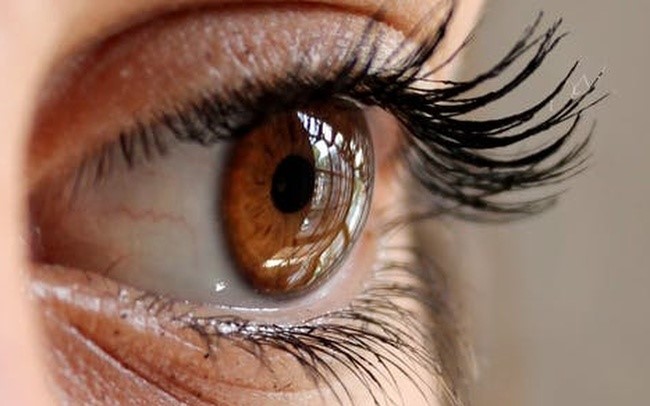
The GDF3 protein is also involved in the development of the eyes, specifically the specialized light-sensitive tissue that lines the back of the eye called the retina.
Conditions referring to this gene or chromosome
Other names
GDF-3
growth/differentiation factor 3
Related patient information and medicines

Patient information leaflet
Câncer de garganta
(The throat is usually spr... Dr Krishna Vakharia, 16th October 2023 The National Institute for Health and Care Excellence (NICE) has recommended that a person should receive a diagnosis or ruling out of cancer within 28 days of being referred urgently by their GP for suspected cancer. To confirm the diagnosis If anything suspicious is seen by the.

Patient information leaflet
Câncer peniano
A exact reason why a cell becomes cancerous is un. It is thought that something damages or alters certain genes in the cell. By looking at certain features of the cells under the ... Grade 1 (low grade) - the cells look reasonably similar to normal cells. The cancer cells are said to be 'well differentiated'. Grade 2 - is a middle grade. Grade 3.
Patient information leaflet
Retinopatia diabética
New abnormal blood ... This is called proliferative retinopathy. These new vessels are delicate and can bleed easily. There are signs of blood flow becoming restricted but not yet showing new blood vessels growing (see below). Stage 3: proliferative retinopathy Proliferative retinopathy is the advanced diabetic retinopathy that occurs when damaged.

Patient information leaflet
Câncer de mama
Breast cancer is the most common cancer in women. O que é breast cancer? | Patient Explainers Breast cancer is the most common cancer in women. Find out more: [/health/breast-cancer-leaflet](https://patient.info/health/breast-cancer-leaflet) Follow Patient: Website: [/](https://patient.info/) Facebook:.

Patient information leaflet
Câncer do útero
Grade 3 - the cells look very abn... The cancer cells tend to grow and multiply quite quickly and are more aggressive. The grade of cancer is different to the stage, which is explained further in the outlook (prognosis) section below. There are also some rarer types of endometrial cancer. Endometrial cancer symptoms In most cases the first symptom.

Patient information leaflet
Acromegalia
Acromegalia is a rare, progressive condition in which you make too much growth hormone. This causes a range of symptoms that develop gradually, often over several years. The most noticeable symptoms are that your hands and feet become larger and features of your face may become more prominent. The cause is usually a small non-cancerous growth.
Leitura adicional e referências
- growth differentiation factor 3; MedlinePlus, National Library of Medicine.
- Frikha R. Klippel-Feil syndrome: a review of the literature. Clin Dysmorphol. 2020 Jan;29(1):35-37. doi: 10.1097/MCD.0000000000000301.
- Jae-Min Park A, Nelson SE, Mesfin A. Klippel-Feil Syndrome: Clinical Presentation and Management. JBJS Rev. 2022 Feb 15;10(2). doi: 10.2106/JBJS.RVW.21.00166.
- Levine AJ, Brivanlou AH. GDF3 at the crossroads of TGF-beta signaling. Cell Cycle. 2006 May;5(10):1069-73. doi: 10.4161/cc.5.10.2771. Epub 2006 May 15.
- Levine AJ, Levine ZJ, Brivanlou AH. GDF3 is a BMP inhibitor that can activate Nodal signaling only at very high doses. Dev Biol. 2009 Jan 1;325(1):43-8. doi: 10.1016/j.ydbio.2008.09.006. Epub 2008 Sep 18.
- Litrenta J, Bi AS, Dryer JW. Klippel-Feil Syndrome: Pathogenesis, Diagnosis, and Management. J Am Acad Orthop Surg. 2021 Nov 15;29(22):951-960. doi: 10.5435/JAAOS-D-21-00190.
- Menger RP, Rayi A, Notarianni C. Klippel Feil Syndrome. 2024 May 11. In: StatPearls [Internet]. Treasure Island (FL): StatPearls Publishing; 2024 Jan-. Available from http://www.ncbi.nlm.nih.gov/books/NBK493157/
- Ye M, Berry-Wynne KM, Asai-Coakwell M, Sundaresan P, Footz T, French CR, Abitbol M, Fleisch VC, Corbett N, Allison WT, Drummond G, Walter MA, Underhill TM, Waskiewicz AJ, Lehmann OJ. Mutation of the bone morphogenetic protein GDF3 causes ocular and skeletal anomalies. Hum Mol Genet. 2010 Jan 15;19(2):287-98. doi: 10.1093/hmg/ddp496. Epub 2009 Oct 28.
Compartilhe seus pensamentos ou experiências com outros em nosso comunidades de pacientes.
Acesso simples a tratamentos confiáveis e serviços de saúde online.
Common conditions
Get help with common conditions through the NHS, without a GP appointment.
 Sinusite aguda
 Amigdalite bacteriana
 Impetigo
 Mordidas de insetos
 Herpes zosterInfecção do trato urinário (ITUs)
Inscreva-se no boletim informativo do Patient
Sua dose semanal de conselhos de saúde claros e confiáveis - escritos para ajudá-lo a se sentir informado, confiante e no controle.
Ao se inscrever, você aceita nossos Política de Privacidade. Você pode cancelar a inscrição a qualquer momento. Nunca vendemos seus dados.